Table of Contents >> Show >> Hide
- Meet the Civilization: Sumer in Ancient Mesopotamia
- How Archaeologists Reconstruct a Civilization Out of Mud Brick and Dust
- Recent Discoveries Rewriting the Sumerian Story
- What These Finds Change About the First Cities
- The New Toolkit: Satellites, 3D Scans, and AI-Assisted Decipherment
- Protecting the Past While Digging It Up
- What’s Next in the Hunt for the First Cities
- Experiences: What It Feels Like to Chase a 5,000-Year-Old Story
If you’ve ever looked at a modern cityits traffic, paperwork, construction noise, and people arguing about who owns whatand thought,
“Surely ancient life was calmer”… archaeologists have some gently devastating news. One of the world’s oldest civilizations, the
Sumerians of ancient Mesopotamia, ran on many of the same ingredients we still use today: neighborhoods, food spots, government forms,
infrastructure projects, and enough administrative recordkeeping to make a spreadsheet blush.
What’s changing is how clearly we can see it. New excavations, better mapping tools, and digital methods for reading ancient writing are helping
researchers reconstruct daily life in early cities like Lagash, Girsu, Uruk, and Eriduplaces that helped invent urban living, large-scale irrigation,
and the earliest known writing systems. And the discoveries aren’t just shiny museum objects. They’re “small” thingsclay tablets, bowls with food
residue, seal impressions, canal tracesthat reveal how the first cities actually worked.
Meet the Civilization: Sumer in Ancient Mesopotamia
“Sumer” refers to southern Mesopotamia (roughly southern Iraq), a region shaped by the Tigris and Euphrates river systems. By the late 5th and
4th millennia BCE, settlements grew into dense urban centers. Over time, networks of city-states emergedeach with temples, workshops, farms,
and political institutionsoften competing, trading, and occasionally “negotiating” with each other in the time-honored tradition of sharp objects
and stern letters.
Why “one of the oldest” is the fairest way to say it
Archaeologists are careful with superlatives for a reason: several regions produced early complex societies. But Sumer is regularly highlighted as
the earliest known civilization in the historical record because of how early its cities became large and how early writing appears in this area. The
combination of urban archaeology and a massive written record makes Sumer unusually “legible” compared with many other ancient cultures.
What made Sumer different
- True cities: not just villages, but neighborhoods, industry, and administration at scale.
- Writing: early cuneiform begins as practical recordkeeping and evolves into a flexible writing system.
- Infrastructure: irrigation and water management turned a challenging landscape into farmland.
- Institutions: temples, palaces, and bureaucracies that coordinated labor, storage, and distribution.
How Archaeologists Reconstruct a Civilization Out of Mud Brick and Dust
Building a reliable picture of a 5,000-year-old city is less like “finding treasure” and more like assembling a massive jigsaw puzzle where the box
art is missing, half the pieces are crumbs, and the wind keeps trying to steal your notes.
Excavation is only the beginning
Modern digs often start with remote sensing, drone mapping, and geophysical survey to detect buried walls, streets, kilns, and pits before a single
trowel hits the ground. Then excavators remove soil in controlled layers, recording the position of everythingbecause context is the real prize.
An object without its exact location and layer is like a quote without a source: interesting, but risky.
Landscape archaeology: reading rivers that moved and canals that vanished
Southern Mesopotamia is dynamic. Rivers shift course, floodplains build up, and canals get silted in or repurposed. That means archaeologists have
to reconstruct ancient water systems and settlement patterns using satellite imagery, geomorphology, and old riverbeds that are visible as faint scars
in the landscape. The “city” isn’t just a mound; it’s an entire engineered region.
Text + artifacts = a full sentence instead of random words
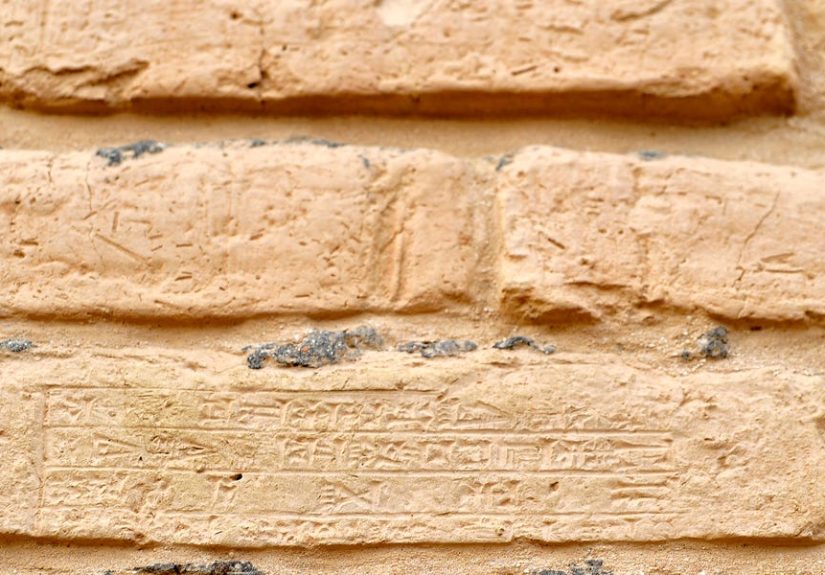
Sumer is special because it left both physical remains and written records. Clay tablets can list rations, map canals, record property transfers, or
document temple inventories. Pair those texts with excavated neighborhoods, workshops, and food remains, and you can start answering questions like:
Who worked where? What did they eat? How centralized was the economy? Which jobs were common? What happened during political transitions?
Recent Discoveries Rewriting the Sumerian Story
Some of the most exciting recent work isn’t about kings and monumentsthough those matter too. It’s about the “middle” of society: the craftspeople,
traders, administrators, and families who made city life run.
Lagash: a 5,000-year-old tavern and the sound of everyday life
At the sprawling site of Lagash, archaeologists uncovered something instantly relatable: a public eating and drinking spaceessentially an ancient
neighborhood hangout. The structure included an open-air area and a kitchen space, along with benches, an oven, storage containers, and even a clay
cooling device used like a refrigerator. Dozens of bowls still held traces of food, including fish remains.
Why does a tavern matter? Because it suggests an urban social world beyond palaces and temples. Public dining spaces imply a community with enough
disposable resources (and enough social life) to support places where people could gather. It also strengthens the case that early Mesopotamian cities
had a layered society that included more than elites and laborerssomething closer to a recognizable urban spectrum of roles.
Girsu: clay “paperwork” and the machinery of early empire
Another set of discoveries comes from Girsu, a major Sumerian city later drawn into the Akkadian Empire. Excavators found hundreds of clay tablets
and seal impressions that document administration in striking detailrecords of commodities, labor, building plans, canal-related information, and lists
of named individuals and occupations. It’s one thing to say “empires controlled cities.” It’s another to hold the receipts.
These archives show how governance operated on the ground: rations measured out, goods tracked, officials identified, and systems standardized. For
historians, that’s a big deal because it’s direct evidence of how early large-scale administration workednot as a vague concept, but as a daily routine.
If you want to understand how the first empires functioned, you need to know what they counted, who did the counting, and how they made the counting
stick.
Eridu: the “unpromising mounds” that turned out to be a foundational city
Eridu has long been associated with early urban development in the south. Recent reporting and renewed attention highlight how archaeologists use
excavation, architecture, and stratigraphy at sites like this to trace deep urban historiestemple rebuilding phases, drainage features, and the slow
layering of settlement debris that forms the tells (mounds) visible today.
Cities like Eridu remind us that “first cities” weren’t born fully formed. They grew by iteration: build, rebuild, expand, re-route water, adjust to
environmental change, and keep going. Archaeology captures that long, messy processmore like a living organism than a neat timeline.
Waterworks at scale: mapping ancient irrigation networks
One of the biggest recent leaps in understanding early Mesopotamia is the ability to map irrigation landscapes across wide regions. Researchers have
identified extensive canal networkshundreds of main channels and thousands of smaller brancheslinked to farmland and long-term settlement. These
reconstructions reinforce a crucial point: early urbanism in Mesopotamia wasn’t just about cities; it was about engineered agriculture and coordinated
maintenance over generations.
In practical terms, canals mean schedules, labor crews, repair decisions, and conflict resolution (because water is life, and life is rarely shared
without rules). When archaeologists can map canal systems, they can better interpret why certain cities grew where they did and how regional power
might have been supported by controlling water distribution.
What These Finds Change About the First Cities
Put the tavern, the archives, and the canal maps together, and the Sumerian story becomes less mythic and more humanstill impressive, but grounded
in real behaviors and practical challenges.
Early cities were “mixed-use” long before the term existed
Excavated neighborhoods, workshops, kilns, and food spaces point to urban zones where living and working overlapped. Instead of separating “downtown”
and “residential,” early cities often blended craft production, storage, and household life. That kind of organization supports the idea that many people
in these cities were skilled producerspotters, metalworkers, textile makerswho powered a broader economy.
Bureaucracy wasn’t a side effectit was the technology
We often talk about writing as a cultural milestone, but in early Mesopotamia it’s deeply tied to administration. Clay tablets, seal impressions (a kind
of signature), and standardized measures made it possible to coordinate goods and labor across complex institutions. In other words, bureaucracy was
not a boring add-on. It was the operating system.
Big projects required coordination and trust
Large canal systems and monumental building programs imply organized labor over time. That raises questions archaeologists and historians are actively
exploring: How was labor recruited? Was it forced, paid in rations, tied to temple obligations, or all of the above depending on era and circumstance?
The written record and excavated work areas help narrow those debates from theory to evidence.
The New Toolkit: Satellites, 3D Scans, and AI-Assisted Decipherment
Archaeology today is increasingly a collaboration between field crews and data specialists. The new tools don’t replace digging; they make digging smarter,
and they allow scholars to connect individual trenches to regional patterns.
Remote sensing: seeing patterns that feet can’t see
Satellite and aerial imagery can reveal buried features through subtle soil differences, vegetation patterns, and old water channels. Remote sensing is
especially powerful in large floodplain regions where canals and ancient riverbeds leave faint traces. It lets archaeologists identify where to survey,
where to dig, and how sites relate across a whole landscape rather than as isolated mounds.
Digital cuneiform: expanding what can be read (and how fast)
The world has an enormous number of cuneiform tablets in museum collections, and only a fraction are fully published and translated. Digitization and
AI-assisted tools aim to scale up that process: from high-quality imaging to systems that help recognize signs and compare variants across time and place.
Even when AI doesn’t “translate” by itself, it can accelerate cataloging, matching fragments, and identifying hard-to-read charactersfreeing human experts
to focus on interpretation.
Why this matters: texts change the questions we can ask
As more tablets become searchable and comparable, researchers can look for patterns at scale: how rations vary across regions, how job titles change after
conquest, how women appear in administrative contexts, or how building projects spike during certain reigns. That’s not just decoding the past; it’s turning
the past into analyzable datawhile still respecting that each tablet was once someone’s real-life record.
Protecting the Past While Digging It Up
Archaeologists don’t work in a vacuum. Many Mesopotamian sites have suffered from looting, conflict, and environmental threats. That reality shapes
modern excavation priorities: documenting sites quickly but responsibly, partnering with local authorities and scholars, and ensuring artifacts remain
protected and contextualized rather than dispersed.
Ethical archaeology also means recognizing that these places are part of living heritage. Excavations today often involve training programs, local employment,
conservation planning, and collaboration with national museums and antiquities services. The goal is not “extraction.” It’s long-term stewardship plus
shared knowledge.
What’s Next in the Hunt for the First Cities
The big story isn’t a single discoveryit’s the convergence of evidence. As archaeologists uncover more neighborhoods, archives, and infrastructure traces,
we get closer to answering questions that once sounded unanswerable:
- How did early city-states coordinate water and labor across huge farming regions?
- What did “public life” look like for ordinary residentswhere did they eat, work, worship, and socialize?
- How did conquest and empire change daily administration, not just royal propaganda?
- How did cities adapt when rivers shifted, droughts hit, or political systems changed?
The deeper researchers digsometimes literally only inches below the surfacethe more the first cities look less like distant myths and more like
surprisingly familiar places: full of planning, problem-solving, community, and the occasional “Who approved this canal project?” meeting.
Experiences: What It Feels Like to Chase a 5,000-Year-Old Story
Archaeology can sound glamorous from the outsidesunlit ruins, dramatic revelations, maybe a cameo by a fedora. The real experience is more human,
more meticulous, and honestly more impressive: a blend of patience, teamwork, and relentless attention to detail.
Field seasons often begin early, because heat and light dictate the schedule. Crews may be on site at dawn, moving like a small city themselves:
surveyors checking coordinates, excavators cleaning a floor surface with brushes and trowels, photographers documenting each stage, and specialists
taking soil samples that look like “just dirt” to everyone except the people who can read ancient environments like a biography.
One of the most unforgettable parts of excavation is how slowly meaning emerges. A wall line isn’t exciting until it connects to another wall line,
which becomes a room, which reveals a threshold, which suggests a street, which finally makes you realize you’re looking at a neighborhood layout.
Archaeologists often describe this as learning to see: the ground stops being a flat surface and becomes a layered record of decisionswhere people
cooked, stored goods, repaired structures, or discarded broken pottery.
Then there’s the emotional jolt of the ordinary. A monumental temple is awe-inspiring, but a public eating space or a stack of bowls can feel strangely
intimate. Those discoveries hint at conversations, routines, and local habits. They suggest that someone once sat on a bench, ate a meal, and went back
to workwhile 5,000 years later, another person carefully records the bench’s exact location in a digital database. It’s hard not to feel a quiet
connection across time, even when you’re also thinking, “Please don’t let the wind blow our paperwork into the trench.”
Working with written artifacts adds another layer of experience. Clay tablets can be humbling: small, dense, and packed with meaning. To a non-specialist,
they look like textured rectangles. To epigraphers and Assyriologists, they are voices. The process of reading themwhether through direct study,
high-resolution images, or AI-assisted sign recognitionoften feels like building a bridge from silence to story. Even when a tablet turns out to be an
inventory list, it’s still a heartbeat of a system: grain measured, rations distributed, names recorded. The past becomes specific.
There’s also the modern reality of collaboration and respect. Archaeological projects in Mesopotamia involve partnerships with local experts, institutions,
and communities. Many archaeologists emphasize that responsible work means training, conservation, and shared publicationnot just discovery. The best
digs operate like good science: transparent methods, careful documentation, and a recognition that cultural heritage is not a resource to be consumed, but
a legacy to be protected.
For people who aren’t archaeologists, there are still ways to experience this unfolding story. Museum collections, public lectures, and digital archives
can bring Mesopotamia closer than you might expect. Reading about a tablet is one thing; seeing a seal impression up closerealizing it functioned like a
signaturemakes the ancient world feel startlingly modern. And if you ever visit an exhibit on cuneiform or early cities, look past the “greatest hits”
objects. Spend time with the small stuff. That’s where daily life is hiding.
In the end, the experience of this topicwhether you’re in the field, in a lab, or simply following the newsis the same kind of thrill: watching the
world’s earliest urban experiment become clearer, more detailed, and more human with every season of work. The first cities aren’t just being uncovered.
They’re being understood.