Table of Contents >> Show >> Hide
- Who Is John Maniscalco Architecture?
- Why the Work Feels So San Francisco
- Projects That Explain the Practice
- What Stands Out on an Architect Visit
- What Homeowners Can Learn from John Maniscalco Architecture
- Why John Maniscalco Architecture Matters in San Francisco
- A Visitor’s-Eye Experience: What It Feels Like to Walk Through a John Maniscalco Home
- Conclusion
San Francisco is not exactly a city that hands architects an easy brief and a flat lot with a bow on top. It gives them steep hills, skinny parcels, historic neighbors, privacy headaches, view temptations, and weather that can swing from golden glow to fog machine in one afternoon. That is exactly why John Maniscalco Architecture feels so at home here. The firm’s work does not fight San Francisco’s quirks. It studies them, trims them, reframes them, and somehow turns them into architecture that feels calm, bright, and deeply livable.
If you spend time looking through the studio’s residential work, one thing becomes clear fast: this is not modernism for show-offs. It is modernism with manners. The lines are crisp, the materials are disciplined, and the spaces are detailed with real rigor, but the mood is never cold. Instead, John Maniscalco Architecture has built a reputation around homes that feel tailored to daily life while still making design lovers want to stop and stare for a minute. Or ten.
That makes an “architect visit” to John Maniscalco Architecture especially interesting. You are not just looking at pretty houses. You are looking at a body of work that has learned how to make San Francisco’s constraints feel like design advantages. In a city where space is precious and light is everything, that is not a small achievement.
Who Is John Maniscalco Architecture?
John Maniscalco Architecture is a San Francisco practice known for carefully crafted modern residences and a highly collaborative design process. John Maniscalco, a Cornell-trained architect with decades of practice in San Francisco, developed a studio approach centered on livable modern spaces, rigorous detailing, and solutions that respond directly to both client and site. That last point matters, because the firm’s homes rarely feel generic or easily transferable. They tend to look like they belong exactly where they are.
That site-specific mindset helps explain why the work stands out in a city as architecturally layered as San Francisco. Some homes lean into historic context. Others rethink midcentury bones. Others solve impossible-feeling infill problems. Across the board, the firm seems less interested in imposing a signature trick than in finding the right spatial answer. It is a subtle distinction, but an important one. Plenty of firms design recognizable houses. Fewer design houses that feel inevitable.
Why the Work Feels So San Francisco
Light is treated like a building material
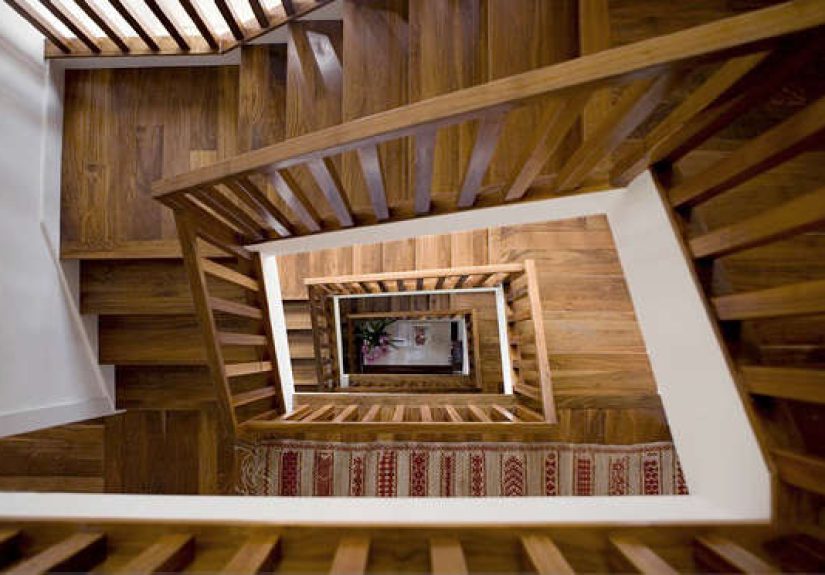
One of the most consistent threads in John Maniscalco’s work is the use of light not as decoration, but as structure. Skylights, glass-backed stair cores, carefully placed windows, atrium-like voids, and long visual connections appear again and again. This is especially powerful in San Francisco, where many homes are narrow, stacked, and wedged between neighboring buildings that are not exactly volunteering to share daylight.
The result is architecture that often feels larger than its square footage. Instead of relying on gimmicks, the firm tends to create spaciousness through verticality, transparency, and controlled openness. In plain English: fewer dark tunnels, more moments where the house breathes.
Views are framed, not just grabbed
San Francisco views can make architects behave like overexcited tourists with a new camera lens. Not here. John Maniscalco Architecture seems to prefer editing the view rather than shouting it from every window. Panoramas matter, of course, but so do selective glimpses, privacy, and the sequence of discovery. Some rooms open wide to the city, while others deliberately hold back and create a more intimate feeling. That push and pull is a big part of what gives the houses emotional range.
Modern design stays warm and livable
There is a reason the firm’s work appeals to both architecture people and people who just want a home that does not feel like a museum. Materials are modern, but not sterile. Cedar, limestone, walnut, travertine, concrete, glass, and metal appear in combinations that feel tactile rather than flashy. The spaces are precise, but not uptight. No room seems to be screaming, “Please do not touch the furniture; it is having a conceptual moment.”
Projects That Explain the Practice
Spruce Street Residence: a country house in the city
Spruce Street Residence is one of the clearest windows into the firm’s design intelligence. Set beside the Presidio parklands, the house grew out of an older property that required lengthy navigation through preservation review before it could be transformed. The final result turned that challenge into an opportunity. To make the most of the setting, the plan was flipped so the common spaces rose to the upper level, where views and daylight could do their best work.
The kitchen became both the light core and the spatial core of the house, opening upward through a large glass ceiling. That move says a lot about Maniscalco’s priorities. In many homes, the kitchen is the workhorse room. Here it also becomes a luminous organizing device. Even the materials were handled with restraint: pale surfaces, etched glass, quiet metal finishes, and a palette designed to feel serene rather than shouty. The primary bath followed the same logic, creating a spa-like room under a skylight with a close relationship to the adjacent garden. It is minimal, yes, but not in that “we removed joy” way. More in the “everything unnecessary was politely shown the door” way.
Russian Hill: the art of making a tight lot feel generous
If Spruce Street shows the firm at its most serene, the Russian Hill infill house shows it at its most strategic. The site came with severe physical and regulatory constraints, including planning rules, design guidelines, easements, and the ever-present issue of neighboring houses peering in from all directions. Instead of treating those limits as creative punishment, Maniscalco leaned into them.
The home stacked multiple stories within a highly optimized envelope, carved out terraces and recessed balconies, and used the vertical journey through the house to reveal bigger and better views as you moved upward. The street facade even reinterpreted the classic San Francisco bay window in a more modern language. That is a smart local move: not rejecting the city’s architectural vocabulary, but updating it. The project also achieved LEED Platinum, proving that technical performance and spatial elegance can, in fact, share the same address.
Tank Hill and Clarendon Heights: architecture at altitude
At higher elevations in San Francisco, the relationship between house and city becomes almost cinematic. John Maniscalco Architecture has handled that condition with unusual discipline. The Tank Hill Residence, widely noted for its hillside siting and layered views, balances expansive outlooks with private retreat. Large windows frame the city, but the house does not become all panorama, all the time. It modulates light, elevation, and volume so that the experience shifts from room to room.
That same sensitivity shows up in the Clarendon Heights Home highlighted by AIA San Francisco’s home tours. There, a generic 1970s box was transformed into a site-specific composition that capitalized on sweeping views through a series of subtractive gestures. That phrase may sound architectural, but the effect is easy to understand: instead of simply adding more house, the design strategically carved and shaped space so the site could finally speak.
Dolores Heights Residence: corner lot, cedar forms, changing light
The Dolores Heights Residence is another strong example of the studio’s ability to turn an odd site into an advantage. Located on a sloping double lot, the house uses deep overhangs and angular cedar forms to frame views and respond to shifting daylight. This is the kind of project that reminds you how much John Maniscalco Architecture cares about the choreography of living. A home is not just a set of rooms. It is a set of experiences that change by hour, season, and weather.
That attention to the daily life of architecture may be the studio’s quiet superpower. The houses do not simply photograph well. They appear designed to unfold well over time, which is harder and much more important.
What Stands Out on an Architect Visit
When you survey the firm’s work together, a few patterns stand out immediately. First, stairs matter. They are not merely circulation devices shoved into leftover square footage. They often act as vertical anchors, light wells, and moments of drama. Second, thresholds matter. The transition from street to entry, from enclosed room to view, from interior to garden, is treated with real care. Third, materials matter not because they are expensive, but because they clarify the architecture.
That clarity is part of what makes the work memorable. In many contemporary houses, you can feel the design trying very hard to impress you. In Maniscalco’s work, the impression tends to arrive more quietly. A stair catches light in just the right way. A window edits the horizon instead of dumping the entire skyline into your lap. A room feels calm because the palette was pared down before it started showing off. It is sophisticated architecture, but it rarely feels smug about it.
There is also an unusually consistent relationship between precision and comfort. The detailing is exacting, yet the atmosphere stays relaxed. That balance is not easy. Plenty of architects can do polished. Plenty can do cozy. Doing both without making one cancel out the other is where the skill really shows.
What Homeowners Can Learn from John Maniscalco Architecture
1. Constraints can improve the design
Narrow lots, steep grades, privacy concerns, and historic context do not have to lead to compromised results. In the best hands, they produce sharper thinking. The firm’s San Francisco work shows how limitations can lead to better sequencing, better framing, and more inventive use of light.
2. Bigger windows are not the only answer
Good design is not a contest to remove the most wall. Strategic glazing, skylights, internal transparency, and sectional thinking can bring in light more effectively than simply creating a giant sheet of glass and hoping for the best.
3. A calm material palette goes a long way
One reason these homes age well visually is that they avoid trend overload. Instead of throwing fifteen finishes into a room like a design reality show challenge, the firm often works with a smaller, quieter palette and lets proportion, texture, and light carry the space.
4. Site-specific design feels better to live in
Homes that respond to the actual place they occupy tend to feel richer and more grounded. You can sense that in Maniscalco’s work. The houses do not seem imported from a style catalog. They seem grown from their conditions.
Why John Maniscalco Architecture Matters in San Francisco
San Francisco architecture often lives in tension between preservation and reinvention. That can produce either wonderful complexity or complete design indigestion. John Maniscalco Architecture navigates that tension well. The work respects context without becoming nostalgic, and embraces modernism without turning it into a personality disorder. It is refined, responsive architecture that fits a city where every square foot has a story and every window wants an opinion.
That is why an architect visit focused on this studio is so rewarding. You come away with more than a list of handsome houses. You come away with a clearer sense of what thoughtful residential architecture can do in a difficult city: bring in light, create calm, honor views, protect privacy, and make everyday life feel just a little more graceful.
A Visitor’s-Eye Experience: What It Feels Like to Walk Through a John Maniscalco Home
Imagine arriving at one of these houses on a typical San Francisco day, where the sky cannot decide whether it wants to be silver, blue, or pure theatrical fog. From the street, the architecture often looks composed and self-contained. It does not overshare. It keeps a straight face. Then you step inside, and the mood changes.
The first sensation is usually not grandeur. It is orientation. You begin to understand where the light is coming from, where the stair wants to take you, where the private spaces pull back, and where the house plans to surprise you later. That slow reveal is one of the pleasures of the work. Instead of dropping every idea in the first thirty seconds, the architecture lets you discover it in sequence. Street. Entry. Turn. Light. Stair. View. Pause. Another view. A sliver of sky. A garden edge. A wall that looked solid from one angle now opens a long line across the home.
Then the details start doing their quiet work. A handrail feels deliberate rather than generic. A skylight does more than brighten a room; it changes your sense of height. A glass surface softens rather than glares. Wood tones warm a room that could have felt too austere if handled by a less disciplined studio. Even when the geometry is sharp, the emotional register stays soft.
What really lingers, though, is the relationship between shelter and openness. In a city as dense and visually active as San Francisco, total exposure can feel exhausting. John Maniscalco Architecture seems to understand that. These homes often give you a panoramic view in one place and a cocoon-like moment in the next. You are connected to the city, but not swallowed by it. You are aware of the landscape, the neighboring roofs, the changing weather, the long horizon lines, but you are also given corners of retreat. That balance is what makes the spaces feel deeply habitable rather than merely photogenic.
There is also a kind of lived intelligence in the way rooms connect. Kitchens feel central without becoming chaotic command centers. Stairs are memorable without becoming theatrical stunts. Bedrooms and baths often feel tucked into calmer zones, as if the house understands that daily life is made of changing energy levels, not one permanent state of design excitement. In that sense, a visit to a John Maniscalco home feels less like a tour through a style statement and more like a lesson in rhythm.
And maybe that is the best way to describe the overall experience. The architecture is confident, but it never seems desperate for applause. It trusts proportion, light, material, and sequence to do the talking. By the end of the visit, what stays with you is not one flashy object or one social-media-ready angle. It is the total atmosphere: calm, exacting, warm, and unmistakably shaped by San Francisco itself.
Conclusion
John Maniscalco Architecture stands out because it treats residential design as both a technical challenge and a human one. The firm’s San Francisco work proves that modern architecture can be precise without being cold, site-specific without being forced, and luxurious without losing its sense of everyday usefulness. From Presidio-facing reinventions to tight urban infill and hillside homes that negotiate views with real intelligence, the studio has built a body of work that feels disciplined, elegant, and very much of its place.
For anyone interested in San Francisco architecture, contemporary residential design, or simply the art of making difficult sites sing, an architect visit to John Maniscalco Architecture offers plenty to study. These are homes that do more than look good in photographs. They show how good design can make a complicated city feel brighter, calmer, and more beautifully lived in.