Table of Contents >> Show >> Hide
- Why Long-Distance Relationship Comics Feel So Relatable
- The Story Behind the Art: Love, Distance, and Daily Life
- The Struggles: What Long-Distance Love Really Asks of You
- The Joys: Why Distance Can Make Love Feel Bigger
- What Couples Can Learn From Tabby’s Long-Distance Relationship Illustrations
- Why Art Is the Perfect Language for Long-Distance Love
- Extra Experiences: What Long-Distance Love Feels Like From the Inside
- Conclusion
Long-distance relationships are a strange emotional sport. There is no official uniform, but most players own a suspicious number of screenshots, airport photos, countdown apps, and hoodies that technically belong to someone else. The rules are simple: love someone deeply, miss them constantly, communicate creatively, and try not to start a dramatic argument because a text message ended with a period instead of a heart emoji.
That tender, funny, occasionally ridiculous reality is exactly why the work of digital artist Tabby connected with so many people. Her webcomic series, often associated with Slice of Life, illustrates the struggles and joys of a long-distance relationship with warmth, honesty, and a sharp sense of everyday humor. Instead of turning distance into a grand tragedy, her comics zoom in on the tiny moments: falling asleep on video calls, counting the days until the next visit, hugging a pillow like it has legal personhood, and celebrating the simple miracle of finally being in the same room.
The result is more than cute relationship art. It is a visual diary of modern love, where Wi-Fi becomes a love language, time zones become villains, and a single “I miss you” can carry the emotional weight of a full orchestra. For readers who have lived through a long-distance relationship, Tabby’s illustrations feel less like drawings and more like evidence: “Yes, exactly. This is what it feels like.”
Why Long-Distance Relationship Comics Feel So Relatable
Great relationship comics work because they take private emotions and make them public without making them feel exposed. Long-distance love is especially suited to this kind of storytelling because it is full of visual contrasts. One person is wrapped in a blanket at midnight. The other is drinking morning coffee several states away. One partner is staring at a phone. The other is boarding a plane. One day feels painfully empty; the next visit feels like a holiday invented by the heart.
Tabby’s illustrations tap into those contrasts beautifully. They do not need complicated plotlines or dramatic speeches. The emotional punch often comes from a familiar setup: two people doing ordinary things while distance sits between them like an annoying third roommate who never pays rent. A text conversation can become a lifeline. A video call can feel like a date. A goodbye hug can look sweet to outsiders but feel like someone quietly removing a vital organ.
This is why long-distance relationship comics are shared so widely online. They give couples a shorthand. Instead of writing a five-paragraph essay about missing someone, a person can send a comic and say, “This is us.” That kind of recognition is powerful. It turns loneliness into community and makes the private weirdness of love feel normal.
The Story Behind the Art: Love, Distance, and Daily Life
Tabby, a digital artist from Illinois, became known for illustrations that documented the highs and lows of being away from a long-distance boyfriend. Her webcomic approach was personal, but it carried universal appeal. The drawings were not presented as polished fantasy. They felt lived-in, casual, and emotionally specificthe kind of art that understands both the romance of reunion and the comedy of trying to look cute on a glitchy video call.
Turning everyday moments into emotional snapshots
The phrase “slice of life” fits because the comics focus on small scenes rather than huge plot twists. In real relationships, especially long-distance ones, love often survives through details. Remembering a partner’s schedule. Sending a good-luck message before an exam. Watching the same movie while texting commentary. Keeping a silly inside joke alive for months. These moments may not sound cinematic, but they are the bricks that build emotional closeness.
Tabby’s work shows that distance does not erase intimacy; it changes its shape. A couple cannot always share a couch, but they can share routines. They cannot always hold hands, but they can hold space for each other. The art makes those invisible efforts visible.
The Struggles: What Long-Distance Love Really Asks of You
Long-distance relationships can be beautiful, but let’s not pretend they are powered entirely by moonlight and cute texts. They require patience, planning, emotional maturity, and sometimes the ability to explain why you fell asleep mid-call without sounding like a villain. Tabby’s illustrations resonate because they acknowledge the hard parts without making the relationship look hopeless.
1. Missing the ordinary, not just the romantic
People often think long-distance couples miss big romantic moments: anniversaries, dates, weekend trips, and dramatic airport reunions. They do, of course. But the deeper ache often comes from missing ordinary togetherness. Making breakfast. Running errands. Sitting in comfortable silence. Laughing at a bad TV show in real time. The boring stuff becomes precious when you cannot have it.
That is one of the strongest themes in long-distance relationship art. The sadness is not always theatrical. Sometimes it is simply seeing an empty side of the bed or wanting to tell your partner a tiny story that would have been funnier in person. Distance makes couples appreciate the unglamorous parts of closenessthe crumbs, the socks, the shared snacks, and the joy of not needing to schedule affection.
2. Communication pressure can get heavy
Communication is the backbone of a long-distance relationship, but it can also become a source of stress. When texting, calling, and video chats are the main ways to connect, every message can feel unusually important. A delayed reply may trigger worry. A short answer may sound colder than intended. A missed call can become a full emotional weather event.
This is why healthy long-distance communication needs both consistency and flexibility. Couples benefit from regular check-ins, but they also need room to be human. Nobody can be charming, emotionally available, and fully charged at all times. A strong relationship makes space for “I love you, but my brain is mashed potatoes tonight.”
3. Time zones and schedules become tiny monsters
Even when partners live in the same country, schedules can clash. Work shifts, school deadlines, family obligations, and travel costs can make connection difficult. Add time zones, and suddenly romance requires math. One person is ready for a deep conversation while the other is brushing their teeth with one eye closed.
Long-distance couples often learn to become logistical experts. They plan calls, visits, budgets, and backup plans. The calendar becomes a relationship tool. It may not sound romantic, but nothing says “I love you” like remembering that your partner has a busy Tuesday and sending encouragement before the chaos begins.
4. Jealousy and insecurity can sneak in
Distance leaves room for imagination, and imagination is not always kind. If a partner goes quiet, the mind may start writing a soap opera with no evidence and terrible lighting. Trust becomes essential because couples cannot rely on physical presence to soothe every doubt.
Tabby’s comics capture this emotional vulnerability with humor and softness. The fear of being forgotten, replaced, or misunderstood is real. But the solution is rarely surveillance or constant questioning. It is honest conversation, clear expectations, reassurance, and the shared decision to protect the relationship instead of letting insecurity drive the bus.
5. Goodbyes hurt every time
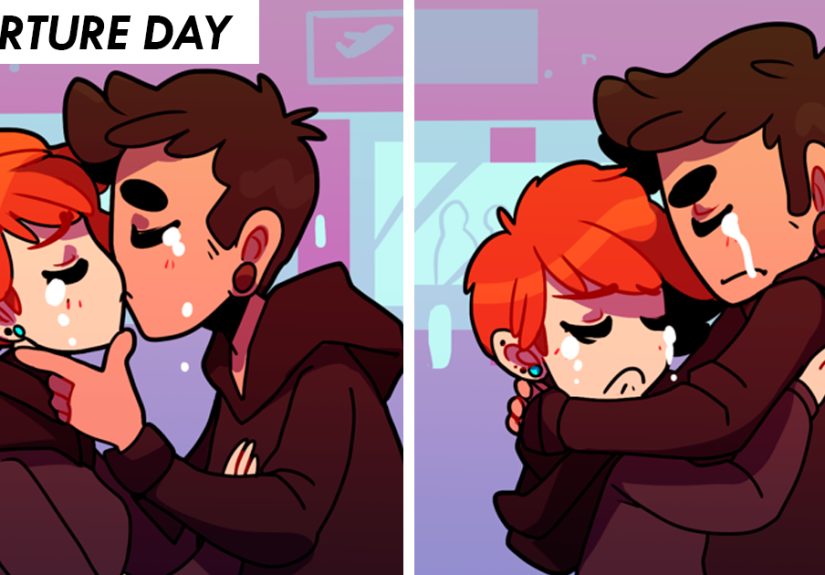
In a close-distance relationship, leaving after a date usually means “See you soon.” In a long-distance relationship, goodbye may mean weeks or months apart. Airports, train stations, and car windows become emotional landmarks. Even a happy visit can carry the sadness of its ending.
This bittersweet cycle appears often in long-distance relationship illustrations because it is one of the most recognizable parts of the experience. The reunion is electric. The last day is tender and strange. The goodbye is awful. Then the countdown begins again, because love is apparently both a feeling and a scheduling challenge.
The Joys: Why Distance Can Make Love Feel Bigger
For all its challenges, long-distance love has a surprising amount of joy. Many couples discover that distance forces them to become more intentional. They cannot coast on proximity. They have to choose connection, build trust, and make small moments count. That effort can create a relationship that feels deeply meaningful.
Reunions feel like fireworks in sweatpants
One of the sweetest parts of a long-distance relationship is the reunion. The first hug after weeks apart can make every delayed flight, awkward call, and lonely night feel worth it. There is a heightened appreciation for presence. Sitting next to each other becomes exciting. Grocery shopping together becomes adorable. Even doing nothing feels like a luxury vacation.
Tabby’s art understands this emotional high. The joy is not always glamorous. Sometimes the happiest scene is simply two people curled up together, finally free from screens. That is the magic: distance turns ordinary closeness into treasure.
Couples develop creative rituals
Long-distance couples are often surprisingly inventive. They watch shows together while texting. They mail letters, gifts, snacks, drawings, and tiny inside jokes. They create playlists. They fall asleep on calls. They celebrate mini-anniversaries. They send photos of lunch because “I wish you were here” sometimes looks like a sandwich.
These rituals matter because they create shared life across separate spaces. They say, “You are part of my day even when you are not physically in it.” That message is the emotional glue of long-distance love.
Distance can strengthen independence
A healthy long-distance relationship does not require partners to pause their lives until they are reunited. In fact, one of the hidden benefits is that both people can grow individually. They can pursue school, careers, friendships, hobbies, and personal goals while staying emotionally connected.
This independence can make the relationship stronger. Each partner brings new stories, skills, and confidence back into the bond. The best long-distance relationships are not about waiting sadly by the phone forever. They are about building two full lives that still make room for one shared future.
What Couples Can Learn From Tabby’s Long-Distance Relationship Illustrations
The popularity of Tabby’s comics comes from more than cuteness. They offer quiet relationship lessons without sounding like a lecture from someone holding a clipboard. Here are some of the biggest takeaways.
Talk about expectations before resentment grows
Couples should discuss what they need from each other: how often they want to communicate, what exclusivity means, how visits will be planned, and what the long-term goal looks like. Expectations do not have to be rigid, but they should be spoken. Unspoken expectations are basically relationship booby traps wearing tiny hats.
Use more than one kind of communication
Texting is useful, but tone can get lost. Voice calls, video chats, photos, letters, and shared activities all add different kinds of closeness. A sweet voice message can feel more personal than a paragraph. A silly selfie can lighten a heavy day. A handwritten note can become a keepsake.
Make room for conflict without panic
Arguments happen in every relationship. In long-distance relationships, conflict can feel scarier because partners cannot always repair it with a hug or a face-to-face conversation. That makes calm repair especially important. Instead of treating every disagreement like a crisis, couples can learn to say, “We are upset, but we are on the same team.”
Plan visits and future milestones
A long-distance relationship feels easier when there is something to look forward to. It does not always have to be a major move or a perfect plan, but couples benefit from shared direction. The next visit, the next trip, the next conversation about closing the distancethese milestones create hope.
Keep humor alive
Humor is underrated relationship medicine. Long-distance love comes with awkward screenshots, frozen faces on video calls, bad timing, dramatic pets interrupting conversations, and the occasional “Can you hear me?” repeated like a sacred chant. Laughing together helps couples stay connected when the situation is frustrating.
Why Art Is the Perfect Language for Long-Distance Love
Art can express what advice articles sometimes cannot. A comic panel can show loneliness, affection, frustration, and hope all at once. It can make a reader laugh before they realize they are a little emotional. That is why relationship illustrations travel so well online: they bypass over-explanation and go straight to recognition.
Tabby’s long-distance relationship comics succeed because they honor both sides of the experience. They do not pretend distance is easy, but they also do not treat it as doomed. They show love as something practical and tender: a daily choice made through messages, plans, patience, jokes, and the stubborn belief that the miles are not stronger than the connection.
For artists, this kind of work also proves the value of personal storytelling. The more specific a story feels, the more universal it can become. A comic about one couple’s bedtime call may remind thousands of readers of their own late-night conversations. A drawing about missing someone may become a shared emotional mirror. That is the quiet power of slice-of-life art.
Extra Experiences: What Long-Distance Love Feels Like From the Inside
Anyone who has been in a long-distance relationship knows that the experience is not one emotion; it is a whole emotional weather system. Some days are sunny. Some days are foggy. Some days you are one unread message away from becoming a detective with absolutely no license. The funny thing is that the relationship can feel strongest and hardest at the same time.
One common experience is the strange intimacy of routine. Maybe every night ends with a call, even if both people are too tired to say anything profound. One partner folds laundry while the other cooks dinner. The conversation wanders from serious plans to random complaints about a neighbor’s dog. It may not look romantic from the outside, but for the couple, it feels like sharing a room made of sound.
Another familiar experience is the countdown. Long-distance couples often live by dates: 27 days until the visit, 10 days until the flight, 3 hours until the call. The countdown can be exciting, but it can also make time feel slower. A week can stretch like taffy when you are waiting to see someone you love. Then, once you are together, time becomes rude and sprints like it has somewhere better to be.
There is also the emotional comedy of objects. A hoodie becomes sacred. A mug from a trip becomes a tiny monument. A printed photo becomes desk decor, emotional support, and proof that the relationship exists outside a phone screen. These objects matter because they bring physical texture to a relationship that often lives digitally.
Long-distance love also teaches couples the difference between attention and availability. A partner may not always be free, but they can still be attentive. A quick “thinking of you” message before a meeting can mean more than an hour-long call filled with distraction. The goal is not constant contact. The goal is meaningful contact.
Then there are the visits. The first few minutes together can feel almost unreal, as if the person from the screen has stepped into the room in full human form. You notice details the camera never captured: the way they laugh under their breath, how warm their hand feels, how nice it is to walk side by side without holding a device. For a little while, the relationship becomes simple. No buffering. No battery percentage. No time-zone math. Just two people, finally together.
But the goodbye always waits. That is the hardest part. Still, many couples learn to treat goodbye not as an ending but as proof of commitment. It hurts because the connection matters. The sadness is real, but so is the choice to keep going. In that way, long-distance relationships are not just about missing someone. They are about practicing hope with discipline.
This is why Tabby’s illustrations continue to feel meaningful. They capture the private rituals, the silly coping mechanisms, the ache of separation, and the joy of reunion. They remind readers that long-distance love is not a lesser version of love. It is love with extra paperwork, stronger Wi-Fi needs, and a surprising amount of courage.
Conclusion
Artist Illustrates Her Long Distance Relationship Struggles And Joys is more than a charming headline. It describes a form of storytelling that turns distance into something visible, funny, and deeply human. Through Tabby’s slice-of-life relationship comics, readers see the real emotional texture of loving someone from far away: the missed hugs, the late-night calls, the calendar planning, the airport tears, and the ridiculous joy of finally sharing the same space.
Long-distance relationships are not easy, but they are not automatically tragic either. With trust, clear communication, shared goals, humor, and genuine effort, distance can become a chapter rather than a sentence. Tabby’s illustrations remind us that love is not measured only in miles or minutes spent together. Sometimes it is measured in patience, creativity, and the ability to make someone feel close even when they are far away.