Table of Contents >> Show >> Hide
- The U-2 Dragon Lady: A Cold War Legend That Refused to Retire
- Why the U-2 Still Matters in the Age of Satellites and Drones
- The New Trick: Turning the U-2 Into a Digital Battlespace Node
- What Is the U-2 Avionics Tech Refresh?
- The U-2 and Kubernetes: Yes, Really
- New Sensors Keep the Dragon Lady Relevant
- Why Teaching an Old Aircraft New Tricks Makes Sense
- The Irony of Modernizing a Plane Near Retirement
- Flying the U-2 Is Still Not for the Faint of Heart
- What the U-2’s New Trick Says About the Future of Airpower
- Lessons From the Dragon Lady
- Experience-Based Reflection: What the U-2 Story Feels Like in the Real World
- Conclusion: The Dragon Lady’s Final Lesson
Most aircraft are expected to age the way milk ages: quietly, unfortunately, and preferably out of sight. The Lockheed U-2 Dragon Lady did not get that memo. More than six decades after it first slipped into the sky as a secret Cold War spy plane, the U-2 is still doing something unusual for a machine born in the Eisenhower era: learning.
The phrase “At 64 Years Old, the U-2 Learns a New Trick” sounds like a clever headline, but it also captures a real shift in how the U.S. Air Force has used one of its strangest and most valuable aircraft. The new trick is not a faster engine or a coat of stealth paint. It is something more modern: open architecture, upgraded avionics, advanced mission computers, new sensors, networking, and even airborne software experiments that make the U-2 less like a traditional spy plane and more like a flying data hub.
In plain English, the Dragon Lady is being taught how to plug into the digital battlefield. Not bad for an aircraft that still needs a chase car to help it land.
The U-2 Dragon Lady: A Cold War Legend That Refused to Retire
The U-2 was designed by Lockheed Skunk Works under the legendary Clarence “Kelly” Johnson. Its original mission was simple to describe and incredibly difficult to execute: fly higher than enemy defenses could reach and collect intelligence from the edge of space. The first U-2A flew in August 1955, and by the late 1950s, U-2 missions were giving U.S. leaders critical information about Soviet military capabilities.
The aircraft became famous, and sometimes infamous. U-2 imagery helped reveal Soviet missile deployments in Cuba in 1962, contributing to one of the most intense moments of the Cold War. The airplane was also at the center of the 1960 Francis Gary Powers incident, when a U-2 was shot down over the Soviet Union. For most aircraft, that kind of history would be enough for a museum plaque, a glossy coffee-table book, and a quiet retirement under dramatic lighting.
But the U-2 did not retire. It evolved.
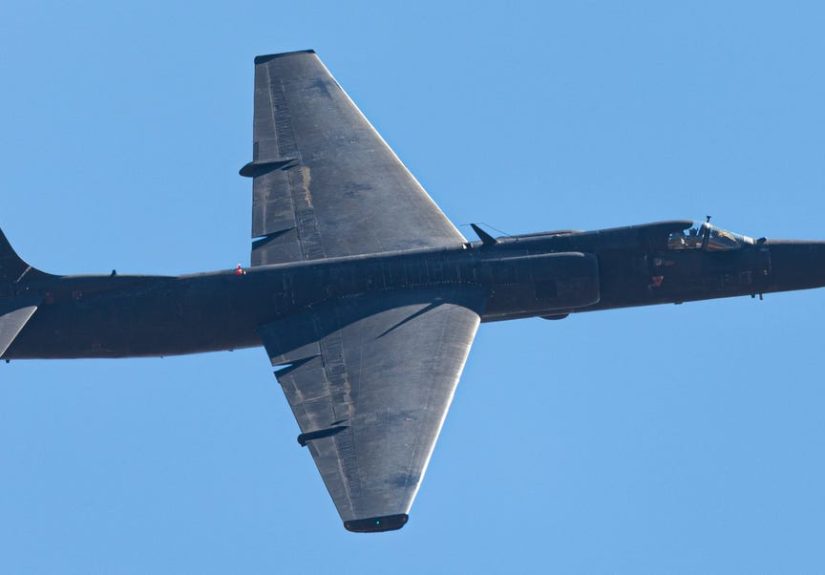
The modern U-2S is not the same aircraft that first flew in the 1950s. It has been re-engined, re-equipped, and repeatedly upgraded for intelligence, surveillance, and reconnaissance missions. The U.S. Air Force describes the U-2 as a high-altitude, all-weather surveillance and reconnaissance aircraft capable of supporting U.S. and allied forces day or night. It can carry powerful sensors, gather imagery and signals intelligence, and operate at altitudes above most conventional air traffic.
Why the U-2 Still Matters in the Age of Satellites and Drones
It is fair to ask: why keep flying a pilot-operated spy plane when satellites orbit overhead and unmanned aircraft can stay aloft for long periods? The answer is flexibility. Satellites are extraordinary tools, but they follow orbital paths. Drones are useful, but they may be limited by speed, altitude, airspace access, and survivability. The U-2 occupies a strange but valuable middle ground.
It flies extremely high. It can carry different sensor packages. It can be redirected more easily than many space-based systems. It can collect vast amounts of data over wide areas. And because it has a pilot onboard, it can still adapt in real time when a mission changes. In the intelligence world, that flexibility matters. A lot.
The U-2’s greatest strength has always been its ability to lift a serious payload to serious altitude. That makes it a useful platform for cameras, radar, communications gear, signals intelligence systems, and experimental technologies. The airframe may be old, but the mission equipment does not have to be. Think of it as a classic pickup truck that somehow got fiber internet, a new dashboard, and a software development team riding in the bed.
The New Trick: Turning the U-2 Into a Digital Battlespace Node
The U-2’s new trick is tied to a broader defense technology idea: connect everything, share data faster, and let commanders see the battlefield across air, land, sea, space, and cyber domains. In military language, this often appears under phrases like Joint All-Domain Operations, Advanced Battle Management System, open mission systems, and command-and-control networking.
In practical terms, the goal is to make aircraft less like isolated machines and more like smart devices in a highly secure combat network. The U-2 is being modernized so it can collect data, process data, share data, and integrate new capabilities more quickly.
The biggest step in that direction is the Avionics Tech Refresh, often shortened to ATR. Lockheed Martin and the U.S. Air Force completed the first flight of the U-2 Dragon Lady’s ATR program in 2023. That test flight checked new avionics, cabling, and software, and it demonstrated the aircraft’s path toward a more open, upgradeable future.
What Is the U-2 Avionics Tech Refresh?
The Avionics Tech Refresh is a modernization program designed to update the U-2’s onboard systems. It includes a modern avionics suite, improved cockpit displays, new communications and navigation features, and a mission computer built around open architecture standards.
That last part is especially important. Open architecture does not mean the aircraft is “open” in the casual consumer-tech sense. Nobody is downloading random apps to a spy plane while sipping coffee at altitude. It means the aircraft’s systems are designed to accept upgrades more quickly and integrate with other platforms more easily. Instead of custom-building every new capability from scratch, engineers can create a more modular path for future improvements.
For the U-2, this is a big deal. An aircraft that was once designed around film cameras and Cold War secrecy is being reshaped for a world of software, data links, sensor fusion, and rapid upgrades. The new mission computer helps the aircraft work within the U.S. Air Force’s Open Mission Systems approach, which is intended to make platforms more adaptable across changing mission needs.
Better Displays, Less Pilot Workload
Flying the U-2 is famously difficult. The aircraft has long, glider-like wings, a bicycle-style landing gear arrangement, and unusual handling characteristics. At high altitude, pilots operate in a pressure suit, managing a demanding aircraft while also supporting complex intelligence missions. That is not exactly the same as commuting in a midsize sedan.
Modern cockpit displays and upgraded avionics can help reduce pilot workload. Better information presentation matters when the pilot must manage aircraft performance, mission systems, navigation, communications, and safety in a high-altitude environment. The ATR upgrade is not just about shiny screens. It is about making the aircraft easier to operate in missions where the amount of incoming information can be enormous.
Open Mission Systems: The Real Superpower
Open Mission Systems, or OMS, may sound like the kind of phrase that appears on a conference slide right before everyone reaches for more coffee. But the concept is powerful. It allows aircraft and mission systems to be designed around common standards, making it easier to plug in new software, sensors, and capabilities.
For the U-2, OMS compliance means the Dragon Lady can serve as a testbed and operational platform for future battlespace technologies. It can connect with other systems and support faster experimentation. In a world where software can change faster than hardware, that adaptability is essential.
The U-2 and Kubernetes: Yes, Really
One of the most interesting examples of the U-2 learning a new trick came in 2020, when Lockheed Martin conducted a flight test using Kubernetes containerization technology onboard a U-2. Kubernetes is widely known in cloud computing for managing software containers. Seeing it associated with a high-altitude spy plane is a little like finding out your grandfather has been quietly running a data center in the garage.
The point of that test was not to turn the U-2 into a Silicon Valley startup with wings. It was to explore how distributed processing and containerized software could help deliver new mission capabilities to airborne platforms more quickly. Modern military aircraft increasingly depend on software. The faster and more securely that software can be developed, tested, deployed, and updated, the more responsive the aircraft can be to new threats and mission requirements.
That experiment showed why the U-2 remains valuable beyond traditional reconnaissance. Because it flies high, carries significant payloads, and has room for sophisticated systems, it can serve as a flying laboratory for new digital warfare concepts. The U-2 is not just watching the battlefield; it is helping test how future aircraft may process and share information.
New Sensors Keep the Dragon Lady Relevant
Avionics are only part of the story. The U-2 has also benefited from sensor modernization. Advanced imaging, radar, signals intelligence, and infrared systems keep the aircraft useful in missions that require detailed collection from high altitude.
One important area is radar. Air & Space Forces Magazine has reported on the ASARS-2B/C radar upgrade, which improves the U-2’s high-altitude ground mapping, moving target, and maritime capabilities while moving toward an open, more upgradeable architecture. That matters because modern intelligence is not just about taking pictures. It is about detecting movement, mapping terrain, tracking activity, and feeding useful information into larger command networks.
The U-2 has also received imaging upgrades, including improvements to electro-optical reconnaissance systems. These upgrades help the aircraft continue collecting relevant intelligence even as the battlefield becomes more complex and contested.
Why Teaching an Old Aircraft New Tricks Makes Sense
Modernizing an old aircraft can sound counterintuitive. Why spend money upgrading a platform that may be retired soon? The answer depends on what the upgrade teaches, not just how long the aircraft flies afterward.
The U-2 offers a rare combination: altitude, payload capacity, electrical power, mission flexibility, and decades of operational experience. That makes it useful not only as a working reconnaissance aircraft but also as a bridge to the future. Technologies tested on the U-2 can inform upgrades for other aircraft and future platforms.
In other words, the U-2 can help the Air Force learn how to integrate open systems, software-defined capabilities, and cross-domain data sharing before those ideas are fully deployed across newer fleets. It is a classroom at 70,000 feet. The tuition is probably expensive, but the view is excellent.
The Irony of Modernizing a Plane Near Retirement
The U-2’s future has been debated for years. The Air Force has considered retiring it multiple times, especially as space-based intelligence and unmanned aircraft have grown more capable. Recent budget discussions have pointed toward retirement in the second half of the 2020s, although exact timelines can shift depending on congressional decisions, operational needs, and replacement capabilities.
That makes the U-2’s modernization story feel almost poetic. Here is an aircraft that may be approaching the end of its service life, yet it is still receiving new digital tools. It is like watching a 64-year-old marathon runner buy a smartwatch, update the training plan, and casually pass younger runners on a hill.
But the irony is not wasteful. If the U-2 helps prove technologies that can move to future platforms, then modernization has value even beyond the airframe itself. The Dragon Lady’s final act may be to teach the next generation of aircraft how to think, connect, and adapt.
Flying the U-2 Is Still Not for the Faint of Heart
No discussion of the U-2 is complete without appreciating how demanding it is to fly. The aircraft’s long wings give it extraordinary lift, but they also make landing difficult. U-2 landings are famously assisted by chase cars, driven by another pilot who radios altitude callouts to the pilot in the aircraft. NASA’s ER-2, a close relative of the U-2 used for high-altitude science missions, has used similar chase-car support.
The U-2 pilot wears a full pressure suit because the aircraft operates at extreme altitude. Before flights, pilots go through careful preparation to reduce the risk of decompression sickness. In the cockpit, they work in an environment that feels closer to spaceflight than normal aviation. The aircraft may be old, but flying it is still elite work.
That human element makes the U-2’s modernization more interesting. New avionics and mission systems are not just abstract technology upgrades. They can directly affect how pilots manage information, workload, and mission complexity. Better systems can make a hard aircraft slightly less punishing and a complex mission more manageable.
What the U-2’s New Trick Says About the Future of Airpower
The U-2’s transformation reveals a major truth about modern airpower: the aircraft itself is only part of the weapon system. Data is now central. Sensors, networks, processors, and software updates can matter as much as speed or altitude.
In older eras, aircraft upgrades often focused on engines, weapons, range, or survivability. Those still matter. But today, the ability to collect, process, and share information quickly may determine whether a force can act before an adversary does. The U-2’s modernization shows that even an old airframe can remain strategically useful if it becomes a better information platform.
This also explains why open systems are so important. The battlefield changes quickly. Threats evolve. Sensors improve. Software advances. A closed, hard-to-upgrade platform can become obsolete even if it still flies beautifully. An open, modular platform has a better chance of adapting.
Lessons From the Dragon Lady
The U-2 teaches several lessons that go beyond aviation history. First, good design lasts. Kelly Johnson and Skunk Works created an aircraft so specialized and effective that engineers are still finding ways to use it decades later.
Second, modernization is not always about replacing the old with the new. Sometimes it is about combining the proven with the possible. The U-2’s airframe provides altitude and payload. Modern software and sensors provide relevance. Together, they create a platform that still has something to offer.
Third, adaptability beats nostalgia. The U-2 is beloved by aviation enthusiasts, but affection alone does not keep aircraft in service. The Dragon Lady survives because it can still perform useful missions, support experiments, and help bridge the gap between today’s ISR needs and tomorrow’s connected battlespace.
Experience-Based Reflection: What the U-2 Story Feels Like in the Real World
Anyone who has worked around older machines, legacy systems, or long-running technology programs can understand the U-2 story on a human level. There is a special kind of respect that grows around equipment that simply refuses to become irrelevant. It may creak, it may demand careful handling, and it may require parts that are harder to find than a polite comment section online, but it keeps doing the job.
The U-2’s modernization feels familiar because many industries face the same challenge. Hospitals run critical systems that were designed years ago but now need cybersecurity upgrades. Factories rely on older machines that still outperform newer equipment in specific tasks. Businesses use legacy software that nobody wants to touch until the day it becomes essential. The question is always the same: do you replace it, retire it, or teach it something new?
The U-2 shows that “old” and “obsolete” are not the same thing. An old system becomes obsolete when it can no longer adapt to the mission. But if its core strengths remain valuable, modernization can extend its usefulness in surprising ways. The Dragon Lady still has altitude. It still has payload. It still has a mission. By adding modern avionics, open systems, and new software concepts, engineers are not pretending the aircraft is young. They are making its age work for it.
There is also a leadership lesson here. Organizations often chase shiny replacements because new technology feels cleaner than upgrading old systems. New platforms come with glossy renderings, bold promises, and fewer awkward maintenance stories. But the practical choice is not always the glamorous one. Sometimes the smartest move is to upgrade what already works while preparing for what comes next.
That is exactly what makes the U-2 fascinating. It is not simply surviving because of nostalgia. It is being used as a bridge. Its upgrades help pilots, engineers, and commanders test ideas that may influence future aircraft. The U-2 is like the experienced employee who has seen every crisis, knows where the weird cables are stored, and suddenly learns the newest software tool faster than everyone expected.
From a storytelling perspective, the Dragon Lady also reminds us that innovation is not always sleek. Sometimes it wears a pressure suit. Sometimes it lands with help from a chase car. Sometimes it is a 1950s aircraft testing modern software practices that sound more at home in a cloud computing conference than a military flight line. That contrast is what makes the U-2 so compelling.
For readers, the broader takeaway is simple: reinvention does not require starting over. Whether the subject is an aircraft, a company, a career, or a personal skill set, the ability to adapt can keep something valuable in the game long after others have counted it out. The U-2 may eventually retire, but it will not leave quietly. It will leave as a machine that kept learning until the end.
Conclusion: The Dragon Lady’s Final Lesson
At 64 years old, the U-2 learned a new trick by becoming more than a high-altitude spy plane. Through the Avionics Tech Refresh, open mission systems, advanced sensors, digital networking, and software experiments, the Dragon Lady has become a symbol of how legacy platforms can remain relevant in a fast-changing defense environment.
The aircraft’s future may be limited, but its influence is not. The U-2 has already shaped the history of intelligence gathering, and now it is helping shape the future of connected, software-driven airpower. That is a remarkable second act for an aircraft born in secrecy, flown at the edge of space, and still stubbornly useful after all these years.
The Dragon Lady may be old, but she is not done teaching.