Table of Contents >> Show >> Hide
- Who Is Ýrúrarí?
- Why These Face Masks Went Viral
- The Art of Making a Mask That Refuses to Be Boring
- 12 Viral Mask Moments Worth Noticing
- 1. The Braces Smile
- 2. The Giant Tongue
- 3. The Monster Mouth
- 4. The Lopsided Expression
- 5. The Tongue-as-Accessory Look
- 6. The Full-Face Surprise
- 7. The Cartoon Teeth
- 8. The Playful Discomfort
- 9. The Social Distancing Joke
- 10. The Handmade Texture
- 11. The Upcycled Spirit
- 12. The Smile Behind the Mask
- Not Protective Equipment, But Still Meaningful
- Why Knitting Was the Perfect Medium
- The Deeper Message: Humor Is a Design Tool
- How Ýrúrarí’s Masks Fit Into Sustainable Fashion
- What Creators Can Learn From the Viral Series
- Experience Notes: What This Viral Mask Project Teaches Us
- Conclusion
Note: This body-only HTML article is written for web publication, with clean markup, no source-link blocks, and no contentReference tags.
Some artists make fashion. Some artists make sculpture. Ýrúrarí, the Icelandic textile artist also known as Ýr Jóhannsdóttir, somehow managed to knit both into a face mask and then add a giant tongue for good measure. Her unconventional take on face masks went viral because it arrived at exactly the right cultural moment: a time when the world was staring at cloth coverings, surgical masks, homemade patterns, and anxious headlines, wondering whether personal style had quietly left the building.
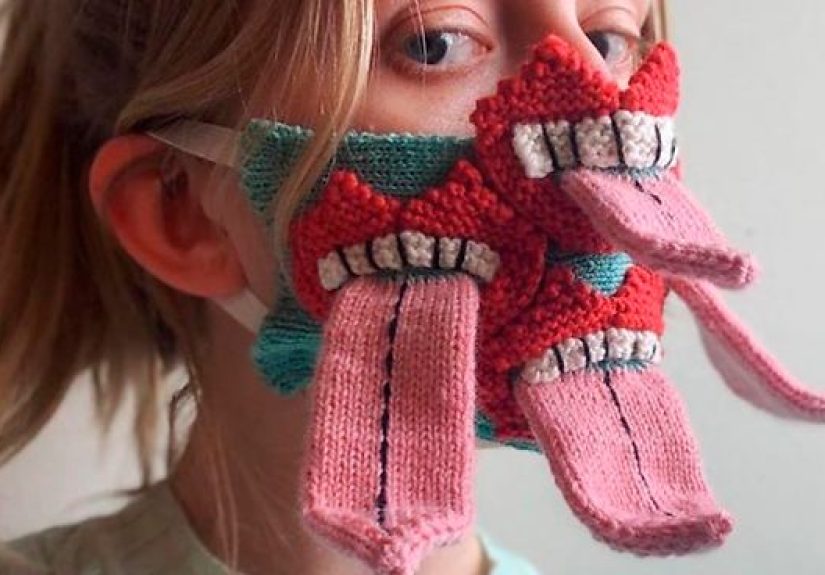
Then came Ýrúrarí’s masksmouth-themed, woolly, surreal, funny, and just odd enough to make you pause mid-scroll. These were not basic black masks or floral cotton coverings stitched from leftover fabric. They were wearable art objects with exaggerated teeth, floppy tongues, monster mouths, braces, cartoonish lips, and playful textures. In other words, they were the kind of masks that looked like they had eaten the mask-wearing trend and then stuck their tongue out at it.
The important thing to understand is that these knitted face masks were never presented as medical-grade protection. Ýrúrarí has described them as spontaneous objects made during isolation, more emotional survival tool than protective equipment. That distinction matters. The masks were not trying to replace proper health guidance; they were trying to turn a shared global symbol of fear and separation into something strange, expressive, and oddly joyful.
Who Is Ýrúrarí?
Ýrúrarí is the creative name of Ýr Jóhannsdóttir, a Reykjavík-based textile artist and designer known for transforming knitwear into whimsical, body-bending, sometimes delightfully ridiculous wearable art. Her work often features mouths, tongues, fingers, eyes, exaggerated gestures, and mischievous shapes that make ordinary clothing feel alive. A sweater is no longer just a sweater in her hands. It may become a creature, a joke, a sculpture, or a conversation starter with sleeves.
Her background in textile design helps explain the technical confidence behind the humor. Ýrúrarí studied textile design in Iceland and later earned a BA in textile design from the Glasgow School of Art. But the real magic of her work is not just training; it is personality. Her pieces often sit between fashion, costume, performance, and visual punchline. They are wearable, but they do not quietly behave like clothes. They wave, grin, drool, stretch, and interrupt.
Before her viral face masks, Ýrúrarí had already explored tongue-covered sweaters and playful garment makeovers. She is especially known for giving unwanted or damaged clothing a second life through creative mending and upcycling. Instead of hiding a hole, she may turn it into a mouth. Instead of pretending a sweater is still “normal,” she lets it become the weirdest version of itself. That approach makes her work especially relevant in an era when sustainable fashion is no longer a niche conversation but a serious design challenge.
Why These Face Masks Went Viral
The masks went viral because they hit several internet sweet spots at once. First, they were instantly visual. You did not need an art history degree, a design vocabulary, or a long caption to understand the joke. A knitted mask with a giant tongue is not exactly subtle. Second, the timing was perfect. During the early COVID-19 period, face masks became one of the most visible objects in everyday life. People were scared, confused, isolated, and spending more time online. Something funny, strange, and handmade had unusual emotional power.
Third, the masks changed the meaning of covering a face. A regular mask hides expression. Ýrúrarí’s masks replaced hidden expression with exaggerated expression. Instead of a neutral surface, she created faces that were too expressive to ignore. The masks smiled, grimaced, licked, stretched, and teased. They were not “masking” the face so much as turning the face into a stage.
That is why the series traveled so well across social media and design blogs. A person scrolling quickly through images could instantly recognize the tension: face masks had become practical, serious, and emotionally heavy, while Ýrúrarí made them silly, sculptural, and unforgettable. The contrast was the hook.
The Art of Making a Mask That Refuses to Be Boring
At first glance, these masks look like a jokeand they are funny. But they are also carefully made. Knitting a three-dimensional tongue or a set of cartoon teeth is not the same as knitting a scarf while half-watching a cooking show. These pieces require shaping, layering, color choices, hand-finishing, and a strong sense of proportion. The humor works because the craft holds it together.
Many of the viral masks play with the mouth as a symbol. Mouths are expressive, social, rude, vulnerable, and a little strange. They smile, speak, eat, shout, whisper, and stick out tongues when words fail. During the pandemic, the mouth became both central and hidden. It was the part of the body people were asked to cover, the source of worry, and the missing piece in everyday social interaction. Ýrúrarí’s masks took that absence and exaggerated it until it became comedy.
In one look, a mouth stretches across the lower face with oversized teeth and braces. In another, a tongue curls outward like it is trying to escape quarantine before the rest of the body gets permission. Some masks feel monster-like; others are more cartoonish. A few look like friendly creatures that have misunderstood the assignment but showed up with enthusiasm anyway. Together, the collection turns mask-wearing into a visual performance.
12 Viral Mask Moments Worth Noticing
The original viral appeal came from the image seriesthe “12 pics” effect. Each mask offered a slightly different personality. Rather than simply repeating one idea, Ýrúrarí explored how many moods a knitted mouth could have. Here are the design ideas that made the collection so memorable.
1. The Braces Smile
The braces mask may be one of the most internet-friendly pieces in the series. It takes an everyday dental detail and blows it up into a comic statement. The result is awkward, charming, and strangely nostalgic, like middle school yearbook anxiety turned into high art.
2. The Giant Tongue
A long knitted tongue is funny because it breaks the expected boundary of the face. It turns a mask into a gesture. Instead of silently covering the mouth, the object seems to say, “Yes, I am a mask, but I also have opinions.”
3. The Monster Mouth
Some designs use jagged teeth and bold colors to create a creature-like effect. These masks work because they make social distancing visual. You do not need a sign that says “please give me space” when your face covering looks ready to bite the air.
4. The Lopsided Expression
Not every mask is symmetrical or polished in a conventional fashion sense. The lopsided designs feel more alive, as though the face has been caught mid-reaction. That imperfection gives the work personality.
5. The Tongue-as-Accessory Look
In some pieces, the tongue becomes almost like a scarf, fringe, or decorative add-on. It shows how Ýrúrarí treats body parts as design elements, not just anatomical references.
6. The Full-Face Surprise
Some masks move beyond the lower face and begin to feel closer to balaclavas or soft sculptures. These pieces blur the line between fashion accessory and performance costume.
7. The Cartoon Teeth
Teeth are a perfect design detail because they can be cute, creepy, comic, or dramatic depending on scale. Ýrúrarí uses them like punctuation marks.
8. The Playful Discomfort
The masks are funny partly because they are a little uncomfortable to look at. They remind us that humor does not always have to be pretty. Sometimes it can be woolly, toothy, and slightly unhinged.
9. The Social Distancing Joke
During a period when everyone was learning to keep distance, these masks turned distance into a joke. If a giant tongue does not create personal space, what will?
10. The Handmade Texture
The knitted texture matters. A printed tongue on fabric would not have the same charm. The softness of wool makes the weirdness feel warmer and more human.
11. The Upcycled Spirit
Ýrúrarí’s broader practice often involves extending the life of old garments. That sustainable mindset gives her playful pieces a deeper design message: fashion can be imaginative without constantly demanding new materials.
12. The Smile Behind the Mask
The most powerful idea may be the simplest. At a time when real smiles were hidden, Ýrúrarí created masks that smiled for peopleloudly, weirdly, and with spectacularly strange dental energy.
Not Protective Equipment, But Still Meaningful
One of the most important SEO-friendly clarifications for this topic is also the most practical: Ýrúrarí’s knitted masks are art pieces, not medical masks. They were not designed to prevent illness, filter particles, or replace properly fitted protective face coverings. That does not make them less valuable. It simply means their value belongs to a different category.
They belong to the world of emotional design. During crisis, people do not only need tools; they also need symbols, humor, rituals, and ways to process uncertainty. A handmade object can become a coping mechanism. A funny mask can make isolation feel slightly less heavy. A strange face covering can remind viewers that creativity does not wait politely for perfect conditions. Sometimes it appears in the middle of stress, holding knitting needles and making a monster mouth.
This is where the project becomes more than a viral oddity. It shows how artists respond to shared fear by reshaping the objects around them. Face masks were everywhere, so Ýrúrarí transformed the face mask into a canvas. The result was not medical advice. It was a mood, a protest against blandness, and a small act of joy.
Why Knitting Was the Perfect Medium
Knitting carries a built-in sense of comfort. It suggests warmth, patience, care, and human touch. That softness is exactly what makes the masks so funny. A giant tongue might sound bizarre, but a knitted giant tongue is bizarre in a cozy way. It is not cold, glossy, or aggressive. It has the energy of a creature made from a grandmother’s yarn basket after midnight.
The medium also connects the work to slow making. In a digital culture where images go viral in seconds, these masks remind us that the object itself took time. Stitches had to be formed. Shapes had to be tested. Details had to be attached. The viral image may move fast, but the handmade artwork behind it moves slowly.
That contrast is part of the charm. The internet loves quick novelty, but people are often most impressed by work that clearly required patience. Ýrúrarí’s masks are meme-friendly, yes, but they are not disposable memes. They are carefully crafted pieces that carry the evidence of handwork.
The Deeper Message: Humor Is a Design Tool
Humor is often treated as decoration, but in Ýrúrarí’s work, humor is the structure. The joke is not added at the end; it is built into the design concept. A tongue mask does not need a caption because the object itself delivers the punchline.
That is why the masks connect with such a wide audience. They do not require people to agree on fashion trends, pandemic politics, or art theory. They offer a simple emotional invitation: laugh for a second. In difficult times, that can be surprisingly powerful.
Humor also makes unusual design more approachable. Some avant-garde fashion can feel distant or intimidating, as if the viewer needs permission to understand it. Ýrúrarí’s masks are different. They are weird, but they welcome the viewer in. You can admire the craft, laugh at the tongue, and still recognize the deeper commentary on body language, social behavior, isolation, and creativity.
How Ýrúrarí’s Masks Fit Into Sustainable Fashion
Although the viral face masks are the headline grabber, Ýrúrarí’s broader body of work deserves attention for its sustainability. She often works with existing garments, damaged sweaters, leftover materials, and playful mending. That approach challenges the idea that clothing must be discarded when it becomes stained, torn, outdated, or boring.
Instead of treating damage as failure, she treats it as an opening. A hole can become a mouth. A plain sweater can become a character. A forgotten garment can become a one-of-a-kind art piece. This is a valuable lesson for fashion culture, especially in a world overwhelmed by fast fashion and overconsumption.
Her masks may not be practical everyday accessories, but they come from the same philosophy: ordinary textile objects can be reimagined. A face covering can become sculpture. A sweater can become a creature. A flaw can become the best part of the design. That mindset is both environmentally thoughtful and creatively freeing.
What Creators Can Learn From the Viral Series
For artists, designers, bloggers, and DIY makers, Ýrúrarí’s viral masks offer a useful case study. The project worked because it was specific. It did not try to appeal to everyone by becoming bland. It leaned into a recognizable visual language: tongues, teeth, mouths, color, texture, humor, and handmade strangeness.
The series also shows the importance of timing. Ýrúrarí responded to a real cultural objectthe face maskwhen everyone was thinking about it. But instead of copying the practical designs already circulating online, she asked a more interesting question: what emotional and visual possibilities does this object have?
That is a strong creative lesson. Viral work often begins when a familiar object is made unfamiliar again. The object does not have to be complicated. It just has to be seen from an angle no one expected.
Experience Notes: What This Viral Mask Project Teaches Us
Anyone who has worked with handmade objects, DIY fashion, craft blogging, or visual storytelling can learn a lot from Ýrúrarí’s unconventional face masks. The first lesson is that people respond to objects with personality. A technically perfect piece can be impressive, but a piece with attitude is memorable. Ýrúrarí’s masks do not politely sit in the background. They make a faceliterallyand that is why people remember them.
The second lesson is that creative projects do not always need to begin with a commercial plan. Some of the most shareable work starts as an experiment, a coping strategy, or a small private joke. In this case, the masks emerged during isolation, when routines were disrupted and the world felt strange. That emotional honesty gave the project authenticity. Viewers could sense that the work was not manufactured only for clicks. It came from someone processing a surreal moment through the language she knew best: knitting.
The third lesson is especially useful for makers: materials shape mood. Wool has warmth. Yarn has softness. Hand-knitted texture carries evidence of time and touch. If the same designs had been made from hard plastic, they would have felt completely different. Because they were knitted, even the strangest tongues and teeth felt playful rather than harsh. This is why material choice should never be treated as an afterthought. The medium is part of the message.
The fourth lesson is that humor can make serious topics easier to approach. Face masks were emotionally loaded during the pandemic. They represented safety, fear, rules, illness, responsibility, and social tension. Ýrúrarí did not ignore that seriousness. Instead, she created a parallel emotional space where people could laugh without dismissing the reality around them. That balance is difficult, but powerful. Good humorous design does not erase discomfort; it gives people a new way to look at it.
The fifth lesson is about visual storytelling. The “12 pics” format worked because each image offered a quick, distinct moment. One mask had braces. Another had a wild tongue. Another suggested a monster. Together, the images formed a mini-gallery with rhythm and surprise. For web publishers, this is a reminder that image-led stories need structure. A gallery should not feel like twelve versions of the same thing. It should feel like twelve reasons to keep scrolling.
The final lesson is that sustainable creativity can be fun. Too often, sustainability is framed only through guilt: buy less, waste less, stop doing bad things. Ýrúrarí’s practice offers a more inviting version. Reuse can be funny. Mending can be expressive. Old garments can become more exciting than new ones. That message matters because people are more likely to embrace sustainable habits when they feel imaginative, personal, and joyful. In that sense, these strange knitted masks are more than viral pictures. They are tiny wool-covered reminders that creativity can help us survive weird times with a little more humor and a lot more character.
Conclusion
Ýrúrarí’s unconventional take on face masks went viral because it transformed a symbol of anxiety into a symbol of imagination. Her knitted masks were not meant to be medical equipment, and that point should always be clear. But as art objects, they captured something real about the pandemic era: the need to adapt, laugh, make, and stay human when everyday life suddenly feels unfamiliar.
With oversized mouths, unruly tongues, cartoon teeth, and handmade warmth, Ýrúrarí turned face coverings into expressive sculptures. The masks are funny, but they are not shallow. They speak to craft, sustainability, emotional resilience, and the strange ways people use creativity to cope. In a world full of plain masks, Ýrúrarí made masks that talked back.