Table of Contents >> Show >> Hide
- Quick Picks: Best Work Gloves 2021 at a Glance
- How We Chose (and How You Should, Too)
- Best Work Gloves 2021: Top Picks (With Real-World Use Cases)
- 1) Wells Lamont HydraHyde Leather Work Gloves Best Overall for Most Home & Outdoor Projects
- 2) Mechanix Wear The Original Best for Dexterity, Assembly, and “I Need to Actually Use My Fingers” Jobs
- 3) Ironclad Ranchworx Best Heavy-Duty Leather for Tough Jobs (Especially When Abuse Is Guaranteed)
- 4) MCR Safety Cut Pro 9188SFB (ANSI A4) Best Cut-Resistant Value for Shop & DIY
- 5) DEX FIT FN330 Nitrile-Coated Gloves Best Thin, Grippy “Second-Skin” Option for Detail Work
- 6) Firm Grip Nitrile Coated Work Gloves Best Budget Workhorse (Especially for Wood & General Construction)
- 7) G & F Products Rubber Latex Coated Knit Gloves Best for Messy Grip and Low-Cost Durability
- 8) Carhartt Work-Flex High Dexterity / Spandex Work Gloves Best Hybrid “Everyday Utility” Feel
- Match the Glove to the Job (So You Don’t Buy the “Best” and Still Hate It)
- Buying Guide: What to Look for in the Best Work Gloves (2021 Checklist)
- Care Tips: Make Your Gloves Last Longer Than a Weekend
- Extra: of Real-World Experiences (What People Learn After Burning Through Gloves)
Your hands do a truly unfair amount of labor. They lift, twist, scrape, grip, carry, pry, hold hot things you “definitely can handle,” and somehow still
have to text your friend back like nothing happened. If you only buy one piece of PPE that pays for itself fast, make it a good pair of work gloves.
In 2021, the best work gloves weren’t just “thick.” They were task-specific: grippy when wet, breathable when sweaty, cut-rated when sharp stuff shows up,
and durable in the spots that actually wear out (spoiler: thumb crotch, fingertips, and palm).
Below is a 2021-focused guide that blends the most consistently recommended glove styles from that yearplus details that explain why they earned
their keep. You’ll get top picks, a quick “match the glove to the job” cheat sheet, and real-world experience notes at the end so you can avoid the classic
mistake of buying “the best glove”… for the wrong job.
Quick Picks: Best Work Gloves 2021 at a Glance
- Best Overall (All-Around Projects): Wells Lamont HydraHyde Leather Work Gloves
- Best for Dexterity & DIY: Mechanix Wear The Original
- Best Heavy-Duty Leather: Ironclad Ranchworx
- Best Cut-Resistant Value: MCR Safety Cut Pro (ANSI A4) 9188SFB
- Best for Detail Work (Thin & Grippy): DEX FIT FN330 Nitrile-Coated Gloves
- Best Budget Coated Gloves (Bulk-Friendly): Firm Grip Nitrile Coated Work Gloves
- Best “Dirty Jobs” Grip (Latex-Coated Knit): G & F Products Rubber Latex Coated Gloves
- Best Hybrid Everyday (High-Dexterity Utility): Carhartt Work-Flex High Dexterity / Spandex Work Gloves
How We Chose (and How You Should, Too)
In 2021, “best work gloves” meant balancing five things that constantly fight each other:
protection, dexterity, grip, comfort, and durability. Add temperature and moisture, and glove shopping becomes a tiny engineering project.
Here’s the simple framework that keeps you from ending up with gloves that live in a drawer, untouched, like a treadmill.
1) Start With the Hazard (Not the Brand)
If there’s a risk of cuts, punctures, chemical exposure, abrasions, or temperature extremes, your glove choice should reflect that risk. Safety guidance in
the U.S. emphasizes selecting appropriate hand protection when hands are exposed to hazardsso “whatever was on sale” isn’t a strategy; it’s a confession.
2) Read the Ratings Without Needing a Decoder Ring
For cut risks, ANSI/ISEA cut levels run from A1 (lowest) to A9 (highest). The higher the level, the more force the glove can withstand before a blade cuts
through. For many DIY and shop tasks, the sweet spot is often around A3–A5enough protection without turning your hands into oven mitts.
You may also see EN 388 ratings (common on work and safety gloves). EN 388 evaluates mechanical risks like abrasion, tear, puncture, and cut resistance.
Translation: those codes are the glove’s “stats,” not decoration.
3) Fit Is a Safety Feature
Gloves that are too loose reduce grip and snag easily. Gloves that are too tight fatigue your hands faster and can make you “cheat” by taking them off
mid-taskright when you need protection most. The best glove is the one you’ll keep on.
Best Work Gloves 2021: Top Picks (With Real-World Use Cases)
1) Wells Lamont HydraHyde Leather Work Gloves Best Overall for Most Home & Outdoor Projects
If you needed one glove to cover 80% of typical 2021 taskshauling lumber, yard work, light construction, general repairsHydraHyde-style leather gloves
were a go-to recommendation for a reason: they deliver that classic leather durability but aim to stay supple and water-resistant instead of turning into
stiff cardboard after one damp day.
Why they work: leather palms handle abrasion well; reinforced stress points help; and the “comfortable enough to keep wearing” factor is
huge when you’re bouncing between tasks. These are especially strong for projects where you want protection from splinters and rough materials but don’t
need maximum cut ratings.
Great for: yard cleanups, fencing, hauling, DIY repairs, handling brick/stone, moderate tool work.
Not ideal for: fine electronics, very oily work (go nitrile-coated), or high cut risk (choose a rated cut glove).
2) Mechanix Wear The Original Best for Dexterity, Assembly, and “I Need to Actually Use My Fingers” Jobs
Mechanix “Original”-style gloves were everywhere in 2021 lists for a simple reason: they feel like gloves, not hand armor. The thin synthetic palm and
breathable back make them a favorite for tasks where you handle fasteners, tools, or parts and need a sensitive gripthink driving screws, working on
bikes, assembling furniture, or doing repairs where “clumsy hands” becomes a real problem.
Why they work: breathable material helps reduce sweat; a snug fit boosts control; and the design tends to focus on dexterity first.
Many users like them for “grab-and-go” tasks because you can go from carrying something rough to picking up a small screw without swapping gloves.
Great for: mechanics, DIY, light construction, assembly, tool handling.
Not ideal for: thorny brush, heavy abrasion all day, or sharp sheet metal (use cut-rated gloves).
3) Ironclad Ranchworx Best Heavy-Duty Leather for Tough Jobs (Especially When Abuse Is Guaranteed)
When the job is rough on glovesthink ranch work, demolition cleanup, hauling heavy materials, grabbing splintery lumberRanchworx-style gloves stand out
because they reinforce the places that fail first. Premium leather palms plus reinforced areas and protective features give you durability that feels
earned, not advertised.
Why they work: they’re built for punishment: durable leather, reinforced thumb area, and design features aimed at high wear zones. This is
the kind of glove that doesn’t panic when you grab something sharp-ish or abrasiveyou still need to be smart, but the glove isn’t paper-thin.
Great for: ranch/farm chores, demolition cleanup, hauling, rough material handling.
Not ideal for: fine dexterity tasks where you need delicate fingertip feel.
4) MCR Safety Cut Pro 9188SFB (ANSI A4) Best Cut-Resistant Value for Shop & DIY
If you regularly handle sharp edgessheet metal, glassy tile, jagged scrap, or even just endless cardboardcut-resistant gloves are the “why didn’t I do
this sooner?” upgrade. A4-rated options were widely praised as a practical middle ground: meaningful protection without feeling like you’re wearing chain
mail.
Why they work: an A4 cut level is a solid choice for many workshop risks. An 18-gauge knit (thin) plus a grippy nitrile foam palm helps
you keep control, which is half the battle. Reinforced thumb areas matter more than people thinkthumb wear is the silent glove killer.
Great for: cutting and handling materials, shop work, construction tasks with sharp edges, warehouse/box breakdown.
Not ideal for: high heat exposure or tasks needing impact knuckle protection (choose impact gloves).
5) DEX FIT FN330 Nitrile-Coated Gloves Best Thin, Grippy “Second-Skin” Option for Detail Work
In 2021, a lot of people discovered that “thin gloves” can be safer than thick onesbecause you keep your grip and precision. Nitrile-coated, lightweight
knit gloves like the FN330 style are popular for home repairs, plumbing tasks, gardening, and warehouse/packing work because they feel nimble, not bulky.
Why they work: the knit shell stays breathable; the nitrile coating adds grip in dry, wet, and mildly oily conditions; and the close fit
reduces slips. These are the gloves you reach for when you’re doing ten different small tasks and don’t want to keep taking gloves on and off.
Great for: DIY, gardening, light carpentry, auto maintenance (non-chemical), handling small parts.
Not ideal for: heavy abrasion, thorny brush, or serious cut hazards (choose higher cut ratings).
6) Firm Grip Nitrile Coated Work Gloves Best Budget Workhorse (Especially for Wood & General Construction)
If you’re the kind of person who loses gloves like socks, bulk-friendly nitrile-coated gloves are a smart 2021 pick. They give you a surprisingly good
grip for the money, protect against splinters and minor abrasions, and let you handle tools without feeling like you’re wearing pillows.
Why they work: nitrile coatings provide strong grip on wood and many building materials; knit backs breathe; and you can buy multiple pairs
without needing a small loan. These are excellent “daily drivers” for non-specialty tasks.
Great for: lumber handling, general DIY, cleanup, light tool use.
Not ideal for: high cut risk or chemical exposure.
7) G & F Products Rubber Latex Coated Knit Gloves Best for Messy Grip and Low-Cost Durability
Latex-coated knit gloves are the “blue-collar classic” for a reason. They’re grippy, affordable, and work well for messy jobs where you want traction and
basic protectionmoving projects, yard work, cleanup, and handling materials that tend to slip.
Why they work: the latex coating boosts grip; the knit shell is comfortable; and the cost makes them easy to keep in the garage, truck, and
“mystery drawer.” If you’re doing work where gloves get filthy and beat up, this style is practical.
Great for: moving, yard work, cleanup, light demolition, landscaping.
Not ideal for: latex allergies, fine precision work, or chemical handling (use chemical-rated gloves).
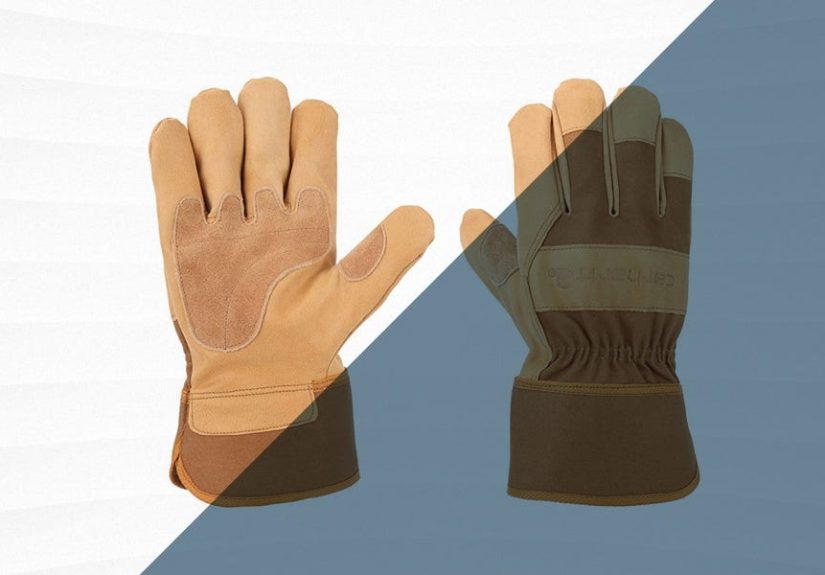
8) Carhartt Work-Flex High Dexterity / Spandex Work Gloves Best Hybrid “Everyday Utility” Feel
Carhartt’s Work-Flex/high-dexterity style gloves hit a useful middle lane: more structure than ultra-thin knit gloves, but more flexibility than heavy
leather. In 2021, that meant a glove you could wear for general chores, moderate tool work, and projects where you want a secure fit plus decent
durability.
Why they work: breathable stretch material helps comfort; reinforced zones support durability; and water-repellent or grippy palms are handy
when your workday includes surprise moisture (because of course it does).
Great for: general DIY, workshop tasks, light yard work, daily chores.
Not ideal for: deep cold, high cut hazards, or heavy abrasion all day.
Match the Glove to the Job (So You Don’t Buy the “Best” and Still Hate It)
Construction & Lumber Handling
Look for abrasion resistance, reinforced palms, and enough dexterity to handle nails, fasteners, and tools. Leather or nitrile-coated gloves are common
choices. If you’re handling rough lumber all day, reinforced stress points matter more than fancy branding.
Mechanic Work & Assembly
Prioritize dexterity and tactile control. A snug, breathable glove with a thin palm helps you grip tools and handle small components. If the environment is
oily, nitrile-coated gloves often outperform leather for grip.
Sharp Materials: Sheet Metal, Tile, Glassy Edges, and Endless Cardboard
Choose cut-rated gloves (ANSI A-levels). If you’re doing occasional sharp handling, A3–A5 is a common practical range. For more serious exposure, step up.
Also: cut resistance is not the same as puncture resistancedon’t assume one rating means everything.
Wet Work & Rainy Projects
Water resistance and grip are key. Water-resistant leather is great for outdoor projects, while coated gloves can grip better on slick surfaces. If your job
is truly “soaking wet,” consider waterproof-specific designs and treat gloves as consumables.
Cold Weather Projects
Insulation helps, but bulky gloves reduce safety if they make you lose grip or tool control. A practical approach is layering: a thinner dexterity glove for
work plus warm-up breaks, or an insulated work glove that still lets you handle tools safely.
Buying Guide: What to Look for in the Best Work Gloves (2021 Checklist)
Grip (Dry, Wet, and Oily)
A glove that slips is a glove that causes injuries. Nitrile coatings tend to perform well across conditions; latex can grip aggressively; leather grips well
on dry rough materials but can get slick when wet unless treated or designed for water resistance.
Dexterity (The “Can I Pick Up a Screw?” Test)
Try this mental test: can you pick up a small screw, tighten a clamp, or pull a tape measure without cursing? High-dexterity gloves help you keep gloves on,
which is the entire point.
Durability Where It Counts
The thumb crotch, fingertips, and palm wear out first. Gloves that reinforce these areas usually last longer in real work. If a glove is reinforced but
still flexible, that’s a win.
Breathability
Sweaty hands reduce grip and comfort. Breathable backs and moisture-wicking materials help, especially in hot garages or summer yard work. If your gloves are
always soaked inside, you’ll start “forgetting” to wear them. (Amazing how that happens.)
Cuff & Closure
Hook-and-loop closures can help keep debris out and improve fit. Knit wrists are comfortable and quick. Longer cuffs help with brush, thorns, and debris.
Choose based on the environmentnot vibes.
Care Tips: Make Your Gloves Last Longer Than a Weekend
- Rotate pairs: letting gloves dry fully between uses extends life (and reduces stink).
- Clean correctly: machine-wash only if the manufacturer says so; leather usually prefers gentle cleaning and air drying.
- Don’t “work through” damage: holes and thin spots turn gloves into confidence costumesreplace them.
- Store smart: keep gloves out of direct sun and extreme heat; both can degrade materials faster.
Extra: of Real-World Experiences (What People Learn After Burning Through Gloves)
The first lesson most people learn about work gloves is that durability is wildly task-dependent. A glove that survives months of garage tinkering might get
shredded in one afternoon of hauling brush or pulling splintery lumber. That’s not always because the glove is “bad”it’s because your hands just walked
into a different sport. One day you’re doing precision DIY, and the next day you’re basically wrestling a pile of thorny vines that hate you personally.
The second lesson: the “best glove” is usually the one you actually wear. Thick leather can be amazing for abrasion, but if it makes you clumsy with tools,
you’ll start taking it off “just for this one thing,” and that’s exactly when you catch a splinter, pinch, or sharp edge. High-dexterity gloves shine here.
Even if they don’t last forever, they keep your grip, and grip prevents accidents. Many people end up with a two-glove strategy: a dexterity glove for most
tasks and a heavy leather glove for the rough stuff. It’s not overkillit’s realism.
Another common experience: moisture changes everything. A glove that feels perfect in the dry can turn slippery when wet. That’s why nitrile-coated palms
became such a staple: they keep traction when conditions aren’t ideal. If you’ve ever carried a wet board or handled a muddy tool, you know the moment when
your hand says, “I do not trust this.” Better grip equals less squeezing, which equals less fatigue. Your hands and forearms will thank you laterprobably
not in words, but in the form of less soreness.
People also learn (often the hard way) that cut resistance and puncture resistance aren’t the same thing. Cut-rated gloves help with sharp edges, but nails,
wire, and splinters can still poke through depending on the glove design. That’s why “match the hazard” matters. If you’re breaking down boxes all week, a
cut-rated glove can feel like a superpower. If you’re pulling thorny brush, a thicker glove with longer cuffs might be the better protection even if it’s
not a high cut level.
Finally, the most relatable glove experience of all: gloves are semi-consumable. Even great gloves wear out. Thumb crotches split. Fingertips thin out. Palms
get slick. Accepting that reality helps you buy smarter. Keep a few affordable coated gloves for messy or high-wear jobs, invest in one great “main pair” for
daily use, and replace them before they fail at the worst possible momentlike when you’re carrying something heavy and your glove suddenly becomes a
fingerless fashion statement.