Table of Contents >> Show >> Hide
- The Puppy Who Was Apparently “Too Big” for Someone’s Business Plan
- Why “Too Big” Is a Human Problem, Not a Dog Problem
- From Shelter Listing to New York Success Story
- How Bert Became an Internet Favorite
- What This Story Says About Adoption
- The Real Issue: Unrealistic Expectations Around Breeding
- Why People Love This Story So Much
- Conclusion
- Related Experiences: Why This Story Feels So Familiar to So Many People
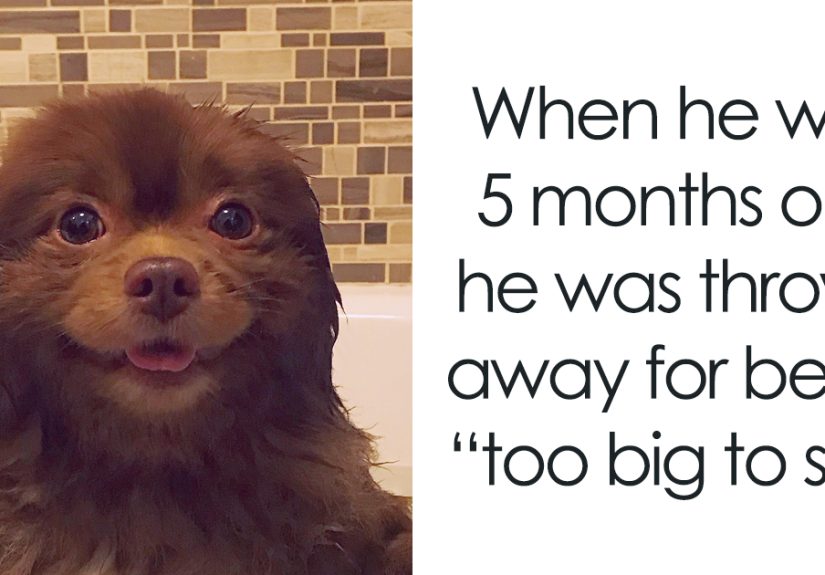
Some dogs begin life with a velvet pillow and a tiny monogrammed sweater. Others begin with a rude little plot twist that says far more about humans than it does about them. Bert the Pomeranian belongs firmly in the second category. As the story goes, he was surrendered at just 5 months old because a breeder thought he was “too big” to sell. That sounds like the kind of sentence that should come with a cartoon record scratch, but it really happened. And in one of those rare feel-good reversals the internet actually deserves, the fluffy pup went from being rejected for not fitting a commercial ideal to becoming a beloved rescue dog, gallery sidekick, and social-media favorite.
It is a story people instantly understand because it works on two levels. On the surface, it is adorable: a round-faced Pomeranian with movie-star fluff and the energy of a mildly judgmental teddy bear. Underneath, though, it is also a sharp little lesson about what happens when animals are treated like inventory. Bert’s rescue tale is not just cute content with extra fur. It is a reminder that a dog who is “wrong” for a sales sheet can be absolutely perfect in a real home.
The Puppy Who Was Apparently “Too Big” for Someone’s Business Plan
Bert’s early life was brief, but it packed in enough disappointment to fuel a full season of prestige television. He was reportedly dumped at a shelter at around 5 months old after being judged too large to sell as a Pomeranian puppy. Then Kathy Grayson spotted him on Petfinder, flew to Oklahoma, and brought him home to New York. That is already a better character arc than most reboots get.
Once adopted, Bert moved into a life that looked nothing like the one his breeder had imagined for him. Instead of being rejected for failing to fit a tiny, marketable box, he became part of Grayson’s daily life and part of her art-world orbit. He has been described as calm, silly, inquisitive, and charming, which is a pretty strong résumé for a dog whose original offense was basically “too much magnificent fluff.”
The funniest part of the whole thing is that the quality that allegedly made him less sellable is probably the same quality that made people fall for him. Bert does not look like a mistake. He looks like a luxury throw pillow that gained consciousness and opinions. He stands out. In a sea of copy-paste puppy marketing, he became memorable.
Why “Too Big” Is a Human Problem, Not a Dog Problem
Here is where the story becomes more than a viral pet anecdote. The American Kennel Club’s breed standard for Pomeranians places the breed in a very small size range, with show ideals even narrower. In breeder and show circles, tiny measurements can matter. But standards were never meant to decide whether a dog deserves love, safety, or a home. That is the key difference between responsible breeding and cold-blooded commercial thinking.
Pomeranians Are Tiny Dogs With Surprisingly Huge Vibes
Pomeranians are famous for being compact, lively, smart, and hilariously self-important. They are the kind of dogs who can weigh just a few pounds and still behave like they personally run the household, the block, and maybe municipal government. Breed resources regularly describe them as vivacious, inquisitive, bold, and extroverted. In other words, the Pom brand has never really been “small and timid.” It has always been “small and convinced it is a lion.”
That is why the phrase “too big” feels so absurd in the context of a pet home. A slightly larger Pom is still a Pom. He still has the fox-like face, plumed tail, thick double coat, and oversized personality that made the breed famous. He is not somehow disqualified from companionship because he missed a commercial size target. He just failed to cooperate with someone else’s spreadsheet.
Pets Are Not Product Lines
Animal-welfare groups have spent years warning about profit-first breeding, especially in systems where puppies are moved like merchandise and valued for how neatly they fit buyer expectations. When the question becomes, “Will this puppy sell at the ideal price?” instead of “Is this puppy healthy, socialized, and headed to a suitable home?” the priorities are upside down. Bert’s story resonates because people can sense that instantly.
To be fair, not every breeder is irresponsible, and not every breeder who works with a breed standard is doing something wrong. Responsible breeders care deeply about health, temperament, transparency, and lifetime support. They do not treat an individual puppy’s quirks as disposable flaws. They also do not vanish the second a dog becomes less profitable. That is the difference. Ethics look very different from sales tactics in a bow tie.
From Shelter Listing to New York Success Story
Once Bert landed with Kathy Grayson, the whole narrative changed. He was no longer a rejected puppy. He was a dog with a person, a routine, and a life. That shift matters more than any makeover montage. Shelter dogs do not need magical transformations to become worthy. They need stability. They need someone who sees them as a companion rather than a return on investment.
Grayson has said she knew almost immediately that Bert was the one. Anyone who has adopted a pet understands that feeling. Sometimes it is not rational. You look at three slightly blurry rescue photos, and suddenly your future is rearranged by a tiny face in a bandana. Science may call that attachment. The rest of us call it, “Well, I guess I live with this dog now.”
In New York, Bert became a familiar presence at The Hole gallery, where he helped turn an art space into something warmer, weirder, and more delightful. A good gallery dog does not critique brushwork out loud, but he does improve foot traffic and morale. That is a valuable contribution in any industry.
How Bert Became an Internet Favorite
Bert’s appeal grew because he was not merely cute. The internet is drowning in cute. Bert had character. His expressive face, chocolate coat, teddy-bear look, and calm little oddball energy gave him a full visual identity. He became the kind of dog people remembered after they scrolled past him, which is practically celebrity status online.
His fame got a major boost when photos of him dressed as Paddington Bear spread widely. It was one of those rare costume moments where the joke did not even need explanation. He looked uncannily right for the role, like he had spent years preparing for a very niche audition. From there, Bert’s image circulated beyond rescue-dog circles into broader pop culture, where he was celebrated not as a sad backstory but as a complete star.
That shift matters. Plenty of rescue animals go viral because their suffering shocks people. Bert went viral because his life became joyful and entertaining. His story still begins with abandonment, but it is remembered for the happy second half. That is a much better legacy than being forever introduced as “the dog no one wanted.”
What This Story Says About Adoption
Adoption stories like Bert’s work so well because they quietly demolish a bunch of bad assumptions. One is the idea that the best dogs only come from carefully curated, premium-priced channels. Another is the belief that a surrendered or shelter dog must come with something “wrong” with it. In reality, animals end up in shelters for all kinds of human reasons, including unrealistic expectations, bad timing, financial strain, or plain old irresponsibility.
Petfinder’s educational resources have long noted that many relinquished dogs are young, and many arrive in shelters because of circumstances that say more about owners or systems than about the animals themselves. A dog can be purebred, photogenic, healthy, and still get dumped. That is part of what makes Bert’s case so striking. He was not hidden from adoption because he lacked charm. He was overlooked because someone valued sellability over suitability.
And once you see that clearly, the lesson becomes obvious: adoption is not settling. Sometimes adoption is how the best story in the room begins.
The Real Issue: Unrealistic Expectations Around Breeding
There is also a broader cautionary note here. Animal-welfare organizations, including the ASPCA and Humane World, have repeatedly warned consumers about breeding systems that prioritize speed, volume, and appearance over care. While Bert’s specific case is not a documented puppy-mill investigation, the logic behind “too big to sell” feels uncomfortably familiar. It reflects a marketplace mindset where animals are sorted by what moves fastest, not by what is humane.
That is why stories like this hit a nerve. Most people can accept that a breeder may have goals for conformation or show quality. What they do not accept is a dog being treated as a failed retail item because he does not perfectly match a preferred spec. Nobody hears “too big to sell” and thinks, yes, what a reasonable way to discuss a living creature. The phrase lands with a thud because it exposes the mentality behind it.
A responsible breeder provides health testing, socialization, appropriate placement, and ongoing responsibility for the animals they produce. A responsible breeder is transparent. A responsible breeder acts like the dog’s welfare matters after the sale. Once you understand that, Bert’s story stops sounding like a quirky fluke and starts sounding like a case study in what happens when ethics go missing.
Why People Love This Story So Much
People love underdog stories, and yes, Bert is technically an underdog even though he is approximately the size of a festive throw pillow. But the emotional pull goes deeper than that. This story satisfies a very human hope: the hope that being rejected by the wrong person can put you on the path to the right one.
Bert was not “fixed” by being loved. He was already lovable. Love simply put him in a place where that truth could be seen. That is why the story spreads so easily. It flatters our best instincts. It tells us that first judgments can be ridiculous, that beauty can be found in what commerce overlooks, and that sometimes the puppy who fails one person’s standards becomes another person’s tiny king.
Also, let us be honest, he really does look like a plush toy that wandered into adulthood by accident. That helps.
Conclusion
“Breeder abandoned 5-month-old Pomeranian because he was too big” sounds like the setup for a grim story about vanity and profit. Instead, it became a story about rescue, perspective, and the very funny possibility that the breeder may have missed out on a once-in-a-generation dog. Bert’s journey from shelter listing to beloved companion proves a simple point: a dog does not need to be perfect by commercial standards to be extraordinary in real life.
In fact, the very qualities that make an animal inconvenient to sell may be the exact qualities that make that animal unforgettable. Bert was supposedly too much of something. Too big. Too unusual. Too hard to package neatly. And then he went out and became exactly the kind of dog people remember, share, laugh over, and adore. That is not just poetic justice. That is a fluffy little mic drop.
Related Experiences: Why This Story Feels So Familiar to So Many People
One reason Bert’s story sticks is that countless pet owners have lived through some version of it, even if their dog never ended up wearing a Paddington coat or hanging around an art gallery in Manhattan. Plenty of people have adopted the dog who was labeled “too much” in one way or another. Too big, too shy, too energetic, too plain, too old, too loud, too weird-looking, too nervous in the kennel, too scruffy for the glamorous puppy crowd. Then that same dog gets home, exhales for the first time, and turns out to be the best decision the family ever made.
Some people know this story from the breeder side of the culture too. They were told to want a perfectly petite puppy, a perfectly symmetrical face, a perfectly trendy color, a perfectly curated little fantasy. Instead, they met the dog with the giant paws, the odd expression, the off-standard coat, or the body that clearly had not read the marketing brochure. And somehow that so-called “wrong” dog had more personality than every polished sales photo combined. A lot of adopters describe that exact moment: the instant they stopped shopping with their eyes and started choosing with their gut.
There is also a very specific rescue experience hidden inside Bert’s story: the shock of realizing how quickly a dog can become central to a place. Anyone who has ever brought a rescue animal into a shop, studio, office, or family business knows what happens next. The dog becomes the receptionist, emotional-support department, comic relief team, and unofficial head of public relations. Customers ask about the dog before they ask about the product. Regulars stop by just to say hello. The whole atmosphere softens. A once-overlooked animal starts generating community without even trying.
Then there is the healing part, which rescue people rarely talk about in a dramatic way because it usually happens quietly. The dog learns the sound of dinner being prepared. The dog picks a favorite corner of the couch. The dog starts sleeping more deeply. The dog stops watching every door like a security guard on double shifts. Little by little, the animal that once felt temporary begins acting like he belongs. That transformation is rarely flashy, but it is one of the most moving things a person can witness.
And maybe that is why stories like Bert’s keep circulating years later. They are not just about one photogenic Pomeranian who got a better ending than expected. They are about a pattern people recognize from their own lives. The “imperfect” dog becomes the unforgettable dog. The rejected one becomes the heart of the household. The animal someone else dismissed turns into the one everybody talks about, misses when he leaves the room, and thanks heaven they found. Bert’s life may be unusually public, but the emotional truth of it is wonderfully common. A lot of the best dogs start with someone underestimating them. Thankfully, they usually get the last bark.