Table of Contents >> Show >> Hide
- What Is the Eames Hang-It-All, Exactly?
- The 1953 Backstory: Toys, Tidiness, and a Little Bit of Science
- Design Anatomy: Why It Looks Simple (But Isn’t)
- Materials, Sizes, and Modern Versions (Because Your Wall Deserves Details)
- Why It Became a Mid-Century Modern Icon
- Where the Hang-It-All Works Best (Room-by-Room Ideas)
- Authenticity, Licensing, and the “Eames-Style” Trap
- Installation and Care: The Unsexy Stuff That Saves Your Wall
- FAQ: Quick Answers for Curious Readers
- Real-Life Experiences With the Hang-It-All ( of “Okay, But How Does It Live?”)
- Conclusion
Some household objects are destined to live boring lives. A normal coat hook? It hangs a coat, silently judges your
life choices, and occasionally takes a bite out of a sweater. The Charles and Ray Eames Hang-It-All
did not get that memo.
Designed in 1953, the Eames Hang-It-All coat rack looks like a candy-colored
science experiment that wandered onto your wall and decided to solve your entryway chaos. It’s playful without
being childish, sculptural without being precious, andmost importantlyuseful without being ugly. In other words:
it’s basically the unicorn of home organization.
What Is the Eames Hang-It-All, Exactly?
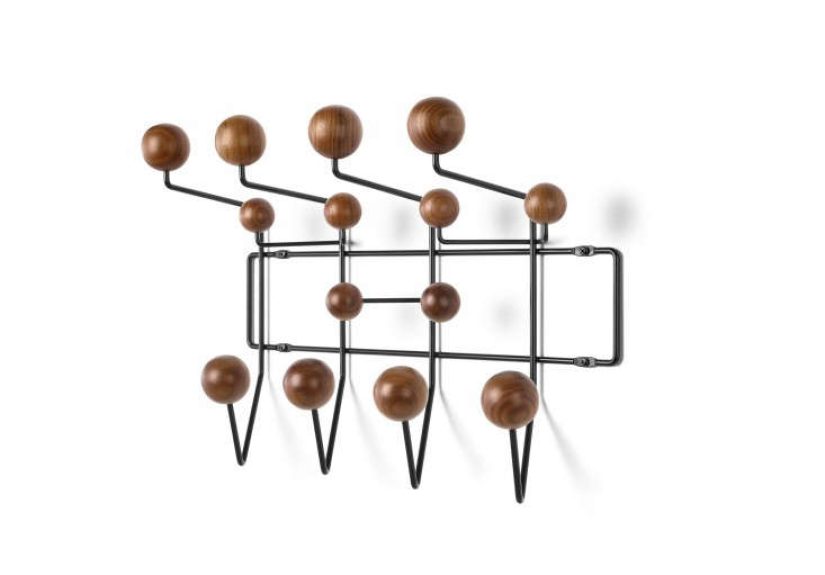
The Hang-It-All is a wall-mounted coat rack made from a welded steel-wire (or steel-rod) frame
with a series of angled “arms” capped by round balls. Those ballsoften in bright colorsare the point. Instead of
sharp hooks that snag fabric, the rounded forms are gentler on clothing and surprisingly better at holding odd
shapes: backpack straps, tote handles, headphones, scarves, even that one tote bag you swear you’ll stop collecting.
The design started with children in mind (the name is not subtle: “hang it all”), but it quickly proved it could
behave in grown-up spaces too. That’s the Eames magic: take something everyday, redesign it with empathy and humor,
and suddenly your hallway feels like it got a personality upgrade.
The 1953 Backstory: Toys, Tidiness, and a Little Bit of Science
Charles and Ray Eames didn’t treat “kid stuff” as a side quest. They designed toys and objects that respected
children as full humans with real needsand real messes. The Hang-It-All was originally marketed through
Tigrett Enterprises’ Playhouse Division as a tool to encourage kids to hang up their belongings,
turning tidying into something closer to play than punishment.
But the Hang-It-All isn’t just toy-likeit’s also quietly brainy. Museums and design historians often connect its
clustered spheres and rods to the mid-century fascination with scientific imagery, including classroom molecular
models and the emerging visual culture of microscopes. The result is a rack that feels both friendly and futuristic:
a cheerful constellation of “atoms” that happens to hold your coat.
Early production ran through the mid-century era, and the piece later returned as a licensed reissuehelping it
become a modern classic that still shows up in contemporary homes, offices, and design-minded dorm rooms (the ones
with plants that are somehow thriving).
Design Anatomy: Why It Looks Simple (But Isn’t)
At first glance, the Hang-It-All seems like a straightforward grid plus hooks. Look closer and you’ll notice how
carefully it’s composed:
-
Angled wire arms: Instead of lining hooks up like soldiers, the arms stagger and tilt, creating
more usable hanging space and a more dynamic silhouette. -
Round balls as hooks: The balls reduce fabric damage and make it easier to hang items without
“threading” them onto a sharp point. -
Negative space: The open wire frame feels airy on the wall, so it reads like sculpturenot a
bulky storage device. -
Color as function: Bright balls aren’t just decoration; they act as visual cues. Even kids can
remember “my backpack goes on the blue one.”
Technically, the Hang-It-All is tied to the Eameses’ broader experiments with bending and welding wiretechniques
they used across furniture bases and wire forms. In other words, this coat rack is related (in a “same DNA” way) to
some of their most iconic mid-century modern seating. Yes, your wall hook has a fancy family tree.
Materials, Sizes, and Modern Versions (Because Your Wall Deserves Details)
Over the years, the Hang-It-All has appeared in multiple finishes and colorways. The classic version is a light
frame with colorful balls, but today you can also find more subdued optionsthink darker woods, softer palettes, and
versions that lean “gallery minimal” instead of “playroom pop.”
Common materials you’ll see
- Powder-coated steel (frame/rods or wire)
- Maple wood balls (often painted)
- Walnut or natural wood balls (for a more muted, grown-up feel)
- Special editions that swap the balls’ material for a different visual effect
Typical dimensions (roughly)
The Hang-It-All is compact enough for small entryways but substantial enough to hold its own visually. It’s often
listed around ~19.75″ wide, ~14.6″ tall, and ~6.4″ deep. That
“depth” matters: it gives bulkier items (like winter coats) some breathing room instead of smearing them flat
against the wall like sad pancakes.
Why It Became a Mid-Century Modern Icon
Plenty of mid-century objects look cool. Fewer are cool and solve an annoying daily problem. The Hang-It-All
nails a few timeless principles that keep it relevant:
1) It’s friendly design (your knitwear will thank you)
Rounded hooks are kinder to fabrics than traditional metal points. That’s not a minor detailit’s the difference
between “functional” and “actually usable without regret.”
2) It turns clutter into a composition
Even when it’s loaded with coats, bags, and scarves, the rack still reads as designed. The colors peek through.
The wire structure stays light. Your mess looks… curated. (A small miracle.)
3) It scales visually
One unit makes a statement; two or three become a wall installation that feels intentional. That scalability is why
it works in everything from a tiny apartment entry to a busy family mudroom.
Where the Hang-It-All Works Best (Room-by-Room Ideas)
Entryway
This is the classic use-case. Mount it near the door and give each household member “their” color. Add a small
tray below for keys, and your daily routine becomes about 30% less chaotic.
Kids’ room
The original intent still holds up: kids are more likely to hang things when the hooks are fun and easy. Pair it
with a low bench, and you’ve basically built a tiny independence machine.
Home office
Hang headphones, a laptop bag, a camera strap, or even a light jacket for “I swear I’ll go outside later.” It’s a
practical way to keep gear visible without turning your chair into the official dumping ground.
Bathroom (yes, but be smart)
It can hold towels and robes, but the key is moderationespecially with damp items. If your bathroom is humid, give
fabrics a chance to dry properly and don’t treat it like a wet-laundry theme park.
Authenticity, Licensing, and the “Eames-Style” Trap
The Hang-It-All is widely imitated because it’s recognizable, and knockoffs love recognizable. If authenticity
matters to your readers (or your budget is going toward “buy once, cry once”), look for versions produced and
licensed through the official channels associated with the Eames legacy and established manufacturers.
Practical tip for shoppers: authentic listings tend to be specific about materials, construction, warranties, and
licensed trademarks. Vague phrases like “inspired by” or “Eames-style” are your cue that you’re not looking at the
real thingno matter how loudly the product photos are screaming “mid-century.”
Installation and Care: The Unsexy Stuff That Saves Your Wall
A coat rack is only as good as its mounting. The Hang-It-All is designed to be anchored with hardware, not
improvisational adhesive strips and optimism. If you want it to actually hold weight (and avoid the sound of doom
at 2 a.m.), use proper anchors or studs and follow the manufacturer’s guidance.
Cleaning basics
- Wood balls: wipe gently; avoid soaking; dry promptly
- Metal frame: soft cloth with mild soap and water; dry afterward
- General rule: treat it like furniture, not like a kitchen sink
FAQ: Quick Answers for Curious Readers
When was the Eames Hang-It-All designed?
It dates to 1953, created during the Eameses’ highly productive mid-century period.
How much can it hold?
When properly installed, it’s commonly rated for a substantial total loadenough for multiple coats and bagsthough
the exact capacity depends on correct anchoring and how weight is distributed.
Is it only for kids?
Not at all. It was designed with children in mind, but its proportions, materials, and visual presence make it
equally at home in adult spaces.
Does it work in small apartments?
Yes. It’s wall-mounted, visually light, and compactideal for tight entryways where floor space is sacred.
What makes it “mid-century modern”?
Clean structure, honest materials, efficient construction, and a belief that everyday objects can be both
functional and delightfulwithout unnecessary ornament.
Real-Life Experiences With the Hang-It-All ( of “Okay, But How Does It Live?”)
Imagine this: you walk in the door with your hands fullone tote bag, one coffee, one jacket you swore you didn’t
need, and a set of keys that always tries to disappear the second you blink. A normal hook rack demands you aim like
you’re playing a carnival game. The Hang-It-All is more forgiving. Those round balls are easy targets, and even a
half-hearted toss usually lands somewhere useful. It’s the rare home accessory that accommodates real-life laziness
without enabling total chaos.
In a small apartment entryway, the Hang-It-All can feel like you gained a closet you didn’t have. One ball becomes
the “keys live here” spot (pair it with a small dish below if you want to level up). Another ball becomes the
“dog leash or gym bag” station. If you’re the kind of person who rotates bags like they’re seasonal personalities,
you can dedicate a few balls to totes and crossbodies and stop draping them over chairs like sad little shoulder
ghosts.
In homes with kids, the experience shifts from “storage” to “behavior hack.” Kids respond to color. They respond to
something that looks like it belongs in their world. Suddenly, “hang up your backpack” isn’t a lectureit’s a
simple routine: backpack goes on the green ball, jacket goes on the red ball, and the scarf that used to live on
the floor gets a ball of its own. The rack becomes a visual map of the family’s daily flow, which is exactly what
good design should do: reduce friction without requiring constant policing.
Then there’s the guest factor. People notice it. The Hang-It-All is one of those objects that sparks the same kind
of reaction as a well-chosen record on display: “Ohnice.” At gatherings, guests intuitively use it because it’s
obvious what it’s for, but they also comment on it because it feels cheerful. If your entry is the first impression
of your home, the Hang-It-All is like greeting people with a friendly grin instead of a pile of coats on a chair.
Seasonally, it shines in winter. Gloves, hats, scarves, and puffy coats all compete for space, and normal hooks
tend to turn into a tangled mass. With the Hang-It-All, the spacing helps. Items hang apart instead of merging into
a single blob of fabric. In summer, it switches roles: it becomes the landing zone for straw hats, lightweight
jackets, tote bags, and that one umbrella you keep “just in case” even when the forecast says sunshine for a month.
The best part? When it’s empty, it still looks like a piece of artso you never feel like you’re staring at
“storage.” You’re just looking at good design that happens to hold your life together.
Conclusion
The Charles and Ray Eames Hang-It-All is proof that “functional” doesn’t have to mean “forgettable.”
It began as a clever way to help children hang up their belongings and became a design icon because it balances
joy, durability, and everyday usefulness. Whether your style leans colorful and bold or calm and neutral, the
Hang-It-All earns its wall space by turning a daily hassle into a small moment of delight.