Table of Contents >> Show >> Hide
- Why This Chocolate Bread Pudding Casserole Works
- Chocolate Bread Pudding Casserole (Serves 8–10)
- Step-by-Step Instructions
- Make-Ahead and Overnight Instructions
- Flavor Variations (So You Never Get Bored)
- Troubleshooting: Fixes for Common Bread Pudding Problems
- Serving Ideas (From “Simple” to “We’re Celebrating Something”)
- Storage and Reheating
- FAQ
- of Chocolate Bread Pudding Casserole “Experience” (The Real-Life Kind)
- Conclusion
If regular bread pudding is a cozy sweater, chocolate bread pudding casserole is a heated blanket that also brings snacks.
It’s warm, fudgy, custardy, and somehow both “holiday brunch centerpiece” and “Tuesday night I deserve joy” in the same bite.
Plus, it’s a casserolemeaning you can feed a crowd without doing that awkward “Who wants the smaller slice?” math.
This recipe is built for real life: it uses simple pantry staples, welcomes that slightly stale loaf like a long-lost friend,
and gives you make-ahead options so your morning self can be lazy (the highest form of self-care).
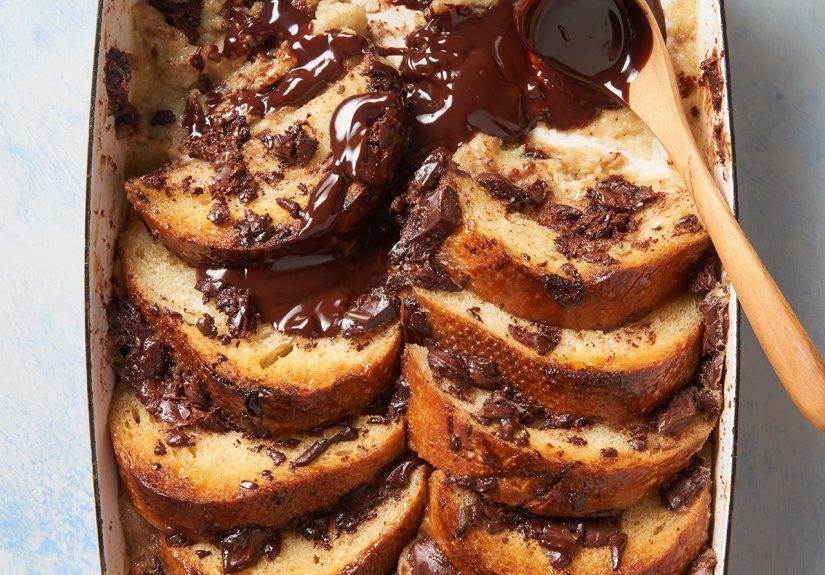
You’ll get a crisp, brownie-like top, a soft chocolatey middle, and pockets of melted chocolate chips that feel like surprise confetti.
Why This Chocolate Bread Pudding Casserole Works
Great bread pudding casserole is basically two things: bread + custard. The magic happens when the bread soaks up a rich mixture of eggs and dairy,
then bakes until the custard sets into something silky and sliceable.
- Stale or toasted bread absorbs custard without collapsing into mush.
- A balanced custard (eggs + milk/cream) sets creamy, not scrambled.
- Chocolate in layers (cocoa + chips + optional melted chocolate) tastes deep, not one-note.
- Rest time lets the bread hydrate evenly, so every bite is custardy, not patchy.
Chocolate Bread Pudding Casserole (Serves 8–10)
Ingredients
- Bread: 12–14 cups (about 12–16 oz) day-old brioche, challah, French bread, or sturdy sandwich bread, cut into 1-inch cubes
- Butter: 3 tablespoons melted (plus more for greasing)
- Eggs: 4 large eggs + 2 egg yolks (extra yolks = extra velvet)
- Dairy: 2 cups whole milk + 1 1/2 cups heavy cream (or use 3 1/2 cups half-and-half)
- Sugar: 3/4 cup packed brown sugar (or 1/2 cup brown + 1/4 cup granulated)
- Cocoa: 1/2 cup unsweetened cocoa powder
- Vanilla: 2 teaspoons pure vanilla extract
- Salt: 1/2 teaspoon kosher salt
- Warm spices (optional but lovely): 1 teaspoon cinnamon + pinch of nutmeg
- Chocolate chips/chunks: 1 1/2 cups semi-sweet or bittersweet
Optional “Make It Extra” Add-Ins
- Espresso boost: 1–2 tablespoons espresso or strong coffee (makes chocolate taste more chocolatey)
- Orange vibe: 1 teaspoon orange zest
- Nutty crunch: 1/2 cup toasted pecans or walnuts
- Fruit contrast: 1 cup raspberries (fresh or frozen) or chopped cherries
Optional Toppings for Serving
- Powdered sugar, whipped cream, or vanilla ice cream
- Warm chocolate sauce or caramel sauce
- Berries + a pinch of flaky salt (trust me)
Equipment
- 9×13-inch baking dish (or similar 3-quart casserole)
- Large mixing bowl + whisk
- Fine-mesh strainer (optional, but great for ultra-smooth custard)
- Roasting pan (optional, if using a water bath)
Step-by-Step Instructions
1) Prep the bread
Heat oven to 300°F. Spread bread cubes on a sheet pan and toast for 12–18 minutes, stirring once,
until dry on the outside (not browned like croutons). This step makes the final texture dreamy instead of soggy.
2) Grease and layer
Butter (or spray) a 9×13-inch baking dish. Add half the bread cubes, sprinkle with half the chocolate chips.
Repeat with the remaining bread and chips. If you’re adding nuts or berries, tuck them between layers like tasty little secrets.
3) Make the chocolate custard
In a large bowl, whisk eggs, yolks, brown sugar, cocoa, salt, vanilla, and optional spices until smooth.
Slowly whisk in milk and cream. If cocoa is being stubborn (it loves drama), strain the custard through a fine-mesh sieve.
4) Soak like you mean it
Pour custard evenly over the bread. Press gently with a spatula so the top layer gets cozy with the liquid.
Drizzle melted butter over the top for a crisp, golden finish.
Let stand 30 minutes at room temp, or cover and refrigerate for an overnight bake.
5) Bake (two great options)
Standard bake (easy): Heat oven to 350°F. Bake uncovered for 40–55 minutes,
until the center is just set (it should jiggle slightly, like gelatin doing a tiny dance) and the top looks crisp.
Water bath bake (extra creamy): Place your baking dish in a large roasting pan.
Pour hot water into the roasting pan until it reaches halfway up the sides of your dish.
Bake at 325°F for 50–70 minutes for a very custardy texture.
Either way, rest for 10–15 minutes before serving. This is not optional. The casserole needs a moment to pull itself together
emotionally (and structurally).
Make-Ahead and Overnight Instructions
This is where overnight bread pudding earns its keep. Assemble everything, cover tightly, and refrigerate for 8–24 hours.
In the morning, let the dish sit at room temperature for 20–30 minutes while the oven heats, then bake as directed.
Overnight soaking gives you a more uniform, custardy interiorbasically the “well-rested” version of dessert.
Flavor Variations (So You Never Get Bored)
Triple Chocolate Bread Pudding
Add 2 ounces melted dark chocolate to the custard, and swap half the chips for chopped milk chocolate.
Finish with a quick ganache drizzle (warm cream + chocolate, stir until glossy).
Mocha Chocolate Bread Pudding Casserole
Whisk 1–2 tablespoons espresso into the custard and add a pinch of cinnamon. Serve with whipped cream and a light dusting of cocoa.
It tastes like a fancy café dessert, without the $9 surcharge for “ambiance.”
Chocolate Orange
Add orange zest to the custard and a splash of orange extract (or a tablespoon of orange liqueur if you’re feeling festive).
Chocolate + citrus = instant “I planned this” energy.
Raspberry Chocolate
Layer in raspberries for bright contrast. The berries cut through richness and make the whole thing taste a little bit like romance.
Or like a Valentine’s Day card you can eat. Same thing.
Troubleshooting: Fixes for Common Bread Pudding Problems
“Mine is soggy.”
- Toast the bread first or use day-old bread.
- Don’t flood the dish with extra liquidcustard needs enough egg to set.
- Bake until the center is just set; underbaking is the #1 culprit.
“Mine is dry.”
- Cut bread into 1-inch cubes (too small = dries out faster).
- Use whole milk/cream (low-fat dairy can bake up less luscious).
- Cover loosely with foil for the first 25 minutes if your oven runs hot.
“The top is done but the center isn’t.”
- Lower the oven temp by 25°F and bake longer.
- Try the water-bath method for gentler, even heat.
How to know it’s done
Look for puffed edges and a center that’s set but still slightly wobbly. If you like precision,
the custard sets in the neighborhood of 165–180°F.
Serving Ideas (From “Simple” to “We’re Celebrating Something”)
- Brunch mode: Serve warm with berries and lightly sweetened whipped cream.
- Dessert mode: Add vanilla ice cream and let it melt into the chocolate like it pays rent there.
- Holiday mode: Drizzle with caramel, add toasted nuts, and finish with flaky salt.
Storage and Reheating
- Refrigerate: Cover and store up to 4 days.
- Reheat: Warm slices in a 300°F oven for 10–15 minutes (microwave works, but the oven keeps the top crisp).
- Freeze: Wrap tightly and freeze up to 2–3 months. Thaw overnight in the fridge, then rewarm gently.
FAQ
What’s the best bread for chocolate bread pudding?
Brioche and challah are favorites for a rich, tender bite, while French bread gives more chew.
Even sturdy sandwich bread can work if it’s dried well.
Can I make this dairy-free?
You can, with swaps: use full-fat canned coconut milk or oat-based cream plus a plant milk you like.
Expect a slightly different set and flavorbut still delicious.
Can I reduce the sugar?
Yes. Drop the sugar to 1/2 cup total, and lean on bittersweet chocolate chips.
If you’re adding sweet toppings (ice cream, sauces), you won’t miss it.
of Chocolate Bread Pudding Casserole “Experience” (The Real-Life Kind)
Chocolate bread pudding casserole has a funny way of becoming everyone’s “tradition” the moment they taste it.
One day it’s just a smart way to use leftover bread; the next day people are texting you things like,
“So… are you bringing the casserole again?” (Yes. Yes you are. You have been chosen.)
The first time many home bakers try it, the biggest surprise is how flexible it is. You can be extremely organizedmeasuring, straining,
layering like a pastry chef with a playlistand the casserole will reward you with a glossy, sliceable custard.
Or you can be extremely humanusing a random loaf, eyeballing the chocolate chips, and whisking with the mild urgency of a person
who realized the brunch invitation was for todayand it will still turn out comforting and impressive.
There’s also the “overnight glow-up.” Assemble it the night before, and in the morning it bakes up like it had a full spa day:
the bread is evenly soaked, the chocolate is tucked into every corner, and the top gets that lightly crisp, brownie-ish finish.
If you’ve ever tried to cook individual French toast slices for a group, you know the pain:
someone gets the first slice (great), someone gets the last slice (sad), and you spend the whole time flipping instead of chatting.
An overnight bread pudding casserole solves that. One dish, one bake, one heroic entrance.
Then there’s the “small upgrades, huge bragging rights” effect. Add espresso and suddenly it tastes like a mocha dessert you’d pay for.
Add orange zest and it becomes fancy enough for a dinner party. Toss in raspberries and people start describing it as “balanced”
(which is a very kind lie we all accept because it makes dessert feel like a responsible decision).
Sprinkle flaky salt on top and watch everyone nod like they’re judging a cooking show.
The best part might be what happens after it cools. Fresh from the oven, it’s gooey and dramatic.
The next day, it slices cleaneralmost like a baked chocolate custard with bread built in.
That means leftovers are not “leftovers”; they’re “second-round dessert,” “breakfast with confidence,” or “tiny reward for answering emails.”
Warm a square, add a spoonful of whipped cream, and suddenly your kitchen feels like the coziest café in town.
If you want a final piece of real-life wisdom: don’t skimp on the rest time. Ten minutes can be the difference between
“why is this collapsing?” and “look at that perfect slice.” Let it rest, let it set, let it be the calm adult in the room.
Meanwhile, you can prepare the toppings, pour the coffee, and practice saying, “Oh this? It’s just a quick chocolate bread pudding casserole.”
Like it didn’t just make you everyone’s favorite person.
Conclusion
This chocolate bread pudding casserole recipe hits the sweet spot between effortless and unforgettable:
crisp top, custardy center, rich chocolate flavor, and enough flexibility to fit brunch, dessert, and celebrations.
Make it overnight for maximum ease, customize it with mocha or orange, and serve it warm with something creamy on top.
You’ll use up bread, feed people, andfair warningget promoted to “official dessert person.”