Table of Contents >> Show >> Hide
- What Is a Classified Vertical File 2 Drawer?
- Why Choose a Vertical 2 Drawer File Cabinet?
- Standard Locking Cabinet vs. GSA-Approved Classified Cabinet
- Key Features to Look For
- Best Uses for a Classified Vertical File 2 Drawer
- How to Organize a 2 Drawer Vertical File Cabinet
- Buying Tips: What to Check Before You Order
- Common Mistakes to Avoid
- Maintenance Tips for Long-Term Use
- Is a Classified Vertical File 2 Drawer Worth It?
- Experience-Based Insights: Living With a Classified Vertical File 2 Drawer
- Conclusion
A classified vertical file 2 drawer may not sound like the sort of office item that deserves a dramatic entrance, but let’s be honest: paperwork has a way of staging tiny rebellions. One day your contracts, tax forms, employee files, client records, manuals, receipts, and “I’ll deal with this later” papers are neatly stacked. The next day, your desk looks like a paper tornado applied for a management position.
That is where a two-drawer vertical filing cabinet earns its keep. Compact, practical, and surprisingly important for document security, this type of cabinet is designed for offices, home workspaces, medical practices, law firms, financial teams, schools, and anyone who believes important papers should not live under a coffee mug. When the word “classified” enters the conversation, however, the stakes rise. A regular locking cabinet is useful for everyday privacy, but truly classified or sensitive documents may require specialized security containers that meet strict federal standards.
This guide breaks down what a classified vertical file 2 drawer is, how it differs from standard filing cabinets, which features matter most, and how to choose one without turning the shopping process into a government procurement thriller.
What Is a Classified Vertical File 2 Drawer?
A classified vertical file 2 drawer is a compact filing cabinet with two vertically stacked drawers designed to store folders, documents, and records in a smaller footprint. The word “vertical” means the cabinet is taller than it is wide, making it a smart choice for offices where floor space is precious. The “2 drawer” design usually fits under a desk, beside a workstation, in a records room, or in a small administrative corner.
The word “classified” can mean two different things depending on the context. In everyday office language, people sometimes use it to mean documents that are private, confidential, or sensitive. That might include HR files, client agreements, financial records, legal papers, medical documents, or proprietary business information. In government and defense environments, “classified” has a much stricter meaning. In that setting, documents marked Confidential, Secret, or Top Secret typically require approved security containers, not just an ordinary file cabinet with a key lock.
So, before buying, the first question is simple: are you storing private business paperwork or officially classified material? The answer changes everything from the lock type to the cabinet certification.
Why Choose a Vertical 2 Drawer File Cabinet?
The two-drawer vertical design is popular because it balances storage capacity with convenience. It gives you enough room for essential files without swallowing the office like a metal refrigerator. Compared with large lateral cabinets or four-drawer vertical cabinets, a two-drawer model is easier to place, easier to move, and easier to organize for daily access.
It Saves Floor Space
A vertical file cabinet is narrow and deep, so it takes up less wall width than a lateral cabinet. This is especially helpful in small offices, home offices, reception areas, and shared workspaces. If your office has more ambition than square footage, vertical storage is your friend.
It Keeps Important Files Close
A 2 drawer vertical file cabinet can sit beside a desk or under a work surface, keeping frequently used documents within reach. Instead of walking across the room every time you need a vendor contract or personnel form, you can simply open the drawer and look impressively organized.
It Works for Letter and Legal Files
Many models are built for letter-size folders, while others support legal-size files or adjustable hanging rails for both. Businesses that handle contracts, court documents, property papers, or accounting records should pay close attention to file-size compatibility before buying.
Standard Locking Cabinet vs. GSA-Approved Classified Cabinet
This is the most important distinction in the entire article. A standard locking file cabinet is not the same as a certified security container for classified government material.
A regular office file cabinet may include a keyed lock, steel construction, ball-bearing drawer slides, and anti-tip features. It can be excellent for everyday business privacy. However, if you are storing official classified documents, a basic lock is not enough. Government-approved security containers are typically built to federal specifications and may include specialized combination locks, reinforced construction, and strict resistance standards against covert or forced entry.
For example, GSA-approved Class 5 and Class 6 filing cabinets are used in environments where classified material must be protected according to federal rules. These containers are not purchased simply because they look sturdy; they are selected because they meet formal security requirements. In many cases, they include locks such as the X-10 or S&G 2740 series and are designed for controlled access in secure facilities.
In plain English: if your documents are “confidential” in the business sense, a strong locking 2 drawer vertical file cabinet may be enough. If your documents are “classified” in the official government sense, confirm the exact compliance requirements before purchasing.
Key Features to Look For
Not all file cabinets are created equal. Some are built like dependable office workhorses. Others wobble when you open a drawer and make you question your life choices. Here are the features that matter most.
1. Locking System
For everyday confidential documents, a keyed lock may be suitable. Look for cabinets where one lock secures both drawers or where each drawer can be locked separately. For higher-security use, consider cabinets with combination locks, multi-lock systems, or certified security hardware.
If the cabinet is for classified government material, do not rely on marketing words such as “secure,” “heavy duty,” or “commercial grade.” Look for exact certifications and approved product listings.
2. Steel Construction
Most durable vertical filing cabinets use steel construction. Thicker steel typically feels sturdier, resists dents better, and handles daily use more effectively. Powder-coated finishes are common because they resist scratches and give the cabinet a professional appearance.
3. Drawer Suspension
Drawer quality is one of those things you do not appreciate until you own a bad cabinet. Smooth ball-bearing suspension makes drawers easier to open, especially when loaded with heavy files. Full-extension drawers are even better because they allow access to folders at the back without performing an office yoga stretch.
4. Anti-Tip Design
File drawers can get heavy. A good cabinet should include an anti-tip mechanism or stable base design. Some cabinets allow only one drawer to open at a time, reducing the chance of tipping forward. This is especially useful in busy offices, schools, clinics, and homes with children.
5. Fire and Water Resistance
For critical documents, fire-resistant cabinets offer another layer of protection. Fire-rated vertical file cabinets may be tested to protect paper documents during high-temperature exposure. Some premium models also offer water resistance, impact protection, and reinforced insulation. These cabinets are heavier and more expensive, but for irreplaceable documents, the peace of mind can be worth it.
6. File Compatibility
Before purchasing, decide whether you need letter-size, legal-size, or adjustable filing. Letter-size folders are common for general business paperwork. Legal-size drawers are useful for contracts, real estate documents, legal records, and larger forms. A cabinet that accepts both letter and legal hanging folders provides more flexibility.
Best Uses for a Classified Vertical File 2 Drawer
A two-drawer vertical filing cabinet is small enough for personal use but serious enough for professional storage. It fits a wide range of settings.
Home Office
Remote workers and small-business owners often need a secure place for tax records, insurance papers, invoices, client files, and business licenses. A 2 drawer cabinet can sit neatly beside a desk without making the room feel like a municipal records department.
Medical and Dental Offices
Clinics handle patient forms, billing documents, staff records, and insurance paperwork. While many records are digital, physical documents still exist, and they need organized, access-controlled storage.
Legal and Financial Offices
Law firms, accountants, bookkeepers, and financial advisors deal with sensitive paperwork daily. A locking vertical file cabinet helps separate active files from archived records while keeping important documents easy to retrieve.
Government and Contractor Workspaces
For government offices or contractors handling sensitive or classified information, the cabinet must match the required security level. A regular locking file is not a substitute for a GSA-approved security container when official classified storage rules apply.
How to Organize a 2 Drawer Vertical File Cabinet
A filing cabinet is only as useful as the system inside it. Without a filing method, it becomes a metal box full of good intentions.
Use One Drawer for Active Files
Keep frequently used records in the top drawer. This might include current clients, open projects, active contracts, pending invoices, or employee documents that require regular updates. The top drawer should be the “working drawer,” not the “mystery cave.”
Use the Second Drawer for Archive or Reference Files
The bottom drawer can hold less frequently used documents such as closed projects, old tax records, warranties, manuals, previous-year financial reports, or long-term reference files.
Label Everything Clearly
Use hanging folders with clear tabs. Avoid vague labels such as “Important Stuff” unless you enjoy future treasure hunts. Better labels include “2026 Tax Documents,” “Vendor Contracts,” “Employee Onboarding,” “Insurance Policies,” or “Client Agreements.”
Create a Retention Schedule
Not every document deserves eternal life. Establish a schedule for what to keep, what to scan, what to shred, and what to archive. This prevents the cabinet from becoming a retirement home for expired coupons and ancient printer manuals.
Buying Tips: What to Check Before You Order
Before choosing a classified vertical file 2 drawer, measure the space where it will go. Remember to account for drawer extension. A cabinet may fit perfectly when closed but become a hallway-blocking beast when opened.
Check the outside dimensions, inside drawer dimensions, weight capacity, lock style, file size compatibility, and assembly requirements. Some cabinets arrive fully assembled, while others require setup. If you are buying a fire-resistant cabinet, check delivery details carefully because these models can be extremely heavy.
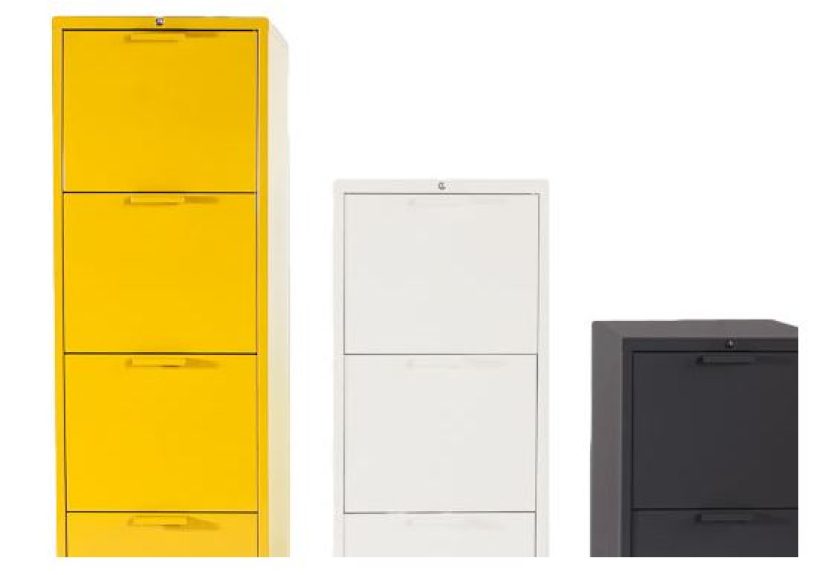
Also consider finish and appearance. Black, gray, parchment, putty, and white are common office colors. Wood-look mobile pedestals are popular for home offices, while steel cabinets are preferred for durability and professional settings.
Common Mistakes to Avoid
The first mistake is buying based only on price. A cheap cabinet may work for light use, but if drawers stick, locks fail, or the frame bends under weight, the bargain disappears quickly.
The second mistake is ignoring security requirements. If you need genuine classified storage, verify compliance before purchasing. Do not assume a “lockable cabinet” equals an approved classified storage container.
The third mistake is choosing the wrong size. Letter-size drawers may not properly fit legal documents, and shallow cabinets may not hold the volume you expect. Always compare your real documents with the cabinet’s drawer specifications.
The fourth mistake is skipping anti-tip features. Paper is heavier than it looks. Load two drawers with files, pull both out, and suddenly physics joins the meeting. A stable cabinet with anti-tip design is a smarter long-term choice.
Maintenance Tips for Long-Term Use
A quality 2 drawer vertical filing cabinet does not need much maintenance, but a little care goes a long way. Do not overload drawers beyond the manufacturer’s stated capacity. Keep file rails properly seated. Clean the exterior with a soft cloth and mild cleaner. Avoid harsh chemicals that may damage powder-coated finishes.
If the drawers start sticking, check for overloaded folders, bent rails, or debris in the track. For locking cabinets, keep spare keys in a secure location away from the cabinet. Yes, storing the spare key inside the locked cabinet is a classic office comedy routine, but it is not a great security strategy.
Is a Classified Vertical File 2 Drawer Worth It?
Yes, if you need compact, secure, and practical storage for important documents. A two-drawer vertical cabinet is not glamorous, but it solves real problems: clutter, lost paperwork, unauthorized access, and inefficient filing. For small offices and home workspaces, it offers the sweet spot between capacity and footprint.
If your needs are basic, choose a sturdy locking cabinet with smooth drawers and anti-tip construction. If your documents are irreplaceable, consider fire-resistant and water-resistant models. If your documents are officially classified, look only at properly approved security containers that match your compliance obligations.
Experience-Based Insights: Living With a Classified Vertical File 2 Drawer
Using a classified vertical file 2 drawer in daily life teaches you something funny about organization: the cabinet does not magically organize your papers, but it does politely pressure you to behave like a responsible adult. The moment you label folders and assign drawers a purpose, your workspace feels calmer. It is like giving your paperwork assigned seating instead of letting it throw a party on your desk.
One practical experience is that the top drawer quickly becomes prime real estate. This is where active files naturally belong. If you run a small business, the top drawer might hold current client agreements, unpaid invoices, project notes, tax forms for the current year, and licenses. Keeping those files in one place saves time every week. Instead of digging through piles, you open one drawer and retrieve what you need in seconds. That sounds small until you realize how many minutes disappear into paper-searching rituals.
The bottom drawer works best for records you need to keep but do not touch daily. This might include previous-year tax documents, insurance policies, warranty papers, closed project folders, or older employee records. The trick is not to let the lower drawer become a paper basement. Review it every few months and remove documents that no longer need to be stored. A filing cabinet should be a working system, not a museum of forgotten forms.
Another lesson is that lock quality matters. A simple lock is helpful for discouraging casual access, especially in shared spaces, but it should not create a false sense of security. For general office privacy, a keyed cabinet is usually practical. For sensitive legal, financial, or personnel records, stronger construction and better access control are worth considering. For official classified material, experience says one thing clearly: compliance comes first. Do not improvise. Use the correct approved container and follow the required handling procedures.
Drawer movement also affects daily satisfaction. A cabinet with smooth ball-bearing slides feels professional every time you use it. A sticky drawer, on the other hand, becomes a tiny frustration machine. Full-extension drawers are especially useful because folders at the back remain easy to reach. Nobody wants to kneel on the floor and excavate a file like an archaeologist discovering an ancient invoice.
Weight is another real-world issue. Lightweight cabinets are easier to move, but they can feel less stable when fully loaded. Heavy-duty steel and fire-resistant cabinets feel more secure, but they may require careful delivery planning. If you are placing one in a home office upstairs, check the weight before ordering. A fire-resistant cabinet can be impressively heavy, and your staircase may have opinions.
In everyday use, the best classified vertical file 2 drawer is the one that matches the risk level of the documents, the space available, and the filing habits of the people using it. The cabinet should make good behavior easy: quick filing, simple retrieval, controlled access, and regular cleanouts. When it does that, it becomes more than office furniture. It becomes a quiet little security guard with drawers.
Conclusion
A classified vertical file 2 drawer is a smart storage solution for anyone who needs important documents organized, protected, and easy to access. It is compact enough for small offices but useful enough for professional environments that handle confidential records. The key is choosing the right level of security. For routine business privacy, a durable locking vertical file cabinet may do the job beautifully. For fire protection, look at rated fire-resistant models. For official classified storage, choose a properly approved security container that meets required standards.
In short, this cabinet may not be the flashiest object in the room, but it can save time, reduce clutter, protect sensitive information, and make your office feel less like a paper jungle. And frankly, any piece of furniture that can bring order to paperwork deserves a little applause.
Note: This article is based on synthesized information from reputable U.S. office furniture retailers, filing cabinet manufacturers, fire-resistant storage providers, and government security-container references. Source links are intentionally omitted as requested.