Table of Contents >> Show >> Hide
- Hack #1: Start with a 20-minute “seasonal reset,” not a full-house purge
- Hack #2: Do a closet swap based on “grab speed”
- Hack #3: Store off-season clothes to prevent the “mystery smell” surprise
- Hack #4: Build an entryway “launch pad” with three parts
- Hack #5: Fix the coat closet by separating “daily” from “occasion”
- Hack #6: Use clear bins where visibility prevents duplicates
- Hack #7: Re-zone your pantry for soup season and holiday baking
- Hack #8: Turn a junk drawer into a “utility drawer” with dividers
- Hack #9: Store cozy-season textiles in “double-duty” furniture
- Hack #10: In the garage, organize by accessibility (then go vertical)
- Hack #11: Pre-organize holiday decor by “where it goes”
- Hack #12: Label for real life (and make it flexible)
- Bonus: A 10-minute weekly fall reset that keeps things tidy
- Experience-Based Notes: What Organizers Commonly See Every Fall
- Conclusion
Fall doesn’t just change the weatherit changes your home’s “daily script.” Backpacks reappear, boots get muddy, sweaters come out of hiding, and suddenly the kitchen is doing overtime (hello, soup season and holiday baking). Professional organizers love fall because it’s a built-in reset: your routines shift, so it’s the perfect moment to shift your storage to match.
This guide pulls together organizer-approved storage strategies for the busiest fall zonesclosets, entryways, pantry, living spaces, garage, and early holiday prepso your home runs smoother with less clutter and fewer “where did that go?” moments.
Hack #1: Start with a 20-minute “seasonal reset,” not a full-house purge
Pros don’t reorganize clutterthey edit first. Use a simple four-step flow on one zone at a time (coat closet, pantry shelf, garage bay): clear everything out, categorize quickly, cut what doesn’t belong in fall, then contain what remains. The magic is focus: pick one small zone, finish it, and move on. Your brain gets a win, and your house gets a system.
Hack #2: Do a closet swap based on “grab speed”
A fall closet swap works best when you treat your closet like a grocery store: high-demand items get prime shelf space. Move fall staplesjackets, sweaters, long pants, rain layersfront and center. Push summer-only items higher, farther back, or into a labeled bin. If you’re short on space, rotate shoes the same way: daily pairs at eye level, occasional pairs up top, true off-season pairs in covered storage. Add a small “seasonal capsule” basket for things you use in fall but not daily (light scarves, beanies, and reusable totes).
Hack #3: Store off-season clothes to prevent the “mystery smell” surprise
Storage isn’t just where; it’s how. Wash and fully dry items before storing (set-in stains and lingering oils are real). Then pick the right container for your conditions:
- Humid area? Use sturdy lidded bins (cardboard is a moisture magnet).
- Need breathability? Use fabric garment bags for knits and coats.
- Bulky comforters? Vacuum-seal, then label clearly so you don’t “unbox” winter in July.
Pro tip: label two wayswhat’s inside and when you’ll want it again (“Winter coats – December”). Future-you will feel oddly loved.
Hack #4: Build an entryway “launch pad” with three parts
Fall clutter often begins at the front door. Organizers keep it simple: hooks (one per person), a shoe zone (rack, cabinet, or baskets), and a drop tray for keys and everyday carry items. Add a boot tray if your area gets rain; it’s basically a mess firewall. If space is tight, go vertical with wall-mounted racks or over-the-door hooks so coats stop breeding on chairs. One extra upgrade pros love: a small lidded bin labeled “OUT THE DOOR” for lip balm, tissues, hand sanitizer, earbuds, or a mini lint rollerlittle things that otherwise vanish right when you need them.
Hack #5: Fix the coat closet by separating “daily” from “occasion”
Coat closets collapse when everything lives in one pile. Create zones:
- Daily coats (front rod or easy hooks)
- Occasional coats (back rod or upper shelf)
- Accessories (one bin for hats, one for gloves, one for scarves)
- Grab-and-go gear (umbrella, reusable bags, dog leash) in a basket
Then set a capacity rule: if the “daily coats” zone is full, something rotates out. It’s not strictit’s physics. If hangers slide and everything falls, swap to matching slim hangers and add a few sturdy hooks for bulky items like backpacks or tote bags.
Hack #6: Use clear bins where visibility prevents duplicates
Clear bins are a pro favorite for fall because you can see what you own before you buy more. They’re especially helpful for seasonal decor, pantry backstock, toiletries, pet supplies, kids’ craft items, and spare linens. Keep the categories tight (“Halloween candles,” not “seasonal stuff”), and label anywayclarity beats guessing, even when the bin is transparent. On deep shelves, choose shallow clear bins so items don’t disappear into the back like they’re joining a secret society.
Hack #7: Re-zone your pantry for soup season and holiday baking
Most pantries don’t need more shelves; they need better zones. Create a baking zone (flour, sugar, chocolate chips, parchment), a soup-and-stew zone (broths, beans, canned tomatoes, grains), and a snack zone at kid height. Use bins or turntables to keep categories together on deep shelves, and label containers if you decant pantry staples into clear canisters for easy scooping and quick inventory checks. A small “backstock” bin for duplicates (extra pasta, extra canned goods, extra granola bars) keeps “extras” from spilling into every zone.
Hack #8: Turn a junk drawer into a “utility drawer” with dividers
Organizers don’t banish junk drawersthey give them a job. Add modular dividers and assign micro-categories: batteries/chargers, tape/scissors, and small tools. Keep only what you actually use. If something doesn’t fit a category, it either needs a different home or it needs to leave. (Yes, even the mysterious key. Especially the mysterious key.)
Hack #9: Store cozy-season textiles in “double-duty” furniture
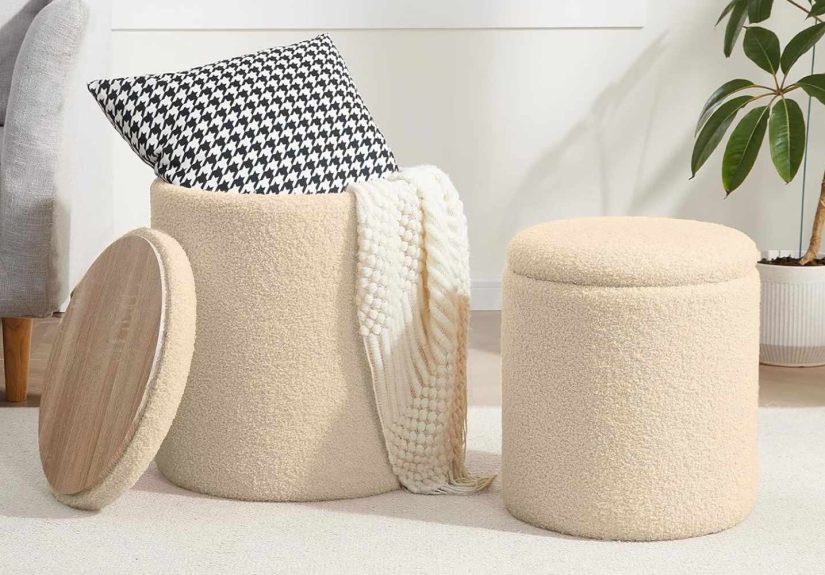
Blankets, throws, and guest linens multiply in fall. Instead of letting them sprawl, use storage that also looks good: lidded baskets by the sofa, storage ottomans for throws and board games, and under-bed bins labeled by size (“Queen Sheets,” “Twin Blankets”). Fall is also a smart time to audit towels and linensif it’s ripped, scratchy, or stained, it’s not guest-ready. Promote it to cleaning duty or donate where appropriate.
Hack #10: In the garage, organize by accessibility (then go vertical)
Pros often divide the garage into most accessible and least accessible zones. Keep everyday backstock and current-season gear up front. Store holiday decor and truly occasional items higher or farther back. Add vertical storageshelving, wall hooks, and labeled binsso the floor stays clear. In early fall, pull winter gear bins forward before the first cold snap so you’re not digging for gloves at the exact moment you need them.
Hack #11: Pre-organize holiday decor by “where it goes”
This is the hack that makes December feel 30% less chaotic. Instead of storing decor only by type (ornaments, lights, garlands), store it by destination: “Tree,” “Mantel,” “Front Porch,” “Dining Table.” Protect fragile items with dividers, wrap lights around cardboard to prevent tangles, and keep a small “decor toolkit” bin (hooks, extra bulbs, tape, scissors). Next year’s setup becomes a series of easy binsnot a frantic treasure hunt.
Hack #12: Label for real life (and make it flexible)
Labels aren’t just prettythey’re maintenance. For seasonal storage, removable or clip-on labels are especially useful because categories change fast (kids grow, hobbies shift, holiday themes evolve). Keep labels large, consistent, and placed in the same spot on every bin so you can scan shelves quickly. If you can’t see it at a glance, you won’t use it.
Bonus: A 10-minute weekly fall reset that keeps things tidy
Pros don’t rely on motivation; they rely on small resets. Once a week, set a timer for 10 minutes and run this loop:
- Entryway: shoes back to the rack, papers into the inbox tray, coats on hooks.
- Kitchen: return pantry items to zones, toss expired snacks, wipe one shelf if needed.
- Living room: blankets back to baskets, stray items into a “return” bin.
Keep one donation bag active at all times. When it’s full, it leaves the houseno debates, no “maybe later.” This tiny habit is how organizers prevent clutter from quietly respawning.
Experience-Based Notes: What Organizers Commonly See Every Fall
Advice is easy; real homes are chaos with a heating bill. Here are four fall situations organizers frequently describe, plus the fixes that actually hold up when life is loud.
1) The Backpack + Paper Avalanche
What happens: School starts and your entryway becomes a staging area for backpacks, lunch bags, sports gear, and a growing pile of papers that somehow includes both “Important: Sign Tonight” and a crayon drawing of a dinosaur wearing sunglasses. Everyone drops items wherever they land, and mornings become a frantic scavenger hunt.
What fixes it: A simple launch pad: one hook per kid, one bin or basket underneath for accessories (shin guards, gloves, water bottle), and one paper “inbox” tray. The inbox isn’t storageit’s a processing station. Once a day, papers get signed, filed, or recycled. If the inbox overflows, it’s a signal to process more often, not a signal to buy a bigger inbox.
2) The Coat Closet Black Hole
What happens: As temperatures bounce around, everyone grabs whatever jacket is closestthen shoves it into a closet that’s already stuffed with summer gear, tote bags, and an umbrella collection that could supply a small parade. Coats slide off hangers, gloves go missing, and the closet becomes the kind of place where time doesn’t exist.
What fixes it: Organizers typically remove anything that isn’t fall/winter-related first (summer beach bags, pool towels, random gear). Then they add “containers within the closet”: bins for hats/gloves/scarves, a basket for dog gear, and a hook strip for keys. The biggest change is a capacity rule: each person gets a limited number of “daily coat” slots. Extra coats live elsewhere. Limiting space prevents the closet from turning into a fabric landslideand it makes it obvious when it’s time to rotate out worn or unused outerwear.
3) The Pantry That’s Full but Still Feels Empty
What happens: You stock up for fall cooking, but ingredients hide behind each other. You can’t see what you have, so you buy duplicates. Then you have three half-used bags of flour and zero patience.
What fixes it: A quick visibility reset: pull items out, toss expired food, and group by seasonal usebaking, soups/stews, snacks, breakfast. Then contain each group with a bin or basket to create boundaries on the shelf. Turntables help on deep shelves where items disappear. Decanting is optional, but it’s useful for staples like flour or sugar when airtight containers keep them fresher and easier to scoop. The goal is seeing your inventory in under five seconds, so your grocery list becomes accurate instead of hopeful.
4) The “Holiday Decor Panic Buy”
What happens: Decorating season arrives and you discover tangled lights, crushed garlands, or missing hooks. You get frustrated and buy replacementsonly to find the original box later in a bin labeled “misc.” Then you own two of everything and love neither.
What fixes it: Pros treat holiday storage like a repeatable project. First, they edit: donate what you don’t use or don’t love. Second, they assign: store by destination (“Tree,” “Mantel,” “Outdoor”) so setup is predictable. Third, they protect fragile pieces with dividers and keep lights wrapped on holders so they’re ready to go. Finally, they store a small decorating toolkit (tape, hooks, extra bulbs, scissors) with the holiday bins. When everything is staged together, setup becomes calmer and you stop rebuying what you already own.
The pattern across these scenarios is consistent: organization sticks when it matches your habits. The best fall storage hacks don’t force you to become a new person; they make your current life easier to run.
Conclusion
Fall is the season to re-map your home around the way you live now. Start small with the Core-4 reset, then target the high-traffic zones: closets, entryway, pantry, living areas, garage, and early holiday storage. Use clear bins where visibility matters, store by frequency and destination, and label so the system can survive the rest of the household. Less clutter, more calmand fewer late-night searches for the other glove.