Table of Contents >> Show >> Hide
- What Is Bota Une Dovi?
- Ingredients You’ll Need (and Why They Matter)
- Cornmeal Porridge with Peanut Butter (Bota Une Dovi): The Recipe
- Common Problems (and the Fixes That Actually Work)
- Variations: Make It Yours Without Ruining the Vibe
- Serving Ideas That Don’t Feel Like Homework
- Make-Ahead, Storage, and Reheating
- Nutrition and Safety Notes (Short, Useful, Not Scary)
- Kitchen Experiences: What Making Bota Une Dovi Feels Like (About )
- Conclusion
Some breakfasts whisper. This one shows up in sweatpants, turns on the kettle, and says, “We’re doing comfort today.”
Bota une dovia warm cornmeal porridge enriched with peanut butterhits that sweet spot between “simple pantry food”
and “how is something this easy so satisfying?”
In many Zimbabwean homes, cornmeal porridge (often made with maize meal) is a daily staple. Stir in peanut butter (dovi),
and you get a creamy bowl that’s hearty, filling, and flexible enough to match your mood: sweet, lightly salty, or somewhere deliciously in between.
What Is Bota Une Dovi?
Think of bota as porridge made from cornmeal/maize mealsimilar in spirit to grits, polenta, or cornmeal porridge found across the globe.
Dovi refers to peanut butter (or a peanut paste), which melts into the hot porridge and transforms it from “nice” to “please don’t talk to me until I finish this bowl.”
The core idea is beautifully practical: cornmeal provides comforting carbs and body; peanut butter adds richness, flavor, and staying power.
The result is smooth, spoonable, and especially welcome on chilly morningsor any morning where life is doing the most.
Ingredients You’ll Need (and Why They Matter)
Core ingredients
- Cornmeal or maize meal (white or yellow) – Fine to medium grind gives a smoother porridge; coarser grind tastes more rustic and may need extra simmer time.
- Water – Traditional and clean-tasting. You can swap part of it for milk or plant milk for extra creaminess.
- Peanut butter – Smooth is classic for a silky finish; natural peanut butter works great (just stir the jar first).
- Salt – A small pinch makes the corn taste more like corn and less like warm wallpaper paste (highly technical term).
Optional, but highly recommended
- Sugar, honey, or maple syrup – For a sweet breakfast bowl.
- Cinnamon, nutmeg, vanilla – Cozy aromatics that play well with peanuts.
- Milk, evaporated milk, or coconut milk – For a richer, more “dessert-for-breakfast” vibe.
- Banana, berries, or chopped peanuts – For texture and extra flavor.
Quick note on cornmeal choices: if you’ve ever stood in a grocery aisle wondering why one bag says “cornmeal,” another says “polenta,”
and grits are nearby acting like they own the placedon’t worry. For this recipe, you mainly want a grind that cooks into a soft porridge.
Fine/medium cornmeal is the easiest starting point.
Cornmeal Porridge with Peanut Butter (Bota Une Dovi): The Recipe
Yield, timing, and gear
- Servings: 3–4
- Total time: ~20–25 minutes
- You’ll need: medium saucepan, whisk, measuring cups/spoons, wooden spoon or silicone spatula
Ingredients
- 1 cup cornmeal (fine or medium grind; white or yellow)
- 4 cups water, divided (plus more as needed)
- 1 pinch salt
- 2 to 3 tablespoons peanut butter (smooth or natural), plus more for serving
- 1 to 2 tablespoons sugar or honey (optional, to taste)
- 1/2 teaspoon vanilla extract (optional)
- 1/4 teaspoon cinnamon (optional)
- Pinch of nutmeg (optional)
- 1/2 to 1 cup milk or plant milk (optional, for extra creaminess)
Step-by-step instructions
-
Make a smooth cornmeal paste (your anti-lump insurance).
In a saucepan (off heat), combine the cornmeal with 1 cup of cold water. Whisk until it looks like a smooth slurryno dry pockets. -
Bring the remaining water to a boil.
Add 3 cups water and a pinch of salt to the pan. Set over medium-high heat and bring to a gentle boil, whisking as it heats. -
Simmer and stir (yes, this is the “arm day” portion).
Reduce heat to low. Simmer for 12–18 minutes, whisking frequently, especially along the bottom edges. The porridge will thicken as the corn cooks.
If it gets too thick, add a splash of water (or milk) and whisk smooth. -
Add peanut butter at the right moment.
Once the porridge is thick but still creamy, whisk in 2–3 tablespoons peanut butter.
Keep stirring until it fully melts and the color turns a warm, peanutty tan. -
Sweeten and season (optional, but delightful).
Stir in sugar/honey, vanilla, and spices if using. Taste and adjust: a pinch more salt can make the peanut flavor pop. -
Finish with creaminess (optional).
For a silkier bowl, stir in 1/2 cup milk (or coconut milk) at the end and warm through for 1–2 minutes. -
Serve hot.
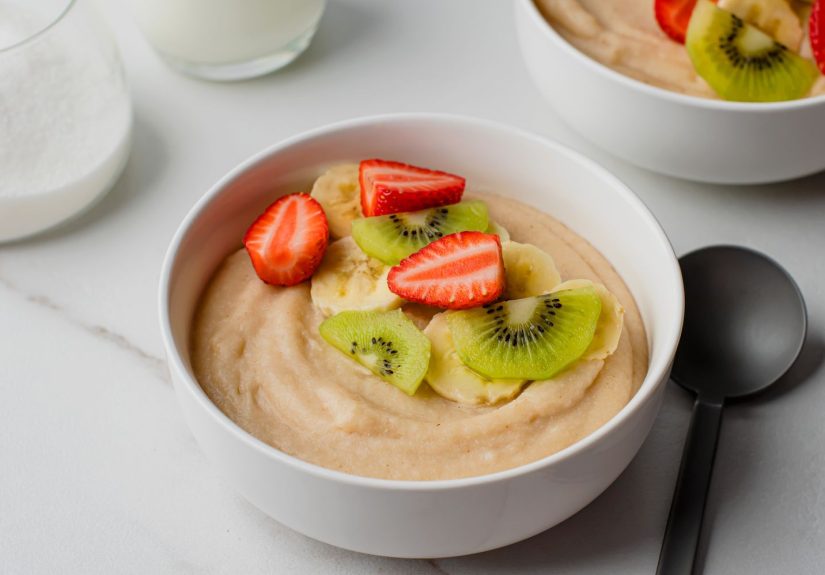
Spoon into bowls and top with sliced banana, berries, chopped peanuts, or an extra swirl of peanut butter.
Texture tip: This porridge thickens as it sits. If you like it looser, keep an extra splash of water or milk nearby and whisk it in right before serving.
Common Problems (and the Fixes That Actually Work)
“Help, it’s lumpy.”
Lumps usually happen when dry cornmeal hits hot liquid too fast. The paste/slurry method prevents most of it.
If lumps still appear, whisk vigorously while the porridge is still hot. Worst case? A quick blitz with an immersion blender makes it silky again.
“It’s too thicklike edible spackle.”
Cornmeal keeps absorbing liquid as it cooks. Thin it with warm water or milk, a little at a time, whisking until it loosens.
(Add liquid slowlyporridge loves drama and will swing from “brick” to “soup” if you overcorrect.)
“It tastes flat.”
Add a pinch more salt, a touch of sweetener, or a small spoon of peanut butter.
Flavor wakes up with contrast: salty-sweet is the whole point here.
“It scorched on the bottom.”
Keep the heat low and stir the bottom edges often. A heavy-bottomed pot helps.
If you do get a scorched layer, don’t scrape it injust pour the unburned porridge into a clean pot and keep going.
Variations: Make It Yours Without Ruining the Vibe
Sweeter breakfast bowl
Add vanilla + cinnamon + a little brown sugar or honey. Top with banana and a drizzle of peanut butter.
This tastes like a cozy bakery smell decided to become breakfast.
More savory (quietly brilliant)
Skip the sugar, use a bit more salt, and stir in a small pat of butter or a splash of unsweetened milk.
Peanut butter’s roasted flavor can read surprisingly savory when you’re not pushing sweetness.
Dairy-free and still creamy
Use water plus coconut milk or oat milk. Peanut butter adds richness, so you won’t feel like you’re “missing” dairy.
Higher-protein option
Add an extra tablespoon of peanut butter and top with chopped peanuts. If you tolerate it, a dollop of Greek yogurt on top (after serving) adds tang and protein.
Kid-friendly “PB & banana” edition
Keep it smooth, lightly sweet, and finish with mashed banana stirred in. It naturally sweetens the bowl and makes the texture extra plush.
Serving Ideas That Don’t Feel Like Homework
- Classic: peanut butter swirl + banana slices + pinch of cinnamon
- Crunchy: chopped roasted peanuts + toasted coconut
- Fruit-forward: berries + honey + a squeeze of lime (yes, limesurprisingly bright)
- Warm-spice: nutmeg + vanilla + a little brown sugar
- Snack bowl: smaller portion, thicker texture, eaten slowly like comfort food (because that’s what it is)
Make-Ahead, Storage, and Reheating
If you love future-you, make a double batch. Store cooled porridge in an airtight container in the fridge.
When reheating, add a splash of water or milk and warm gently on the stove or in the microwave, stirring halfway through.
Pro tip: Reheat first, then stir in a fresh spoon of peanut butter at the end. It tastes brighter and more “just made.”
Nutrition and Safety Notes (Short, Useful, Not Scary)
Cornmeal porridge provides energy and comfort; peanut butter adds fat and protein that help keep you full.
If you’re building a balanced breakfast, consider adding fruit (fiber and micronutrients) and a sprinkle of nuts for texture.
Allergy note: Peanuts are a major allergen. If peanut allergy is a concern, do not substitute casuallyuse a safe alternative like sunflower seed butter only if it’s appropriate for your needs.
Kitchen Experiences: What Making Bota Une Dovi Feels Like (About )
There’s a particular kind of comfort food that doesn’t need a big speech. Bota une dovi is that kind of breakfast.
The experience starts before the first bitewhen you whisk cornmeal into water and it looks unimpressive, like you accidentally invented beige paint.
Then the heat kicks in, the mixture thickens, and suddenly your kitchen smells warm and familiar in a way that’s hard to explain but easy to recognize.
If you’ve never made cornmeal porridge before, the biggest “aha” moment is realizing that the texture is almost entirely in your control.
Want it silky and spoon-loose? Add a bit more liquid and keep whisking. Want it thick and hearty? Let it simmer a few extra minutes.
You can even aim for different textures depending on who’s eating. Some people love it thin and sippable in a mug (especially on rushed mornings).
Others want it thick enough to hold toppings without everything sinking like a tragic fruit shipwreck.
Peanut butter changes the whole mood. When it hits the hot porridge, it melts slowly, and the smell shifts from “warm corn” to “roasted peanuts and comfort.”
The color deepens, the mouthfeel turns creamy, and suddenly the bowl feels more substantiallike it can carry you through a long morning.
A lot of home cooks end up developing their own peanut butter “signature”: some prefer just enough to perfume the porridge, while others go bold until it tastes like a cozy peanut dessert that happens to be acceptable at 8 a.m.
Toppings become a tiny form of self-expression. Banana is the classic partner because it’s sweet, soft, and basically made for porridge.
But you’ll notice something fun: bota une dovi welcomes “whatever’s around” energy. Leftover berries? Great. A handful of granola?
Now it’s crunchy. A drizzle of honey? You’ve got shine and sweetness. If you like a little contrast, a small pinch of salt on top can make the peanut flavor pop even more.
It sounds too simple to matter, but it doessalt is the background singer that makes the lead vocalist sound better.
This is also one of those dishes that quietly teaches patience. You can’t blast it on high heat and walk away.
It wants gentle simmering and regular stirringthe kind of low-stakes attention that feels almost calming once you accept it.
Many people find that the stirring becomes a rhythm: whisk, scrape the bottom, check the thickness, add a splash of water, whisk again.
It’s not complicated, but it’s involved enough to feel like you made something real (because you did).
And when you finally sit down with a warm bowlespecially on a cold daythe appeal makes perfect sense.
It’s filling without being heavy, comforting without being boring, and adaptable without turning into a fussy “project.”
Bota une dovi is the kind of recipe that can become a habit: the breakfast you make when you want to start the day steady, warm, and a little bit proud of yourself.
Conclusion
Bota une dovi is proof that a few pantry ingredients can deliver big comfort: cornmeal for body, peanut butter for richness, and a little stirring to bring it all together.
Make it sweet, keep it simple, or dress it up with fruit and spiceseither way, you’ll end up with a warm, satisfying breakfast that feels like a hug you can eat.