Table of Contents >> Show >> Hide
- What “8.75 Million Home” Actually Means
- Why Absences Hit Harder Than a Typical Slowdown
- From 2020’s Freefall to 2022’s “Wait, Where Did Everyone Go?”
- The “Two Economies” Problem: Remote-Ready vs. Location-Locked
- Consumer Spending Didn’t DisappearIt Moved
- Small Businesses: Fragile by Design, Heroic by Necessity
- Government Stabilizers: Checks, Unemployment, and the “Keep the Lights On” Strategy
- Public Health Policy Became Labor Policy (Whether We Liked It or Not)
- Why the Pain Was Uneven: Jobs, Wages, Caregiving, and Geography
- Lessons for the Next Disruption
- Experiences: What “Keeping 8.75 Million Home” Looked Like in Real Life
If the U.S. economy has a love language, it’s “show up.” Show up to work, to school, to the airport at 4:12 a.m. because the flight says “boarding”
(and because airports were invented to teach patience). COVID-19’s recurring superpower was simple: it kept people home. And when enough people stay home
at the same timewhether they’re sick, caring for someone, quarantining, or stuck in the “my kid’s class is remote again” loopthe ripple effects show up
everywhere: shorter store hours, delayed projects, canceled flights, and a labor market that feels like it’s running a marathon while tying its shoes.
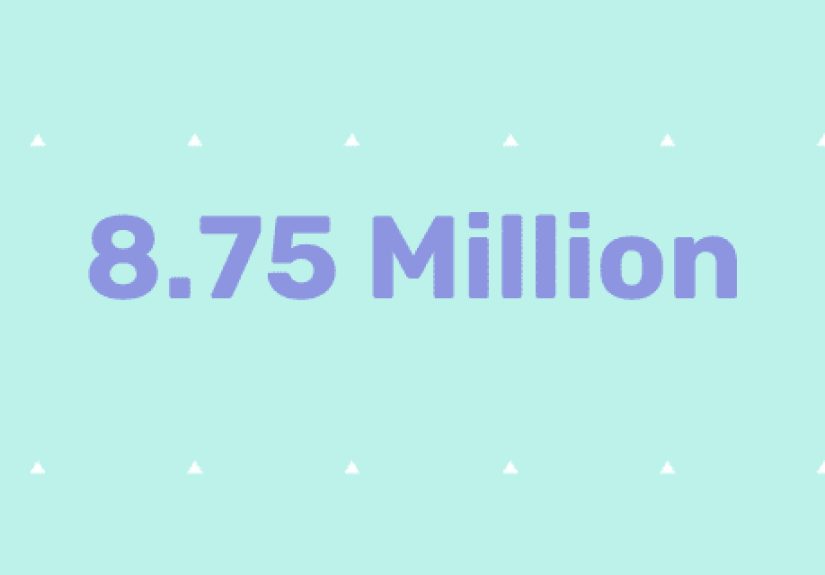
The headline number8.75 millionisn’t just a statistic. It’s a snapshot of how a virus can function like a sudden “pause” button on
real-world productivity. It’s also a reminder that economic impacts don’t only come from shutdown orders or dramatic stock market days. Sometimes the biggest
disruption is a million small disruptions at once: a missing cashier here, a short-staffed hospital there, a warehouse crew down by 20% on the day a big
shipment arrives.
What “8.75 Million Home” Actually Means
“Keeping 8.75 million home” refers to a specific moment during the Omicron wave when a large number of people reported they weren’t working
because they had COVID-19 symptoms or were caring for someone who did. Importantly, this is not the same thing as long-term unemployment. It’s closer to a
shock to labor availabilitythe workforce equivalent of finding out half your group chat is “offline” right when you’re trying to plan
dinner.
That distinction matters. If someone is “unemployed,” the typical story is a job has been lost and income is interrupted. If someone is “not working this
week due to COVID illness or caregiving,” the job may still existbut the business loses output today, coworkers scramble for coverage today,
and supply chains feel it today. This is how a public health event becomes an operational and economic eventfast.
Why Absences Hit Harder Than a Typical Slowdown
Economists often talk about the economy as if it’s a smooth machine: labor goes in, goods and services come out, everyone applauds, and the GDP chart
behaves. COVID made the economy look less like a machine and more like a busy restaurant on a Saturday night when the dishwasher calls out sick.
When millions are temporarily absent, businesses face a set of problems that aren’t solved by “strong demand” alone:
- Capacity drops suddenly. A hospital can’t “make up” nursing hours the way a factory can run a weekend shift.
- Service sectors are especially fragile. You can’t stockpile haircuts, dental cleanings, or live concerts.
- Bottlenecks multiply. One missing linkdrivers, loaders, schedulerscan slow an entire chain.
- Quality and safety risks rise. Overworked teams are more prone to mistakes, and training replacements takes time.
The result is that even in periods where overall spending is high, the economy can feel like it’s “underperforming.” Not because people don’t want to buy
things, but because fewer workers can safely and reliably deliver them.
From 2020’s Freefall to 2022’s “Wait, Where Did Everyone Go?”
The pandemic’s economic story in the U.S. came in chapters. In spring 2020, the shock was broad and brutal: businesses closed, travel collapsed, and the
unemployment rate spiked to levels modern America hadn’t seen. That period was defined by layoffs and shutdowns.
Later, especially by 2021–2022, the story shifted. Many sectors reopened, demand returned (sometimes aggressively), and yet employers struggled to staff up.
COVID didn’t only remove jobs; it also removed people from shiftssometimes for days, sometimes for weekscreating a stop-and-go recovery. That
“stop-and-go” dynamic is exactly what a figure like 8.75 million captures: a labor market that can look healthy on paper and still be operationally strained.
The “Two Economies” Problem: Remote-Ready vs. Location-Locked
One reason COVID’s impact felt so uneven is that the U.S. effectively ran two economies at once:
the remote-ready economy (many office jobs) and the location-locked economy (healthcare, retail, hospitality,
manufacturing, logistics, and most frontline work).
Remote-capable workers often kept earning, kept spending, and (eventually) kept complaining about video calls that could’ve been emails. Meanwhile,
location-locked workers faced higher exposure risk, more variable schedules, and fewer buffers when schools closed or household members got sick. This split
shaped everything from income inequality to inflation patterns: demand for goods surged while services were constrained.
Consumer Spending Didn’t DisappearIt Moved
Early in the pandemic, many households cut backsometimes by choice, sometimes because restaurants, travel, and entertainment weren’t available.
But spending didn’t simply vanish. It shifted.
Americans redirected dollars toward home improvement, electronics, groceries, and delivery. That shift collided with disrupted global manufacturing and
shipping, creating supply shortages and longer delivery times. In plain English: people wanted stuff, and the system that moves stuff was having a very bad
time.
A surge in worker absences intensifies this dynamic. Even if ports are open and trucks exist, missing workers in warehousing, distribution, and last-mile
delivery can turn “two-day shipping” into “two-day shipping… emotionally.”
Small Businesses: Fragile by Design, Heroic by Necessity
Small businesses felt the pandemic like a repeated stress test. Many operate on thin margins and depend on consistent staffing and predictable customer flow.
COVID attacked both. And unlike large firms, small businesses often lack redundancythere’s no “spare manager” or backup team waiting in the wings.
Consider a neighborhood restaurant. If two kitchen staff are out, the business might shorten hours, cut the menu, or close for the day. Multiply that across
thousands of local businesses, and you don’t just get inconvenienceyou get measurable economic drag, reduced wages, and fewer opportunities for hourly
workers who rely on stable shifts.
Federal relief programs helped many small firms bridge the worst gaps, but relief didn’t eliminate the operational reality: when people are home sick,
business is hardereven if demand is there.
Government Stabilizers: Checks, Unemployment, and the “Keep the Lights On” Strategy
The U.S. response combined fiscal relief (payments to households, expanded unemployment benefits, aid to businesses and state/local governments) and monetary
policy support (lower interest rates and credit facilities). The goal was to prevent a public health shock from becoming a full-blown depression.
In real-world terms, relief programs helped families pay rent, buy groceries, and keep up with bills when work was disrupted. This mattered not only for
household wellbeing, but also for the broader economy: when households can keep spending on essentials, businesses have a better chance of surviving.
But stabilizers have trade-offs. Rapid relief can be imperfectly targeted. Expanded systems can attract fraud. And prolonged disruptions can still create
labor mismatchesespecially when childcare, health risks, and job conditions change faster than the labor market can adapt.
Public Health Policy Became Labor Policy (Whether We Liked It or Not)
During COVID, the rules around isolation and quarantine didn’t just shape health outcomesthey shaped staffing levels. When guidance changes from 10 days to 5,
that’s not an abstract adjustment. It’s a very concrete difference in how many nurses are available next week, how many flights an airline can staff, and how
quickly a warehouse can clear a backlog.
This is where the “8.75 million home” story becomes especially powerful: it shows how waves of illness can function like an invisible but massive reduction
in available labor. Even strong hiring can’t solve that overnight, because the issue isn’t job openingsit’s human beings being temporarily unavailable.
Why the Pain Was Uneven: Jobs, Wages, Caregiving, and Geography
COVID didn’t hit the U.S. economy like a single hammer. It hit like a handful of hammers, each aimed at different groups:
- Frontline workers had higher exposure and often less flexibility.
- Parents and caregivers faced labor supply pressure when schools and childcare were disrupted.
- Service-sector workers experienced sharper swings in hours and tips.
- Regions dependent on tourism often saw deeper and longer demand shocks.
Over time, the economy recovered in aggregate, but the distributional scars remained visible: some households rebuilt savings, while others accumulated debt.
Some workers gained bargaining power and switched jobs, while others were pushed out of the labor force by health issues or caregiving responsibilities.
Lessons for the Next Disruption
The 8.75 million figure is a reminder that resilience is not just about money. It’s about systems that keep functioning when life gets messy.
If the next disruption is another virus, a climate event, or something we haven’t invented a name for yet, the playbook is clearer now:
- Build paid sick time and supportive leave policies so workers can stay home when needed without catastrophe.
- Invest in childcare reliabilitybecause the labor market runs on families, not spreadsheets.
- Improve ventilation and workplace safety to reduce transmission and absenteeism.
- Create staffing and cross-training buffers in critical sectors (healthcare, logistics, public safety).
- Use real-time data to match policy decisions to on-the-ground conditions.
- Strengthen supply chain flexibility so a single bottleneck doesn’t become a nationwide headache.
The economic lesson is straightforward: when health shocks remove labor unexpectedly, the economy can’t simply “willpower” its way to normal. Resilience
requires planning, redundancy, and policies that treat human constraints as the central variablenot an afterthought.
Experiences: What “Keeping 8.75 Million Home” Looked Like in Real Life
Numbers make headlines, but experiences explain the feeling. When millions stayed home during the Omicron surge, the disruption showed up in ordinary moments
that suddenly weren’t ordinary at all.
A retail manager in the Midwest described the week like playing staffing roulette. Three employees called out in one morningtwo with symptoms, one caring for
a partner who tested positive. The store stayed open, but half the aisles didn’t get restocked, the customer service desk closed early, and the manager spent
the day apologizing with the tired sincerity of someone who’s said, “I’m so sorry, we’re short-staffed” 84 times before lunch. The demand was there. The
labor wasn’t.
In healthcare, the experience was sharper. A nurse in a busy hospital unit (already worn down from earlier waves) saw schedules rearranged almost daily.
People weren’t quitting in mass that weekthey were simply out. Some were sick. Some were quarantining. Some were waiting on test results while trying to keep
their households safe. The unit still had patients. The work still had to happen. But fewer people were available to do it, and the moral weight of that gap
was heavy. You can’t “backorder” patient care.
For parents, the impact often arrived through schools. One household in the Northeast talked about the whiplash of childcare plans: a classroom exposure
notice on Monday, remote learning by Wednesday, and a scramble for coverage that felt like a second full-time job. One parent reduced work hours; the other
tried to take calls while supervising math worksheets that seemed designed by someone who had never met a second-grader. The paycheck didn’t always drop to
zero, but productivity didand the stress climbed fast.
In logistics, supervisors spoke about “thin ice” operations: everything worked as long as nothing went wrong. But COVID absences meant something always went
wrong. A warehouse shift started with fewer pickers, which delayed loading, which pushed delivery windows later, which meant customer support lines were
flooded by afternoon. None of those links were dramatic on their own; together they created the sense that the whole system was running five minutes behind
all day long.
And in offices, remote workers experienced a different kind of disruption. Work continued, but the boundaries blurred. People attended meetings from kitchens,
spare rooms, and the occasional closet (not for dramajust for quiet). Some felt grateful to be safe at home; others felt isolated and burned out. The economy
kept moving, but it moved differentlymore digital, more fragmented, and, for many, more exhausting than it looked from the outside.
Put together, these experiences explain why “8.75 million home” matters. It’s not merely about who was absent. It’s about how interconnected modern work is:
when enough people are missing at once, the economy doesn’t crash like a movie scene. It stuttershours shrink, shelves thin out, services slow down, and the
everyday conveniences people rely on become a little less reliable. That stutter is an economic story, a public health story, and a human story all at once.
Model: GPT-5.2 Thinking