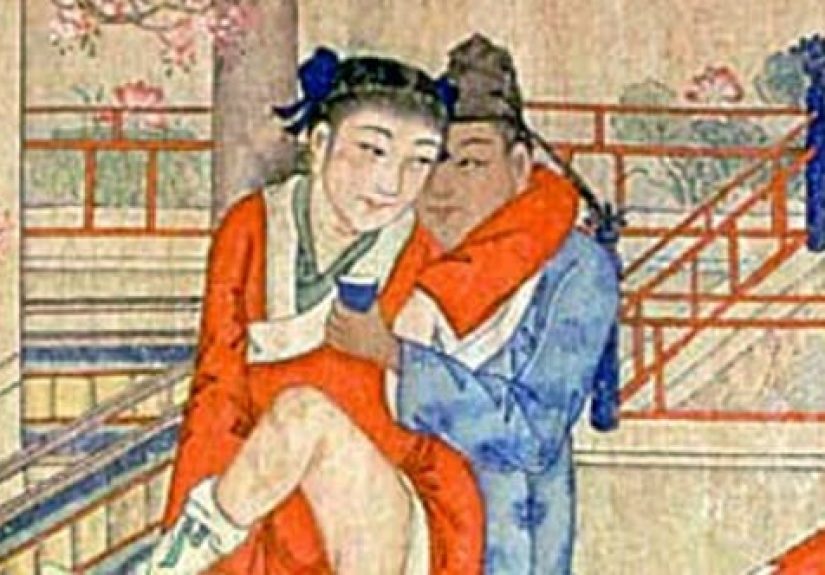
Table of Contents >> Show >> Hide
- Why Ancient Views of Sexuality Were So Different
- 1. Ancient Egypt Treated Marriage as Practical, Not Overly Ceremonial
- 2. Fertility Was Often Treated Like a Sacred Technology
- 3. Mesopotamia Made Love and War Share a Goddess
- 4. Ancient Greece Saw Bodies, Desire, and Status Through a Very Different Lens
- 5. Rome Turned Fertility Into Public Ritual
- 6. The Kamasutra Was Not Just “That Book”
- 7. Some Cultures Recognized More Than Two Gender Roles
- 8. Sexuality Was Often Linked to Social Rank More Than Identity
- 9. Women’s Sexuality Was Often Feared, Managed, or Mythologized
- 10. Love Magic and Desire Spells Were a Thing
- 11. Chastity Could Be Powerful, Not Just Restrictive
- 12. Sexual Rumors Were Political Weapons
- What These Beliefs Reveal About Human Nature
- Modern Lessons From Ancient Sexuality
- Experiences and Reflections Related to Crazy Ways Past Cultures Saw Human Sexuality
- Conclusion
Human sexuality has never been just one simple thing. Across history, it has been sacred, suspicious, political, poetic, practical, comic, dangerous, divine, and occasionally so wrapped in ritual that modern readers can only blink and whisper, “Wait, that was normal?” Past cultures did not think about desire, marriage, fertility, gender, and intimacy the way most modern Americans do. They often viewed sexuality through religion, family survival, social rank, health, inheritance, cosmic order, or community duty.
That is what makes the history of human sexuality so fascinating. The point is not to laugh at ancient people as if they were confused tourists wandering through biology without a map. Many of their beliefs made sense inside their own worlds. Still, some ideas were wildly different from today’s assumptions. A goddess could represent love and war at the same time. A marriage could begin without a wedding ceremony. A festival could mix purification with fertility symbolism. A respected person might move between gender roles in ways later societies misunderstood or erased.
This article explores strange, surprising, and deeply human ways past cultures saw sexuality. It stays historical rather than explicit, because the real story is not shock value. The real story is how societies used sexuality to explain life itself.
Why Ancient Views of Sexuality Were So Different
Modern people often separate sexuality into categories such as romance, identity, privacy, health, and personal choice. Many past cultures did not divide life that neatly. Sexuality could be connected to crops growing, kings staying powerful, families preserving property, gods blessing childbirth, or ancestors continuing through descendants.
In other words, sexuality was rarely “just personal.” It was part of the social operating system. Ancient communities worried about who married whom, who inherited land, who produced heirs, who could perform rituals, and how bodies symbolized order or disorder. When those questions mattered for survival, sexuality became everyone’s business: family elders, priests, lawmakers, poets, physicians, and sometimes the entire village committee of people who had opinions before breakfast.
1. Ancient Egypt Treated Marriage as Practical, Not Overly Ceremonial
One of the most surprising facts about ancient Egypt is that marriage did not require the kind of formal wedding ceremony many people expect today. A couple could be understood as married when they began living together and household arrangements were settled. That may sound oddly casual, but Egyptian marriage was also practical and legally meaningful.
Property mattered. Women in ancient Egypt could own possessions, manage wealth, and in many cases keep what they brought into marriage. Compared with many neighboring civilizations, Egyptian women had notable legal and economic rights. Marriage was not simply a romantic postcard with lotus flowers. It was a household partnership, a property arrangement, a family alliance, and a structure for raising children.
What seems “crazy” from a modern perspective is the mix: less wedding spectacle, but more practical attention to assets and obligations. Ancient Egyptians may not have needed a seven-tier cake, a choreographed first dance, or a photographer yelling, “Now pretend you like your cousins.” They needed a functioning household.
2. Fertility Was Often Treated Like a Sacred Technology
In many ancient cultures, fertility was not viewed only as a private matter between partners. It was linked to agriculture, survival, and divine favor. When infant mortality was high, harvests were uncertain, and family labor mattered, reproduction became a community concern. Fertility gods and goddesses appeared everywhere because fertility was not a side topic; it was the engine of life.
Ancient Egypt had protective deities connected with childbirth and family wellbeing. Mesopotamia had powerful goddesses associated with love, fertility, and social vitality. Greek and Roman worlds honored deities connected to desire, marriage, beauty, and birth. These divine figures show that sexuality was often seen as part of the sacred cycle of creation.
Fertility Was Bigger Than Romance
Today, many people think of romance first and children later, if at all. In the ancient world, the order was often reversed. The survival of the family line could be more important than individual romantic preference. That did not mean love was absent. Ancient poems, letters, and myths are full of longing and heartbreak. But love often had to share the stage with inheritance, duty, status, and religious expectation.
3. Mesopotamia Made Love and War Share a Goddess
Few ancient figures capture the complexity of sexuality better than Inanna, later associated with Ishtar. She was connected with love, fertility, sensuality, power, and war. To modern minds, love and war may seem like opposite departments. In Mesopotamian religion, they could belong to the same divine force.
This is not as contradictory as it first appears. Desire can create alliances, rivalries, families, political drama, and intense emotion. War, too, is about power, conquest, loyalty, and survival. Inanna/Ishtar embodied a world where attraction and aggression were not always treated as separate forces. She was not a soft-focus greeting card goddess. She was cosmic intensity wearing a crown.
Mesopotamian culture also placed huge importance on marriage because it stabilized families and inheritance. Legal codes regulated household relationships, especially women’s roles within marriage. So, on one side, the divine imagination could be bold and complicated; on the other, everyday society could be highly structured and controlled. Ancient sexuality often lived in that tension between mythic freedom and legal restriction.
4. Ancient Greece Saw Bodies, Desire, and Status Through a Very Different Lens
Ancient Greece is often discussed in the history of sexuality because Greek ideas about beauty, masculinity, education, and social hierarchy were very different from modern categories. It is important not to flatten all Greek city-states into one attitude. Athens, Sparta, and other communities had different customs and expectations.
Greek culture placed enormous symbolic value on the male body in athletics and art. Public athletic nudity, for example, was not automatically understood the way modern people might interpret it. It could represent discipline, citizenship, beauty, and cultural identity. The body was a social sign, not merely a private object.
Greek mythology also played with gender and transformation. Figures such as Tiresias, who was associated with shifts in sex or gender in mythic storytelling, show that ancient imagination could be more flexible than later moral systems allowed. Greek drama also had men perform women’s roles on stage, partly because women were excluded from public theatrical performance in many contexts. Yes, ancient theater had its own version of “Sir, this is a wig and a civic institution.”
5. Rome Turned Fertility Into Public Ritual
Ancient Rome had a reputation for being practical, legalistic, and extremely fond of turning everything into a ceremony with rules. Sexuality and fertility were no exception. Roman society connected family life to citizenship, inheritance, morality, and the strength of the state.
One famous example is Lupercalia, an ancient Roman festival held in February and associated with purification and fertility. Modern readers sometimes hear about Roman festivals and imagine a chaotic costume party with Latin homework. The reality was more complicated. Public rituals helped express hopes for health, reproduction, protection, and social continuity.
Roman women could hold influence in households, religion, business, and imperial politics, but they generally lacked the same public political voice as men. Sexual morality was often judged through status and family order. A person’s social rank could shape how behavior was interpreted. In Rome, sexuality was never simply about desire; it was about hierarchy.
6. The Kamasutra Was Not Just “That Book”
Few historical texts have been more misunderstood in modern popular culture than the Kamasutra. Many people reduce it to a manual of physical positions, but historically it was broader than that. It belonged to a learned Indian tradition concerned with kama, or pleasure, as one part of a well-rounded life. It discussed courtship, relationships, household culture, social behavior, beauty, and the pleasures of refined living.
The truly interesting part is that ancient Indian thought did not always treat pleasure as shameful. In certain traditions, pleasure could be studied, categorized, debated, and woven into philosophy. That does not mean ancient India was one giant open-minded paradise; no civilization is that simple. Social rank, gender expectations, marriage customs, and religious duties all mattered. But the existence of a sophisticated text on pleasure challenges the idea that all premodern cultures were silent or prudish about sexuality.
In a modern bookstore, the Kamasutra might get shelved with sensational titles. In its historical context, it was closer to a social science of pleasure, etiquette, and adult relationships. Ancient scholarship really did say, “Let us organize desire into categories,” because apparently even romance was not safe from paperwork.
7. Some Cultures Recognized More Than Two Gender Roles
Many people assume that complex discussions of gender are entirely modern. History says otherwise. Across many Indigenous cultures, gender diversity existed long before modern terminology. The term “Two-Spirit” is a contemporary English umbrella term used by some Indigenous people, but it points toward older traditions in which certain individuals held social, spiritual, artistic, or ceremonial roles that did not fit a simple male-female binary.
It is important to be respectful here. Not every Indigenous nation had the same gender system, and modern labels should not be carelessly projected backward. Still, historical and cultural evidence shows that some communities recognized gender variance as meaningful rather than automatically shameful. In Diné tradition, for example, accounts describe more than two gender categories.
What seems “new” in modern debates is often not new at all. What is newer is the language, the politics, and the fight over recognition. Past cultures did not all see gender diversity the same way, but the idea that human identity has always been strictly binary is historically weak.
8. Sexuality Was Often Linked to Social Rank More Than Identity
Modern people often discuss sexuality as identity: straight, gay, bisexual, queer, asexual, and other terms. Many ancient societies did not organize desire primarily through identity categories. Instead, they often focused on role, status, age, citizenship, gender expectations, family duty, and public reputation.
This difference matters. When historians study ancient Greece or Rome, they must avoid forcing modern categories onto people who did not use those categories. A behavior that modern society might interpret through orientation could have been interpreted in the ancient world through status or power. That does not mean same-sex desire did not exist. It certainly did. It means the cultural meaning attached to it could be very different.
In short, ancient people had desire. What they did not always have was the same vocabulary, legal framework, or identity politics that shape modern conversations.
9. Women’s Sexuality Was Often Feared, Managed, or Mythologized
Across many past cultures, women’s sexuality carried heavy symbolic weight. It could be celebrated through goddesses, fertility figures, poetry, and marriage rituals. It could also be controlled through laws, family supervision, veiling customs, inheritance rules, and moral stories.
This double attitude appears again and again. A goddess might be powerful, desirable, and terrifying, while real women were expected to behave within strict social boundaries. Ancient art could celebrate feminine beauty, while legal systems limited women’s choices. Myth could imagine women as divine forces, while society often treated them as family assets.
The contradiction is not accidental. Many cultures admired the creative power associated with women’s bodies while also trying to control it. That is one of the oldest social tug-of-war games in history, and unfortunately, humanity has been playing it far longer than anyone asked.
10. Love Magic and Desire Spells Were a Thing
In the ancient Mediterranean world, people sometimes turned to magic when romance, attraction, or rivalry did not go according to plan. Archaeologists and historians have studied curse tablets and spells that reveal intense emotional lives beneath official culture. People wanted affection, revenge, loyalty, attention, or victory over romantic competitors.
This does not mean every ancient person believed magic worked in the same way. But magical objects show that private desire often escaped public rules. When law, family, and social etiquette could not solve matters of the heart, some people tried supernatural customer service.
These artifacts are valuable because they preserve voices that elite literature often ignores. They reveal anxiety, longing, jealousy, and hope. Basically, ancient people had messy feelings too; they just sometimes wrote them on lead instead of posting vague updates online.
11. Chastity Could Be Powerful, Not Just Restrictive
Not every historical culture placed the highest value on sexual expression. Many religious traditions treated abstinence, celibacy, or controlled desire as spiritually powerful. Early Christian, Buddhist, Hindu, and other traditions developed ideas about discipline, purity, renunciation, and self-mastery.
Modern readers may see this only as repression, but the historical picture is more complicated. For some people, celibacy could offer status, education, religious authority, or freedom from marriage expectations. For others, it was imposed by social pressure. Like most human institutions, it could empower and restrict at the same time.
The “crazy” part is not that past cultures valued restraint. The surprising part is how often sexuality and anti-sexuality were both treated as sources of power. Desire could be sacred, and refusing desire could be sacred too. History loves making things complicated right when you thought you understood the assignment.
12. Sexual Rumors Were Political Weapons
History is full of rulers and public figures attacked through sexual gossip. A powerful woman could be accused of uncontrolled desire. A political rival could be painted as immoral, unnatural, weak, or corrupt. These stories often tell us less about what actually happened and more about what a society feared.
Catherine the Great offers a later historical example of how sexual myths could be used to discredit female power. Her enemies spread lurid rumors to make her authority seem dangerous and excessive. Similar patterns appear throughout history: when people disliked a ruler, they often attacked the ruler’s body, relationships, or gender performance.
Sexuality became a shortcut for political character. If opponents could make someone seem morally suspicious, they could weaken that person’s legitimacy. In modern terms, it was a smear campaign wearing a powdered wig.
What These Beliefs Reveal About Human Nature
The strangest thing about past cultures’ views of sexuality is not that they were different. It is that they were different in such recognizable ways. People wanted love, safety, children, pleasure, status, belonging, and meaning. They worried about betrayal, inheritance, reputation, and social disorder. They created gods, laws, rituals, poems, jokes, taboos, and myths to manage desires that refused to behave neatly.
Human sexuality has always been biological, but culture decides what biology means. One society sees fertility as divine blessing. Another sees desire as a threat to discipline. Another links gender variation to spiritual power. Another turns marriage into a contract between families. These interpretations change, but the human need to interpret sexuality never goes away.
Modern Lessons From Ancient Sexuality
Studying ancient sexuality can make modern people more humble. It reminds us that today’s assumptions are not universal laws carved into the moon. They are cultural arrangements, shaped by religion, medicine, law, economics, media, and politics. Future generations may find some of today’s ideas just as odd as we find ancient fertility festivals.
It also warns us against oversimplifying the past. No ancient culture was completely liberated, completely repressed, completely equal, or completely strange. Every society contained contradictions. Egypt gave women notable property rights but still lived in a patriarchal world. Greece celebrated male beauty but restricted women’s public roles. Rome valued family order but staged public rituals around fertility. India produced sophisticated writings on pleasure while maintaining social hierarchies. Indigenous gender systems varied widely and should not be squeezed into one modern category.
The best way to understand past cultures is not to ask, “Were they progressive or backward?” A better question is, “What problem were they trying to solve?” Often, their answers involved survival, social order, spiritual meaning, and the eternal challenge of getting humans to behave predictably, which, as every century has discovered, is ambitious.
Experiences and Reflections Related to Crazy Ways Past Cultures Saw Human Sexuality
When reading about the history of sexuality, one of the most eye-opening experiences is realizing how quickly “normal” changes. A belief that feels obvious in one century can seem bizarre in another. Imagine explaining modern dating apps, gender reveal parties, celebrity relationship gossip, or wedding hashtags to an ancient Roman. He might nod politely, then immediately consult a priest, a lawyer, and possibly a goat.
The first useful experience is learning to pause before judging. Ancient Egyptian marriage customs may seem surprisingly informal because there was no single ceremony like a modern wedding. But if we look closer, we see a culture concerned with household stability, property rights, and family continuity. Their system was not careless; it was practical. The form was different, but the goal was familiar: create a stable life with clear expectations.
The second experience is noticing how often sexuality becomes a mirror for power. In Mesopotamia, a goddess such as Inanna/Ishtar could represent attraction, fertility, and war. That combination sounds dramatic, but it captures a truth many societies recognized: desire can build households, start conflicts, shift alliances, and challenge authority. Ancient mythology sometimes expressed emotional realities more honestly than polite social rules did.
The third experience is seeing how gender has never been as simple as some people claim. Learning about Two-Spirit traditions and other gender-diverse roles can be especially important because it shows that human societies have long developed more than one way to understand identity, responsibility, and spiritual purpose. These traditions should not be treated as trivia or used carelessly. They belong to living cultures with their own histories. Still, they remind us that the past was not a single straight line leading to the present.
The fourth experience is recognizing the difference between privacy and community. Modern Americans often treat sexuality as private, at least in theory. Past societies often treated it as a public issue because it affected inheritance, labor, religion, and social order. That does not mean ancient people had no private feelings. They loved, desired, worried, and suffered just like people do now. But their private feelings were often surrounded by public expectations.
The fifth experience is understanding that humor helps history become readable. Without humor, this topic can become a heavy parade of laws, taboos, and academic terms. But history is full of human awkwardness. People wrote love poems, made fertility charms, argued about marriage, gossiped about rulers, worried about reputation, and tried to explain attraction with whatever tools their culture gave them. Sometimes those tools were philosophy. Sometimes they were ritual. Sometimes they were magic. Humans have always been creative when confused.
The final experience is the most valuable: studying past cultures makes modern conversations less arrogant. We are not the first people to debate sexuality, gender, love, marriage, pleasure, restraint, and morality. We inherited a very old conversation. Ancient people may not have used our words, but they wrestled with many of the same forces: desire, duty, fear, affection, status, and meaning. Their answers were sometimes wise, sometimes unfair, sometimes poetic, and sometimes deeply strange. In other words, they were human.
Conclusion
Past cultures saw human sexuality in ways that can seem crazy, funny, beautiful, strict, symbolic, and surprisingly familiar. Ancient Egypt made marriage practical and property-conscious. Mesopotamia imagined love and war through the same powerful goddess. Greece connected bodies to beauty, citizenship, theater, and myth. Rome turned fertility into public ritual. India produced sophisticated writings on pleasure and social life. Indigenous traditions remind us that gender diversity has deep historical roots.
The big lesson is simple: sexuality has always been more than biology. It is culture, law, religion, art, family, politics, and storytelling all tangled together. The past may look strange, but it also reveals how endlessly inventive humans are when trying to explain desire, identity, and belonging.
Note: This article is written for web publication in standard American English, based on historical research and presented in a non-explicit educational style.