Table of Contents >> Show >> Hide
- What “Shadowland” Really Means in Design
- Why Everyone Is Suddenly in the Mood for It
- The Building Blocks of the Shadowland Aesthetic
- Shadowland in the Wild: The Spaces That Explain the Obsession
- How to Bring Shadowland Home Without Making It Look Like a Cave
- Why Shadowland Works So Well Right Now
- Living in Shadowland: The Experience Behind the Aesthetic
- Conclusion
Some design trends kick the door down wearing sequins. Shadowland slips in quietly, turns on one perfectly placed lamp, and somehow makes the whole room look richer, calmer, and a little more mysterious. That is the mood at the heart of this obsession: spaces shaped not by brightness alone, but by contrast, texture, atmosphere, and the deliberate beauty of what is left half-hidden.
Shadowland is not about making your home gloomy or pretending you live inside an art-house thriller. It is about creating depth. It is about letting shadows do some of the decorative work that color, pattern, and clutter have been doing overtime for. In a world addicted to overexposure, overstyling, and enough overhead lighting to interrogate a sandwich, Shadowland feels like a stylish correction. It is softer, quieter, and infinitely more interesting.
At its best, this aesthetic blends moody interiors, sculptural lighting, soulful textiles, and natural materials into rooms that feel composed rather than staged. It borrows from monastic calm, museum polish, boutique-hotel drama, and the tactile comfort of a home that actually wants you to stay awhile. If minimalism had a more emotionally intelligent cousin, it would probably live here.
What “Shadowland” Really Means in Design
The term may sound cinematic, but its design appeal is remarkably practical. Shadowland is a way of thinking about rooms as layered environments rather than flat, brightly lit boxes. It values atmosphere over flash. Instead of asking, “How do I fill this room?” it asks, “How should this room feel at 8 p.m.?” That one question changes everything.
Spaces that embody Shadowland usually share a few qualities. They favor soft transitions over harsh contrast. They lean into charcoal, stone, olive, cocoa, taupe, smoke blue, and blackened brown rather than sugary pastels or sterile all-white. They use texture the way other homes use color: limewash, plaster, raw wood, brushed metal, nubby linen, velvet, wool, woven wall hangings, and ceramics with uneven surfaces that look better the closer you get.
There is also a strong architectural instinct at work here. Light is not treated like a switch you flip on and forget. It is directed, bounced, softened, dimmed, reflected, and interrupted. A wall may recede into darkness while a table lamp glows low and golden. A matte surface may absorb light while brushed brass warms it. A tapestry may soften sound while deepening the room’s emotional temperature. Shadowland knows that drama does not require noise.
Why Everyone Is Suddenly in the Mood for It
Design never happens in a vacuum. People crave certain interiors because they reflect larger emotional needs, and right now many homeowners are done with rooms that look bright, efficient, and utterly incapable of keeping a secret. The appetite has shifted toward spaces that feel personal, layered, and a little cocooning.
That helps explain the rise of dark bedrooms, moody living rooms, handwoven textiles, antique tapestries, and earthy finishes. Instead of chasing perfection, people are leaning toward mood. Instead of demanding that every corner photograph like a cloud, they want spaces that feel intimate in real life. That means richer palettes, quieter surfaces, softer pools of light, and objects with tactile or historical weight.
There is also a subtle rebellion built into Shadowland. For years, design culture worshiped brightness as if whiteness automatically meant sophistication. But a room flooded with light can still feel emotionally flat. A darker, more textured room can feel more luxurious because it asks you to slow down. It reveals itself over time. That is a powerful thing in an era of scroll-speed taste.
The Building Blocks of the Shadowland Aesthetic
Color That Whispers Instead of Shouts
Shadowland palettes tend to be grounded, not gloomy. Think soot, ink, mushroom, olive drab, espresso, weathered navy, aubergine, and chalky gray. These shades do not just color a room; they hold it together. They create the visual equivalent of a lower speaking voice, which is often much more compelling than yelling.
The trick is restraint. A good Shadowland room usually avoids sharp, sugary contrast. It prefers tonal layering: charcoal against pewter, olive against moss, dusty blue against smoked oak, deep plaster against off-white linen. When lighter notes appear, they feel luminous rather than loud. That balance is what keeps the aesthetic sophisticated instead of theatrical.
Lighting With a Strategy
If there is one nonnegotiable in Shadowland, it is thoughtful lighting. This is not the place for a lonely ceiling fixture doing all the work and none of it gracefully. The look depends on layers: a pendant for structure, table lamps for intimacy, sconces for glow, and maybe one sculptural piece that turns negative space into a design moment.
Indirect light matters especially when the walls are dark. It softens the room rather than flattening it. Light aimed upward can make a ceiling feel airy. A lamp placed low can make seating areas feel grounded and private. Dimmers are not optional here; they are the backstage crew making the whole production work.
And yes, Shadowland absolutely appreciates a lamp that is a little bit extra. Not gaudy-extra. Intelligent-extra. The kind of fixture that creates interesting shadows, reveals the shape of a wall, and looks almost like sculpture during the day.
Texture Is the Real Main Character
In a brighter room, color often does the heavy lifting. In Shadowland, texture takes center stage. Matte walls with cloudy limewash movement. A rough ceramic lamp next to polished stone. Handwoven textiles on a clean-lined sofa. A tapestry or quilt that brings warmth, history, and softness without screaming for attention. Texture gives moody rooms their pulse.
This is also why Shadowland works so well with natural and handmade materials. Unfinished wood, brushed metal, plaster, linen, wool, leather, paper shades, woven cane, and handmade tile all catch light differently. They create subtle variation, which is exactly what keeps a dark room from feeling dead.
Objects With Story and Substance
Shadowland is not obsessed with buying ten thousand matching accessories and calling it a personality. It prefers fewer objects, better chosen. Pieces made from reused materials. Textiles that show the hand of the maker. Vintage furniture with a little patina and a lot of character. Art that changes as the light changes. The goal is not just beauty. It is emotional density.
That is one reason this aesthetic pairs so naturally with sustainable design. Upcrafted materials, remnant textiles, handmade lighting, and repurposed decor all bring depth because they already carry narrative. A home feels more grounded when its objects seem discovered, not simply delivered in one very enthusiastic weekend.
Shadowland in the Wild: The Spaces That Explain the Obsession
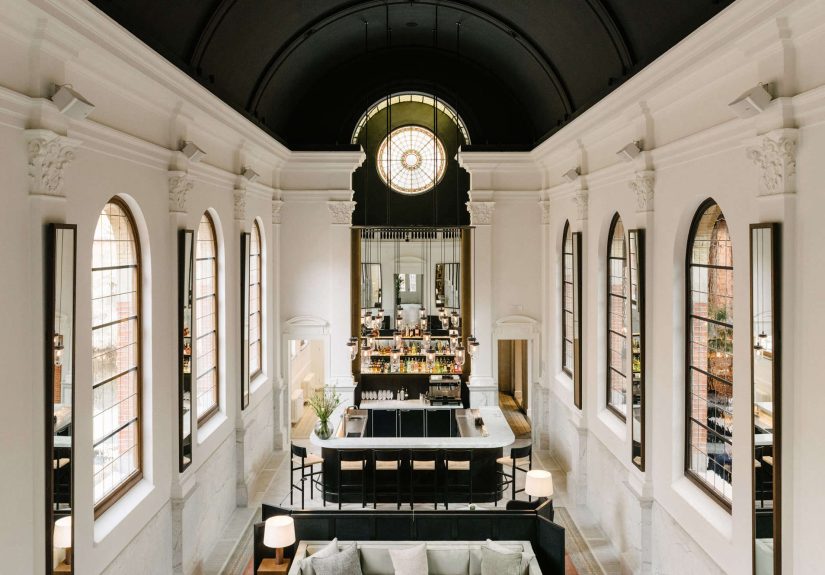
One of the clearest expressions of this mood can be found in hospitality design. A former Augustinian convent turned hotel, for example, feels like a master class in controlled serenity: restrained color, sacred calm, softened light, and materials that understand the power of silence. It is not loud luxury. It is atmospheric luxury. You feel it before you analyze it.
Museum spaces also offer clues. Retail and gallery environments that combine height, openness, focused lighting, and careful material editing often create exactly the kind of tension Shadowland loves. They make objects feel important by giving them room, shadow, and contrast. That lesson scales beautifully at home. A single shelf with one ceramic piece and the right pool of light can say more than an entire wall of stuff.
Then there is the art world’s long romance with shadow as a creative force. Light-and-shadow installations prove that shadow is not merely the absence of illumination. It is form. It is drawing. It is atmosphere. It can turn simple materials into something uncanny and moving. That idea translates directly into interiors: the room is not finished when the furniture arrives; it is finished when the light hits it correctly.
How to Bring Shadowland Home Without Making It Look Like a Cave
Start With One Room
A bedroom, library, den, or dining room is usually the easiest entry point. These rooms already benefit from intimacy, so a deeper palette and softer lighting feel natural there. Trying to make your laundry room “mysterious” on day one is ambitious in a way that may not reward you.
Use Deep Color, But Balance It
If you paint walls a dark tone, offset that visual weight with warmer woods, brushed metals, stone, linen, and a few lighter accents that glow instead of glare. The room should feel grounded, not airless. Even a nearly black room needs visual oxygen.
Think in Layers, Not Matching Sets
A Shadowland room should feel accumulated, not stamped out by a catalog. Mix old and new. Pair a clean-lined sofa with a vintage rug. Add a tapestry over paneled walls. Put a hand-thrown ceramic lamp on a sleek stone table. Let each layer bring its own temperature and texture.
Be Picky About Shine
Gloss can be beautiful, but too much reflective surface can puncture the mood. Matte plaster, limewash, aged brass, antiqued mirror, honed stone, and washed linen usually do a better job here than anything hyper-polished. Shadowland prefers glow to glare.
Leave Some Space Unfilled
This matters more than people think. Shadowland is partly about what you do not add. Negative space allows light and shadow to become visible design tools. A room with a little restraint feels more powerful than one where every surface is trying to audition for attention.
Why Shadowland Works So Well Right Now
Because it gives us something many homes have been missing: emotional contrast. A good Shadowland room is restful but not boring, dramatic but not fussy, elegant but still livable. It is sophisticated enough for design people and forgiving enough for actual life, which is a rare and beautiful combination.
It also reflects a broader cultural shift toward interiors that support mood, ritual, and slowness. We want rooms that feel like refuge. We want homes that look good in daylight but even better at dusk. We want environments that hold texture, memory, shadow, and quiet. In that sense, Shadowland is not a passing obsession at all. It is a reminder that beautiful rooms do not need to reveal everything at once.
Living in Shadowland: The Experience Behind the Aesthetic
What makes Shadowland more than a style is the way it changes everyday experience. Morning feels different in a room with layered neutrals and gentle contrast. Instead of getting hit with a blast of brightness that demands instant productivity, you wake into gradation: soft light across plaster, a muted shadow on the floor, a linen curtain that filters rather than erases the day. The room does not shove you into consciousness. It invites you there.
By afternoon, the textures begin to earn their keep. A handwoven throw does not just sit there looking artisanal for the internet. It catches the changing light. A matte wall gains cloud-like depth. A ceramic lamp base throws a tiny shadow that makes the whole side table feel considered. Even a dark painted door starts to look richer as the sun shifts and edges sharpen. Shadowland teaches you that the same room can have several personalities in a single day, and none of them need a makeover.
Then evening arrives, which is where this whole aesthetic shows off a little. A low lamp in the corner makes the sofa feel like the best seat in the world. Brass warms up. Wood deepens. A tapestry or textile on the wall starts to look less like decoration and more like weather, a soft atmospheric layer that makes the room feel wrapped and complete. Suddenly you are not just in your living room. You are in an environment. You are in a mood. You are in the kind of place that makes takeout feel almost ceremonial.
That is the hidden genius of Shadowland: it makes ordinary rituals feel more intentional. Reading before bed feels better under a small pool of focused light than under one giant overhead bulb. A dinner table becomes more inviting when the center of the room glows and the corners fade. Even cleaning up can feel faintly cinematic, which is honestly the nicest thing anyone can do for a sponge and a dish towel.
There is also a psychological comfort to rooms that do not reveal every inch of themselves immediately. A space with some shadow feels private. It creates a sense of shelter. Not secrecy, exactly, but protection. You feel held by the room instead of merely housed in it. That emotional quality is why moody spaces often feel luxurious even when the furniture is simple and the square footage is not especially impressive. Atmosphere is doing some very expensive-looking work.
And perhaps that is why Shadowland resonates so strongly now. People are tired of homes that perform nonstop. They want homes that listen back. They want places that support rest, reflection, and beauty without demanding perfection. Shadowland offers that in a language of deep color, soft texture, and strategic light. It suggests that elegance can be quiet, that drama can be subtle, and that comfort does not have to be beige and boring.
So no, Shadowland is not just a fleeting obsession with dark paint and mood lighting. It is a richer way of noticing how rooms behave, how materials respond, and how design can shape feeling without shouting about it. Once you start seeing that interplay of light and shadow, it becomes hard to unsee. Which is exactly how all the best obsessions begin.
Conclusion
Shadowland is proof that the most compelling interiors are not always the brightest ones. Sometimes the magic lives in the softened edge, the matte wall, the handwoven layer, the reused material, the lamp that glows just enough, and the corner that looks better at twilight than at noon. This aesthetic is moody, yes, but it is also deeply livable. It trades perfection for atmosphere, clutter for composition, and visual noise for emotional intelligence.
If you want your home to feel more grounded, more tactile, and more memorable, Shadowland is a smart obsession to borrow from. Just remember the rule that keeps it chic: darkness is never the destination. Depth is.