Table of Contents >> Show >> Hide
- Why You Might Need to Shut Off a Water Heater Quickly
- Before You Touch Anything
- How to Identify Whether Your Water Heater Is Gas or Electric
- How to Turn Off an Electric Water Heater Fast
- How to Turn Off a Gas Water Heater Fast
- Fast Shutdown by Situation
- Common Mistakes to Avoid
- How to Turn the Water Heater Back On Safely
- When to Call a Professional
- Final Takeaway
- Real-Life Experiences and Lessons from Fast Water Heater Shutoffs
- SEO Tags
When a water heater starts acting suspicious, it rarely sends a polite calendar invite first. One minute you are enjoying a shower that feels like a spa upgrade, and the next minute you are staring at a leak, hearing strange popping noises, or wondering whether that smell is hot dust or a much bigger problem. That is why knowing how to turn off a water heater fast matters. It can help prevent water damage, reduce the risk of overheating, and make life easier while you wait for repairs.
The good news is that shutting down a water heater is not complicated once you know whether you have a gas or electric model. The better news is that you do not need to become an honorary plumber at 2 a.m. to do it safely. You just need to know what to touch, what not to touch, and when to back away and call a pro.
This guide walks you through the fastest safe way to turn off a water heater, whether it is gas or electric. It also covers what to do during common emergencies, the biggest mistakes to avoid, and how to turn the unit back on without creating a whole new problem. Because yes, a water heater can absolutely turn a small headache into a dramatic home-improvement sequel if handled the wrong way.
Why You Might Need to Shut Off a Water Heater Quickly
There are plenty of everyday reasons to turn off a water heater. Maybe you are replacing a valve, flushing sediment from the tank, going on vacation, or dealing with a plumber who says, “Please shut off the unit before I get there.” But sometimes speed matters more than convenience.
You may need to shut off the water heater fast if:
- The tank is leaking
- You smell gas near a gas unit
- The water is dangerously hot
- You hear banging, popping, or rumbling from the tank
- You are shutting off the home’s water supply and want to protect the heater
- The unit has been exposed to flooding, fire, or physical damage
In short, if your water heater is behaving like it wants attention immediately, give it the kind of attention that starts with shutting it down.
Before You Touch Anything
Let’s begin with the serious stuff. If you smell gas, hear gas escaping, or suspect a gas leak, do not stand around playing detective. Leave the area, avoid flipping light switches or using electronics nearby, and contact your gas utility or fire department. That is not a DIY moment. That is a “grab the family, grab the dog, and go” moment.
If you see standing water around an electric water heater and the breaker panel is in a wet area, do not wade in like you are auditioning for a survival show. Water and electricity are a terrible duo. Call for professional help if you cannot safely reach the breaker.
For ordinary shutdowns, wear closed-toe shoes, keep your hands dry, and move carefully. Water heaters are simple machines, but they are full of heat, pressure, electricity, or gas. Sometimes all four like to be dramatic at once.
How to Identify Whether Your Water Heater Is Gas or Electric
If you are not sure what kind of unit you have, take a quick look near the bottom of the tank.
Signs You Have a Gas Water Heater
- A gas control valve or thermostat near the base
- A burner compartment or access panel
- A vent or flue pipe going upward from the top
- A gas line leading into the unit
Signs You Have an Electric Water Heater
- No flue or vent pipe
- One or two access panels on the side
- Wiring connected to the unit
- A dedicated breaker in the electrical panel
Once you know the type, the shutdown steps become much easier.
How to Turn Off an Electric Water Heater Fast
If you have an electric water heater, the fastest safe shutdown starts at your breaker panel, not at the tank.
Step 1: Turn Off Power at the Breaker
Go to your home’s electrical panel and find the breaker labeled “water heater.” Flip it to the OFF position. If the labels are missing or written in ancient homeowner hieroglyphics, look for the double-pole breaker that controls the unit.
This is the most important step. Never drain or service an electric water heater while the power is still on. If the tank empties and the heating elements stay energized, they can burn out faster than your patience on hold with customer support.
Step 2: Shut Off the Cold Water Supply
Look for the cold-water inlet valve above the heater. It is usually on the pipe feeding into the top of the tank. Turn the valve clockwise if it is a wheel-style valve, or rotate the handle so it is perpendicular to the pipe if it is a lever-style valve.
This stops more water from entering the tank. If you are dealing with a leak, this step can save you from turning your utility closet into an indoor pond.
Step 3: Open a Hot Water Faucet
Turn on a nearby hot water faucet. This helps relieve pressure in the system and lets hot water cool down as you prepare for the next step. It is also a nice reminder that what is inside the tank can still be very hot, even after the power is off.
Step 4: Drain the Tank If Needed
If your goal is maintenance, repair, winterizing, or stopping a leak from the tank itself, connect a garden hose to the drain valve near the bottom. Run the hose to a floor drain, driveway, or another safe location. Open the drain valve slowly.
Take your time here. The water may be hot enough to scald. A water heater is basically a giant metal thermos with trust issues.
How to Turn Off a Gas Water Heater Fast
Gas water heaters have two shutoff points that matter: the gas control on the heater and the manual gas shutoff valve on the gas line. In many routine situations, you may use one or both depending on why you are shutting the unit down.
Step 1: Turn the Gas Control to Pilot or Off
Find the gas control knob near the bottom front of the tank. For short-term maintenance like flushing, many homeowners switch it to Pilot. That stops the burner from heating while keeping the pilot light active on some models. For a full shutdown, turn the control to Off.
If the heater has been damaged, is overheating, or you are dealing with anything more serious than routine maintenance, use Off, not Pilot.
Step 2: Shut Off the Gas Supply Valve
Find the manual gas shutoff valve on the gas line near the heater. Turn the handle a quarter turn until it is perpendicular to the pipe. That means the gas supply is off.
This is the move you want for a true gas shutdown. If you smell gas, leave the area instead of lingering around the valve for a home-improvement hero moment.
Step 3: Shut Off the Cold Water Supply
Just like with an electric heater, close the cold-water inlet valve at the top of the tank if you are dealing with a leak, repair, or draining the tank.
Step 4: Open a Hot Water Faucet
Open a nearby hot water faucet to relieve pressure and start cooling the water. This also helps the tank drain more smoothly if you plan to empty it.
Step 5: Drain the Tank If Necessary
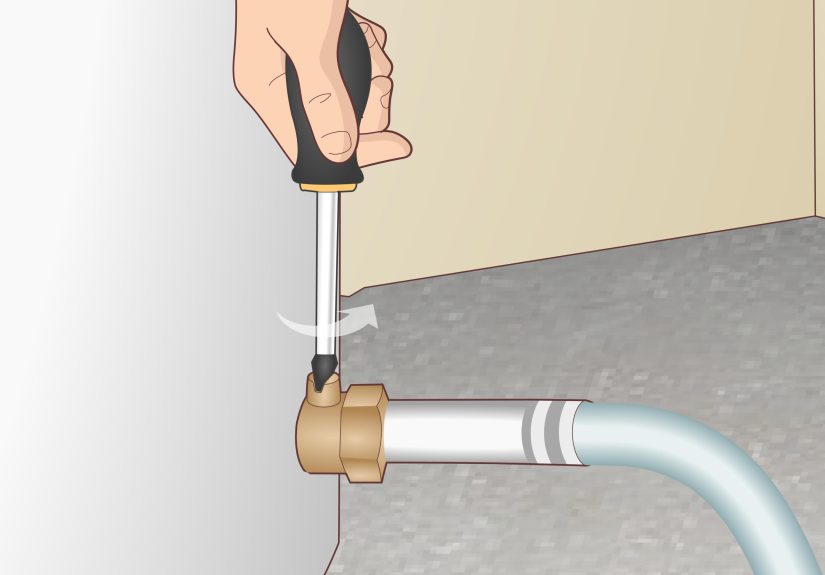
Attach a hose to the drain valve and send the water to a safe drainage spot. Open the valve slowly. Keep in mind that sediment can clog the drain, so do not be surprised if the process is more “stubborn trickle” than “majestic waterfall.”
Fast Shutdown by Situation
If the Water Heater Is Leaking
Turn off the power source first, then shut off the cold-water supply. If the leak is significant, drain the tank. If water is spraying near wiring or the burner area, stop and call a professional.
If You Smell Gas
Do not relight anything. Do not touch switches. Leave the area and call the gas utility or emergency services. Safety beats hot water every time.
If the Water Is Too Hot
Shut down the heater if necessary, especially if water is scalding or you hear boiling sounds. Once the situation is safe, inspect the thermostat setting. For many homes, 120 degrees Fahrenheit is a practical target for comfort, energy savings, and scald prevention.
If You Are Going on Vacation
You may not need a full shutdown. Many units have a vacation mode. On some gas models, switching to pilot can reduce energy use. On electric models, some homeowners turn the breaker off for extended trips. Just remember that if freezing temperatures are a risk, a completely shut-down tank may need to be drained.
Common Mistakes to Avoid
- Turning off the water but not the heat source: This is especially risky for electric heaters.
- Draining scalding water too quickly: Slow down and use a safe drain location.
- Confusing Pilot with Off: Pilot is not always a full shutdown.
- Touching electrical panels with wet hands: Please do not.
- Relighting gas immediately: If gas has been present, give it time to disperse and follow the manufacturer’s instructions.
- Shutting off the entire home gas supply without a real emergency: Appliance shutoff is usually enough unless there is an actual gas emergency.
How to Turn the Water Heater Back On Safely
For Electric Water Heaters
Before restoring power, make sure the tank is completely full. Open the cold-water supply valve and leave a hot faucet open until water flows steadily without sputtering. That means the tank is full and air has cleared from the line. Only then should you turn the breaker back on.
For Gas Water Heaters
Open the cold-water supply valve and let the tank fill completely. Then reopen the gas supply valve if it was closed. Follow the lighting instructions printed on the heater or in the owner’s manual. Do not freestyle this part. Every model has its own startup steps, and “I think this looks right” is not the ideal energy policy.
When to Call a Professional
Call a licensed plumber, electrician, or gas technician if:
- You smell gas or suspect a gas leak
- The breaker trips repeatedly
- The unit will not stay off or will not restart correctly
- The tank is leaking from the body, not just a fitting
- You see scorch marks, melted wires, rust, or corrosion
- You are unsure which valve or breaker controls the unit
A water heater problem can be a quick fix, but it can also be a warning sign. If something seems off beyond a routine shutdown, trust that instinct. Your future self would rather pay for a service call than explain why the laundry room became a tropical swamp.
Final Takeaway
If you need to turn off a water heater fast, the rule is simple: shut off the energy source first, then shut off the water if needed, then relieve pressure and drain only if the situation calls for it. For electric water heaters, that means the breaker. For gas water heaters, that means the gas control and often the manual gas valve too.
Once you know those basics, you can handle the first few minutes of a water heater problem calmly and safely. And in homeownership, that is half the battle. The other half is pretending you were totally calm the whole time.
Real-Life Experiences and Lessons from Fast Water Heater Shutoffs
One of the most common experiences homeowners describe is discovering a leak at the worst possible time. It usually starts with something subtle. A damp patch near the garage wall. A mysterious little puddle. A drip that seems harmless until it is definitely not harmless. In those moments, the people who react fastest are usually the ones who already know two things: where the breaker is and where the cold-water valve is. That small bit of knowledge can mean the difference between a minor inconvenience and a room full of soaked boxes, ruined flooring, and a sudden new hobby called mold prevention.
Another common story involves electric water heaters during maintenance. A homeowner decides to flush the tank, feels confident, connects the hose, opens the drain, and only afterward remembers the power is still on. Sometimes they get lucky. Sometimes they end up with burned-out heating elements and a repair bill that turns a simple Saturday chore into an expensive life lesson. The experience usually teaches the same message: electric water heaters do not forgive skipped steps. Breaker first. Always.
Gas water heater experiences tend to include a different kind of stress. People often assume turning the temperature dial down is the same as shutting the unit off. Then they hear the burner kick back on and realize the heater has its own opinions. Homeowners who have gone through this once usually become passionate about the difference between Pilot and Off. Pilot may be fine for some short maintenance tasks, but a real emergency calls for a real shutdown. It is one of those details that sounds boring until it is suddenly very exciting for all the wrong reasons.
Vacation stories are another classic. Some homeowners leave town for a week and never think twice about the water heater. Others return to a surprise leak that started while nobody was home to notice it. People who have lived through that experience often become loyal fans of simple prevention. They either use vacation mode, turn the unit down, or shut off the water supply if they will be gone longer. After one unpleasant homecoming, “extra cautious” starts to feel a lot like “extremely wise.”
Then there are the experiences involving strange noises. Popping, crackling, rumbling, or what one homeowner described as “a giant making popcorn in the basement.” These sounds often point to sediment buildup. Many people ignore the noise at first because the heater is still producing hot water. But after a while, the sound gets louder, efficiency drops, and the unit starts acting older than it is. The lesson many learn is that turning off the heater properly before flushing it is not just about maintenance. It is about preserving the life of the appliance and keeping minor issues from becoming expensive ones.
Perhaps the most valuable shared experience is emotional, not mechanical. In emergencies, people panic when they do not know the first move. But once they have gone through a leak, a shutdown, or a repair visit, they usually say the same thing: they wish they had learned the shutoff steps sooner. Not because the process is hard, but because uncertainty makes everything feel bigger. Knowing how to turn off a water heater fast gives you control in a moment that might otherwise feel chaotic. And that confidence is worth a lot when hot water, gas, or electricity decides to get theatrical.