Table of Contents >> Show >> Hide
- The quick answer (because you’re busy and also wet towels are multiplying)
- Why shower chairs fall into a Medicare gray zone
- Original Medicare: what it covers (and what it side-eyes)
- The “commode chair loophole” people ask about (and what it actually means)
- Medicare Advantage: where shower chair help is more likely (but never guaranteed)
- How to check your coverage (without spiraling into the “benefits portal” abyss)
- What you might pay out of pocket (and how to shop like a pro)
- Other ways to get help paying (when Medicare says “no thanks”)
- FAQs (the stuff people ask right after they ask “Where did my other sock go?”)
- Real-World Experiences: Shower Chairs, Paperwork, and Plan Surprises (About )
- Conclusion
You’d think “not falling in the shower” would be a covered medical service. It’s basically preventive medicine with a drain. But Medicare doesn’t always see it that wayespecially when the item looks like something you could buy at any big-box store next to the bath mats and “Live Laugh Loofah” signs.
This guide breaks down what Original Medicare (Parts A & B) usually doesand does notpay for, why Medicare Advantage (Part C) can be a totally different universe, and how to check your own plan without needing a decoder ring and a law degree.
The quick answer (because you’re busy and also wet towels are multiplying)
- Original Medicare (Part B): Usually does not cover shower chairs or bath benches. They’re commonly treated as “comfort/convenience” or general safety items rather than covered durable medical equipment (DME).
- Medicare Advantage (Part C): Sometimes can helpnot always as “DME coverage,” but through supplemental benefits like an OTC (over-the-counter) allowance, a flex card, or a home-safety/assistive-device benefit. Coverage varies by plan, county, and year.
Why shower chairs fall into a Medicare gray zone
Medicare Part B covers DME when it’s considered medically necessary, meant for use in the home, and fits Medicare’s idea of “durable medical equipment” (think: walkers, wheelchairs, oxygen equipment, hospital beds). A shower chair is durable and used at homeso why the “no” so often?
Because Medicare draws a line between:
- Medical equipment primarily used to treat or manage a condition, and
- Safety or convenience items that make daily living easier but aren’t considered “medical” enough.
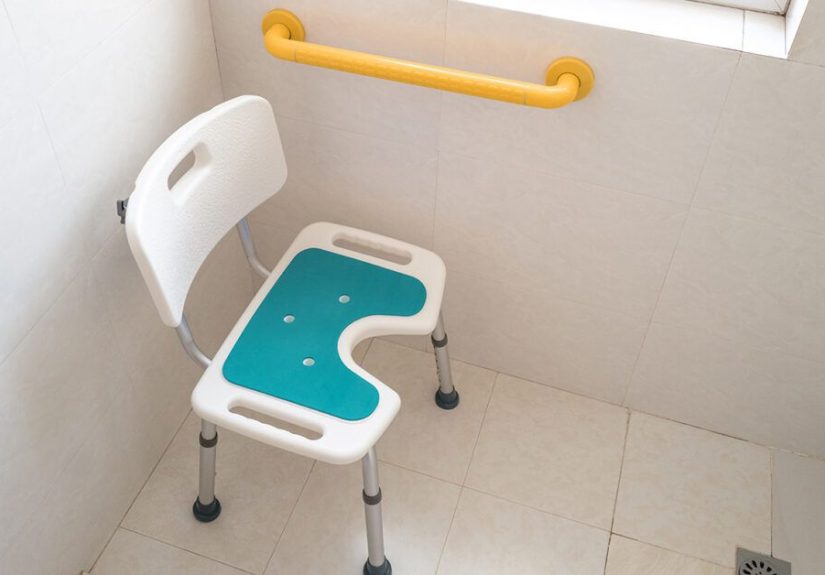
Shower chairs commonly land in that second bucket. They’re helpful (sometimes life-changing), but Medicare often treats them like grab bars, raised toilet seats, and similar bathroom-safety gear: smart to have, not typically paid for.
Original Medicare: what it covers (and what it side-eyes)
Part A vs. Part B in one breath
Part A is mainly hospital/inpatient coverage. Part B is where outpatient care and DME usually live. If anything is going to cover a piece of equipment you use at home, it’s generally Part Bnot Part A.
What Medicare Part B does cover under DME
Part B covers many DME items when they’re medically necessary and prescribed for home use. Medicare even lists common exampleslike canes, crutches, hospital beds, wheelchairs, and yes, commode chairs.
So why not shower chairs?
In Medicare-speak, shower chairs are often viewed as not primarily medical or as items for comfort/convenience and general safety. Even if your doctor recommends one (and your doctor probably will recommend one), a prescription doesn’t automatically turn it into a covered DME item under Original Medicare.
Real-life example: After a hip replacement, your physical therapist may strongly suggest a shower chair because standing on one leg while shampooing is an extreme sport. Original Medicare may still say: “We love that for you. We’re not paying for it.”
The “commode chair loophole” people ask about (and what it actually means)
You’ll see this pop up a lot: “Medicare doesn’t cover shower chairs, but it covers commode chairs.” Truecommode chairs are a recognized DME category.
However, there are two important reality checks:
- Coverage is based on toileting need, not the fact that the chair can survive a splash. Many coverage rules for commodes focus on whether a person is confined to bed or room-confined and can’t safely access a standard toilet.
- Using a commode chair in the shower doesn’t mean Medicare covered it “as a shower chair.” If it’s covered, it’s generally because it met the criteria for a commode.
Safety note: Some commode chairs are designed to be waterproof; others aren’t. If you’re considering this route, confirm the chair’s specifications and use appropriate non-slip measures. Your bathroom tile does not care about your deductible.
Medicare Advantage: where shower chair help is more likely (but never guaranteed)
Medicare Advantage plans must cover everything Original Medicare covers for Part A and Part B services, but they can also offer extra benefits. This is where shower chairs may appearoften not as “DME,” but as part of:
- OTC allowances (monthly/quarterly credits to buy approved items)
- Flex cards (prepaid cards for certain health-related purchases)
- Assistive device or home safety benefits (an annual allowance for safety items)
Some plans explicitly mention items like shower stools or safety devices as examples of what an allowance can be used for. But here’s the catch: it’s plan-specific. Two neighbors can have the same carrier and totally different benefits because they’re in different counties or plan types.
How Advantage “coverage” usually works in practice
If your plan helps pay for a shower chair, it often looks like one of these scenarios:
- Catalog model: You order a chair from the plan’s OTC catalog (online/phone). The plan pays from your OTC balance.
- Retail model: You buy from approved retailers using a flex card or benefit cardonly eligible items count.
- Reimbursement model: You pay upfront, submit documentation, and the plan reimburses up to a limit (with rules, forms, and the occasional sigh).
Pro tip: The chair you want and the chair the plan will pay for may not be the same chair. Advantage benefits often cover “standard” models, not deluxe spa-throne editions with cup holders and a USB port (though… imagine).
How to check your coverage (without spiraling into the “benefits portal” abyss)
If you have Original Medicare
- Search Medicare’s DME coverage guidance and lists of covered items.
- Ask your doctor what equipment best matches your medical need (sometimes a covered alternative exists, like a commode chair, depending on your situation).
- Use a Medicare-enrolled supplier for covered DME. If an item isn’t covered, the supplier may still sell itbut you’ll likely pay out of pocket.
- Watch for paperwork like an ABN (Advance Beneficiary Notice) in settings where it appliesbasically a heads-up that Medicare may deny payment.
If you have Medicare Advantage
- Find your Evidence of Coverage (EOC) and search terms like “OTC,” “bath,” “assistive devices,” “home safety,” “durable medical equipment,” and “fall prevention.”
- Check your OTC catalog (if you have one). Search “shower chair,” “shower stool,” “bath bench,” “transfer bench.”
- Call member services and ask a very specific question: “Do I have an OTC or home-safety allowance that can be used for a shower chair or bath bench? If yes, what brands/models are eligible and where can I purchase them?”
- Ask about limits and timing: monthly/quarterly amounts, annual caps, and whether unused funds expire.
Translation: Original Medicare is more standardized. Advantage is more “Choose Your Own Adventure,” and sometimes the ending depends on whether you bought the chair from Store A or Store B.
What you might pay out of pocket (and how to shop like a pro)
Shower chairs can range from budget basics to sturdier models with adjustable height, padded seats, backrests, arms, or transfer-bench designs. If you’re paying out of pocket, focus on safety and fit over fancy features.
Shopping checklist
- Weight capacity: Don’t guess. Check the rating.
- Seat height range: Feet should rest flat for stability.
- Non-slip feet: Rubber tips matter. A lot.
- Drainage holes and easy-clean materials: Mold is not a hobby.
- Backrest/arms: Helpful for balance and standing transfers.
- Transfer bench vs. chair: If stepping over a tub wall is the problem, a transfer bench can be safer than a chair.
Specific example: If you’re recovering from surgery and can’t safely lift your leg over a tub, a transfer bench (which spans the tub edge) may be the difference between a safe shower and an accidental interpretive dance on wet porcelain.
Other ways to get help paying (when Medicare says “no thanks”)
If neither Original Medicare nor your Advantage plan covers a shower chair, you still have options:
1) Medicaid (or Medicare Savings Programs), depending on your state
State Medicaid programs and waiver programs sometimes help with home safety equipment or supportsrules vary widely. If you have both Medicare and Medicaid (“dual eligible”), ask your Medicaid office or case manager what’s available.
2) Local aging and disability resources
Area Agencies on Aging, independent living centers, and local nonprofits sometimes provide fall-prevention supplies, equipment loan closets, or short-term recovery support.
3) Veterans benefits (for eligible Veterans)
Some Veterans can access programs that assist with home safety needs or durable equipment through the VA. Eligibility and covered items depend on your benefits and medical situation.
4) FSA/HSA funds (if you have them)
If you have an HSA or FSA, you may be able to use those funds for eligible medical purchases (rules depend on your account and documentation). Many people use these accounts to soften the blow of Medicare “non-coverage.”
FAQs (the stuff people ask right after they ask “Where did my other sock go?”)
Will a doctor’s prescription make Original Medicare cover a shower chair?
Usually, no. A prescription can help show medical need, but Original Medicare typically doesn’t treat shower chairs as covered DME.
Does Medigap cover shower chairs?
Medigap supplements Original Medicare cost-sharing for covered services. If Original Medicare doesn’t cover the shower chair, Medigap generally won’t swoop in as the hero.
If Medicare covers a commode chair, can I use it in the shower?
Some people do, but coverage is usually tied to toileting criteria, not shower use. Also confirm the chair is designed for wet environments and used safely.
Can a Medicare Advantage plan change these benefits year to year?
Yes. Supplemental benefits can change annually. Always review your Annual Notice of Change (ANOC) and your plan’s current-year Evidence of Coverage.
Real-World Experiences: Shower Chairs, Paperwork, and Plan Surprises (About )
Talk to enough Medicare beneficiaries (or their adult kids), and you’ll notice a pattern: the shower chair is rarely the expensive part. The expensive part is the surprise.
Experience #1: “My doctor said I needed it, so it must be covered… right?”
A common story starts after a fall, surgery, or a new diagnosis that affects balance. The clinician gives practical advice: “Get a shower chair. Install grab bars. Use a handheld showerhead.” Everyone nods, relieved to have a plan. Then someone asks the fateful question: “So Medicare pays?” That’s usually when the room gets quietbecause medical advice and Medicare coverage are not the same thing. Many people end up buying the chair out of pocket the same day, because the alternative is not showering safely. In those moments, the $35–$120 range (for many basic models) feels less like a purchase and more like a membership fee for staying upright.
Experience #2: The Medicare Advantage “OTC treasure hunt.”
Advantage members sometimes have a different experience: the benefit exists, but it’s hidden behind a scavenger hunt. One person finds “bath stool” in the OTC catalog, but not “shower chair.” Another discovers the flex card works at one retailer, but not another. And many learn the phrase eligible items only the hard wayusually while standing at checkout, explaining to a cashier (who did not ask for this side quest) why the card paid for bandages but rejected the chair. The best outcomes happen when someone calls member services first, confirms the exact item category, and orders directly through the plan’s approved channel.
Experience #3: The “covered alternative” that isn’t really an alternative.
Some people hear that commode chairs can be covered and wonder if that solves everything. Sometimes it helpsespecially when toileting access is truly the limiting issue. But other times it’s a mismatch: the person doesn’t need a commode; they need stable seating while bathing. The takeaway from these cases isn’t “game the system.” It’s “match the equipment to the real risk.” A shower chair that fits the tub, supports safe transfers, and doesn’t wobble is worth more than a theoretical workaround that doesn’t meet the daily need.
Experience #4: The biggest win is avoiding the next fall.
Families often say the chair paid for itself emotionally the first time a loved one showered without fear. Confidence returns. Rushing decreases. Caregivers relax. And the bathroom stops feeling like a tiny, slippery obstacle course. Even when Medicare doesn’t cover it, many people decide it’s one of the most “medical” purchases they’ve ever madebecause it prevents the kind of injury that leads to ER visits, rehab, and months of lost independence.
Bottom line from the real world: If you have Original Medicare, plan on paying out of pocket for a shower chair most of the time. If you have Medicare Advantage, you might get helpbut confirm the benefit details before you buy, and keep receipts if reimbursement is involved.
Conclusion
So, does Medicare cover shower chairs? Original Medicare usually doesn’tthey’re commonly treated as bathroom safety or convenience items, even when they’re medically smart. Medicare Advantage may help through OTC allowances, flex cards, or home-safety benefits, but it’s highly plan-specific and can change year to year.
If you’re trying to reduce fall risk, the most practical approach is:
- Check Original Medicare DME rules (and covered alternatives like commode chairs, when medically appropriate).
- If you have Advantage, search your EOC/OTC catalog and call to confirm eligibility before purchasing.
- If neither covers it, explore community resources, Medicaid/waivers (if applicable), and safe out-of-pocket options.