Table of Contents >> Show >> Hide
- Why Laundry Can Mess With Eczema (Even When You’re “Doing Everything Right”)
- Start With the Big Rule: Fragrance-Free and Dye-Free
- Label-Reading for Sensitive Skin: A Quick Decoder Ring
- Ingredients and Add-Ins That Commonly Cause Trouble
- The Eczema-Safe Detergent Shortlist: What to Choose (Without Naming a Single Unicorn)
- Laundry Habits Matter as Much as the Bottle
- How to Tell if Detergent Is Triggering Your Eczema
- Special Situations: Babies, Athletes, Hard Water, and Shared Laundry Rooms
- Quick Checklist: Your Eczema-Safe Laundry Routine
- Conclusion: Laundry Shouldn’t Be Your Skin’s Villain Origin Story
- Experiences From Real Life: What People Often Notice When They “Eczema-Proof” Their Laundry
If you have eczema (atopic dermatitis) or super-sensitive skin, you’ve probably had this moment: you finally calm a flare… then you put on a freshly washed shirt and your skin goes, “Nice try,” and lights up like a complaint department.
Laundry sounds harmlesswater, soap, spinny machine, done. But for eczema-prone skin, detergents, additives, and leftover residue can be the difference between “comfortable” and “why do my elbows feel like they’re auditioning for a sandpaper commercial?”
This guide breaks down what reputable U.S. medical and allergy organizations recommend, how to read detergent labels like a pro, and how to build an eczema-safe laundry routine that doesn’t require you to become a chemist (unless you want to, in which case: respect).
Why Laundry Can Mess With Eczema (Even When You’re “Doing Everything Right”)
Eczema skin has a weakened barrier. That barrier normally keeps moisture in and irritants out. When it’s compromised, everyday thingsheat, sweat, friction, harsh cleanserscan trigger itching and inflammation. Laundry can contribute in three common ways:
- Residue: Detergent left in fabric can sit against your skin for hours. If you sweat, that residue can dissolve and spread more easily across the skin.
- Fragrance and dyes: Scented detergents and brighteners can irritate sensitive skin, and fragrance is a frequent culprit in skin reactions.
- Fabric additives: Fabric softeners and dryer sheets coat fibers to feel “soft,” but that coating can be irritating for eczema-prone skin.
The good news: you don’t need “perfect” laundryjust a routine that reduces irritants and gives your skin fewer reasons to complain.
Start With the Big Rule: Fragrance-Free and Dye-Free
Dermatology and allergy guidance consistently points in the same direction: choose a detergent that is fragrance-free and dye-free (often marketed as “Free & Clear”). If you only change one thing, make it this.
Fragrance-Free vs. Unscented: Not the Same Thing
Here’s the annoying truth: “unscented” can still include fragrance chemicals used to mask odors, while “fragrance-free” means fragrance materials (including masking scents) aren’t used. If your skin is reactive, “fragrance-free” is the safer bet.
What About “Hypoallergenic”?
“Hypoallergenic” sounds comfortinglike the detergent is wearing a tiny lab coat. In reality, it’s often a marketing term and doesn’t guarantee the product is fragrance-free, dye-free, or compatible with eczema. Use it as a hint, not proof. The label details matter more.
Label-Reading for Sensitive Skin: A Quick Decoder Ring
Standing in the laundry aisle can feel like speed-dating with 47 bottles. Here’s how to pick the ones worth a second date.
Look for These Phrases (And Verify Them)
- Fragrance-free (best starting point)
- Dye-free
- Free & Clear (common shorthand, but still check “fragrance-free”)
- Made for sensitive skin (helpful, but not a guarantee)
Be Cautious With These Claims
- Unscented (may still include masking fragrance)
- Natural or plant-based (plant extracts and essential oils can still irritate)
- Extra-strength or powerful stain fighter (often more enzymes/fragrance/boosters)
Ingredients and Add-Ins That Commonly Cause Trouble
You don’t need to memorize the periodic table. Focus on categories that frequently bother sensitive or eczema-prone skin. If you’ve had unexplained flares, these are the usual suspects:
1) Fragrance (Including Essential Oils)
Fragrance is a top trigger for both irritation and allergic contact dermatitis in many people. “Botanical” or “essential oil” fragrance is still fragrance.
2) Dyes and Optical Brighteners
Dyes are added for looks (your skin does not care if your detergent is “Arctic Blue Splash”). Optical brighteners are sometimes used to make fabrics look whiter/brighter. Some sensitive-skin folks do better without them.
3) Fabric Softeners and Dryer Sheets
These products work by leaving a conditioning layer on fabric. That layer can transfer to skin and cause irritation. If eczema is flaring, skip themat least during the “calm things down” phase.
4) Preservatives and Other “Invisible” Irritants
Some people react to preservatives used in cleaning products. If you’ve tried fragrance-free/dye-free and still react, it may be worth discussing patch testing with a dermatologist or allergist to identify specific allergens.
The Eczema-Safe Detergent Shortlist: What to Choose (Without Naming a Single Unicorn)
You’ll find plenty of solid options in the U.S. market. You don’t need a boutique detergent that costs more per ounce than espresso. Instead, use this practical checklist:
Step 1: Pick a Fragrance-Free, Dye-Free Detergent
- Choose “fragrance-free” (not just “unscented”).
- Avoid “odor eliminator,” “fresh scent,” and “long-lasting fragrance.”
- Skip “scent boosters.” They’re basically perfume beads in a trench coat.
Step 2: Consider Third-Party Signals
Two signals can help you narrow choices:
- National Eczema Association Seal of Acceptance: indicates products meet criteria designed to reduce common irritants for eczema-prone skin. (It’s not magic, but it’s a helpful filter.)
- EPA Safer Choice (Fragrance-Free): focuses on ingredient safety standards and offers fragrance-free guidance. This is more about chemical safety and transparency than eczema specifically, but it can be a useful tie-breaker.
Step 3: Choose the Format That Rinses Best for Your Setup
The “best” detergent format is the one that rinses thoroughly in your machine and doesn’t leave residue behind. Here’s a sensible starting point:
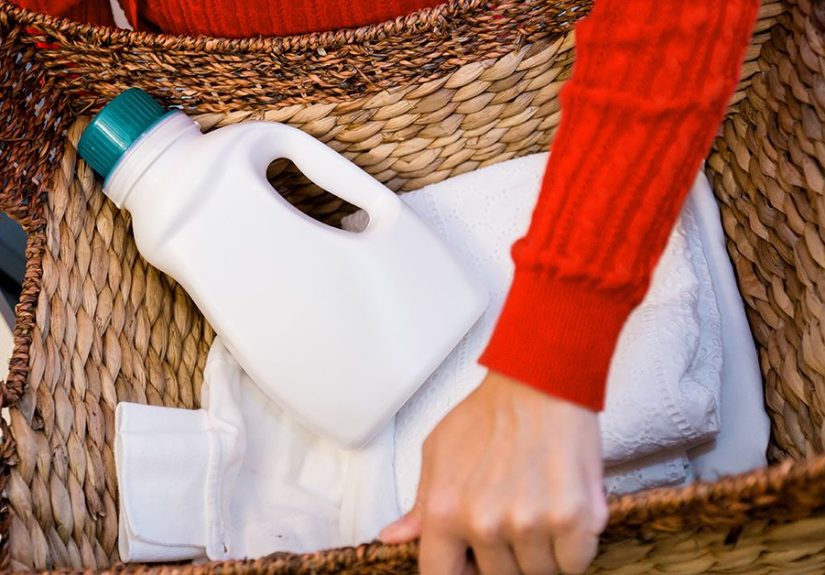
- Liquid: Often dissolves easily in cold water and can be easier to measure precisely.
- Powder: Can clean well, but may not dissolve fully in cold washes or hard waterleftover granules can mean residue.
- PODS/pacs: Convenient, but the dose can be too much for small loads (and “too much detergent” is a common eczema mistake).
If your skin is reacting and you’re troubleshooting, liquid fragrance-free/dye-free detergents are often the simplest place to start because they dissolve well and let you use a smaller dose.
Laundry Habits Matter as Much as the Bottle
You can buy the gentlest detergent on Earth and still irritate eczema if your laundry routine leaves residue behind. These changes are boringbut boring is exactly what eczema likes.
Use Less Detergent Than You Think You Need
More detergent does not equal cleaner clothes. It often equals more residue. Many dermatology recommendations specifically call out using only the recommended amount. If you have soft water or wash smaller loads, you may need even less.
Add an Extra Rinse (Especially for Underwear, Socks, and Sheets)
If your machine has an “extra rinse” option, this is one of the highest-impact tweaks you can make. Your skin spends a lot of time in contact with bedding and clothing seamsgive those fabrics the cleanest finish possible.
Skip Fabric Softener and Dryer Sheets (At Least During Flares)
If you miss the softness, try dryer balls (no fragrance) or focus on better rinsing and avoiding overdrying. Soft fabric is greatbut “soft” shouldn’t mean “coated in mystery film.”
Wash New Clothes Before Wearing
New clothes can carry dyes, finishing resins, and other manufacturing leftovers. Washing before first wear can reduce exposure to those irritants.
Choose Skin-Friendly Fabrics
Cotton tends to be gentler for many people with eczema. Wool and scratchy synthetics can increase friction and itch. And if tags or seams irritate you, cut tags off and look for softer, smoother basics (your skin will thank you).
How to Tell if Detergent Is Triggering Your Eczema
Because eczema flares can have multiple triggers, it helps to look for patterns:
- Timing: itching worsens shortly after putting on freshly washed clothes or getting into freshly washed sheets
- Location: rash appears where clothing fits tightly (waistbands, socks, bra lines) or where sweat collects
- Change event: symptoms start after switching detergents, adding scent boosters, or using a new softener
A Simple “Laundry Reset” Experiment (Two Weeks)
- Switch to fragrance-free, dye-free detergent.
- Stop fabric softener, dryer sheets, and scent boosters completely.
- Use a smaller detergent dose.
- Add an extra rinse for anything that touches skin directly.
- Wash bedding and towels with the same simplified routine.
If symptoms improve, you’ve found a meaningful lever. If nothing changes, detergent might not be the main triggeror you may be reacting to a specific ingredient that requires targeted identification (that’s where a clinician and patch testing can help, especially if allergic contact dermatitis is suspected).
Special Situations: Babies, Athletes, Hard Water, and Shared Laundry Rooms
Babies and Kids
Children’s skin can be especially sensitive. Pediatric guidance often emphasizes mild, fragrance-free laundry products and avoiding scented softeners. Wash new baby clothes before first wear, and consider double-rinsing pajamas and sleep sacks since they’re worn for long stretches.
Sports Gear and Sweat
Sweat and friction can intensify irritation. If you’re active, prioritize thorough rinsing and avoid “sport fragrance” detergents. If you need extra odor control, start with mechanical solutions: prompt washing, adequate drying, and breathable fabrics. (Your skin would rather you solve odor with timing than with perfume.)
Hard Water
Hard water can make detergents less effective and contribute to residue. If clothes feel stiff or “coated,” try: using less detergent, adding an extra rinse, and ensuring your machine isn’t overloaded. If you’re troubleshooting eczema, keep changes simple and adjust one variable at a time.
Shared Laundry Machines
If you use communal washers, residues from other people’s scented products can linger. Run a quick rinse cycle before your load if possible, or wash your most skin-contact items (underwear, sheets) in your own machine when you can.
Quick Checklist: Your Eczema-Safe Laundry Routine
- Detergent: fragrance-free + dye-free
- Skip: fabric softeners, dryer sheets, scent boosters
- Measure: use less detergent (residue is the enemy)
- Rinse: extra rinse for underwear, socks, towels, bedding
- First wear: wash new clothes before wearing
- Fabrics: prioritize soft, breathable materials like cotton
- When in doubt: simplify and change one thing at a time
Conclusion: Laundry Shouldn’t Be Your Skin’s Villain Origin Story
Choosing an eczema-safe detergent is less about finding a “perfect” brand and more about removing the biggest irritants: fragrance, dyes, softeners, and leftover residue. Start simple: fragrance-free, dye-free detergent; use a smaller dose; add an extra rinse; skip softeners and dryer sheets.
If your skin improves, you’ve just turned laundry from a hidden trigger into a helpful ally. If it doesn’t, you still winbecause you’ve ruled out a major variable and can move on to other triggers with clearer data. Eczema management is basically detective work… except the culprit sometimes is your pillowcase.
Experiences From Real Life: What People Often Notice When They “Eczema-Proof” Their Laundry
Below are common experiences that people with eczema (and parents of kids with eczema) often describe when they adjust their laundry routine. Think of these as “patterns you might recognize,” not guaranteeseczema is famously individual, like a picky eater who also writes Yelp reviews.
1) The “Wait… my pajamas were the problem?” revelation.
A lot of people assume detergent would irritate everywhere equally, but the first improvement they notice is often in areas that have long contact with fabric: inner elbows, behind the knees, waistband lines, and wherever pajamas and sheets rub all night. After switching to fragrance-free, dye-free detergent and adding an extra rinse, some report that nighttime itch becomes less intense. Not always gonebut dialed down enough to fall asleep without the 2 a.m. scratch concert.
2) The surprise culprit: “But it’s just the dryer sheet!”
Dryer sheets and fabric softeners can feel like the most harmless part of laundry. They smell “clean,” they make towels fluffy, and they’re the final stepso they get a free pass. But many eczema-prone folks notice the biggest change when they remove these add-ons. The fabric may feel slightly less “silky” at first, yet skin can feel calmer because the coating layer is gone. People often describe it as “my clothes finally feel like… clothes, not like a scented candle I’m wearing.”
3) The “less detergent” plot twist.
This one offends our instincts. Most of us grew up thinking more soap equals more clean. In reality, people with sensitive skin often do better with smaller dosesespecially in high-efficiency washers where too much detergent doesn’t rinse out well. A common experience is that clothes feel less “waxy” or less “slippery,” and skin reacts less. If someone makes only one habit change (without switching brands), reducing detergent and adding an extra rinse can still help.
4) The “new clothes aren’t innocent” lesson.
Plenty of people report flares after wearing brand-new clothes straight from the storeespecially tight-fitting items or synthetic blends. After they start washing new clothes before wearing (with a gentle routine), those mystery rashes become less frequent. It’s not that new clothes are “dirty,” but they can carry finishing chemicals and excess dyes that sensitive skin may dislike. The common takeaway: “If it touches my skin, it gets washed firstno exceptions.”
5) The slow-and-steady improvement pattern.
Laundry changes don’t always create an overnight miracle. Many people describe a gradual shift over one to three weeks: fewer “random” itch spikes, less redness after sweating, and fewer flare-ups that seem to come from nowhere. That timeline makes sense because you’re reducing repeat exposure: every load you wash with the new routine replaces older, more irritating residues in your wardrobe and bedding rotation.
6) The “my skin is calm, but only if I stay consistent” reality.
A lot of eczema management is maintenance. People often say they can tell when someone “helpfully” uses a scented detergent at a relative’s house or when they borrow a freshly washed sweater from a friend. The flare isn’t always dramatic, but it’s noticeableitch returns, patches reappear, sleep gets worse. The experience teaches a practical habit: keep your basics (underwear, pajamas, bedding) on the safest routine, even if you occasionally tolerate small risks elsewhere.
7) The relief of having a simple rule.
One underrated benefit: decision fatigue goes down. People commonly say that once they adopt a “fragrance-free, dye-free, no softeners, extra rinse” rule, they stop second-guessing every rash. They still have eczema triggersweather, stress, sweat, infectionsbut laundry becomes a stable, predictable part of the plan. And honestly, your skin deserves at least one predictable thing in life.
If you’re starting today, keep it basic. Choose fragrance-free and dye-free, cut the softeners, use less detergent, and rinse well. You don’t need a fancy systemyou need a boring one that works.