Table of Contents >> Show >> Hide
- Why Classroom Management Matters More Than Most People Realize
- 1. Build Relationships Before You Need to Correct Behavior
- 2. Teach Expectations Like Academic Content
- 3. Create Routines That Remove Friction
- 4. Keep Directions Short, Visible, and Repeatable
- 5. Use Positive Reinforcement That Is Specific
- 6. Correct Calmly, Quickly, and Privately When Possible
- 7. Keep Students Engaged With Purposeful Instruction and Choice
- 8. Plan for Minor Behavior Before It Becomes Major Behavior
- 9. Make Classroom Management Inclusive and Culturally Responsive
- 10. Communicate With Families Before There Is a Problem
- Common Classroom Management Mistakes to Avoid
- Experience Shows What the Research Cannot Fully Capture
- Conclusion
Every teacher has met this moment: you turn around for five seconds to write on the board, and somehow the room transforms into a tiny documentary about chaos. One student is sharpening a pencil like it is an Olympic event, another is debating weekend plans at full volume, and someone in the back is mysteriously upside down. This is exactly why effective classroom management matters.
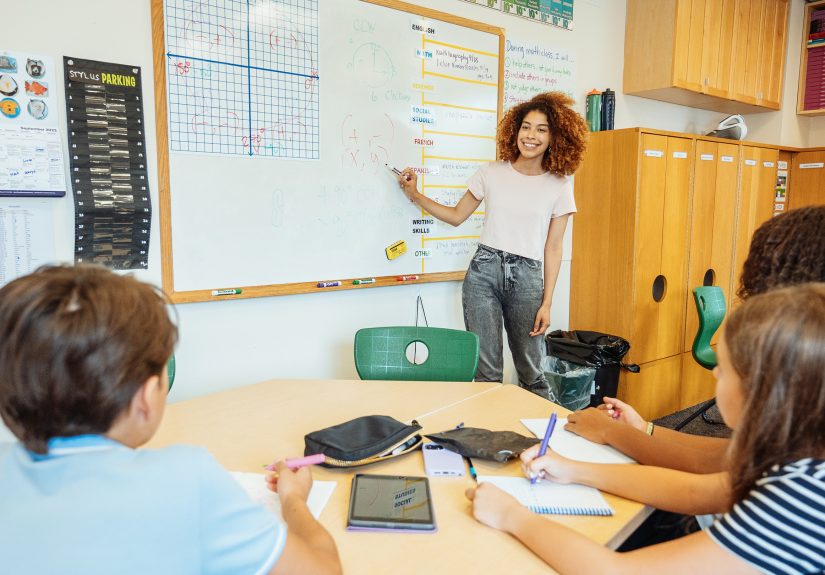
Good classroom management is not about becoming the world’s sternest hall monitor. It is about creating a learning environment where expectations are clear, routines are predictable, students feel respected, and time is spent on learning instead of constant damage control. When a classroom runs well, students know what to do, how to do it, and what happens if things go off track. Better yet, they feel like they belong there.
If you are looking for effective classroom management tips that actually work in real classrooms, the best approach is a balanced one: build relationships, teach routines, reinforce positive behavior, correct calmly, and keep students engaged. In other words, the goal is not to “control” students. The goal is to build a classroom where learning can breathe.
Why Classroom Management Matters More Than Most People Realize
Classroom management shapes nearly everything else in school. It affects academic focus, student confidence, peer relationships, teacher stress, and the overall climate of the room. A well-managed classroom does not feel rigid or joyless. It feels safe, organized, fair, and productive.
Students do better when they understand expectations and trust the adults leading them. Teachers do better when they are not forced to improvise discipline every seven minutes. The strongest classrooms usually are not the quietest ones. They are the ones where students understand the flow of the day, know how to participate, and can recover from mistakes without the whole lesson falling apart.
1. Build Relationships Before You Need to Correct Behavior
One of the most effective classroom management tips is also one of the most human: get to know your students before problems appear. Students are more likely to respond well to expectations when they believe the teacher actually sees them as people, not as seat numbers with backpacks.
Relationship-building can look simple. Greet students at the door. Learn how to pronounce their names correctly. Notice their interests. Ask about the soccer game, the art project, or the new haircut that clearly took two hours and deserves recognition. Small moments build trust, and trust makes redirection easier later.
For example, if a student blurts out during discussion, the correction lands differently when it comes from a teacher who has already built rapport. “Hold that thought, Jordan. I want to hear it when it’s your turn,” sounds respectful and steady. It protects the classroom expectation without turning the interaction into a power struggle.
2. Teach Expectations Like Academic Content
Many behavior problems happen because adults assume students already know what “appropriate behavior” looks like in a specific classroom. That assumption is usually where the trouble begins. Expectations should be taught as clearly as any academic skill.
That means defining what success looks like in observable language. Instead of saying, “Behave yourselves,” say, “When someone else is speaking, eyes are up, voices are off, and hands are still.” Instead of “Work together nicely,” say, “Take turns, use quiet voices, and make sure each person has a job.”
The best expectations are short, positive, and easy to remember. Three to five core expectations is often enough. More than that and the wall starts looking like a legal contract no one intends to read.
What strong classroom expectations sound like
Try simple phrases such as:
Be respectful. Be responsible. Be ready to learn.
Then teach what each one means in different situations. What does respect look like during independent work? During partner talk? During cleanup? Students need examples, practice, reminders, and reteaching throughout the year, not just on the first day when everyone is still pretending to be perfect.
3. Create Routines That Remove Friction
Rules tell students the boundaries. Routines tell them how the classroom actually runs. If expectations are the map, routines are the roads. Without routines, even cooperative students waste time asking the same questions over and over.
Think through the moments where classrooms usually wobble: entering the room, turning in work, asking for help, moving into groups, getting supplies, transitioning between activities, and packing up. If you do not have a routine for those moments, students will invent one. Their version is often creative, loud, and not terribly efficient.
Routines worth teaching early
Teach students exactly what to do when they enter the room, where to find the warm-up, how to submit assignments, what noise level is expected during partner work, and what cleanup should look like before dismissal. Practice these routines until they become normal.
A good example is the first three minutes of class. If students enter and immediately see a short task on the board, they have a purpose right away. That simple routine prevents drifting, reduces side conversations, and helps the lesson start with momentum instead of a verbal wrestling match.
4. Keep Directions Short, Visible, and Repeatable
Long explanations are often the enemy of classroom management. The more words teachers use, the more chances students have to tune out, mishear, or begin a side quest that has nothing to do with the lesson.
Give directions in short steps. Post them visually when possible. Check for understanding before students begin. A smart habit is to ask one or two students to restate the directions in their own words. That is far more effective than asking, “Does everyone get it?” because at least three students will say yes while actively having no idea what is happening.
For instance, during group work you might say: “Step one: read the scenario. Step two: highlight the main problem. Step three: write one solution together. You have eight minutes.” Clear beats clever almost every time.
5. Use Positive Reinforcement That Is Specific
Students need to know when they are meeting expectations, not only when they are missing them. Positive reinforcement works best when it is specific, immediate, and tied to observable behavior.
Generic praise like “Good job” is pleasant, but it does not always tell students what they did right. Specific praise is more useful. “I noticed this table started right away and shared materials without arguing,” gives students a model to follow. It highlights the behavior you want repeated.
This does not mean turning your classroom into a nonstop confetti cannon of compliments. It means noticing effort, self-control, kindness, persistence, and follow-through in a way that feels authentic. Students can spot fake praise from three zip codes away.
Examples of effective positive reinforcement
“Thank you for disagreeing respectfully.”
“I appreciate how quickly this side of the room transitioned.”
“You got frustrated, took a breath, and restarted. That is real progress.”
When teachers consistently name the behaviors they want to see, classroom culture starts to shift. Students understand that the room is not only about catching mistakes. It is also about noticing growth.
6. Correct Calmly, Quickly, and Privately When Possible
Not every behavior needs a dramatic public response. In fact, many classroom disruptions grow because adults accidentally turn them into performances. A calm correction is usually more effective than a loud one.
When possible, redirect early and quietly. Use proximity. Pause near the off-task student. Point to the posted expectation. Give a brief cue such as, “Back to paragraph two,” or “Voices off, please.” The goal is to correct the behavior without derailing instruction or embarrassing the student.
If a student needs more direct redirection, describe what they should do next rather than launching into a speech about what they should have done ten minutes ago. “Put the phone away and open your notebook” is useful. “This is exactly what I’m always talking about, and back in September…” is less useful, even if emotionally satisfying for about four seconds.
Private conversations are often better for repeated issues. A quick conference after class can sound like this: “I’ve noticed you’re having a hard time staying with the group during transitions. What’s going on, and what would help tomorrow go better?” That approach protects dignity and gets closer to the cause of the behavior.
7. Keep Students Engaged With Purposeful Instruction and Choice
Sometimes classroom management problems are really lesson design problems wearing a fake mustache. Students are more likely to drift when tasks feel confusing, too easy, too difficult, or painfully passive.
Strong engagement is one of the best prevention tools teachers have. Use frequent opportunities to respond. Break up long stretches of teacher talk. Include discussion, movement, writing, collaboration, and short checks for understanding. When students are doing meaningful work, they have fewer chances to invent nonsense.
Choice also helps. Offering two writing prompts, letting students choose between drawing or explaining a concept, or assigning roles in group work gives students a sense of ownership. Choice does not weaken management. It often strengthens it because students feel more invested in the task.
A simple example: instead of assigning every student the exact same response format, let them choose to write a paragraph, create a chart, or record a short explanation. The learning target stays the same, but engagement improves because students have a little room to breathe.
8. Plan for Minor Behavior Before It Becomes Major Behavior
Good classroom management is proactive, not just reactive. That means anticipating common issues and deciding ahead of time how you will respond. What will you do when students talk over each other? When transitions get noisy? When one student refuses to start? When a group gets silly and forgets the assignment exists?
Pre-correction is a powerful strategy. Before the situation goes sideways, remind students what successful behavior looks like. For example: “In this discussion, we are going to disagree sometimes. That is fine. We are going to do it without interrupting, mocking, or talking over people.”
It also helps to have a ladder of responses ready for minor disruptions: a nonverbal signal, a proximity move, a brief verbal reminder, a choice, then a private follow-up. Predictable responses feel fairer to students and keep teachers from making discipline decisions based on mood, fatigue, or whether the photocopier jammed that morning.
9. Make Classroom Management Inclusive and Culturally Responsive
Effective classroom management should feel fair, respectful, and inclusive. Students come to school with different experiences, communication styles, emotional needs, and cultural backgrounds. A strategy that works beautifully for one group may miss the mark for another if it ignores identity, belonging, or access.
That means teachers should reflect on participation patterns, language choices, and assumptions about what “good behavior” looks like. Are the same students always being corrected? Are quieter students given meaningful ways to participate? Are expectations explained clearly rather than assumed? Are students invited to help shape what respect and success look like in the room?
Inclusive management also means making expectations accessible. Use visuals. Model routines. Build in peer support. Offer structure without humiliation. A student who struggles with attention, processing speed, language, or anxiety may need the expectation taught differently, not simply repeated louder.
And when harm happens, restorative approaches can be powerful. Instead of focusing only on punishment, teachers can guide students to reflect, repair, and rejoin the classroom community. Accountability matters, but so does restoration.
10. Communicate With Families Before There Is a Problem
Family communication should not begin with bad news. One of the most effective classroom management tips is to make positive contact early. A short message home about effort, kindness, or improvement builds trust and makes later problem-solving easier.
When concerns do come up, families are more likely to partner with teachers when the communication feels respectful, specific, and solutions-focused. Instead of saying, “Your child is disruptive,” try, “I’m noticing difficulty during independent work, especially after transitions. I’d like to work together on strategies that help your child start tasks more smoothly.”
That kind of language invites collaboration. It also keeps the focus on behavior in context rather than labeling the student as the problem.
Common Classroom Management Mistakes to Avoid
Even strong teachers fall into traps. One common mistake is creating too many rules. Another is being inconsistent. Students notice very quickly when expectations depend on the adult’s mood. Mixed signals lead to testing, confusion, and endless negotiations nobody has time for.
Another mistake is over-talking during corrections. The longer the lecture, the less effective it usually becomes. Public embarrassment is another trap. It may produce short-term compliance, but it often damages trust and invites resistance later.
Finally, some teachers wait too long to reteach routines. If a routine is not working, reteach it without shame. That is not failure. That is maintenance. Nobody expects students to master academic content after one explanation, so behavior routines should not be treated that way either.
Experience Shows What the Research Cannot Fully Capture
Real classroom experience adds texture to every classroom management strategy. On paper, routines look neat. In real life, one student forgot a pencil, another came in upset from lunch, one is tired because of events at home, and someone else is absolutely convinced today is the right day to test the limits of gravity with a glue stick. Experience teaches teachers that management is not a script. It is a steady practice of noticing, adjusting, and staying grounded.
Many teachers discover early that the days that feel “off” are often not about one dramatic behavior. They are about tiny cracks in the rhythm of the room. The directions were too long. The transition was vague. The task was not clear enough. The class sat too long without a chance to talk, move, or reset. Experience teaches that behavior is often communication. When students are restless, avoid assuming they are lazy or disrespectful. Sometimes they are confused, overstimulated, embarrassed, bored, hungry, or worried.
Teachers also learn that calm is contagious. The adults who stay composed during disruption usually regain control faster than the adults who try to overpower the room with volume. Students notice tone, posture, pacing, and facial expression long before they absorb the exact words being said. A teacher who says, “Let’s reset,” in a clear, neutral tone often accomplishes more than one who launches into a frustrated speech. Experience teaches that authority does not always look loud. Very often, it looks regulated.
Another lesson that grows from experience is that consistency matters more than intensity. Grand speeches, flashy reward systems, and dramatic consequences may work for a day or two, but students learn the real classroom culture from repeated patterns. Do expectations stay the same on Monday and Friday? Does the teacher follow through without becoming harsh? Do students get another chance after a mistake? Over time, those repeated signals shape trust.
Experienced teachers also talk about the power of recovery. A class can have a rough morning and still have a strong afternoon. A student can make a poor choice and still repair the moment. A teacher can teach a lesson that completely flops, laugh internally, and come back with a better plan tomorrow. Classroom management gets stronger when everyone in the room understands that mistakes are part of learning, not permanent labels.
Perhaps the most important experience-based truth is this: students respond better when they feel both supported and expected to grow. They need warmth and structure. They need predictable limits and human connection. The classrooms that run best are rarely built on fear. They are built on clarity, practice, fairness, and relationships that say, “You belong here, and we are going to do this well together.”
Conclusion
Effective classroom management tips are not about controlling every sound, movement, or opinion in the room. They are about building a classroom where learning is easier because the environment is clear, respectful, and predictable. Start with relationships. Teach expectations directly. Practice routines until they become automatic. Reinforce what is working. Correct calmly. Keep students engaged. Stay consistent. And when things go sideways, respond with steadiness instead of drama.
No classroom is perfect, and no teacher gets it right every single day. But the most successful classrooms are usually not built on magic. They are built on intentional habits repeated with patience. That may not sound glamorous, but it works. And in education, “works” is a beautiful word.