Table of Contents >> Show >> Hide
- What Was the Clean Truck Partnership?
- Why Did the FTC Investigate It?
- “Isn’t This Protected Because the Government Was Involved?”
- So Why Did the FTC End the Antitrust Probe?
- Why This Case Is Bigger Than Trucks
- Practical Compliance: How to Collaborate Without Getting Flagged
- What Happens Next for Clean Trucking?
- On-the-Ground Experiences: When Clean-Truck Goals Meet Antitrust Reality (Extra )
- Conclusion
Picture four of the biggest heavy-duty truck makers in America sitting at the same table, signing a “partnership”
that influences what kinds of engines they’ll build and sell. Now picture the Federal Trade Commission (FTC)
walking in like the teacher who heard someone say the words “group project” a little too enthusiastically:
“Okay… what exactly are we agreeing to here?”
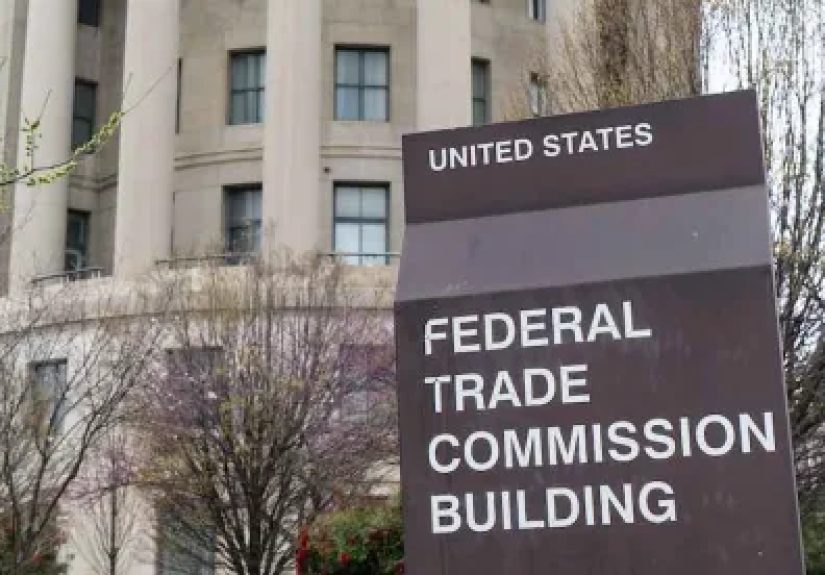
In August 2025, the FTC announced it had closed its antitrust investigation into the
Clean Truck Partnership (CTP)a California-brokered agreement tied to ambitious emissions rules.
The case matters far beyond trucking. It’s a modern, real-world example of the tension between
climate collaboration and competition law, and it offers a practical blueprint
for what regulators are willing to tolerate (and what makes them reach for the antitrust rulebook).
This article breaks down what the Clean Truck Partnership was, why the FTC described “obvious” antitrust concerns,
what commitments ended the probe, and what businessesespecially in regulated and sustainability-heavy industries
should learn before they sign the next well-meaning agreement that accidentally reads like a cartel fan-fiction.
What Was the Clean Truck Partnership?
The Clean Truck Partnership was an agreement involving the California Air Resources Board (CARB), a trade association
representing truck and engine manufacturers, and several major heavy-duty truck makers. The partnership grew out of
California’s push to reduce greenhouse-gas emissions and other pollutants from medium- and heavy-duty trucks.
The policy backdrop: California’s clean-truck rules
CARB adopted a set of regulations designed to accelerate the shift from internal combustion engine (ICE) trucks to
zero-emission trucks. In plain English: California wanted more electric (or otherwise zero-emission) trucks sold
over time, with strict standards shaping what could be sold and when. Those rules created pressure on manufacturers,
fleets, and the supply chainfrom battery production to charging infrastructure.
The partnership was presented as a way to align industry commitments with CARB’s clean-air goals while giving
manufacturers some flexibility and predictability. In theory, that sounds tidy. In antitrust land, “tidy” can be a
red flagespecially when “tidy” means “competitors collectively commit to limits that affect output.”
Why Did the FTC Investigate It?
The FTC’s core job is to protect competition. And from the FTC’s perspective, the Clean Truck Partnership wasn’t just
a feel-good sustainability pact. It looked like a horizontal agreement (meaning: among competitors)
with features that could restrict supply and dull competition.
1) Market concentration: “These aren’t small players”
One reason the FTC took the partnership seriously is the structure of the heavy-duty truck market.
When a market is highly concentrated, coordination among the biggest firms can have outsized effects:
fewer choices, less innovation pressure, and (often) higher prices.
2) Output restrictions dressed in regulatory clothing
Antitrust law is especially skeptical of competitors agreeingexplicitly or implicitlyto limit output.
Output limits don’t have to be a literal “we will produce 10 fewer trucks.” They can show up as commitments that
cap sales of certain products, restrict what can be produced, or steer production away from competing options.
The FTC pointed to provisions that, in its view, functioned like caps on certain truck or engine sales and
collectively adopted emissions limits that could, in practice, constrain production. That’s the kind of structure
antitrust enforcers “take the dimmest possible view of,” because less output often equals less competition.
3) Cross-enforcement risk: competitors policing competitors
Another problem (from the FTC’s point of view) was that the agreement didn’t clearly prevent one manufacturer from
trying to enforce the partnership’s restrictions against another manufacturer. Even if enforcement would be messy in
court, the threat of enforcement can change behavior. If your competitor might sue you for deviating from a
shared commitment, you may think twice before competing aggressively.
4) The “Dead Hand” problem: obligations that survive even if regulators lose
The most eyebrow-raising feature was what FTC staff described as a “Dead Hand” provision: the idea that the
manufacturers’ commitments would persist even if CARB’s legal authority were later invalidated. That’s a big deal.
Why? Because once the agreement becomes a private, competitor-to-competitor commitment that survives the regulator’s
power, it starts looking less like “we’re complying with the law” and more like “we’re agreeing among ourselves to
behave a certain way regardless of what the law ultimately allows.” And antitrust law does not love that journey.
“Isn’t This Protected Because the Government Was Involved?”
You might think a state agency’s involvement would create a legal shield. Sometimes it canbut not automatically.
The FTC’s closing statement emphasized that doctrines often raised in these contexts (like state-action immunity and
protections for petitioning the government) are not blank checks.
State-action immunity: not a costume you can buy online
In broad terms, state-action immunity can protect certain conduct when it’s truly the result of state policy and is
actively supervised by the state. The FTC’s concern here was that the agreement’s structure and enforcement dynamics
could weaken political accountabilityespecially if private parties are effectively locking in a quasi-regulatory
scheme without the normal ability of elected officials to revise or unwind it.
Noerr-Pennington: petitioning is protected; private collusion is not
Competitors can often band together to petition the governmentthink trade associations advocating for a change in
rules. But the FTC’s view was that the Clean Truck Partnership wasn’t merely petitioning CARB. It was a signed
“Agreement” among major competitors with operational commitments that could affect output and competition.
Translation: lobbying for a regulation is one thing; signing a private pact that functions like an output restraint
is another. Antitrust analysis cares about what the agreement does, not just what the press release
says it means.
So Why Did the FTC End the Antitrust Probe?
Here’s the plot twist: the FTC ended the investigation after the manufacturers and their trade association delivered
written commitments that, in the FTC’s view, addressed the biggest competitive risks. The FTC didn’t issue penalties
or a formal consent decree-style order here; instead, it accepted commitments backed by reporting and disclosure.
The commitments that closed the case
-
Non-enforcement: The manufacturers stated the Clean Truck Partnership is unenforceable and
committed they would not enforce (or attempt to enforce) its terms against each other. -
Independent decision-making: They committed to act independentlywithout regard to the partnership’s
restrictive provisionswhen trying to sell heavy-duty trucks. -
No future “cross-enforcement” deals with state regulators: They agreed not to enter future
agreements with U.S. state regulators that allow competitors to police each other or bind firms to limits the
state lacks authority to impose or enforce. -
Trade association guardrails: The trade association agreed it would not negotiate or enter into
similar agreements on behalf of members in the future.
In other words: the FTC wanted the “private cartel-shaped features” removed from the roadmap going forward. Ending
the probe wasn’t a gold star for the original agreementit was a recognition that the key risks were now addressed,
and the partnership was effectively put “in the rearview mirror.”
Why This Case Is Bigger Than Trucks
Sustainability initiatives increasingly require coordination: shared standards, joint infrastructure planning, and
common data systems. Meanwhile, antitrust enforcement has become more skeptical of competitor collaboration,
especially when it affects output, pricing, or strategic roadmaps.
The Clean Truck Partnership saga is a case study for any industry trying to do “big transition” workenergy,
manufacturing, agriculture, tech supply chains, and more.
Lesson 1: “Good intentions” don’t immunize bad structure
Antitrust law focuses on competitive effects and risk signals. If an agreement looks like competitors jointly
limiting output, courts and agencies don’t typically say, “But the vibes were immaculate.” They say, “Why are
competitors agreeing not to compete?”
Lesson 2: If the regulator can’t enforce it, your agreement may look private
Regulators can pass rules. Companies can comply with rules. But when companies sign a private agreement that
substitutes for regulationor survives even if the regulation fallsit can look like a private system of control.
The more “private enforcement” and “locked-in commitments” you add, the more antitrust scrutiny you invite.
Lesson 3: Trade associations are helpfuluntil they become a coordination hub
Trade associations do legitimate work. But they also create a place where competitors meet, talk, and sometimes
(accidentally) coordinate. The FTC’s emphasis on the trade association’s future commitments is a reminder:
associations need strong antitrust compliance rules, careful agendas, and real guardrails around discussions that
could touch output, pricing, or competitive strategy.
Practical Compliance: How to Collaborate Without Getting Flagged
Companies can still collaborate on sustainability. The trick is doing it in a way that supports competition rather
than replaces it.
Do this
- Collaborate on standards transparently with open participation and clear governance.
- Use third parties to aggregate data when the data could be competitively sensitive.
- Keep competition alive: allow companies to exceed standards and innovate independently.
- Document pro-competitive benefits like interoperability, safety, and faster innovation.
- Train teams on what not to discuss (pricing, output, customer allocation, future capacity plans).
Avoid this
- Don’t cap output (directly or indirectly) through competitor commitments.
- Don’t build cross-enforcement where competitors can punish each other for “noncompliance.”
- Don’t create “dead hand” obligations that survive the regulator’s authority or democratic oversight.
- Don’t treat “ESG” as an antitrust hall passit isn’t.
One easy gut-check: if your collaboration would make sense even if your competitor didn’t exist, you’re probably
on safer ground. If your collaboration requires your competitor to sign the same pledge so you can all move in
lockstep, you’re stepping onto the thin ice where antitrust lawyers start speaking only in whispers.
What Happens Next for Clean Trucking?
The FTC’s action did not end the policy debate about electrifying trucks. It did, however, send a signal:
major competitors can’t privately lock in output-affecting commitments just because a regulator
helped broker the deal.
Expect future clean-trucking efforts to lean more on:
(1) formal regulations (with clear government enforcement and accountability),
(2) incentives and infrastructure programs, and
(3) narrower, carefully structured collaborations that focus on technology, interoperability, and safetywithout
restricting competitive output choices.
For fleets, the big theme is uncertainty. Fleet managers want predictable rules and reliable total-cost-of-ownership
math. They also want trucks that can do the job today. When policy whiplash meets charging buildout timelines,
procurement becomes less like “shopping” and more like “risk management with a steering wheel.”
On-the-Ground Experiences: When Clean-Truck Goals Meet Antitrust Reality (Extra )
The Clean Truck Partnership story isn’t just a legal memoit’s something people in the industry feel in day-to-day
decisions. Here are a few realistic “from the field” snapshots that reflect what stakeholders commonly experience
when climate policy, market concentration, and antitrust enforcement collide.
1) The fleet manager’s spreadsheet gets emotional
Fleet procurement teams live inside spreadsheets: vehicle price, maintenance, fuel, downtime, charging, route
length, payload, resale value. When policies shiftor when a voluntary partnership suddenly becomes legally
radioactivethose spreadsheets turn into “choose your own adventure” novels.
A typical experience looks like this: a regional fleet plans a pilot of zero-emission trucks for shorter urban
routes, assuming incentives and charging upgrades will stay steady. Then uncertainty hitslitigation headlines,
waiver debates, enforcement threats, and now an FTC antitrust probe tied to the very agreement that was supposed to
create stability. The fleet doesn’t stop caring about emissions. It starts caring about timelines and
risk. Purchases get delayed, pilots get smaller, and everyone asks the same question: “What rules will
still exist two budget cycles from now?”
2) OEM compliance teams become the “party planners” of collaboration
Inside manufacturers, antitrust counsel and compliance teams often become reluctant event planners. They’re the ones
writing the rules of engagement for meetings with competitors: what can be discussed, what must be avoided, how
notes are kept, who attends, and when to stop the conversation.
A common experience after a high-profile enforcement story is a sudden burst of internal training. Sales, policy,
and engineering teams get refreshed guidance like: “Don’t discuss future production volumes,” “Don’t align rollout
plans with competitors,” and “If the words ‘cap’ or ‘limit’ appear in a draft, call Legal before you hit send.”
People joke about it, but it’s seriousbecause the fastest way to turn a sustainability meeting into an antitrust
exhibit is to treat competitors like co-authors of your business plan.
3) Regulators learn the hard way that “voluntary” can still look coercive
Regulators often like voluntary agreements because they can move faster than rulemaking, especially when technology
and infrastructure need coordination. But a key experience from this episode is that “voluntary” doesn’t
automatically mean “safe.”
If a voluntary deal creates private commitments that outlast regulatory authorityor invites competitors to
cross-enforce constraintsantitrust risk grows. Regulators may respond by returning to the slower but sturdier path:
formal rules, clearer enforcement mechanisms, and public accountability. That’s less exciting than an
“unprecedented partnership” headline, but it tends to survive legal storms better.
4) Dealers and maintenance teams feel the transition in practical ways
While policy debates happen in headlines, dealers and service teams experience the transition in daily workflows:
training on high-voltage systems, new diagnostic tools, parts availability, and the operational reality that an
electric truck’s “refueling” is a schedule problem as much as an energy problem.
When the policy environment becomes uncertain, these teams often see a freeze: fleets hesitate, inventory planning
gets harder, and infrastructure partners delay investments. Everyone still wants clarity. The difference is that,
after an FTC intervention, they also want collaboration structures that are unquestionably legalso the industry can
build the future without accidentally agreeing to stop competing in the present.
The bottom line experience across the ecosystem is simple: the clean-truck transition is hard enough without adding
antitrust turbulence. The FTC’s message was not “don’t go green.” It was “don’t do it by signing a competitor pact
that restricts output and locks in commitments beyond democratic oversight.”
Conclusion
The FTC ending its Clean Truck Partnership antitrust probe is a headline with a long tail. It’s about trucks, yes.
But it’s also about how U.S. regulators want sustainability work to happen: through transparent, accountable
regulation and pro-competitive innovationnot through competitor agreements that can limit output, invite
cross-enforcement, or survive even when legal authority changes.
If your industry is building the futurecleaner, safer, more efficienttake the lesson seriously: collaborate, but
don’t coordinate away competition. Because the only thing more expensive than a new technology transition is a new
technology transition plus an antitrust investigation.