Table of Contents >> Show >> Hide
- What Is the FK63 Deep Bookcase?
- Why Designers Still Care About the FK63
- Design Details That Make the Deep Version Special
- Where the FK63 Deep Bookcase Works Best
- How to Style an FK63 Deep Bookcase Without Ruining the Vibe
- Practical Pros and Considerations Before You Buy
- Is the FK63 Deep Bookcase Worth It?
- Living With the FK63 Deep Bookcase: The Everyday Experience
- Conclusion
The FK63 Deep Bookcase is one of those rare furniture pieces that manages to feel serious, useful, and effortlessly cool at the same time. It does not shout for attention. It does not arrive wearing sequins. It simply stands there in solid oak, looking composed and expensive in the best possible way, like it has already read the books you keep pretending you will finish this summer.
Originally designed in 1963 by Preben Fabricius and Jørgen Kastholm, the FK63 system belongs to that glorious corner of Danish modern design where proportion, craftsmanship, and restraint do all the heavy lifting. The deep version of the bookcase takes that philosophy and makes it especially practical for modern life. With a deeper shelf profile, it can do more than just hold novels in tidy rows. It can display art books, ceramics, storage boxes, framed pieces, and the kind of meaningful objects that make a room feel lived-in rather than staged for a catalog shoot.
If you are researching the FK63 Deep Bookcase, you are probably not looking for a basic “it has shelves, wow” summary. You want to know what makes it different, why designers love it, where it works best, and whether it is actually worth the investment. That is exactly what this guide covers, with a little style advice and a little practical honesty mixed in for good measure.
What Is the FK63 Deep Bookcase?
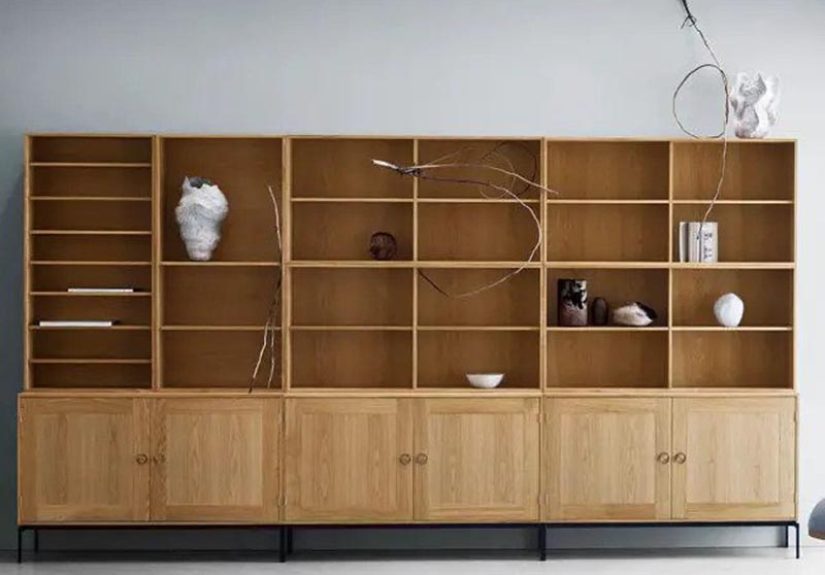
The FK63 Deep Bookcase is part of the larger FK63 Bookcase System, a modular shelving collection now produced by Carl Hansen & Søn. The system is known for combining solid oak construction, refined joinery, and flexible configurations that can work in homes, offices, hospitality spaces, and other interiors where storage needs to look intentional, not purely functional.
The deep bookcase format is the version that gives you more shelf depth to work with. In the Carl Hansen lineup, the model is presented at 56 x 112 x 36 cm, which makes it compact enough to fit into real rooms while still offering a generous storage presence. That deeper profile matters more than it sounds. Shallow shelving is fine for paperbacks and decorative minimalism. Deep shelving, on the other hand, lets a bookcase become a true design tool. It can support layered styling, practical storage, and a richer visual rhythm.
Another key point is that the FK63 is not just a one-note open shelf. The broader system includes options such as full-width cabinets, drawers, doors, and optional sliding trays. That means the deep bookcase can function as open display, concealed storage, or a mix of both. In other words, it is not only handsome. It is strategic.
Why Designers Still Care About the FK63
It Balances Minimalism With Warmth
Minimalist furniture can sometimes drift into one of two unfortunate directions: bland enough to disappear or cold enough to make your room feel like a very elegant tax office. The FK63 avoids both problems. Its lines are clean and architectural, but the oak brings warmth, texture, and visual softness. The result is a Scandinavian bookcase that looks disciplined without feeling sterile.
That balance is a big reason the piece still resonates today. American interiors are full of mixed influences right now: warm minimalism, quiet luxury, Japandi, updated midcentury, collected eclecticism. The FK63 Deep Bookcase fits surprisingly well into all of them because it is grounded in materials and proportion rather than trend tricks.
It Was Designed to Be Flexible, Not Fussy
The best modular furniture solves problems without creating new ones. The FK63 system was designed for flexibility from the start. It can be wall-mounted or used as a standalone unit on a slender powder-coated steel base. Modules can be arranged to suit different room sizes and storage needs, and the system supports a mix of open and closed elements.
That flexibility is not gimmicky. It is the kind of practical intelligence that makes a piece age well. A bookcase that works in a first apartment, a home office, a dining room, and a future renovation has a much longer design life than something that only looks good in one specific corner with perfect lighting and zero children.
It Celebrates Craftsmanship in the Details
One reason the FK63 Deep Bookcase stands apart from mass-market shelving is that the design reward comes from the details. The oak is FSC-certified, the grain is emphasized with oil or white-oil finishes, and the joinery is treated as part of the visual experience rather than hidden away like a guilty secret. Brass handles add contrast, ash drawers bring a subtle material shift, and the precise door fitting reflects old-school cabinetmaking discipline.
That is the thing about high-end storage: the magic is often in the parts people do not notice right away. Then they lean closer. Then they suddenly become the type of person who talks about mortise joints over coffee.
Design Details That Make the Deep Version Special
Depth changes behavior. That may sound dramatic for a bookcase, but it is true. A deep bookcase does not simply store more. It changes how you style, organize, and experience a wall.
With the FK63 Deep Bookcase, that extra depth opens up several possibilities:
- Layered styling: You can place artwork or framed photos behind books and objects rather than forcing everything into a single flat line.
- Larger-format storage: Art books, archival boxes, baskets, and sculptural pieces fit more comfortably.
- Mixed-function use: The shelf can handle display and utility at the same time, which is ideal for real homes where beauty and clutter are in a constant wrestling match.
- Better visual weight: Deep shelving often feels more architectural and substantial, especially when made from oak and paired with a refined frame or cabinetry.
The optional sliding trays are particularly interesting because they make the piece feel less like ordinary shelving and more like a storage system with personality. Likewise, the availability of cabinets and drawers means the FK63 can hide the ugly but necessary things of life: cords, paper piles, remote controls, chargers, or that one mystery drawer everyone has but no one discusses.
Where the FK63 Deep Bookcase Works Best
Living Rooms
This is the most obvious placement, but also the most effective. In a living room, the FK63 Deep Bookcase can operate as a library wall, a display cabinet, or a hybrid media-storage piece. The deeper shelves help it hold more than books, which is important because most living rooms today demand that furniture multitask. One shelf might hold design monographs, the next a ceramic lamp, the next a basket with game controllers. That is not chaos. That is modern domestic reality.
Home Offices
In a home office, the FK63 has a particularly strong case. The modular feel suits workspaces, while the oak prevents the room from becoming emotionally identical to a spreadsheet. Closed storage can hide boring office supplies, while open shelves display books, files, and personal objects that keep the space from feeling corporate.
Dining Rooms and Transitional Spaces
Because the piece has such a polished profile, it also works beautifully in a dining room, hallway, or open-plan transition area. Use it for serveware, glassware, books, table linens, or curated objects. Deep shelves are especially useful here because they can hold larger bowls, trays, and boxes without making everything feel jammed together.
Bedrooms and Reading Corners
If your bedroom leans more boutique hotel than laundry-depot-in-progress, the FK63 Deep Bookcase can be a smart addition. It creates a calm, collected focal point and offers enough depth for books, keepsakes, storage boxes, and soft decorative layering.
How to Style an FK63 Deep Bookcase Without Ruining the Vibe
The danger with a beautiful bookcase is assuming every inch needs to be filled. It does not. In fact, one of the quickest ways to make a designer bookcase look ordinary is to pack it so tightly that it feels like a storage unit with delusions of grandeur.
Here are some smarter ways to style an FK63 Deep Bookcase:
Use the Depth for Layers
Deep shelves are ideal for layering. Lean a framed artwork or small print toward the back, then anchor it with books or a heavier object in front. This adds dimension and keeps the bookcase from looking flat. Better Homes & Gardens has long recommended using depth this way, and the FK63 is practically built for it.
Mix Vertical and Horizontal Stacks
Do not line up every book like obedient little soldiers. Alternate vertical stacks with horizontal piles to create rhythm. House Beautiful also points to this technique as a way to avoid monotony and give accessories a place to land.
Leave Breathing Room
Architectural Digest and other design editors often stress that a bookshelf should reflect personality, not panic. Leave negative space. Let a beautiful object sit alone. Not every shelf needs to audition for a maximalist drama.
Combine Display and Concealment
If your FK63 configuration includes cabinets or drawers, use them well. Hide the practical mess. Display the beautiful pieces. That balance is what makes a home feel elevated rather than overly arranged.
Keep the Palette Cohesive
Because oak has such a natural presence, the FK63 looks best when the styling palette feels intentional. That does not mean beige on beige on beige until your soul leaves your body. It just means choosing a handful of colors and materials that echo one another. Ceramics, linen, paper, glass, and dark or muted book spines usually play very nicely here.
Practical Pros and Considerations Before You Buy
No honest article about a premium designer bookcase should pretend beauty is the only question. The FK63 Deep Bookcase has real advantages, but it also asks for commitment.
Pros
- Exceptional craftsmanship: This is heirloom-minded furniture, not disposable shelving.
- Modular flexibility: It can adapt to different spaces and needs over time.
- Rich material presence: Solid oak ages more gracefully than many lower-cost alternatives.
- Useful depth: The deeper shelf profile expands both storage and styling options.
- Timeless design language: It works across many interiors without feeling trendy.
Considerations
- It is an investment piece: This is luxury furniture, not a budget stopgap.
- Open shelving requires editing: If you hate visual maintenance, be realistic.
- Depth should match your room: In very narrow spaces, deeper shelving needs thoughtful placement.
- The best results come from planning: Because it is modular, you should think carefully about how you want to use it before buying.
In short, the FK63 Deep Bookcase is best for people who want long-term value, refined materials, and a storage system that can evolve. It is not the right answer for every budget or every room. But for the right space, it can do the work of several lesser pieces while looking far better in the process.
Is the FK63 Deep Bookcase Worth It?
If your goal is simply “a place to put books,” there are obviously cheaper ways to achieve that. Many cheaper ways. Endlessly cheaper ways. Some of them even come with an Allen key and a mild identity crisis.
But if you want a solid oak bookcase with real design pedigree, modular intelligence, and the ability to function as both storage and architecture, the FK63 Deep Bookcase makes a compelling case for itself. It is a piece that respects materials, rewards close looking, and improves the visual discipline of a room. It does not beg for compliments, which is probably why it gets them.
Its strongest quality may be that it feels useful in a grown-up, enduring way. The FK63 does not try to be flashy. It tries to be right. And furniture that gets the basics right, year after year, often ends up being the furniture people keep the longest.
Living With the FK63 Deep Bookcase: The Everyday Experience
To understand the FK63 Deep Bookcase, it helps to think beyond measurements and materials and into daily life. What does it actually feel like to live with a piece like this? In many ways, that is where the design earns its keep.
First, there is the visual experience. A lot of shelving looks fine when empty and chaotic when full. The FK63 tends to do the opposite. Once it is filled with books, ceramics, framed pieces, and a few well-chosen objects, it often starts to look more complete, more architectural, and more grounded. The oak gives the display warmth, while the clean framework keeps things from drifting into visual clutter. It has presence, but not ego. It quietly organizes the room around itself.
Then there is the tactile side. With a piece like this, people notice the feel of the materials. The oiled oak does not look plastic or overly processed. It looks like wood, because it is wood, and good wood at that. Handles, doors, and trays add moments of interaction that feel deliberate instead of flimsy. That matters more than shoppers sometimes expect. A bookcase is not just seen; it is used constantly. You reach for books, rearrange objects, open a cabinet, shift a stack, wipe a shelf, and place something new. Over time, those small interactions shape your opinion of the piece as much as the design itself.
The depth also changes the lived experience in practical ways. Deep shelves reduce that annoying game of decorative Tetris where every object has to be exactly the right size or it sticks out awkwardly. Larger books fit more naturally. Bowls, boxes, and framed pieces have room to breathe. Styling becomes easier because the shelf gives you more options. Instead of cramming everything into a single front-facing line, you can create real depth, with objects sitting forward and artwork or taller books settling behind them.
There is also a psychological effect to well-designed shelving. It encourages editing. When a bookcase looks this composed, you become more selective about what earns a place on it. Random clutter starts to feel like an intruder. That may sound dramatic, but anyone who has upgraded from generic storage to thoughtful storage knows the phenomenon well. Good furniture can gently improve your habits. Suddenly you are arranging books by subject, hiding ugly paperwork, and rethinking whether you really need to display that free conference mug from 2018.
In shared spaces, the FK63 Deep Bookcase can also become a quiet storyteller. Books, objects from trips, family photos, art, and useful storage all live together in one place. The result is not just organization. It is identity. A room starts to say something more interesting than “someone bought furniture.” It starts to say, “someone lives here, reads here, collects here, and has at least occasional control over their surroundings.”
That is the deeper appeal of the FK63. It does not just store your things. It elevates the experience of having them.
Conclusion
The FK63 Deep Bookcase is more than a handsome storage piece. It is a carefully considered system rooted in Danish modern principles, updated for the way people actually live now. Its modular bookcase format, solid oak construction, deeper shelf profile, and refined craftsmanship make it a standout choice for anyone who wants a bookcase that is both functional and emotionally satisfying.
It works because it respects balance: open and closed storage, beauty and utility, precision and warmth, flexibility and restraint. In a world full of furniture designed to be replaced, the FK63 feels designed to stay. And that might be its most luxurious feature of all.