Table of Contents >> Show >> Hide
- Why Forward Sports Became a Big Name in Soccer Balls
- What Is a Handmade Soccer Ball?
- How Handmade Soccer Balls Are Made: Step by Step
- Hand-Stitched vs. Machine-Stitched vs. Thermo-Bonded Soccer Balls
- The Human Side of Handmade Soccer Balls
- What Makes a Handmade Soccer Ball Good?
- Why Handmade Soccer Balls Still Matter in a High-Tech Game
- Experience Section: What Playing With a Handmade Soccer Ball Feels Like
- Conclusion
Forward Sport soccer balls are a reminder that the world’s simplest-looking sports object is secretly a tiny engineering project wearing cleats. A soccer ball may look like “just a ball” until you zoom in: layered synthetic leather, carefully cut panels, reinforced lining, a rubber bladder, tight stitches, air-pressure testing, bounce testing, roundness checks, and enough human skill to make your weekend pickup game feel like a Champions League warm-up. No pressure.
Forward Sports, based in Sialkot, Pakistan, has become one of the best-known names in global soccer ball manufacturing. The company is widely associated with major brands, elite competition balls, and the long craft tradition of Sialkot, a city often described as one of the world’s great soccer ball production hubs. While modern match balls may use thermal bonding, computer-aided design, robotic inspection, and smart-ball technology, handmade and hand-stitched soccer balls remain a fascinating blend of craft, patience, and performance.
This guide explains how handmade soccer balls are made, why Forward Sports matters, what separates a quality ball from a garage-sale balloon with ambition, and how the experience of playing with a handmade ball compares with cheaper machine-stitched alternatives.
Why Forward Sports Became a Big Name in Soccer Balls
Forward Sports was founded in 1991 and grew from a small production operation into a major soccer ball manufacturer with international reach. The company’s official materials describe it as one of the world’s largest football manufacturers, producing more than 20 million balls annually and supplying high-profile match balls for global competitions. Its headquarters are in Sialkot, a city with a sports-manufacturing history that stretches back more than a century.
Sialkot’s soccer ball story is almost cinematic. Local craftsmanship, leatherworking skills, export demand, and generations of stitchers turned the region into a global production center. Today, soccer balls from Sialkot may end up in professional stadiums, school fields, training academies, retail stores, and neighborhood parks where one overly competitive uncle still insists he “could have gone pro.”
Forward Sports is especially known for working with elite brands and producing balls across several construction types: hand-stitched, machine-stitched, laminated, thermo-bonded, and specialty balls. That range matters because not every soccer ball is built for the same job. A professional match ball prioritizes flight stability, responsiveness, low water absorption, and precision. A training ball focuses on durability. A promotional ball mostly wants to look good in a photo and survive being kicked by someone wearing sandals.
What Is a Handmade Soccer Ball?
A handmade soccer ball is typically assembled by skilled workers who stitch panels together manually using strong thread. The classic design most people imagine is the 32-panel ball: 20 hexagons and 12 pentagons. This geometry helps flat pieces form a rounded shape when sewn together. Modern balls may use fewer or differently shaped panels, but the traditional hand-stitched ball remains one of the most recognizable designs in sports.
Handmade does not mean primitive. A good handmade soccer ball starts with accurate patterns, consistent materials, clean cutting, proper lamination, carefully punched stitch holes, and strict quality control. The craft is in the stitching, but the performance comes from the whole system. Think of it like pizza: the oven matters, the dough matters, the sauce matters, and yes, the person assembling it absolutely matters. A soccer ball is basically a performance pizza, except you kick it and do not add mozzarella.
How Handmade Soccer Balls Are Made: Step by Step
1. Design and Panel Planning
Before a ball is stitched, it is designed. Engineers and product teams decide the panel shape, size, surface texture, graphics, materials, weight target, pressure range, and performance category. A classic handmade soccer ball may use 32 panels, while newer premium balls may use fewer panels to reduce seams and improve flight consistency.
Panel design affects how the ball moves through the air. More seams can create more surface disruption, while fewer panels can create a smoother striking surface. However, fewer panels are not automatically better for every player or every price point. For hand-stitched balls, the goal is often a sweet spot: durability, reliable touch, predictable bounce, and strong seam integrity.
2. Material Selection
Modern soccer balls are usually made with synthetic leather rather than traditional leather. Synthetic materials such as polyurethane or PVC-based covers can be engineered for softness, durability, water resistance, and shape retention. Beneath the outer cover, manufacturers add lining layers made from textile materials such as polyester and cotton blends. These layers help the ball keep its shape and control how firm or responsive it feels.
The bladder is the air-holding heart of the ball. It is commonly made from latex or butyl rubber. Latex bladders often provide a lively, professional feel but may lose air faster. Butyl bladders typically hold air longer and are common in training balls. The valve must be reliable, centered, and properly bonded because nobody wants a ball that wheezes like it just ran wind sprints.
3. Lamination and Backing
Once the outer material is selected, it is laminated with backing layers. Lamination gives each panel structure and strength. It also affects softness, rebound, and long-term durability. In high-volume factories, lamination may be automated to keep thickness and adhesive application consistent.
This stage is easy to underestimate. If the panels are too stiff, the ball may feel harsh. If the panels are too soft or poorly backed, the ball can lose shape quickly. Quality soccer ball manufacturing is a balancing act between comfort and control, softness and strength, flexibility and form.
4. Cutting the Panels
After lamination, panels are cut using molds, dies, or automated cutting machines. Accuracy is essential. A tiny error repeated across 32 panels can become a noticeably uneven ball. The panel edges must align cleanly, especially for hand stitching, because the stitcher relies on consistent shapes and holes to create a tight, balanced sphere.
Graphics may be printed before or after cutting, depending on the production method. For branded balls, color consistency and logo placement matter. The ball has to perform, but it also has to look sharp enough to make players believe their first touch has improved by 37 percent.
5. Punching Stitch Holes
For hand-stitched soccer balls, small holes are punched along the panel edges. These holes guide the thread and keep stitching even. If the spacing is inconsistent, the ball may develop weak points, puckered seams, or uneven tension. Skilled production teams treat this step seriously because the final roundness of the ball depends partly on the precision of these tiny holes.
6. Hand Stitching the Panels
Now the real craft begins. Stitchers join the panels by hand using strong thread, often a polyester-cotton or synthetic blend. A traditional ball may require hundreds of stitches and careful tension control. Too loose, and the seams become weak. Too tight, and the ball can distort. The stitcher must keep the panels aligned while gradually forming a three-dimensional shell from flat pieces.
The ball is usually stitched inside out for most of the process. Near the end, the worker leaves an opening, turns the ball right side out, inserts or positions the bladder, and closes the final seam with hidden stitching. This closing seam requires special care because it must match the strength and appearance of the rest of the ball.
Hand stitching is slow compared with machine stitching or thermal bonding, but it offers strong seams and a flexible feel. That is why many high-quality training and match-style balls still celebrate hand-stitched construction, even as elite professional balls increasingly use bonded technologies.
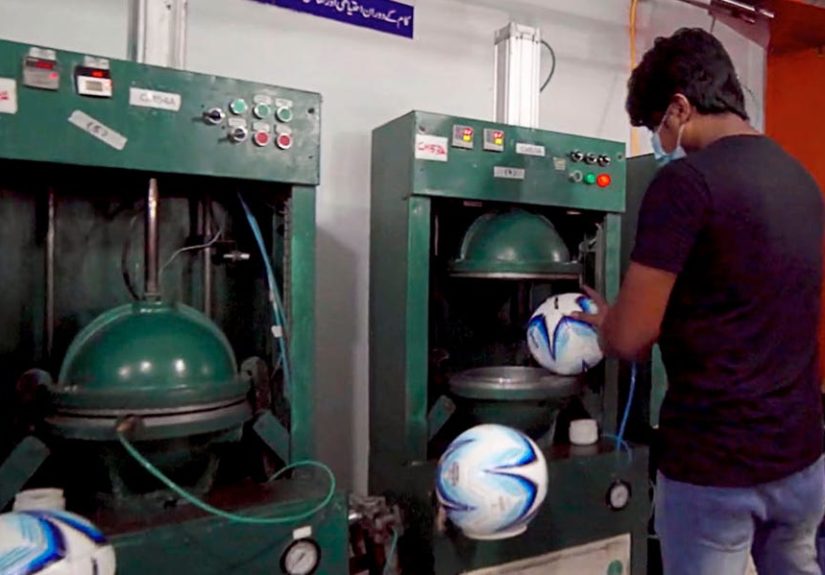
7. Bladder Insertion and Inflation
The bladder gives the ball its air pressure and bounce. During assembly, it must sit correctly inside the panel shell. If the bladder is off-center or poorly shaped, the ball may wobble, bounce unevenly, or feel strange when struck. Once inserted, the ball is inflated to check shape, seam strength, and air retention.
Official size 5 match balls are expected to follow standard rules for circumference, weight, and pressure. In general, adult match balls are about 27 to 28 inches in circumference, weigh roughly 14 to 16 ounces at the start of play, and are inflated within the approved pressure range. Those numbers sound boring until you play with a ball that ignores them. Then every pass feels like negotiating with a beach ball.
8. Shaping and Resting
After inflation, handmade soccer balls may be shaped and rested so the materials settle. This helps the ball reach its intended roundness. Some balls are placed in molds or checked repeatedly during finishing. The point is simple: a soccer ball should be spherical, not “spherical-ish with personality.”
9. Quality Testing
Quality testing separates real soccer balls from decorative impostors. FIFA’s football quality program evaluates balls through several laboratory-style tests, including weight, circumference, roundness, bounce, water absorption, pressure loss, and shape and size retention. Higher-level balls must pass tougher standards.
Factories may also test shooting durability by firing balls against hard surfaces, checking seam strength, inspecting print quality, measuring air pressure, and confirming that the ball keeps its shape. Forward Sports has highlighted modern inspection methods, including advanced quality assurance and automated inspection. In plain English: the ball gets judged harder than a goalkeeper after a near-post mistake.
Hand-Stitched vs. Machine-Stitched vs. Thermo-Bonded Soccer Balls
Hand-stitched balls are known for durability, flexibility, and a traditional feel. They are often favored in training environments because their seams are strong and repairable in some contexts. Machine-stitched balls are faster to produce and often more affordable, making them common for recreational play. Thermo-bonded balls use heat and adhesive to fuse panels together without visible stitching, creating a smoother surface and lower water uptake.
Elite match balls increasingly use thermo-bonded or seamless-style construction because players and governing bodies demand consistent flight, precise touch, and performance in wet conditions. The official match balls used at the highest levels may also include textured surfaces and, in some cases, connected-ball technology that supports officiating systems.
Still, handmade soccer balls are not outdated. They remain valuable because they combine strength, craft, and accessibility. A well-made hand-stitched ball can be excellent for clubs, schools, academies, and players who want a dependable ball that can handle repeated training sessions.
The Human Side of Handmade Soccer Balls
Handmade soccer balls depend on skilled labor. That makes the story inspiring, but it also makes labor standards important. The sports ball industry has faced serious scrutiny over wages, working conditions, outsourcing, gender inequality, and child labor risks, especially in the 1990s. Since then, international agreements, monitoring programs, buyer codes of conduct, and fair-trade standards have pushed the industry toward better oversight.
Fair-trade organizations emphasize that fair play should include fair pay and safe working conditions for the people who make the balls. This is especially important because hand stitching can be paid by piece rate, which may pressure workers to produce more units rather than earn a stable hourly wage. Ethical sourcing, transparent audits, safe factories, women’s employment opportunities, and responsible purchasing are not side issues. They are part of what makes a ball truly high quality.
Forward Sports publicly highlights corporate social responsibility, women’s employment, environmental improvements, renewable energy generation, waste reduction, and water savings. For buyers, clubs, and brands, the lesson is clear: performance matters, but so does the supply chain. A ball should be round, durable, and fair. That is not too much to ask from an object that gets kicked for a living.
What Makes a Handmade Soccer Ball Good?
A good handmade soccer ball has even stitching, consistent panel alignment, proper weight, reliable rebound, strong air retention, and a balanced feel when kicked. The surface should not wrinkle excessively, the seams should not gape, and the ball should roll straight on a flat surface. If it swerves wildly during a gentle pass, do not blame your technique immediately. Blame your technique second.
For training, durability may matter more than professional-level flight. For matches, touch and consistency become more important. For youth players, size and weight should match age group recommendations. A size 5 ball is standard for older players and adults, while smaller sizes are better for children learning control and confidence.
Why Handmade Soccer Balls Still Matter in a High-Tech Game
Soccer is moving fast. Match balls now feature advanced textures, complex panel geometry, thermal bonding, and even internal sensors. Yet handmade soccer balls still matter because they represent the foundation of the sport’s manufacturing culture. The hand-stitched ball teaches us that performance is not only about technology. It is also about touch, patience, repetition, and skill.
There is something satisfying about knowing that a ball was assembled by a person who understands tension, alignment, and shape by feel. It connects the global game to human craft. Every pass, shot, clearance, and questionable Sunday-league bicycle kick starts with that hidden work.
Experience Section: What Playing With a Handmade Soccer Ball Feels Like
Using a handmade soccer ball is a different experience from kicking a cheap plastic ball picked up from a discount bin. The first thing many players notice is the touch. A good hand-stitched ball usually feels slightly cushioned on contact. When you receive a pass, the ball does not slap your foot like a tiny angry drum. It compresses a little, responds cleanly, and gives you that satisfying sense that your first touch was intentional, even if it was mostly luck and a forgiving surface.
During passing drills, handmade balls often feel dependable. The seams create a familiar texture under the foot, and the ball tends to roll with a natural rhythm when properly inflated. For coaches, this matters because players learn better when the equipment behaves consistently. A ball that bounces unpredictably can make beginners think they are worse than they are. A quality hand-stitched ball gives them a fairer chance to develop timing, weight of pass, and receiving technique.
Shooting with a handmade soccer ball can also feel more controlled, especially for players who like a traditional strike. The ball may not have the ultra-smooth, low-seam feel of a modern professional thermo-bonded match ball, but it offers feedback. You can feel when you hit through the center, when you slice across the panel, and when your “power shot” was actually a toe poke wearing a disguise. That feedback is useful. It teaches players what happened at the moment of contact.
Durability is another practical advantage. In everyday training, balls get abused. They hit fences, asphalt, wet grass, goalposts, brick walls, and occasionally the roof of a neighbor who is definitely not amused. A well-made handmade ball can handle a lot of regular use because the stitching is strong and the panel structure is flexible. It may show wear over time, but it often ages in a predictable way rather than failing suddenly.
For parents buying a ball for a young player, the biggest difference may be value. A handmade ball from a reputable manufacturer can cost more than a basic recreational ball, but it can also last longer and feel better. That can encourage kids to practice more. And in soccer, more touches usually matter more than fancy gear. The best ball is the one that makes a player want to go outside, juggle badly for ten minutes, try again, and come back smiling.
For collectors and soccer fans, Forward Sport soccer balls also carry a manufacturing story. They connect the field to Sialkot’s workshops, to skilled stitchers, to global tournaments, and to the evolution of ball design. When you hold a handmade soccer ball, you are holding more than equipment. You are holding geometry, labor, material science, tradition, and a little bit of sporting romance. Not bad for something that spends most of its life being kicked.
Conclusion
Forward Sport soccer balls show how much work hides inside the world’s favorite game. A handmade soccer ball begins as flat materials and becomes a high-performance object through design, cutting, lamination, stitching, bladder placement, inflation, shaping, and testing. Forward Sports’ rise reflects both the industrial strength of Sialkot and the continuing importance of skilled craftsmanship in soccer ball manufacturing.
Modern soccer balls may be smarter, smoother, and more technologically advanced than ever, but the handmade ball still has a special place. It is durable, tactile, practical, and deeply connected to the people who build the game from the inside out. Whether you are a coach, player, parent, collector, or gear nerd with strong opinions about panel geometry, understanding how handmade soccer balls are made gives you a new respect for every pass, shot, and glorious last-minute goal.
Note: This article is written for educational and editorial publishing purposes. It synthesizes publicly available information about Forward Sports, soccer ball manufacturing, FIFA-style quality testing, IFAB ball standards, fair-trade sports ball issues, and the craft tradition of Sialkot without adding source-link elements inside the article body.