Table of Contents >> Show >> Hide
- Quick Jump
- Why History Buffs Fail Quizzes (It’s Not a Character Flaw)
- Events vs. Dates: The Classic Trap
- 9/11: What People Mix Up (And Why It Matters)
- The Moon Landing: Details That Trip Up Smart People
- Brain Hacks for Remembering History Without Suffering
- How to Spot a Bad Quiz (And Protect Your Dignity)
- Experiences Related to “From 9/11 To The Moon Landing: Even History Buffs Fail This Quiz” (Extra Section)
- Conclusion
Confession time: most “history quizzes” aren’t really testing whether you understand history. They’re testing whether your brain can behave like a human filing cabinet… while someone shakes the cabinet… and labels the drawers with trick questions. That’s why even people who can casually drop “Mare Tranquillitatis” into conversation still miss questions like, “Which date was the landing, not the launch?”
This article is your friendly, no-judgment guide to why that happensespecially for big, emotionally charged, widely-covered events like 9/11 and the Apollo 11 Moon landingand how to get better at “quiz history” without turning into a walking timeline with zero hobbies.
Why History Buffs Fail Quizzes (It’s Not a Character Flaw)
Here’s the punchline: knowing history and scoring well on a history quiz are related… the way “being good at cooking” and “nailing a blindfolded spice-identification contest” are related.
1) Quizzes love “thin facts,” but history is “thick meaning”
History buffs tend to remember context: the why, the lead-up, the consequences, the human stories. Quizzes often want the one thin fact that can be turned into a gotcha:
- Which exact date?
- Which exact name?
- Which exact order?
- Which exact definition… according to whoever wrote the quiz at 1:47 a.m.?
2) Your brain stores stories, not spreadsheets
Memory is not a perfect recordingit’s a reconstruction. You remember the “shape” of an event, then your mind fills in details later. That’s usually helpful (you can function as a person), but it’s risky in quizzes (you are now fighting a PDF).
3) “Famous events” create an illusion of mastery
The more you’ve heard about something9/11, Apollo 11, Pearl Harbor, D-Daythe more your brain goes, “Oh yeah, I know this.” That sense of familiarity is real… but it can mask fuzzy details. In other words, your confidence is doing cardio while your accuracy is still in bed.
4) Misinformation is sticky, even when you’re smart
When people encounter misleading details after learning something (a simplified headline, a meme, a dramatized scene), those details can slip into memory. This is especially common with events that have been retold a thousand ways across decades.
Events vs. Dates: The Classic Trap
If history quizzes had a mascot, it would be a calendar wearing sunglasses.
The biggest trap is mixing up which date “counts”:
- Launch date vs. landing date vs. first step vs. return date
- Attack date vs. when the response began vs. when a report was released
- When something started vs. when it ended
That’s not “you being bad at history.” That’s quizzes being obsessed with what historians call metadatathe label on the folder, not what’s inside it.
9/11: What People Mix Up (And Why It Matters)
Because 9/11 is a tragedy with profound human cost, it deserves a respectful toneeven when we’re talking about trivia formats. We can be light about quizzes without being light about the event.
The core facts (the anchor points)
On September 11, 2001, terrorists hijacked four commercial airplanes. Two were flown into the World Trade Center towers in New York City; one hit the Pentagon; and the fourth crashed in Pennsylvania after passengers intervened. Nearly 3,000 people were killed (commonly cited as 2,977 victims, excluding the hijackers).
Why quiz questions about 9/11 are unusually tricky
Some events are difficult because they’re obscure. 9/11 is difficult because it’s over-familiarthe details come wrapped in emotion, media repetition, and personal memory. That combination can distort recall in a few predictable ways:
- Compression: multiple moments blur into one “scene” in your mind.
- Labeling effects: you remember “the Pentagon attack,” but a quiz asks the flight number or airline, and suddenly your brain plays elevator music.
- Timeline drift: you remember the day clearly, but not the sequence of specific events in minutes and hours.
Examples of “gotcha” categories (without turning this into a quiz)
History quizzes often target:
- Numbers: totals (flights, casualties), which people avoid memorizing because it feels grimand it is.
- Names and institutions: who investigated, what commissions produced, what laws or agencies changed afterward.
- Geography: locations and targets, especially for the Pennsylvania crash site.
Best practice: treat 9/11 facts like a timeline with three layers(1) the date and overview, (2) the four-flight structure, (3) major aftermath milestones. That keeps your memory organized without reducing the event to trivia.
The Moon Landing: Details That Trip Up Smart People
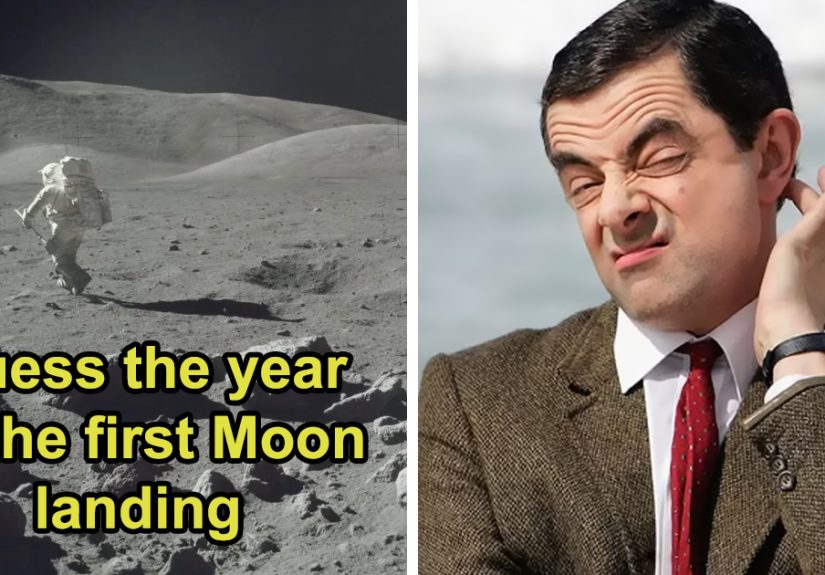
The Apollo 11 Moon landing is the opposite emotional flavor of 9/11often framed as triumph, innovation, and global spectaclebut it’s just as quiz-prone because it’s full of multiple “important dates” and multiple “firsts.”
The core facts (the anchor points)
Apollo 11 launched on July 16, 1969. The Lunar Module Eagle landed on the Moon on July 20, 1969, and Neil Armstrong and Buzz Aldrin became the first humans to walk on the lunar surface. Michael Collins piloted the Command Module in lunar orbit. An estimated hundreds of millions of people watched the broadcast worldwide.
Common confusion points that show up in quizzes
1) “Landing” vs. “first step” vs. “first words”
Some quizzes ask the date of the landing; others ask about when the first step happened; others ask you to identify the famous quote. These are connected, but not identical. If you learned it as a story (“They landed, then he stepped out”), a quiz can split that story into separate checkboxes.
2) Crew roles
People remember Armstrong and Aldrin because they walked on the Moon. Collins gets unfairly “quizzed into invisibility” despite his critical role. Quizzes love asking who did what, not just who was there.
3) Mission names and modules
Apollo 11 had a Command Module and a Lunar Module. The names (Columbia, Eagle) show up in trivia because they’re specific, memorable, andmost importantlyeasy for quiz writers to use as multiple-choice bait.
Why your brain slips on space history
Space missions are naturally technical: vehicles, modules, call signs, launch sites, orbital steps. Meanwhile, your brain wants a clean narrative: “They went to the Moon and came back.” When a quiz demands the technical scaffolding, your memory has to upgrade from “movie plot” to “mission checklist.”
Brain Hacks for Remembering History Without Suffering
Let’s make this practical. If you want to perform better on history trivia (or just stop doubting your own brain), these strategies work because they match how memory actually operates.
1) Use “anchor facts” and build outward
Pick a few unshakable anchors:
- 9/11: September 11, 2001; four hijacked planes; NYC + Pentagon + Pennsylvania.
- Apollo 11: July 1969; launch on the 16th; Moon landing on the 20th; Armstrong/Aldrin walk; Collins orbits.
Then attach smaller facts to those anchors like ornaments on a tree. Without anchors, facts fall off and roll under the couch forever.
2) Practice “timeline stitching”
Instead of memorizing isolated dates, stitch them into a sequence:
- Launch → travel → landing → first step → return
- Morning → multiple attacks → immediate response → long-term aftermath
Sequences are easier than single points because your brain loves cause-and-effect.
3) Watch out for the “misinformation effect”
If your knowledge comes mostly from dramatizations, viral posts, or simplified summaries, you may remember a detail that “feels true” but isn’t. When you learn something new, try to check it against a primary or institutional source (museums, archives, official mission pages). This isn’t about being smug onlineit’s about giving your memory clean ingredients.
4) Use retrieval, not rereading
Rereading makes you feel smarter. Retrieval makes you be smarter. Close the tab and try to explain the event out loud in 60 seconds. If you can’t, your brain didn’t store it yetit just recognized it briefly like an acquaintance at the grocery store.
5) Make it human
People remember people. Attach facts to human stakes:
- The astronaut roles and responsibilities on Apollo 11.
- The individual experiences and collective impact surrounding 9/11.
History is not a list of datesit’s a record of human decisions and consequences. Quizzes may not reward that, but your brain does.
How to Spot a Bad Quiz (And Protect Your Dignity)
Not all quizzes are created equal. Some are designed to teach; others are designed to humble you for entertainment clicks. Here’s how to tell:
Signs a quiz is actually educational
- It explains answers with context.
- It distinguishes similar facts (e.g., launch vs. landing) clearly.
- It avoids trick wording and “technically true” nonsense.
Signs a quiz is a chaos goblin in a trench coat
- It uses vague phrasing (“When did the Moon landing happen?”) and then grades you on a hyper-specific interpretation.
- It swaps terms casually (landing, stepping, mission completion) as if those are the same thing.
- It treats emotionally significant events like point-scoring games without care or nuance.
Takeaway: If you “fail” one of those quizzes, you didn’t fail history. You failed a gimmick. Congratulations on remaining a person.
Experiences Related to “From 9/11 To The Moon Landing: Even History Buffs Fail This Quiz” (Extra Section)
History isn’t only something you knowit’s something you experience, even if the experience is indirect. And that’s a big reason quizzes can be unfair: they measure the tidy version of history, while most of us carry the messy, human version.
For many Americans, 9/11 is remembered through a very specific kind of experience: a sudden interruption. You might picture a normal morning that turned into a day where time felt strangehours moving too fast and too slow at once. People often remember where they were, who they were with, what screen they were watching, and the tone of the room. That kind of memory is powerful, but it isn’t organized like a textbook. It’s organized like a snapshot album: vivid images, strong feelings, and a few details that are crystal clear alongside others that are fuzzy. When a quiz asks for a precise number, an exact name, or a strict sequence, it’s asking you to translate a lived emotional memory into spreadsheet cells. That translation is hardeven when the underlying understanding is deep.
The Moon landing tends to be experienced differentlyoften as a shared story of wonder. Even if you weren’t alive in 1969, you’ve likely encountered it through replays, museum exhibits, documentaries, classroom lessons, and pop culture references. That creates a layered experience: the event itself, plus the way it’s been retold. Over time, retellings can blend together. One documentary emphasizes the launch drama, another focuses on the landing, another zooms in on the first steps, another highlights mission control. Your brain stitches these into one “Apollo 11 highlight reel.” That’s great for inspiration, but it can get you in trouble when a quiz demands you separate the highlight reel into labeled sceneslaunch date, landing date, who said what, which module did what, and who stayed in orbit.
There’s also a social experience to history quizzes: the moment you realize you’re not missing knowledgeyou’re missing the quiz’s preferred framing. You can understand the Cold War context of the Space Race and still blank on a module name. You can know the national and global aftermath of 9/11 and still hesitate on a detail because you don’t want to reduce something tragic to a multiple-choice moment. That hesitation isn’t ignorance; it’s perspective.
One of the healthiest experiences you can build around history is intentional “reconnection” with reliable storytelling. Visit museums (in person or virtual), read institutional summaries, watch interviews, and compare how different sources frame the same event. When you do that, you’re not just collecting factsyou’re teaching your brain where each fact belongs. And that’s the secret sauce quizzes never mention: the best way to remember history is to remember it as a connected human story first, then attach the dates and labels afterward.
Conclusion
History quizzes can be fun, but they’re also sneaky: they reward precision, not necessarily understanding. Big events like 9/11 and the Apollo 11 Moon landing live in our minds as storiesemotional, cultural, and deeply humanso it’s normal to stumble when a quiz slices those stories into tiny fact-squares.
If you want to “pass,” don’t try to memorize everything. Build anchors, stitch timelines, practice retrieval, and keep your sources clean. Most importantly, remember what quizzes forget: history isn’t just what happened. It’s how people lived through it, how we recorded it, and how we keep learning from itone imperfect memory at a time.