Table of Contents >> Show >> Hide
- Why a Triple Bunk Bed Works So Well in a Girls' Room
- What Counts as a Triple Bunk Bed?
- Safety First, Because Cute Should Never Outsmart Common Sense
- How to Design a Girls' Room Triple Bunk Bed Without Making It Feel Overwhelming
- Storage Ideas That Make a Triple Bunk Bed More Livable
- Who Sleeps Where?
- Common Mistakes to Avoid
- Final Thoughts
- Experiences Related to a Girls' Room Triple Bunk Bed
A girls’ room triple bunk bed is one of those ideas that sounds a little wild at first. Three beds in one room? Is this a bedroom or a very stylish summer camp cabin? But when it is planned well, a triple bunk setup can be smart, beautiful, and surprisingly calm. It can turn a crowded bedroom into a functional shared space, free up floor area for play and storage, and give siblings or sleepover guests a cozy place to land without making the room feel packed like a suitcase on vacation.
The trick is getting the balance right. A triple bunk bed should not just be about cramming in as many mattresses as physics will allow. It should work with the room, fit the children using it, follow safety basics, and still leave enough breathing room for personality. In a girls’ bedroom, that often means combining practical choices like built-in drawers, good lighting, and easy-to-climb access with softer design details such as layered bedding, cheerful colors, privacy touches, and a layout that gives each child a sense of ownership.
Done right, a triple bunk bed is not just a space-saving purchase. It becomes the anchor of the room. It can create a reading nook, open up the center of the floor, support bedtime routines that run smoother, and make the whole room feel more intentional. Done wrong, it becomes a giant wooden reminder that nobody measured the ceiling properly. So yes, this is one of those home projects where a tape measure deserves a standing ovation.
Why a Triple Bunk Bed Works So Well in a Girls’ Room
The biggest benefit is obvious: a triple bunk bed gives you three sleeping spots while taking up far less floor space than three separate twin beds. In a shared room, that extra floor space matters. It can become room for a dresser, a small desk, floor cushions, toy storage, or simply enough open area so the room does not feel like an obstacle course.
There is also a visual advantage. Vertical furniture keeps the footprint compact. Instead of spreading beds wall to wall, you are building upward. That makes a small bedroom feel more organized, especially when the bunk structure includes drawers, shelves, cubbies, or a staircase with storage. In a girls’ room, that extra function is gold because the room usually needs to do more than one job. It is a place for sleeping, but often also for reading, crafting, getting dressed, relaxing, and hosting the occasional dramatic stuffed-animal tea summit.
Another reason the idea works is emotional. Shared bedrooms go better when each child feels like she has a defined spot. Triple bunk beds can create mini zones inside one room. Personal reading lights, labeled baskets, individual bedding, and a small shelf for each bunk help make the arrangement feel fair and thoughtful rather than crowded and random.
What Counts as a Triple Bunk Bed?
Not every three-sleeper setup looks the same. When people search for a girls’ room triple bunk bed, they are usually talking about one of three layouts.
1. The classic stacked triple bunk
This is the boldest version: three twin beds arranged vertically. It is a major space saver and can work beautifully in a room with adequate ceiling height. It is best when floor area is tight and you want the smallest footprint possible.
2. The L-shaped triple bunk
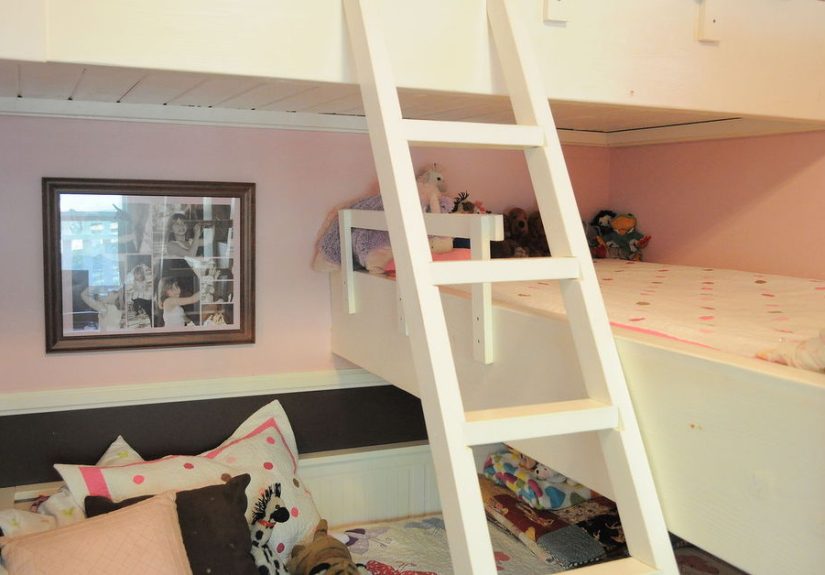
This design places two bunks together with a third bed branching out at a right angle. It often feels more open than a straight stacked version and can make it easier to create separate zones within the room. It is a good option when the room is awkwardly shaped or when you want a layout that feels less tower-like.
3. A bunk-plus-trundle alternative
Some families use a standard bunk bed with a pullout trundle and treat it as a triple-sleeper setup. It is not always sold as a true triple bunk bed, but it can be a practical solution for a room that needs an extra sleeping spot without committing to full-time third-level height.
The best choice depends on ceiling height, daily use, the ages of the children, and whether the third bed is needed every night or mostly for sleepovers. In other words, the right bed is the one that fits your room and your routine, not the one that simply looks dramatic in a product photo.
Safety First, Because Cute Should Never Outsmart Common Sense
A triple bunk bed can be stylish, but it is still a tall piece of furniture designed for sleeping children. That means safety is not a side note. It is the main character.
Start with age-appropriate sleeping arrangements
Children younger than 6 should not sleep on a top bunk. That guideline comes up again and again for a reason. Younger kids generally do not have the coordination or judgment needed for safe climbing and nighttime movement. In a triple bunk setup, that rule becomes even more important because the highest bunk is, well, very high.
Guardrails matter more than almost anything
Upper bunks need proper guardrails on both sides, and the mattress must not sit so high that the rails become decorative instead of protective. Always follow the manufacturer’s mattress height limit. If the mattress is too thick, the rail loses effective height and the whole setup becomes less safe.
Measure ceiling height before you fall in love
This is the part many shoppers skip until the delivery truck arrives. A triple bunk bed can be tall, and the top sleeper needs enough space to sit up without feeling like she is living inside a mailbox. Many practical guides suggest planning generous headroom and carefully checking the total height of the bed before buying. The room should feel comfortable, not like the ceiling is participating in bedtime.
Think about placement
Corner placement can help make a bunk bed feel more stable and contained. It also reduces open sides around the bed. Good placement also includes keeping the bed away from ceiling fans, hanging fixtures, and windows where cords or blinds could become hazards.
Ladders, stairs, and nighttime access matter
Some children do fine with ladders. Others would clearly prefer a staircase fit for royalty. Stairs are often easier to climb, can feel safer, and may offer built-in storage, but they require more floor space. Ladders are more compact. Neither is automatically better; the right choice depends on the room and the child. In both cases, add proper lighting so midnight bathroom trips do not turn into accidental gymnastics.
How to Design a Girls’ Room Triple Bunk Bed Without Making It Feel Overwhelming
The phrase girls’ room does not have to mean a sugar explosion of pink glitter and fluffy everything. It can, if that is the goal. But a well-designed girls’ bedroom usually works best when it feels layered, flexible, and personal.
Choose a palette that has range
Soft blush, dusty rose, pale blue, lavender-gray, warm white, sage, peach, and buttery cream all work beautifully. The best approach is usually one dominant neutral, one main accent color, and one playful secondary shade. That gives the room charm without visual chaos. A triple bunk bed is already a big visual object, so the color palette should support it, not wrestle it in public.
Use bedding to personalize each bunk
Matching frames do not require identical bedding. Let each bunk have its own comforter pattern, throw pillow, or sheet color while staying inside a shared palette. This gives each child a sense of identity without making the room look like three different stores collided overnight.
Add privacy in small, smart ways
Privacy makes shared rooms feel more peaceful. Consider wall-mounted sconces, tiny ledges for books, clip-on reading lights, or curtains for certain bunks if the design allows it safely. Even a simple fabric panel or canopy detail on the lower bed can make the setup feel cozy and custom.
Keep the wall treatment balanced
One accent wall can be lovely, especially behind the bunk bed. Wallpaper, beadboard, vertical paneling, or a painted mural can help define the sleeping zone. Just avoid overloading every wall. When the bed structure is large, restraint makes the room feel more polished.
Storage Ideas That Make a Triple Bunk Bed More Livable
A girls’ room triple bunk bed works best when it earns its square footage. Storage is the difference between a charming shared room and a daily hunt for missing pajamas.
Built-in drawers under the bottom bunk
These are ideal for extra bedding, out-of-season clothes, toys, or pajamas. Deep drawers beat random baskets every time when you are trying to keep the room tidy without a 20-minute negotiation.
Stair drawers or side cubbies
If the bed has stairs, use them. Stair drawers are excellent for socks, books, hair accessories, or school supplies. Side cubbies can hold water bottles, journals, and favorite bedtime reads.
Hooks and narrow shelves
Wall hooks near each bunk can hold robes, headphones, or tomorrow’s outfit. Slim bookshelves keep reading material visible without chewing up walking space.
Closet zones and labeled bins
If three children share one room, labels become your best friend. Assign one shelf color, one bin, or one drawer stack to each child. The goal is simple: everyone should know where her stuff lives before the room starts looking like a garage sale with feelings.
Who Sleeps Where?
This question sounds small. It is not small. In many families, it is the diplomatic summit of the project.
The youngest child usually belongs on the lowest bunk. Children who toss and turn, need more nighttime help, or wake often may also do best on the bottom. Older kids often enjoy the middle or top, especially if they are confident climbers and like having a more tucked-away space.
Fairness does not always mean identical arrangements. One child may value privacy. Another may care more about easy access. Some families rotate bunks every six months. Others assign based on age and keep it simple. There is no universal rule, but there is one universal truth: decide this before installation day if you enjoy peace.
Common Mistakes to Avoid
Buying before measuring
Always measure the room, ceiling height, door swing, window clearance, and walking paths. A triple bunk bed can look compact online and enormous in real life.
Ignoring mattress rules
Using a thicker mattress than the frame allows is one of the easiest ways to reduce safety. Always follow the stated mattress height limit for each bunk.
Forgetting daily routines
Where will backpacks go? Where do pajamas live? Can a child climb down safely at night? The prettiest room in the world will still annoy everyone if basic routines are clumsy.
Overdecorating the space
When the bed is large, the rest of the room should breathe. Leave some open wall space and avoid stuffing every inch with extra furniture.
Final Thoughts
A girls’ room triple bunk bed is not just a bold furniture choice. It is a strategy. It helps families fit more function into one room, makes shared bedrooms feel more organized, and can create a surprisingly magical space when safety and design are handled with equal care. The best version is not necessarily the fanciest or the tallest. It is the one that fits the room, supports the children’s ages and routines, and still leaves space for comfort, personality, and everyday life.
So if you are considering this setup, think beyond the bed frame itself. Measure carefully, choose a layout that makes sense, respect safety rules, and build in storage and personality from the start. Do that, and your girls’ room triple bunk bed can go from “How are we going to fit everyone in here?” to “Wow, this room actually works.” Which is basically the home-design version of a standing ovation.
Experiences Related to a Girls’ Room Triple Bunk Bed
Living with a girls’ room triple bunk bed tends to change the rhythm of the room in ways that are both practical and surprisingly emotional. The first thing many families notice is that the room suddenly feels more open during the day. Once three separate beds are replaced with one vertical sleeping zone, the middle of the floor comes back to life. That reclaimed space often becomes the new star of the room. It might turn into a rug-and-book corner, a dress-up area, a craft station, or the place where siblings sprawl out to whisper, read, and build things that absolutely must remain on the floor for three days.
There is also usually a shift in bedtime habits. Children tend to claim their bunk as their own little world. One keeps a flashlight and a chapter book. Another lines up stuffed animals with military precision. Another insists on a special blanket, a water bottle, and the kind of bedtime arrangement that looks accidental but apparently must never be touched. A triple bunk bed naturally creates these tiny zones of ownership, and that can make room-sharing feel less like forced togetherness and more like a team living in separate-but-connected mini spaces.
Of course, real life is not all styled throw pillows and peaceful twinkle lights. There is usually an adjustment period. The first week may include debates about who gets the top, who climbed where without permission, and whether the middle bunk somehow has better “vibes.” Families often discover that success comes from setting a few rules early. No jumping, no switching bunks at midnight, no storing seventeen mystery cups on the ledge, and no using the ladder like it is a theme park attraction. Once those expectations are clear, the room starts functioning more smoothly.
Another common experience is that a triple bunk bed makes sleepovers much easier. Instead of dragging out air mattresses and negotiating floor space, the room is already ready. That can be especially helpful in homes where cousins visit often or where one child likes hosting friends. At the same time, parents often realize the room needs stronger organization after the new bed arrives. More sleepers usually mean more blankets, more books, more socks, and somehow more hair ties than logic can explain. Good storage stops being a nice extra and becomes part of daily survival.
Emotionally, these rooms can become memory-makers. Sisters sharing a triple bunk room often create rituals around it: reading from one bunk to another, decorating each level for birthdays, or passing notes down from the top like a tiny in-house mail service. Even when the children eventually outgrow the exact setup, the room tends to be remembered as the place where they learned to share space, negotiate routines, and make something cozy together. That is what makes a girls’ room triple bunk bed more than a trend. It is functional, yes, but it also shapes the way the room feels to live in every day.