Table of Contents >> Show >> Hide
- What “Hey Pandas” Really Is (and Why Comics Fit So Well)
- Dark Humor, But Make It Shareable
- Comic DNA: How a Page Delivers a Laugh
- Idea Engine: 12 Darkly Funny Prompts That Stay PG-13
- From Stick Figures to Share-Worthy: Drawing Choices That Sell the Joke
- Writing the Punchline: Timing on Paper
- Posting to Hey Pandas Like a Pro
- Common Mistakes (and Quick Fixes)
- : Creator Experiences Making Dark Humor Comics Online
- Conclusion
- SEO Tags
“Hey Pandas” posts are basically the internet’s version of a friendly open mic nightexcept instead of a brick wall and a nervous laugh, you get a giant crowd, a comment section, and an oddly motivating number of panda emojis. If you’ve ever wanted to try comics (or you already draw and want more eyes on your work), this format is perfect: you can drop a single-panel gag or a short strip, invite people to react, and learn what lands.
The twist in today’s prompt is dark humor. That phrase can sound intimidatinglike you need to be edgy, shocking, or “too online.” You don’t. The best dark humor comics are usually just honest: they point at life’s awkward truths (stress, bureaucracy, aging, technology, social weirdness) and then give them a comedic turn. Think “existential, but make it snackable.”
In this guide, you’ll learn how to create a dark humor comic that’s clever, shareable, and still human. We’ll cover what dark humor actually is, how comic timing works on a page, easy ways to generate ideas, and practical drawing tips (panel flow, lettering, visual clarity). Then we’ll wrap with real-world creator experienceswhat it feels like to post dark jokes online and keep your audience rooting for you instead of reporting you.
What “Hey Pandas” Really Is (and Why Comics Fit So Well)
“Hey Pandas” prompts are community-driven posts where readers respondoften with stories, opinions, photos, or creative work. Comics do especially well in this kind of space because they’re quick to consume and easy to react to. A strong comic gives readers an instant “I get it” moment, which is exactly what makes people comment, share, and tag a friend.
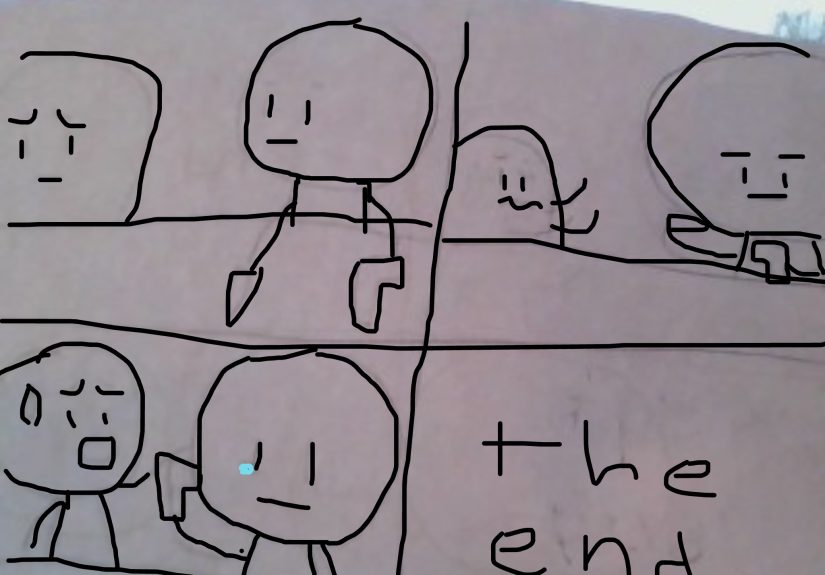
The key is to treat it like a mini gallery show: you’re not dumping your sketchbookyou’re curating one clear idea and presenting it cleanly. A single-panel cartoon, a 3-panel setup, or a 4-panel punchline strip can all work. The format matters less than the clarity of the joke.
Dark Humor, But Make It Shareable
What counts as “dark humor” in a comic?
Dark humor (also called black comedy) is comedy that plays with topics that feel heavy, uncomfortable, or “too real.” But here’s the misunderstanding: dark humor isn’t automatically mean, graphic, or offensive. In comic form, it often looks like one of these:
- Cosmic irony: the universe has jokes and none of them are customer-friendly.
- Bureaucratic doom: the apocalypse is delayed because someone forgot to submit Form 12-B.
- Existential everyday life: your smart fridge has opinions… and a performance review for you.
- Social truth-telling: the punchline is that everyone’s pretending they’re fine.
The goal is usually recognition + surprise. Readers laugh because the comic says something they’ve feltbut didn’t expect to see said out loud.
Why it works: the “safe shock” principle
Humor often comes from an expectation being broken in a way that still feels safe enough to laugh at. That’s why dark humor works best when the comic gives the reader a “permission slip” to laughthrough absurdity, exaggeration, a playful tone, or a clearly fictional setup. If it feels cruel, targeted, or too close to real suffering, people stop laughing and start closing the tab.
Where the line is (so your joke doesn’t face-plant)
If you’re posting to a general audience, aim for “dark, not damaging.” A few practical guardrails:
- Punch up, not down: target systems, habits, and universal strugglesnot vulnerable groups.
- Avoid hate and harassment vibes: if the joke sounds like it’s trying to win an argument, it won’t feel funny.
- Keep it non-graphic: implication and metaphor go farther than shock.
- Make the target obvious: readers should know what you’re satirizing within one panel or by panel two.
Comic DNA: How a Page Delivers a Laugh
One-panel comics: the sniper shot
One-panel dark humor is efficient: a single image sets the world, and the caption (or a short line of dialogue) flips it. These work great for “Hey Pandas” because they’re easy to scroll, easy to screenshot, and easy to react to.
A reliable one-panel formula is:
Normal scene + unsettling truth + silly framing.
Example: a motivational poster in an office that reads, “YOU CAN DO ANYTHING,” and underneath in tiny print: “…except log into the benefits portal.”
3–4 panel strips: setup, turn, punch
Strips give you room for timing. The typical rhythm:
- Setup: establish the premise fast.
- Expectation: let the reader assume where it’s going.
- Turn: reveal the twist.
- Punch: the final beatoften a short line, a visual reveal, or a silent reaction.
The “dark” part often lives in the turn, but the “humor” lives in the punch. If your last panel is basically a TED Talk, you didn’t end on a punchyou ended on homework.
The secret weapon: the silent beat
A silent panel (no dialogue) is the comic equivalent of a perfectly-timed pause. It lets the reader absorb the twist and laugh. If you’re writing too much text, try replacing the last line with a facial expression, a sign in the background, or a tiny visual detail that finishes the joke.
Idea Engine: 12 Darkly Funny Prompts That Stay PG-13
Use these as starting points. Change the characters, setting, or final line to make them yours:
- Customer service for the universe: “Hello, yes, I’d like to return this entire week.”
- A haunted smart device: your voice assistant starts giving unrequested life advice… in a soothing tone.
- Therapy for inanimate objects: a stapler says, “I feel like I’m holding everything together and no one notices.”
- The motivational poster twist: “Hang in there!” but the image is a plant barely surviving in a fluorescent office corner.
- Time management as a villain: “I’m not latemy calendar is gaslighting me.”
- Office apocalypse: the world ends, but the meeting invite still says “Required.”
- Alien anthropologist notes: “Humans perform ‘small talk’ as a ritual to avoid sincerity.”
- Supernatural bureaucracy: a wizard needs three forms to cast “minor convenience spell.”
- The gym as existential theater: a treadmill whispers, “We’re running from nothing, together.”
- Futuristic parenting: “We don’t tell bedtime stories anymorejust update the firmware.”
- Social media honesty: a button labeled “Post” that also says “Be Perceived.”
- The grim reaper’s day job: stuck in traffic, sipping coffee, checking a clipboard like everyone else.
Pro tip: dark humor often gets funnier when the visuals are calm and normal. The contrast between “ordinary art style” and “unexpected truth” is part of the laugh.
From Stick Figures to Share-Worthy: Drawing Choices That Sell the Joke
Clarity beats detail (especially online)
Readers should understand your scene in one second. Use big shapes, clean silhouettes, and simple backgrounds. If your joke relies on a tiny object in the corner, either zoom in or make that object larger. The scroll is ruthless.
Panel flow: lead the reader’s eye on purpose
In multi-panel comics, readers need to know what to look at first and where to go next. Keep panels in a clear sequence (typically left-to-right, top-to-bottom) and avoid confusing layouts unless the confusion is part of the joke. The moment a reader has to “solve” where panel three is, you’ve turned comedy into a maze.
If you want to add extra timing, use panel size. A wider panel can feel slower, like a long pause. A tight series of small panels can feel fast and anxious. You’re basically editing with rectangles.
Lettering and speech bubbles: your invisible credibility
Lettering is where good comics quietly win. A few practical rules:
- Write the text first: then draw the bubble around it so you don’t cram words like a suitcase you’re sitting on.
- Keep fonts consistent: consistency makes the comic feel “real,” even if the art is simple.
- Point tails clearly: readers should never wonder who’s talking.
- Don’t cover faces: faces are your punchlines. Let expressions breathe.
Use contrast: normal world, weird truth
Dark humor pops when the setting is familiar (kitchen, office, checkout line) and the twist is unexpected (a cosmic memo, a tiny existential sign, a mundane monster). Keep the art grounded and let the joke be the weird part.
Writing the Punchline: Timing on Paper
Shorter last lines hit harder
In comedy, the punchline should feel like a door slamming in the most polite way possible. If your final line needs a semicolon, it might be two lines. Try trimming until it sounds like something a character would actually say in one breath.
Let the reader do one small step of math
A satisfying comic lets the reader connect one dot on their own. Not fifteen dots. One. If your joke needs a paragraph of explanation in the comments, it’s not dark humorit’s a group project.
Swap words for visuals when you can
Instead of stating the twist, show it. Signs, labels, tiny background details, or a character’s expression can land the punch without extra text. That’s especially helpful in “Hey Pandas” threads where readers are scanning quickly.
Posting to Hey Pandas Like a Pro
Give your post a title that sets expectations
Your title is the bouncer at the comedy club. It tells people what kind of vibe they’re walking into. A good approach:
“Hey Pandas, I drew a dark humor comic about [topic].”
If the comic is more absurd than dark, say that. You want the right readers clicking in.
Use a caption that invites participation
“What would you caption this?” “Which panel is the most relatable?” “Should I make a part two?” Questions turn passive readers into commenters, and comments help your comic travel.
Be ready for mixed reactions
Dark humor is a spice, not a food group. Some people will laugh. Some won’t. Don’t fight the room. If someone says, “Not for me,” that’s not a creative emergency. Thank the folks who get it and keep moving.
Common Mistakes (and Quick Fixes)
- Mistake: The premise is dark, but the punchline is vague.
Fix: Add one specific detail (a sign, a label, a job title) that makes the twist concrete. - Mistake: Too much text.
Fix: Cut 30% and replace one line with a silent reaction panel. - Mistake: The reader can’t tell who’s speaking.
Fix: Re-aim bubble tails and adjust character positions so the flow is obvious. - Mistake: The comic feels mean instead of clever.
Fix: Redirect the joke toward a system (work culture, algorithms, red tape) rather than a person. - Mistake: The “dark” element overwhelms the humor.
Fix: Make the tone lighter with absurdity, cut the intensity, or choose a more universal theme (stress, time, modern life).
: Creator Experiences Making Dark Humor Comics Online
Artists who post dark humor comics online often describe the same emotional rollercoaster: you hit “publish,” immediately assume you’ve committed a social crime, and then refresh your notifications like you’re waiting for a jury verdict. That feeling is normaldark humor is built on tension, and posting it creates a little tension too. But over time, creators learn that the goal isn’t to make everyone laugh. The goal is to find the readers who share your taste for awkward truth, dry irony, and “laughing so you don’t scream” energy.
One of the first lessons many cartoonists pick up is that clarity protects your intent. When a comic is visually clean and the target is obvious, audiences are more likely to interpret it the way you meant it. When a comic is messy, vague, or overloaded with text, readers fill in the gaps with their own assumptionsand that’s where misunderstandings multiply. In practice, this means creators spend surprising amounts of time refining tiny things: the wording of the last line, the direction of a speech-bubble tail, or the facial expression in the final panel. These details aren’t “extra.” They’re the difference between “wow, relatable” and “wait, what?”
Another common experience: audience feedback becomes your joke compass. Comment sections can be chaotic, but patterns show up fast. If readers consistently laugh at your background details, you’ve learned you’re good at visual punchlines. If they quote one specific line, your voice is strong. If they ask, “Can you make a series?” you’ve found a theme worth revisiting. Many creators build momentum by taking the same dark premise and remixing itlike recurring characters (a burned-out wizard, a polite grim reaper, a too-honest robot) or recurring settings (office, therapy, checkout line, group chat). Familiarity makes the darkness feel safer because readers know what kind of ride they’re on.
Creators also learn the value of softening the edge without losing the bite. Online audiences are broad, and your comic may reach people having a rough day. So cartoonists often use a “cushion”: warm colors, cute character designs, a calm setting, or a gentle final beat. The joke can still be darkabout time, stress, or modern absurditybut the presentation keeps it from feeling cruel. In other words, the comic says, “Life is weird,” not “You’re the problem.”
Finally, posting regularly teaches a practical truth: your best dark humor comes from observation, not escalation. The funniest comics often start as a small notesomething you overheard, a sign you saw, a feeling you recognizedthen you exaggerate it just enough to reveal the irony. When you trust small truths, you don’t need to “go bigger” every time. You just need to go sharper. And that’s how a simple “Hey Pandas” comic can turn into a style people recognize: your voice, your timing, your specific flavor of darknessserved with a wink, not a warning label.
Conclusion
If you want to draw a dark humor comic for “Hey Pandas,” focus on three things: a relatable truth, a surprising turn, and a clean delivery. Keep the visuals readable, let the punchline breathe, and aim your satire at systems and universal struggles. Dark humor doesn’t have to be harshit can be clever, warm, and weirdly comforting. And in a community prompt built for sharing and reacting, a single sharp comic can do what long posts can’t: make someone feel seen in one panel.