Table of Contents >> Show >> Hide
- Why Diane Farr’s Take on Grief Matters
- Sharon Leone Is the Right Character for This Story
- What 'Fire Country' Gets Right About Grief on Television
- The Firefighter Context Makes the Story Hit Harder
- Why Audiences Respond to Honest Mourning
- Diane Farr’s Performance Is Doing Heavy Emotional Lifting
- What This Means for 'Fire Country' Going Forward
- Related Experiences: Why This Story Feels So Personal for Viewers
- Conclusion
Television has a funny habit when it comes to grief. A character loses someone important, there is one tearful speech, one haunted stare out a window, maybe one rain-soaked funeral if the budget is feeling generous, and then everyone is somehow back at work by next Tuesday. Crisis solved. Mascara intact. Emotional devastation wrapped up in a tidy 42-minute package.
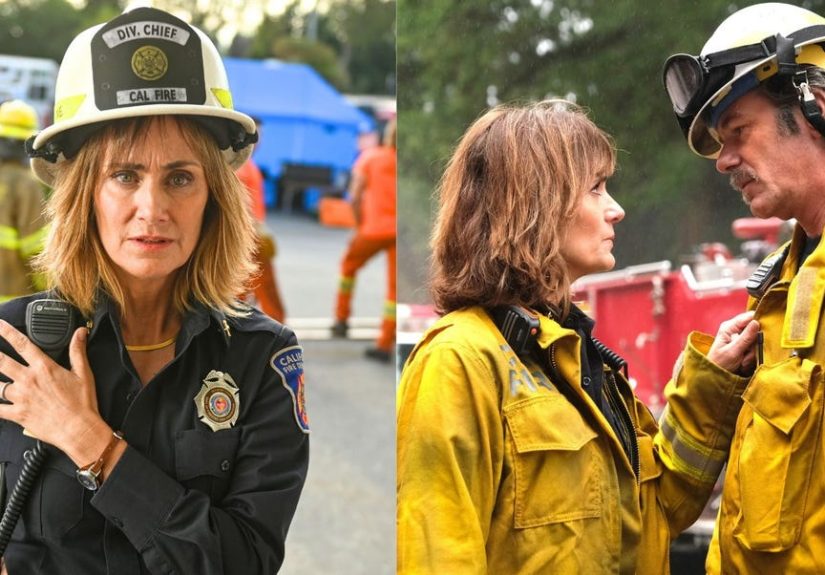
That is exactly why Diane Farr’s recent comments about Fire Country hit such a nerve. Farr, who plays Sharon Leone on the CBS drama, has spoken openly about why grief matters on television and why a show about firefighters would feel dishonest if it showed all the danger without showing the emotional wreckage left behind. It is a sharp point, and honestly, it is one TV could stand to hear a lot more often.
On a series built around fire, rescue, duty, and second chances, grief is not some optional side dish. It is part of the meal. And in Sharon Leone’s case, it is the kind of loss that changes the flavor of the entire story. Farr understands that. More importantly, she seems determined to make sure the audience feels it too.
Why Diane Farr’s Take on Grief Matters
The conversation around Farr’s performance has grown because Fire Country is not dealing with a minor emotional bump. Sharon is mourning the death of Vince Leone, her husband, her longtime partner, and one of the emotional anchors of the series. That loss is not just a plot twist designed to set social media on fire for a weekend. It reshapes the family, the station, and the emotional logic of the show.
Farr’s view is refreshingly direct: if a drama wants viewers to believe in the danger of firefighting, then it also has to be brave enough to show the cost. Not in a melodramatic, violin-heavy, everyone-faints-in-slow-motion kind of way, but in a human way. In other words, if a show wants the heroism, it has to earn the heartbreak.
That idea gives Fire Country a stronger emotional center than many action-driven network dramas. The series has never been only about flames and adrenaline. At its best, it is about family, guilt, redemption, service, and the uncomfortable truth that even strong people come apart. Farr’s comments push that idea further. She is not arguing for endless sadness. She is arguing for emotional honesty.
And that distinction matters. There is a big difference between a show that wallows and a show that witnesses. Farr seems interested in the second option. She wants grief to be visible, layered, and active, not just decorative sorrow placed between rescue scenes like emotional parsley.
Sharon Leone Is the Right Character for This Story
What makes this arc especially compelling is that Sharon is not written as fragile. She is competent, authoritative, experienced, and deeply tied to the culture of service that defines Fire Country. She is the person you would expect to keep moving, keep leading, keep functioning. Which is exactly why her grief lands so hard.
When a show lets a strong character unravel, even partially, it reminds viewers that grief does not only belong to the soft-spoken or visibly broken. It belongs to the organized. The capable. The people who still answer emails, still make dinner, still show up to work, and then suddenly cannot breathe in the grocery store because a song came on at exactly the wrong time. Sharon’s pain lives in that territory.
Farr appears to understand that grief on screen works best when it is not flattened into one emotion. Sharon is not only sad. She is angry, disoriented, defensive, exhausted, and at times unable to connect cleanly with the people around her. That feels true. Real grief is rarely cinematic in the polished sense. It is repetitive, annoying, irrational, and weirdly practical. It can make a person fiercely protective one minute and emotionally unavailable the next.
That is what gives Sharon’s story weight. She is not simply mourning a husband. She is recalibrating her identity. She was part of a partnership in life and in work, and now the structure that shaped her world is gone. Grief, in this case, is not just about missing someone. It is about learning how to be a different version of yourself without asking for that assignment in the first place.
What ‘Fire Country’ Gets Right About Grief on Television
One of the smartest things in Farr’s framing of Sharon’s journey is the idea that grief should not look the same every week. Television often makes the mistake of reducing mourning to one note: crying. But grief is not a genre; it is a weather system. Some days are thunderstorms. Some days are fog. Some days are deceptively sunny until one memory turns the whole afternoon sideways.
Fire Country seems to benefit from treating grief as movement rather than stasis. Sharon can be furious in one episode, bargaining in another, numb in the next, and still not be “done” with mourning. That gives the story room to breathe. It also respects viewers, many of whom know from experience that loss does not move in a straight line just because a script deadline says it should.
This approach also helps the show avoid a common trap. Some dramas either rush grief so fast it feels fake, or they lean on it so heavily that the character becomes nothing but pain. Farr’s comments suggest that she and the creative team are trying to find the middle path. Sharon remains Sharon. She is still feisty, still complicated, still capable of bad decisions and sharp reactions. Grief changes her, but it does not erase her.
That is good television. It creates a character who feels lived in rather than reduced. It also keeps the audience emotionally invested because viewers are not just watching tragedy. They are watching adaptation, resistance, collapse, resilience, and the stubborn mess of surviving something that should never have happened.
The Firefighter Context Makes the Story Hit Harder
Part of what gives Farr’s argument extra force is the world Fire Country inhabits. This is a show built around firefighters, risk, and a community shaped by emergency response. The threat is never abstract. Every call carries consequences. Every heroic act is shadowed by the possibility that someone might not come home.
That context makes grief more than a personal storyline. It becomes part of the moral fabric of the show. If the series only highlighted courage and action, it would be telling half the story. Farr has pointed out that firefighters are often celebrated as heroes, and rightly so, but heroism is not cost-free. Families pay for it. Co-workers pay for it. Communities pay for it. When Fire Country allows Sharon’s grief to stay in the room, it acknowledges that truth.
There is also something powerful about the fact that Farr’s understanding of this material does not seem purely theoretical. Her appreciation for firefighters and the emotional toll of fire-related loss gives her performance extra credibility. That connection matters because viewers can usually tell when a show is aiming for emotional authenticity and when it is simply chasing dramatic noise.
In this case, the grief storyline does not feel bolted on. It feels embedded in the show’s DNA. That makes all the difference.
Why Audiences Respond to Honest Mourning
There is a reason viewers keep reacting so strongly to stories like this. Most people do not need television to teach them what grief is. They already know. They know it from funerals, hospital rooms, awkward casseroles, unanswered voicemails, empty chairs at holidays, and the surreal experience of the world continuing as if nothing has changed.
What audiences want from television is recognition. They want to see some version of that emotional truth reflected back at them. Not every show has to become a grief seminar, of course. But when a series takes on death and loss, viewers can tell when it is cheating.
Farr’s comments suggest she knows that too. Showing grief on TV is not important because it makes a show feel “serious.” It is important because it validates a reality people live with every day. It tells viewers that mourning is not weakness, that anger is not failure, that numbness is not coldness, and that survival does not look graceful just because other people would really prefer it if you kept things upbeat.
There is something deeply humane in that. Sharon’s grief is not merely there to make the audience cry. It is there to make the audience feel seen.
Diane Farr’s Performance Is Doing Heavy Emotional Lifting
It helps, of course, that Diane Farr is the kind of performer who can carry contradictory emotions at once. Her best work on Fire Country has always come from making Sharon feel like more than one thing at a time. She can be commanding and wounded, maternal and sharp-edged, loving and emotionally barricaded. That range is exactly what a grief storyline needs.
The role also benefits from Farr’s maturity as an actress. Sharon is not written as a generic TV mom or a one-note authority figure. She is a grown woman with history, power, flaws, and emotional complexity. Farr leans into that beautifully. She does not ask Sharon to be likable every second. She asks her to be believable.
That choice strengthens the series. So many shows flatten grief into saintly suffering, as if the bereaved must become instantly noble and soft-spoken. But real mourning can make people irritable, impulsive, distracted, selfish, and impossible to read. Sharon’s rough edges are part of what make her feel real. Farr seems willing to let the character be messy, and that messiness is where the truth lives.
It also helps explain why her recent remarks resonated beyond the usual fandom chatter. She is not talking about grief as an abstract “important topic.” She is talking about it as craft, as character, and as responsibility. That is a much richer conversation.
What This Means for ‘Fire Country’ Going Forward
The smartest version of Fire Country now has a clear challenge: carry this emotional honesty forward without losing the pace and scale that made the show popular in the first place. Based on Farr’s comments, that appears to be the goal. The series does not want to become unwatchably grim, but it also does not want to pretend a devastating loss can be solved with one inspirational speech and a good night’s sleep.
If it can keep that balance, the show stands to become more emotionally confident than ever. Sharon’s grief can deepen her relationships, complicate her leadership, intensify family tensions, and make every future moment of joy feel earned instead of automatic. In storytelling terms, loss becomes meaningful when it changes behavior. Farr clearly wants that change to matter.
And frankly, that is the right call. Because the opposite would feel cheap. If a firefighter drama cannot sit with grief, even briefly and honestly, then it is just selling danger without consequence. Farr is arguing for something better: a series willing to show that bravery and sorrow often live in the same house.
That is not only good for Fire Country. It is good for television.
Related Experiences: Why This Story Feels So Personal for Viewers
One reason Diane Farr’s comments about grief on TV land so well is that they connect with experiences many people already carry around in quiet, unglamorous ways. You do not have to be part of a fire family to understand Sharon Leone’s emotional reality. You only have to know what it feels like when life keeps moving after your world has obviously been rearranged.
Think about the experience of losing someone while still having responsibilities that refuse to pause. Bills still show up. Kids still need rides. Work still expects a reply-all message by 3 p.m. The refrigerator still makes that weird noise. The dog still wants dinner. That is one of the cruelest parts of grief: the ordinary world keeps acting extremely ordinary. Television often skips that part because it is not flashy, but it is exactly where a lot of real mourning happens.
There is also the experience of “parallel grief,” something Fire Country touches especially well through Sharon and Bode. Families often grieve the same person in completely different languages. One person wants to talk. Another gets practical. Someone starts cleaning closets. Someone else cannot even open a drawer. A parent may focus on protecting a child, while the child is secretly trying to protect the parent. Everybody loves each other, and somehow everybody still feels alone. That contradiction is painfully familiar to a lot of viewers.
Another relatable experience is the awkwardness of public grief versus private grief. In public, people often know the script. They say the right words, attend the service, bring food, hug hard, and promise to check in. In private, grief gets stranger. It shows up in irritation, insomnia, brain fog, random laughter, guilt over feeling okay for six minutes, and the bizarre shock of seeing everyone else continue with business as usual. A show that acknowledges those jagged edges can feel less like entertainment and more like company.
For viewers connected to first responders, military families, medical workers, or any profession where danger is part of the job description, the story can hit even harder. There is a particular kind of stress in loving someone whose work comes with real risk. People in those families often learn to live with background fear, the sort that hums quietly until one phone call turns it all the way up. When a series like Fire Country shows grief honestly, it honors not just the person lost, but the people left holding the emotional aftermath.
Even viewers who have not experienced a major bereavement often recognize the smaller truths wrapped around grief: the silence in a house after visitors leave, the strange importance of routine, the way anger can mask heartbreak, and the way memory can feel comforting one minute and unbearable the next. These are not dramatic inventions. They are everyday emotional experiences, and television becomes more meaningful when it trusts them.
That is why Farr’s perspective matters. She is not simply defending a storyline. She is defending the idea that television should make room for the full emotional reality of loss. Not because sadness is fashionable. Not because prestige TV requires pain. But because viewers deserve stories that understand people are not machines who bounce back on cue. Sometimes they burn, sometimes they break, and sometimes the bravest thing they do is keep going anyway.
Conclusion
Diane Farr’s comments about grief on Fire Country reveal something important about why the show works when it works best. Beneath the rescues, flames, and cliffhangers is a drama trying to tell the truth about what service costs. Sharon Leone’s mourning is not a pause in the action. It is the action, at least emotionally. It changes how she leads, how she loves, how she reacts, and how viewers understand the world around her.
In a television landscape that often rushes past pain to get back to plot, Farr is making the case for something braver: let grief stay visible. Let it be angry. Let it be messy. Let it be human. That choice does not weaken a drama like Fire Country. It gives it weight, soul, and something increasingly rare on TV: emotional consequences that actually feel earned.