Table of Contents >> Show >> Hide
- What Are Hip Thrusts?
- Muscles Worked During Hip Thrusts
- 18 Benefits of Hip Thrusts
- 1. They target the glutes directly.
- 2. They train hip extension well.
- 3. They can help build muscle.
- 4. They can improve glute strength.
- 5. They are scalable for beginners and advanced lifters.
- 6. They may feel friendlier on the spine for some people.
- 7. They can reduce “quad-only” training habits.
- 8. They can support pelvic stability.
- 9. They help expose left-right imbalances.
- 10. They fit many training goals.
- 11. They are easier to learn than some complex barbell lifts.
- 12. They pair beautifully with squats and deadlifts.
- 13. They can improve lockout strength.
- 14. They work in a home gym or commercial gym.
- 15. They make progressive overload straightforward.
- 16. They can wake up sleepy glutes.
- 17. They can support athletic training.
- 18. They build confidence.
- How to Do Hip Thrusts With Good Form
- How Much Weight Should You Use?
- Hip Thrust Variations Worth Trying
- Where Hip Thrusts Fit in a Workout Plan
- Hip Thrusts vs. Squats vs. Glute Bridges
- What Hip Thrusts Actually Feel Like: Real-World Experiences and Common Scenarios
- Final Thoughts
If there were an awards show for lower-body exercises, hip thrusts would absolutely arrive late, look effortless, and still steal the spotlight. This move has gone from “What on earth is that bench-and-barbell setup?” to a staple in strength programs for athletes, beginners, runners, desk workers, and anyone else who wants stronger glutes, better hip extension, and a lower body that does its job without filing daily complaints.
That popularity is not just gym hype wrapped in resistance bands. Hip thrusts train the glutes directly, let you load the hips heavily, and fit nicely into programs focused on strength, muscle growth, performance, or general function. They are also surprisingly adaptable. You can do them with a barbell, dumbbell, resistance band, machine, or body weight. Translation: your glutes do not care whether you train in a fancy gym or next to a laundry basket.
This guide breaks down what hip thrusts are, the muscles they work, 18 benefits worth knowing, common form mistakes, smart weight selection, the best variations, and what people often experience when they add hip thrusts to a workout routine.
What Are Hip Thrusts?
A hip thrust is a bent-knee hip extension exercise usually performed with your upper back supported on a bench while your feet stay planted on the floor. From that setup, you drive your hips upward until your body forms a strong line from shoulders to knees, then lower with control and repeat.
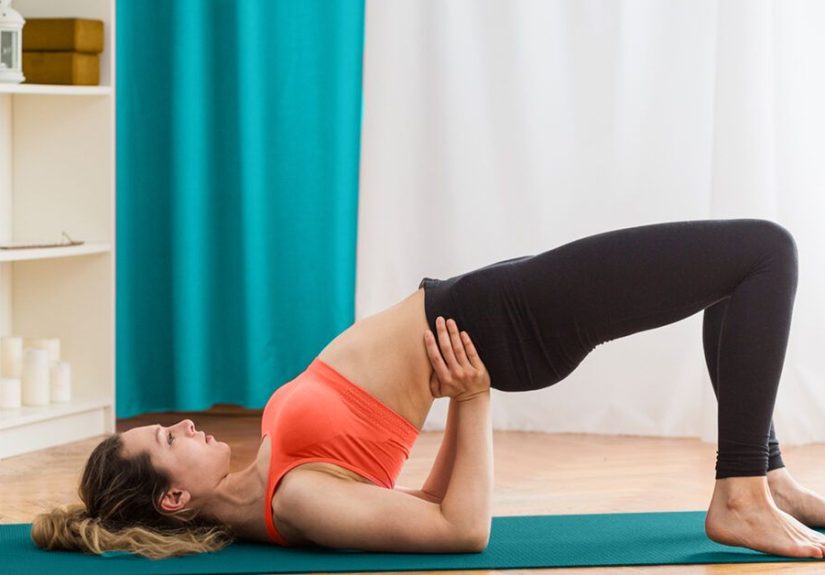
At first glance, hip thrusts look like glute bridges with a gym membership. They are similar, but not identical. A glute bridge is usually done from the floor, while a hip thrust uses an elevated upper back position. That elevated setup increases the range of motion and generally makes it easier to use more external load. In plain English: more room to move, more ways to challenge the glutes, and more opportunities to discover that your backside has opinions.
Muscles Worked During Hip Thrusts
Hip thrusts are mainly a glute-focused exercise, but they are not a one-muscle magic trick. They involve a team effort:
- Gluteus maximus: the star of the show and primary hip extensor.
- Hamstrings: assist with hip extension and help stabilize the movement.
- Gluteus medius and minimus: help with pelvic control and stability, especially in single-leg and banded versions.
- Core: helps maintain rib position, pelvic control, and spinal stability.
- Quadriceps: assist by helping hold knee position and supporting the setup.
- Adductors and other stabilizers: chip in to keep the movement controlled and efficient.
18 Benefits of Hip Thrusts
1. They target the glutes directly.
Some lower-body exercises hit the glutes while also asking the quads, back, and ego to do a lot of work. Hip thrusts make the glutes the main attraction, which is great if your goal is to strengthen or grow them.
2. They train hip extension well.
Hip extension matters for standing up, climbing stairs, sprinting, jumping, and lifting. Hip thrusts strengthen that pattern in a focused, repeatable way.
3. They can help build muscle.
Because hip thrusts can be loaded progressively and controlled through a meaningful range of motion, they work well for hypertrophy. If your glutes have growth goals, this exercise belongs on the guest list.
4. They can improve glute strength.
This move is not just for aesthetics. Stronger glutes can contribute to better lower-body force production and more confident movement in training and daily life.
5. They are scalable for beginners and advanced lifters.
New to strength training? Start with body weight or a light dumbbell. Experienced lifter? Load up a barbell, use bands, or manipulate tempo and pauses. The movement grows with you.
6. They may feel friendlier on the spine for some people.
Compared with some standing lifts, hip thrusts let you load the hips in a supported position. That does not make them automatic physical therapy, but many people find them a comfortable way to hammer the glutes without heavy spinal loading.
7. They can reduce “quad-only” training habits.
People often dominate lower-body workouts with squats, leg presses, and lunges that become very quad-heavy. Hip thrusts help restore balance by giving the posterior chain direct attention.
8. They can support pelvic stability.
Stronger glutes help control hip and pelvic position. That matters in lifting, running, walking, and even standing on one leg while putting on a shoe without wobbling like a shopping cart wheel.
9. They help expose left-right imbalances.
Single-leg and B-stance variations can reveal whether one side is slacking. That is useful information, because asymmetries have a sneaky way of showing up when the load gets heavy.
10. They fit many training goals.
Hip thrusts can be used for muscle growth, strength, activation work, power-focused programming, warm-ups, accessory training, and rehab-style progressions under professional guidance.
11. They are easier to learn than some complex barbell lifts.
Hip thrusts still require good form, but many people find them easier to learn than Olympic lifts or deeply technical squat patterns. There is less “Where do my elbows go?” and more “Squeeze, drive, pause, repeat.”
12. They pair beautifully with squats and deadlifts.
This is not an either-or situation. Hip thrusts complement other lower-body lifts by adding direct glute work. Think of them as a specialist, not a replacement for the entire team.
13. They can improve lockout strength.
If you struggle to finish deadlifts, bridges, or other hip-dominant movements, hip thrusts can help strengthen end-range hip extension and reinforce a strong finish.
14. They work in a home gym or commercial gym.
No barbell? Use a resistance band, dumbbell, couch edge, or even the floor for glute bridges. Hip thrusts are adaptable enough to survive imperfect equipment and creative living room engineering.
15. They make progressive overload straightforward.
You can add weight, reps, sets, pauses, tempo changes, bands, or unilateral work. That makes it easier to keep progressing without needing a dramatic reinvention every other Tuesday.
16. They can wake up sleepy glutes.
For people who sit a lot, the glutes often feel disengaged or underused. Hip thrusts and glute bridge progressions can help reintroduce the brain-to-glute connection that long desk days tend to mute.
17. They can support athletic training.
Because hip extension is central to sprinting, jumping, and many change-of-direction tasks, hip thrusts are often used in sports performance settings as part of broader lower-body development.
18. They build confidence.
There is something satisfying about feeling the right muscles work, seeing the load go up, and noticing daily movements feel stronger. Hip thrusts give clear feedback, and that confidence tends to spill into the rest of a training program.
How to Do Hip Thrusts With Good Form
Step-by-Step Setup
- Sit on the floor with your upper back against a bench.
- Bend your knees and place your feet flat on the floor about hip-width apart.
- Roll a barbell, dumbbell, or padded weight into the hip crease if using load.
- Brace your core and keep your chin slightly tucked.
- Drive through your feet and lift your hips until your torso is roughly parallel to the floor.
- At the top, squeeze your glutes hard without over-arching your lower back.
- Lower under control and repeat.
Best Form Tips
- Bench position matters: your shoulder blades should rest on the bench, not your neck.
- Keep the ribs down: flaring your ribs often turns the move into a lower-back celebration.
- Think “tuck and squeeze”: a slight posterior pelvic tilt at the top helps keep tension where you want it.
- Aim for near-vertical shins at the top: this usually helps you find a solid foot position.
- Use the full range you can control: half reps cheat the glutes out of the good part.
- Pause at the top: even one second can make the movement more honest.
- Lower slowly: the descent counts too, even if your glutes would prefer to skip it.
Common Mistakes to Avoid
- Pushing from the toes only instead of using a stable whole-foot drive.
- Letting the knees cave inward.
- Hyperextending the low back at the top.
- Placing the feet too far forward or too close to the hips.
- Rushing through reps with no pause or control.
- Loading too heavy before mastering the pattern.
How Much Weight Should You Use?
There is no magical hip thrust number that proves you are strong, elite, or worthy of expensive leggings. The right weight depends on your training age, technique, injury history, mobility, equipment, and goal.
For beginners: start with body weight, a mini band, or a light dumbbell. Build the pattern first. If you cannot feel your glutes and your lower back is trying to become the main character, reduce the load and clean up the setup.
For muscle growth: a practical approach is 3 to 4 sets of 6 to 12 reps with a load that feels challenging while still allowing strong form. You should finish the set feeling like you could maybe do 1 to 3 more good reps, not 12 ugly ones.
For strength: more experienced lifters can use heavier loads for lower reps, often 3 to 6 per set, while keeping technique crisp. Heavy hip thrusts can be effective, but they still need full lockout, control, and a pause at the top. No bouncing, no chaos, no “that counted in my heart.”
A simple progression rule: when you can complete all planned sets and reps with solid form and a clean lockout, increase the load slightly the next session. Small jumps add up.
Hip Thrust Variations Worth Trying
Barbell Hip Thrust
The classic gym version and the easiest option for loading heavily over time.
Dumbbell Hip Thrust
Great for beginners or home workouts. A single dumbbell across the hips often feels less intimidating than a barbell.
Bodyweight Glute Bridge
A smart starting point if you are learning the movement or warming up. Less range than a hip thrust, but still useful.
Banded Hip Thrust
Adding a band above the knees can increase glute medius involvement and reinforce knee tracking.
Single-Leg Hip Thrust
A tougher unilateral option that challenges glute strength, pelvic stability, and side-to-side control.
B-Stance Hip Thrust
One foot does most of the work while the other helps with balance. Excellent for easing into unilateral training.
Smith Machine Hip Thrust
Popular in commercial gyms because setup can feel more stable and repeatable than a free barbell.
Frog Pump
A higher-rep burner with the soles of the feet together and knees flared out. Great as a finisher when you want your glutes to send strongly worded feedback.
Where Hip Thrusts Fit in a Workout Plan
Hip thrusts can live in several places in your routine:
- Main strength lift: early in the workout when energy is high.
- Accessory movement: after squats or deadlifts for extra glute volume.
- Activation drill: lighter glute bridges or banded thrusts before lower-body training.
- Home session anchor: paired with split squats, step-ups, and hamstring work.
Most adults benefit from muscle-strengthening work at least twice per week, and hip thrusts can easily be part of that schedule. Two lower-body sessions per week is plenty for many people, especially if the rest of the program is sensible and recovery is not a disaster.
Hip Thrusts vs. Squats vs. Glute Bridges
Here is the honest answer: use the right tool for the right job.
Hip thrusts are excellent for targeted glute work and heavy hip extension training. Squats are fantastic for overall lower-body development and global strength. Glute bridges are beginner-friendly, low-equipment, and great for activation or lighter training days.
Do not waste energy trying to crown one move the ruler of all glute development forever and always. Training is not reality TV. In well-built programs, these exercises can work together rather than compete for a dramatic rose ceremony.
What Hip Thrusts Actually Feel Like: Real-World Experiences and Common Scenarios
People often expect hip thrusts to feel glamorous right away. In reality, the first few sessions are usually a mix of “Oh, I finally feel my glutes” and “Why is setting up this bench like assembling patio furniture with feelings?” That is normal. Hip thrusts have a learning curve, especially when you are figuring out bench height, foot placement, and how to keep the weight from making your hips feel personally attacked.
Beginners commonly notice that they either feel everything in their hamstrings or everything in their lower back. Usually, that is a setup issue rather than proof that the exercise hates them. Bringing the feet slightly closer, keeping the ribs down, and pausing at the top often shifts the effort back into the glutes. Once that happens, the difference is obvious. A good rep feels like the glutes are driving the motion. A bad rep feels like the body held an emergency meeting and the lower back volunteered without permission.
Desk workers often describe a strange but satisfying experience after a few weeks: walking upstairs feels easier, standing up feels stronger, and the back side of the body feels more “awake.” That makes sense. Long periods of sitting can leave people feeling stiff through the hips and disconnected from their glutes. Consistent hip thrust work can help restore strength and awareness in that region, especially when paired with general movement during the day.
Runners and field-sport athletes often report a different benefit. They may not care much about visual changes at first, but they notice better force production, stronger push-off, and a more solid feeling through the hips. That does not mean hip thrusts magically turn everyone into a sprinter overnight, but many athletes appreciate them as part of a larger strength plan.
Lifters focused on muscle growth usually talk about the pump, the pause, and the progressive overload. Hip thrusts are one of those exercises where a one-second squeeze at the top can make a moderate load feel brutally effective. Many people also find that once they stop chasing sloppy heavy reps and start controlling the top position, their glute development improves.
At home, the experience is usually more practical. Maybe there is no bench, so the move becomes a floor bridge or a dumbbell version off a couch. Maybe the dog wanders underneath at the worst possible moment. Maybe the resistance band rolls up and tries to become a tourniquet. Still, the exercise remains useful because it is flexible. It does not need perfect conditions to deliver results.
Perhaps the most common long-term experience is confidence. People learn the pattern, refine the setup, and gradually add load. Then one day the movement stops feeling awkward and starts feeling powerful. That shift matters. It turns hip thrusts from “that glute thing I should probably do” into a reliable part of a routine that actually feels productive.
Final Thoughts
Hip thrusts deserve the attention they get, but not because they are trendy. They earn their spot because they are practical, effective, adjustable, and genuinely useful for building stronger glutes and better hip extension. They can help beginners learn how to use their posterior chain, give experienced lifters a direct path to progressive overload, and offer a solid option for anyone who wants more targeted glute work in a lower-body plan.
The trick is keeping the movement honest. Use a setup that lets your glutes do the work, choose a weight you can control, lock out without cranking the lower back, and progress gradually. Done well, hip thrusts are not just a butt exercise. They are a smart strength tool with enough versatility to stick around long after fitness trends move on to something noisier.