Table of Contents >> Show >> Hide
- Quick Cheat Sheet: The Best Time and the First Cuts to Make
- Why Prune a Lemon Tree at All?
- When to Prune a Lemon Tree (Timing That Actually Works)
- Tools and Prep (Because Clean Cuts Matter)
- How to Properly Prune a Lemon Tree (Step-by-Step)
- Step 1: Remove dead, damaged, or diseased wood
- Step 2: Remove suckers and water sprouts (especially from the trunk)
- Step 3: Thin out crossing, rubbing, or crowded branches
- Step 4: Shape for a manageable size (without “topping” the tree)
- Step 5: Decide on “skirting” (raising the canopy) thoughtfully
- Step 6: Make the cut correctly (branch collar + the three-cut method)
- Step 7: Protect exposed wood from sunburn
- Special Situations (Because Lemon Trees Love Plot Twists)
- Common Lemon Tree Pruning Mistakes (Avoid These and You’ll Look Like a Pro)
- Aftercare: What to Do After You Prune
- FAQ: Lemon Tree Pruning Questions People Actually Ask
- Real-World Experiences: Lessons Home Gardeners Learn the Hard Way (So You Don’t Have To)
- The “I pruned it in summer and now the trunk looks toasted” story
- The “I topped it… and it turned into a green fountain” story
- The “I pruned after a freeze and made it worse” story
- The “my potted lemon is lopsided and dramatic” story
- The “I removed all the low branches and now the fruit sunscalds” story
- The “I pruned lightly every year and now it’s basically self-managing” success story
- Conclusion: Prune with a Plan (and Keep the Tree Happy)
Lemon trees are generous. Sometimes too generouslike that friend who keeps bringing “just one more” casserole to the potluck.
Left alone, a lemon tree can turn into a leafy octopus: branches everywhere, fruit hiding like it owes you money, and thorns waiting to
high-five your forearms.
The good news: pruning a lemon tree isn’t complicated. The better news: you don’t need to sculpt it into a citrus bonsai masterpiece.
You just need the right timing, a few smart cuts, and a tiny bit of restraint (the hardest gardening skill).
This guide covers when to prune lemon trees, how to prune for better light and airflow, and exactly what to do
if your tree is overgrown, in a pot, or recovering from cold damage. Expect practical steps, clear examples, and a dash of humorbecause
if you’re going to get poked by a thorn, you might as well laugh.
Quick Cheat Sheet: The Best Time and the First Cuts to Make
-
Best season: Late winter to early spring, after harvest and after the risk of hard frost has passed, but before
your tree pushes a big flush of new growth. -
Best “first cuts” (always): remove dead/damaged wood, branches that rub/cross, and vigorous shoots from the trunk
(water sprouts/suckers). -
How much to remove: for routine care, aim for light pruning. If you’re taking off more than about a third of the canopy,
you’re doing a renovation (and your tree will need recovery time). - Big warning label: don’t prune right before cold weather, and don’t expose a bunch of previously shaded bark to intense sun without protection.
Why Prune a Lemon Tree at All?
Lemon trees can fruit without much pruning, but thoughtful pruning improves the things you actually care about:
tree health, fruit quality, and how easy it is to harvest without looking like you wrestled a cactus.
1) More sunlight where it matters
Fruit that’s buried deep in a dense canopy tends to be smaller, slower to color, and more prone to pest and disease issues.
Thinning crowded areas lets filtered sunlight reach interior branches, encouraging productive growth and better fruit development.
2) Better airflow, fewer problems
Citrus doesn’t love stale, humid pockets inside the canopy. Opening up the center slightly can help leaves dry faster after rain or irrigation,
making conditions less friendly for fungal issues.
3) A stronger structure (and fewer “snap” surprises)
Lemon trees can push vigorous growth. If too many long, lanky shoots develop, they can crack under wind or the weight of fruit.
Pruning helps balance the canopy so branches aren’t competing like siblings in the back seat.
4) Easier harvesting and maintenance
Keeping height and spread manageable means you can pick fruit, inspect for pests, and cover the tree during cold snaps
without needing a ladder and a prayer.
When to Prune a Lemon Tree (Timing That Actually Works)
Timing is the secret sauce. Prune at the wrong time and you can reduce flowers, stimulate tender growth before cold weather,
or expose bark to sunburn. Prune at the right time and the tree heals quickly and rebounds with productive growth.
The sweet spot: late winter to early spring
For most home growers, the ideal window is late winter through early spring. In many warm regions, that’s the period after you’ve harvested
the main crop and when the risk of hard frost is fading, but before the tree surges into major new growth.
This timing supports faster healing and helps the tree put energy into the right places.
If your area gets frost: wait it out
In frost-prone locations, avoid pruning too early. Pruning can encourage tender new shoots, and those are the first to get zapped by a cold snap.
If you’re on the edge of citrus-growing territory (or you’ve been betrayed by “surprise winter”), hold off until the danger of freezes has clearly passed.
If the tree has freeze damage: don’t rush to “clean it up”
After a freeze, it’s tempting to go full haircut mode. Resist. Cold damage often reveals itself slowly, and wood that looks dead now might
still have life. Many citrus recommendations suggest waiting until spring growth shows what’s truly damagedsometimes even into late springbefore
making major cuts. The tree needs time to declare, “This limb is toast,” with confidence.
Can you prune in summer?
Light touch-upslike pinching off small water sprouts or removing a broken twigare fine. But avoid major pruning during hot, intense sun periods
because it can expose previously shaded bark. Citrus bark can sunburn, and sunburn can kill tissue. Think of it like this:
your tree’s inner branches have been living indoors; don’t shove them into noon-day beach weather without sunscreen.
What about fall pruning?
Generally, fall is a “nope” for significant pruning. Cuts may heal more slowly, and the new growth you trigger can be more vulnerable
to cold injury. If you absolutely must remove something hazardous (broken limb, disease), do itbut keep it minimal.
Does the variety matter? (Eureka, Lisbon, Meyer, and friends)
The core rules are the same, but lemon trees often flower and flush growth more frequently than many other citrus types.
That means annual light pruning is often more helpful for lemons than, say, an orange tree that’s content to coast.
Meyer lemon pruning follows the same playbook: prioritize structure, light, and removing vigorous shoots from the trunk.
Tools and Prep (Because Clean Cuts Matter)
What you’ll want on pruning day
- Hand pruners for pencil-size stems
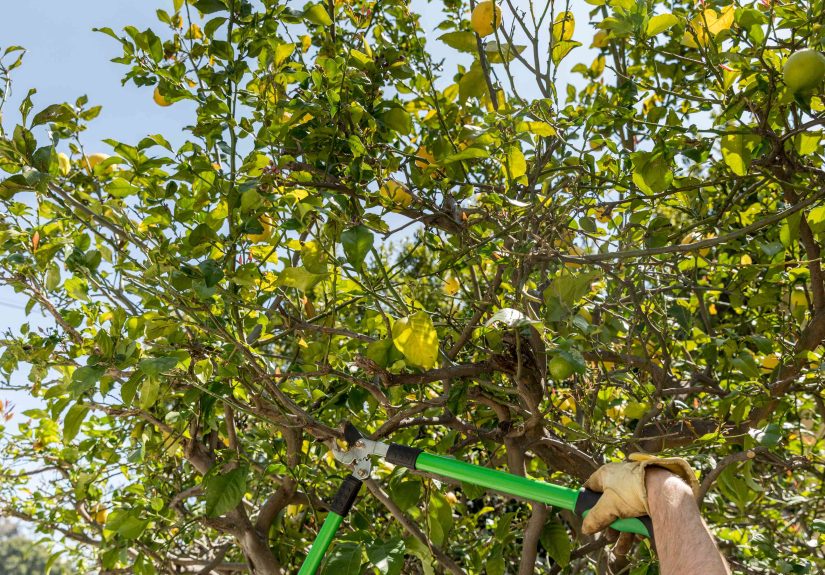
- Loppers for thumb-size branches
- Pruning saw for larger limbs
- Gloves (thorns: 1, bare hands: 0)
- Eye protection (you only get two eyes)
- Disinfectant for tools if you’re cutting out disease
Two-minute safety and tree-check ritual
Walk around the tree first. Look for broken limbs, branches crossing and rubbing, and clusters of fast vertical shoots.
Also check for fruit still hanging that you want to harvest first. And if your tree is tall, keep ladder work minimalcitrus pruning
is not worth a trip to the ER.
How to Properly Prune a Lemon Tree (Step-by-Step)
Step 1: Remove dead, damaged, or diseased wood
Start with the obvious. Deadwood doesn’t recover, damaged wood invites pests, and diseased wood can spread problems.
Cut back to healthy tissue. If you’re removing disease, disinfect tools between cuts so you don’t “share” the issue across the canopy.
Example: A twig that snaps cleanly and looks dry inside? Remove it. A branch with cracked bark or oozing sap? Remove it back to healthy wood,
and monitor the tree for pests.
Step 2: Remove suckers and water sprouts (especially from the trunk)
Suckers are vigorous shoots, often emerging from the trunk or below the graft line. They steal energy and can change the tree’s growth habit.
Water sprouts are fast, vertical shoots that often pop up after stress or heavy pruning.
For small suckers, remove them earlysometimes they can be rubbed off by hand when young. For larger ones, cut them cleanly as close to their origin as practical
without gouging the trunk.
Step 3: Thin out crossing, rubbing, or crowded branches
Find branches that cross through the center or rub against each other. Rubbing creates wounds, and wounds invite trouble.
Choose the better-placed branch to keep (usually the one with a more open angle and better light exposure).
Your goal isn’t to create an empty “open vase” like a peach treecitrus prefers some leaf cover. You’re aiming for a canopy that
allows light to dapple through and air to move, without exposing big interior limbs.
Step 4: Shape for a manageable size (without “topping” the tree)
If the tree is too tall or too wide, use selective thinning cuts: remove an entire branch back to a side branch or its point of origin,
rather than chopping everything at the same height (that’s topping, and it triggers a jungle of water sprouts).
Example: Instead of cutting the top straight across, identify one or two tall leaders and remove them back to a lower, outward-facing lateral branch.
The tree stays shorter but still looks natural.
Step 5: Decide on “skirting” (raising the canopy) thoughtfully
Some growers keep citrus canopies low for fruiting area, while home gardeners often prefer a slightly raised canopy for easier access and cleaner fruit.
If branches are dragging fruit on the soil or blocking airflow under the tree, you can remove a few of the lowest limbs.
Just don’t overdo itlower foliage also shades bark and helps prevent sunburn.
Step 6: Make the cut correctly (branch collar + the three-cut method)
For small branches, cut just outside the branch collar (the swollen area where the branch meets the trunk or parent branch).
Don’t leave long stubs, but also don’t cut flush against the trunk. The collar contains tissue that helps the cut seal.
For large limbs, use the three-cut method to prevent bark tearing:
- Undercut the branch a short distance out from the trunk (a shallow cut from below).
- Top cut a bit farther out so the limb breaks cleanly without stripping bark.
- Final cut to remove the stub just outside the branch collar.
Step 7: Protect exposed wood from sunburn
If pruning exposes major limbs or trunk sections that were previously shaded, protect them.
A common approach is painting exposed bark with diluted white interior latex paint (mixed with water) to reflect sunlight and reduce sunburn risk.
This is especially important in hot, bright climates or after removing a big limb.
Special Situations (Because Lemon Trees Love Plot Twists)
Young lemon trees (years 1–3): train, don’t terrorize
Young trees need leaves to build roots. Focus on removing suckers, correcting obvious structural issues (like a branch growing straight into the trunk),
and encouraging a few well-spaced scaffold branches. Avoid heavy pruning early on; it can slow establishment and delay fruiting.
Mature, productive trees: light annual maintenance wins
For an established lemon tree, annual light pruning is usually enough: deadwood, crowded interior shoots, and a bit of size management.
If you remove too much canopy at once, the tree may respond with vigorous non-fruiting shoots (water sprouts) instead of steady fruiting wood.
Container lemon trees: prune for space and sunlight
Potted lemon trees often live on patios, balconies, or indoors part of the year. The goal is compact, balanced growth.
Keep the canopy open enough that light reaches all sides, and limit height so the plant doesn’t become top-heavy.
Practical tip: If your tree lives indoors in winter, prune lightly in late winter/early spring and rotate the pot periodically so growth stays even.
Overgrown lemon trees: a two- or three-season renovation plan
If your lemon tree is huge, tangled, and throwing shade like it’s a professional critic, don’t try to fix everything in one weekend.
Renovation pruning is best done gradually:
- Year 1: remove deadwood, obvious crossing branches, and a couple of the worst offenders (major limbs) to improve structure.
- Year 2: reduce height selectively and thin dense areas.
- Year 3: fine-tune shape and manage water sprouts with light pruning.
This approach reduces sunburn risk and prevents the tree from responding with a forest of vertical shoots.
After a heavy crop vs. a light crop
Citrus can swing between heavy and light crop years. In commercial guidance, heavier structural pruning is often timed after lighter crop years to help balance future production.
For a home lemon tree, you can borrow the principle: after a light year, you can do slightly more thinning and shaping without sacrificing as much fruit.
Common Lemon Tree Pruning Mistakes (Avoid These and You’ll Look Like a Pro)
- Shearing like a hedge: this creates dense outer growth, shades the interior, and triggers lots of water sprouts.
- Topping the tree: a flat “haircut” usually leads to weak regrowth and more work later.
- Pruning right before cold weather: tender new growth is more vulnerable to frost.
- Over-pruning: removing too much canopy can reduce fruiting wood and invite sunburn.
- Flush cuts or leaving stubs: both slow healing; cut just outside the branch collar.
- Ignoring sunburn risk: suddenly exposed bark can be damaged by intense sunprotect it.
- Pruning during drought stress: stressed trees recover more slowly; address water issues first.
Aftercare: What to Do After You Prune
Pruning is a stresseven when it’s the good kind. Help your tree bounce back:
- Water consistently (not soggy, not desert-dry).
- Mulch to protect roots and moderate soil temperature (keep mulch a few inches away from the trunk).
- Fertilize wisely according to your region and season; avoid forcing tender growth going into cold weather.
- Monitor new shoots; pinch or remove water sprouts while they’re small if they’re in the wrong place.
- Watch for pests like scale, aphids, or leaf miners on fresh growth.
FAQ: Lemon Tree Pruning Questions People Actually Ask
Should I prune my lemon tree every year?
Most lemon trees benefit from light annual pruning to remove deadwood, control size, and keep the canopy from becoming a dense thicket.
Can I prune a lemon tree while it has fruit?
You can do minor pruning anytimeremove dead twigs or small suckers. For major shaping, it’s usually better to wait until after harvesting the main crop
so you’re not cutting off fruiting wood you wanted to keep.
How do I know if a branch is dead?
Dead branches are often brittle and dry inside. If you lightly scratch the bark and see green tissue underneath, it’s alive. Brown and dry underneath suggests deadwood.
After cold damage, wait until the tree shows new growth so you can judge accurately.
What’s the difference between thinning and heading cuts?
Thinning cuts remove an entire branch back to its origin, opening the canopy naturally.
Heading cuts shorten a branch and often stimulate multiple new shoots near the cut. For citrus, thinning cuts are usually the cleaner choice for structure.
Do I need to seal pruning cuts?
Generally, no. Citrus typically heals best without wound sealers. Focus on clean cuts and protecting exposed bark from sunburn when necessary.
How do I prune a thorny lemon tree without regretting my life choices?
Gloves, long sleeves, and patience. You can remove a few thorny shoots if they’re in the way, especially if they’re vigorous suckers. But remember: thorns often show up on fast juvenile growth,
and pruning too hard can encourage more of that growth.
Real-World Experiences: Lessons Home Gardeners Learn the Hard Way (So You Don’t Have To)
Reading pruning advice is one thing. Doing it while your lemon tree tries to poke you like a medieval weapon is another.
Here are common “in the garden” scenarios that show how timing and technique play out in real life.
The “I pruned it in summer and now the trunk looks toasted” story
This usually happens when a gardener removes a big limb (or a whole chunk of canopy) during a bright, hot stretch.
The tree’s interior woodpreviously shadedgets sudden, intense sunlight. Citrus bark is sensitive, and sunburn can kill tissue.
The result is a pale, scorched patch that may crack later. The fix is prevention: if major pruning exposes bark, protect it with a diluted white latex paint
mixture and avoid big canopy removal during the peak heat season. In hot climates, it’s smarter to schedule bigger cuts for late winter/early spring so new leaves can shade the wood before summer.
The “I topped it… and it turned into a green fountain” story
Topping feels satisfying in the moment: one dramatic cut, instant shorter tree. Then the lemon tree responds with a burst of vertical shoots (water sprouts),
because you removed a lot of leaf area and the tree is trying to replace it fast. Those shoots are vigorous, often thorny, and not immediately productive.
The gardener ends up pruning again…and again. A calmer approach is selective reduction: remove one tall leader back to a lower lateral branch, then step back.
Do another leader next year if needed. You get a shorter tree without triggering the “fountain mode.”
The “I pruned after a freeze and made it worse” story
After a freeze, branches can look dead before the tree has finished deciding what it can save. People prune early to “help,” then discover later that more dieback happens,
or that a branch they removed might have recovered. Many experienced citrus growers wait until spring growth shows the real line between live and dead wood.
It’s emotionally difficult to look at a ragged tree, but waiting prevents unnecessary cutting and helps you keep the best structure intact.
The “my potted lemon is lopsided and dramatic” story
Container lemons often lean toward the strongest light source, especially indoors or against a warm wall outdoors.
Gardeners prune one side, but forget to rotate the potso the tree keeps leaning like it’s trying to photobomb the window.
The more reliable routine is: rotate the pot every week or two during active growth, prune lightly to keep balance, and thin crowded shoots so light reaches the whole canopy.
The tree becomes more symmetrical, and you get fewer weak, stretched branches.
The “I removed all the low branches and now the fruit sunscalds” story
Some gardeners “skirt” the tree aggressively for lawn mowing or neatness. Then they notice fruit and interior limbs getting more direct sun,
and sometimes fruit sunscald becomes an issue. The compromise many people land on is a modest skirt: remove branches that truly drag fruit on the ground,
but keep enough lower foliage to shade the trunk and interior canopy. If you need clearance, do it gradually over seasons instead of stripping the bottom in one go.
The “I pruned lightly every year and now it’s basically self-managing” success story
This is the boring oneand it’s the best. Gardeners who remove suckers early, thin crossing branches before they become big,
and keep height reasonable with selective cuts rarely face major problems. The tree stays productive, air moves through the canopy,
and harvest becomes easier. The big lesson: small, consistent pruning beats heroic pruning.
Your lemon tree doesn’t need a makeover show. It needs a decent haircut on a reasonable schedule.
Conclusion: Prune with a Plan (and Keep the Tree Happy)
Proper lemon tree pruning comes down to three things: timing, selective cuts, and not getting carried away.
Aim for late winter to early spring, remove deadwood and vigorous trunk shoots first, thin crowded growth for light and airflow, and reduce size with thoughtful
thinning cuts instead of blunt topping.
If there’s one takeaway to tape to your pruners: leave enough leafy cover to protect bark and support fruiting.
A lemon tree with good structure, good light, and fewer tangled branches will reward you with healthier growthand more lemons for everything from pie to panic-cleaning your cutting board.