Table of Contents >> Show >> Hide
- Why rabbit aftercare is such a big deal
- 12 Steps to Care for Your Rabbit After Neutering or Spaying
- Step 1: Set up a quiet, clean recovery area before your rabbit comes home
- Step 2: Keep your rabbit warm, but not overheated
- Step 3: Offer hay, water, pellets, and favorite greens right away
- Step 4: Monitor eating, drinking, peeing, and pooping like a detective
- Step 5: Give pain medication exactly as prescribed
- Step 6: Restrict activity for the first week or so
- Step 7: Check the incision every day
- Step 8: Keep the cage, bedding, and litter area extra clean and dry
- Step 9: Handle your rabbit gently and only when necessary
- Step 10: Watch for subtle signs of pain or trouble
- Step 11: Manage rabbit companions carefully
- Step 12: Know when to call the vet immediately
- What recovery usually looks like
- Common mistakes to avoid
- Conclusion
- Real-life recovery experiences rabbit owners often describe
- SEO Tags
Bringing your rabbit home after neutering or spaying can feel like escorting a tiny royal patient back to the castle. One minute they are sleepy and offended, the next they are trying to pretend nothing happened. Do not be fooled by the brave face. Rabbit aftercare matters a lot, especially during the first 24 to 72 hours, when pain, stress, and digestive slowdowns can turn a routine recovery into a genuine problem.
The good news is that most rabbits recover well when they have a rabbit-savvy veterinarian, proper pain control, a calm setup, and a human who notices the little things. That means watching appetite, droppings, activity, and the incision like it is your part-time job for a few days. It also means resisting the urge to let your bunny launch back into full-speed zoomies before their body is ready. In other words: cute face, strict rules.
If you are wondering how to care for your rabbit after neutering or spaying, these 12 steps will help you support healing, prevent complications, and keep your bunny comfortable while they recover.
Why rabbit aftercare is such a big deal
Rabbits are not tiny cats, and they definitely are not small dogs in a fur coat with better ears. Their digestive systems depend on steady food intake, and they can hide pain like champions. That means a rabbit who is quiet, not eating, or producing fewer droppings may be having a much harder time than they appear. Spays are also more invasive than neuters, so female rabbits often need more recovery time than males.
One more important note: always follow the discharge instructions from your own veterinarian first. This article is meant to help you understand common, evidence-based rabbit spay and neuter aftercare, but your vet knows your rabbit’s procedure, age, health history, and pain-management plan.
12 Steps to Care for Your Rabbit After Neutering or Spaying
Step 1: Set up a quiet, clean recovery area before your rabbit comes home
Your rabbit does not want a welcome-home parade. They want peace, safety, and a setup that says, “No one expects you to perform today.” Create a calm recovery area away from barking dogs, curious children, loud TVs, and household chaos. Keep the space enclosed, well ventilated, and easy to monitor.
Soft flooring matters too. Use clean towels or similarly soft, non-shedding material so debris does not stick to the incision. Skip wire flooring, rough litter, dirty bedding, or anything dusty enough to audition as a desert storm. A smaller recovery pen often works better than giving your rabbit the run of the living room, because it limits sudden jumping and sprinting.
Step 2: Keep your rabbit warm, but not overheated
After anesthesia, some rabbits feel chilled and groggy. A warm, quiet environment can help them settle. If your vet recommends extra warmth, use a safe wrapped heat source, such as a warm water bottle wrapped in a towel, placed so your rabbit can move toward it or away from it. The key is choice. Rabbits do not appreciate being turned into baked potatoes.
Do not use risky electric heating devices that could burn, overheat, or be chewed. Check your rabbit regularly for comfort, normal breathing, and steady alertness as the anesthesia wears off.
Step 3: Offer hay, water, pellets, and favorite greens right away
One of the biggest priorities after rabbit surgery is getting the digestive tract moving again. Offer your rabbit their usual hay immediately, plus water and their regular food. Many rabbits are more tempted by fragrant fresh greens or favorite herbs, so this is an excellent time to bring out the parsley, cilantro, dill, basil, or other vet-approved favorites.
A ceramic water bowl can be especially helpful, even if your rabbit usually drinks from a bottle. After surgery, some rabbits are less willing to “work” for water. Keep food and water within easy reach so your bunny does not have to travel far to nibble or sip.
Step 4: Monitor eating, drinking, peeing, and pooping like a detective
This step is not glamorous, but it is one of the most important parts of rabbit post-op care. Your rabbit should be eating, drinking, urinating, and passing droppings within the timeframe your veterinarian gave you. In general, many rabbit care sources advise watching very closely during the first 12 to 24 hours after surgery.
Normal droppings may be slightly off at first, and a few soft or mucus-coated stools can happen after surgery, but fecal output should move in the right direction quickly. If your rabbit is not eating, is producing very few droppings, stops pooping, or seems painfully bloated, call your vet promptly. In rabbits, a poor appetite is not a “maybe tomorrow” issue. It is a “pick up the phone” issue.
Step 5: Give pain medication exactly as prescribed
Rabbits need pain control after surgery. Full stop. A bunny in pain is less likely to eat, drink, move normally, or recover smoothly. Give all prescribed medications exactly as directed, even if your rabbit is acting stoic and slightly dramatic in a “Nothing is wrong, human, and also I hate this medicine” sort of way.
Never give human pain medication to your rabbit. Not a small dose. Not a “natural” substitute. Not something that helped your cousin after wisdom tooth surgery. Human medications can be dangerous or fatal for rabbits. If you miss a dose, spill a dose, or cannot get the medicine into your bunny, call your veterinary team for instructions.
Step 6: Restrict activity for the first week or so
Your rabbit may feel surprisingly spry before the incision is truly ready. That is why activity restriction matters. Prevent running, jumping, climbing, twisting, and furniture acrobatics for at least the initial recovery period your vet recommends, often around 7 to 10 days. The goal is simple: protect the incision and reduce the risk of internal bleeding, swelling, or wound opening.
This is not the week for full free-roam privileges, obstacle courses, or triumphant couch leaps. Think “quiet recovery retreat,” not “bunny CrossFit.” Gentle movement inside a limited space is fine, but big athletic moments should wait.
Step 7: Check the incision every day
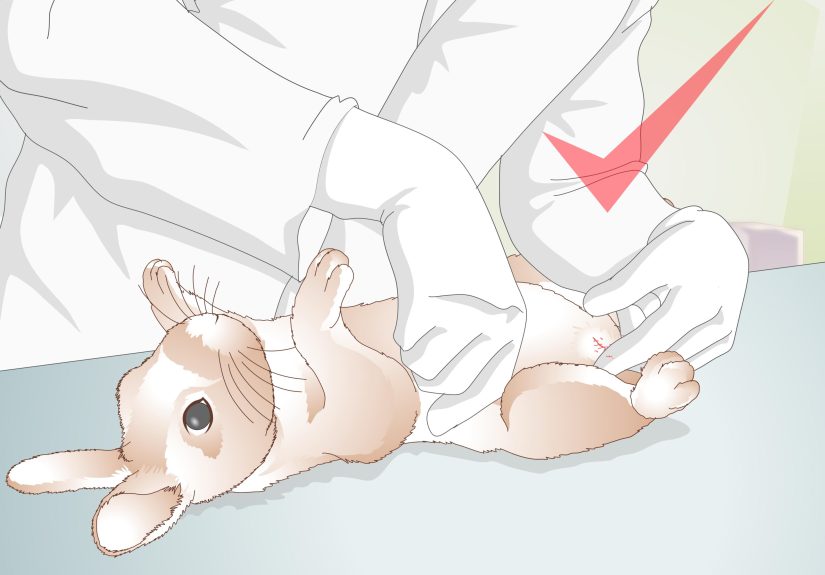
Look at the surgical site at least once daily, and twice daily is even better if your rabbit tolerates it. A mild amount of swelling or bruising may happen, but you should know what your rabbit’s incision normally looks like from day one so you can spot changes.
Call your vet if you see significant redness, increasing swelling, bleeding, a bad smell, pus-like discharge, warmth, gaping skin edges, or anything sticking out that should not be there. Also contact your vet if your rabbit starts chewing at the incision or pulling at sutures. Do not apply creams, ointments, sprays, or home remedies unless your veterinarian specifically tells you to do so.
Step 8: Keep the cage, bedding, and litter area extra clean and dry
For the first 7 to 10 days, cleanliness becomes a healing tool. Change soiled bedding promptly, clean up urine and feces often, and keep the area dry so the incision does not sit against damp or dirty material. Many rabbit aftercare instructions recommend using towels or paper towels over bedding to reduce dust and debris around the surgical site.
This is also a smart time to simplify the enclosure. Fewer loose particles, fewer places to wedge into mischief, and fewer chances for the incision to rub against something scratchy. Your rabbit may not write you a thank-you note, but their healing skin will appreciate the effort.
Step 9: Handle your rabbit gently and only when necessary
Most rabbits do not want a lot of cuddling right after surgery, and honestly, that is fair. Avoid excessive handling, especially lifting, because the abdomen or groin may be sore. When you must move your rabbit, use calm, secure support and keep the body level. No dangling, no awkward scoops, and definitely no “just a quick cuddle” if it makes them tense up.
Instead of picking your rabbit up repeatedly, spend time nearby. Sit on the floor, speak softly, and monitor from a respectful distance. Recovery is not a popularity contest.
Step 10: Watch for subtle signs of pain or trouble
Rabbits often whisper when something is wrong instead of shouting it. Signs of pain or complications can include a hunched posture, teeth grinding, lethargy, reluctance to move, pale gums, shivering, trouble walking, belly swelling, labored breathing, diarrhea, or a sudden drop in appetite or water intake.
Some of these signs may suggest pain, while others can signal bleeding, infection, or digestive slowdown. Trust the pattern, not just one moment. A rabbit who is quiet for five minutes may just be resting. A rabbit who is still not eating, still hiding, and still producing tiny or absent droppings hours later needs veterinary guidance.
Step 11: Manage rabbit companions carefully
If your rabbit has a bonded partner, handling the social side of recovery takes a little finesse. Some bonded rabbits do best when they can still see and smell each other, and calm companionship may reduce stress. But if the healthy rabbit starts mounting, chasing, or bothering the patient, separate them physically while keeping them close enough to maintain familiarity.
If you were planning introductions after surgery, hit pause. Neutered males can remain fertile for several weeks, and hormones do not vanish overnight. Rabbit behavior can stay a little spicy for a while, even after surgery. In short: a fresh neuter is not a dating profile update.
Step 12: Know when to call the vet immediately
Contact your veterinarian or emergency clinic right away if your rabbit is not eating, is not drinking, is not urinating, is not passing droppings, is extremely weak, has pale gums, seems bloated, has significant bleeding, has a badly swollen or open incision, shows signs of labored breathing, or seems much worse instead of better. It is also worth calling if your rabbit remains very groggy or unsteady beyond the time your vet said to expect.
With rabbits, early action matters. Waiting to “see how things look tomorrow” can turn a manageable issue into a true emergency. Keep your vet’s daytime number and after-hours emergency contact somewhere obvious before surgery day arrives. Future you will be grateful.
What recovery usually looks like
Most neutered male rabbits bounce back faster than spayed females. A male may seem more normal within a day or two, while a female may need a bit longer to regain full comfort. That said, “better” does not always mean “healed.” Incisions can take up to two to three weeks to fully settle, even when your rabbit looks ready to audition for a stunt show by day three.
In practical terms, the first night is about quiet observation, warmth, hydration, and tempting appetite. Days two and three are often when you start to see your rabbit’s personality return. The rest of the recovery period is about protecting the incision, continuing medications, keeping the environment clean, and making sure the digestive system stays on track.
Common mistakes to avoid
- Letting your rabbit free-roam too soon
- Assuming a quiet rabbit is just sleepy and not in pain
- Skipping prescribed pain medication
- Using human medications or home remedies
- Ignoring reduced appetite or low fecal output
- Failing to check the incision every day
- Leaving dirty bedding in place “until morning”
- Allowing rough interaction with other rabbits too early
Conclusion
Learning how to care for your rabbit after neutering or spaying is really about mastering the basics: calm housing, clean bedding, pain control, normal eating, close monitoring, and fast action if anything looks off. These surgeries are routine, but rabbit recovery is not something to handle casually. A bunny who eats well, poops well, and leaves the incision alone is headed in the right direction.
The biggest takeaway is this: do not judge recovery by attitude alone. Rabbits are experts at pretending they are fine. Judge recovery by appetite, droppings, incision healing, comfort, and behavior over time. Give your rabbit a quiet week, follow your vet’s instructions closely, and save the victory laps for when the stitches are secure and the poop is gloriously ordinary again.
Real-life recovery experiences rabbit owners often describe
One reason rabbit spay and neuter aftercare can feel stressful is that recovery is rarely dramatic in a movie-style way. It is usually a story of small signs, tiny wins, and a pet parent staring at poop like it holds the secrets of the universe. Many rabbit owners describe the first evening after surgery as the hardest part emotionally. Their bunny comes home sleepy, slightly annoyed, and far less interested in dinner than usual. That can feel alarming, even when the vet said mild grogginess is normal. The most reassuring moments often come from the little things: a first sip of water, a nibble of hay, a single normal-looking dropping in the pen. Those tiny milestones can feel like a standing ovation.
Owners of male rabbits often say the recovery seems surprisingly quick. By the next day, some neutered males are already acting like the surgery was a rude scheduling inconvenience. Female rabbit owners, on the other hand, often report that spay recovery requires more patience. Their rabbits may need extra encouragement to eat, more time resting in one spot, and a few additional days before they look fully comfortable. That difference can be nerve-racking if you are comparing one rabbit’s recovery to another. It helps to remember that a spay is more invasive, so slower progress does not automatically mean something is wrong.
Another common experience is realizing how much routine matters to rabbits. Many owners notice that their bunny relaxes faster when the room stays quiet, feeding times stay familiar, and the home setup does not change too much. Some describe sitting near the recovery pen reading, working, or simply being present without hovering. That calm companionship often seems to help. Rabbit owners with bonded pairs also talk about the balancing act of keeping companions emotionally connected without allowing rough behavior. In some homes, seeing and smelling each other through a barrier works beautifully. In others, temporary distance is necessary because the healthy rabbit wants to mount, investigate too aggressively, or generally act like a nosy little supervisor.
Many experienced rabbit caregivers also mention that incision checks get easier after the first day. At first, everything looks mysterious and mildly terrifying. By day two or three, they start to recognize what is normal for their bunny and what would clearly be a red flag. The same goes for poop monitoring. Newer rabbit owners may not realize how much they can learn from droppings until after surgery, when fecal output becomes one of the best clues to recovery.
Perhaps the most universal experience is how relieved people feel once their rabbit finally acts like themselves again. The first genuine stretch, the first demanding look for breakfast, the first attempt to rearrange the pen like an interior designer with anger issues, those are the moments owners remember. Recovery after neutering or spaying can be a little nerve-wracking, but it also teaches people how observant rabbit care really is. By the end of the week, many owners say they feel more confident, more tuned in to their rabbit’s behavior, and deeply grateful for the return of ordinary bunny mischief.