Table of Contents >> Show >> Hide
- What Is an Empirical Formula?
- Empirical Formula vs. Molecular Formula
- Why Empirical Formulas Matter in Chem 101
- The Basic Steps for Finding an Empirical Formula
- Step 1: Start with Grams
- Step 2: Convert Grams to Moles
- Step 3: Divide by the Smallest Mole Value
- Step 4: Handle Decimals Without Panicking
- Worked Example: Finding an Empirical Formula from Percent Composition
- Worked Example: Finding an Empirical Formula from Mass Data
- How Combustion Analysis Fits In
- How to Find a Molecular Formula from an Empirical Formula
- Common Mistakes Students Make
- Quick Shortcut for Empirical Formula Problems
- Experience-Based Tips for Learning Empirical Formulas
- Conclusion
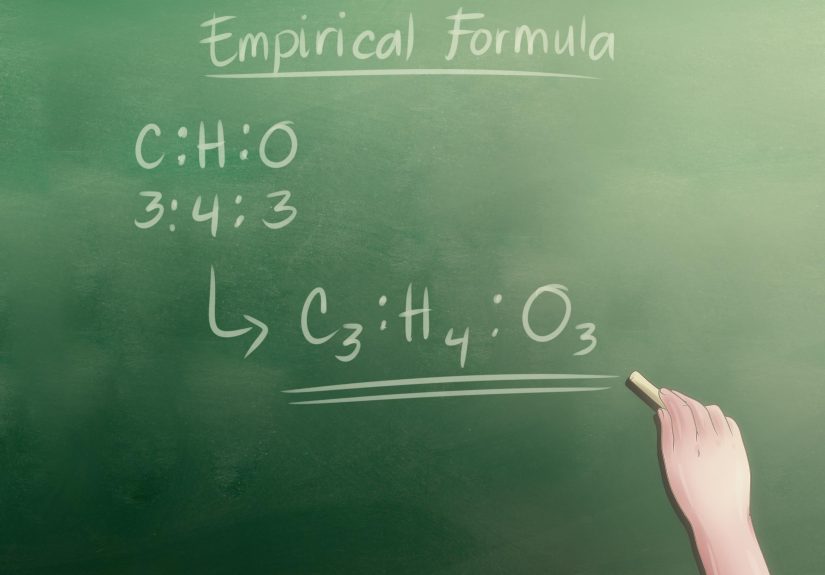
In chemistry, the empirical formula is a bit like the “no-frills” version of a compound’s identity. It does not tell you every atom in the molecule, and it certainly does not show you a fancy 3D structure with bonds posing for a yearbook photo. Instead, it gives you the simplest whole-number ratio of the elements in a compound. That may sound modest, but in Chem 101, learning how to find the empirical formula is one of the first big steps toward understanding chemical composition, stoichiometry, molecular formulas, and laboratory analysis.
If you have ever looked at a problem that says a compound contains 40.0% carbon, 6.7% hydrogen, and 53.3% oxygen, and your brain immediately whispered, “Absolutely not,” do not worry. Empirical formula problems look intimidating at first, but they follow a reliable recipe. Once you know the steps, it becomes less like solving a mystery and more like making pancakes: measure, convert, divide, adjust, and try not to spill anything on your notebook.
This guide explains what an empirical formula is, how it differs from a molecular formula, how to calculate it from percent composition or mass data, and how to avoid the common mistakes that make students lose points faster than a beaker rolling off the lab bench.
What Is an Empirical Formula?
An empirical formula shows the simplest whole-number ratio of atoms or ions in a compound. The word “empirical” comes from observation or experiment, which makes sense because chemists often determine empirical formulas from experimental data, such as percent composition or elemental analysis.
For example, glucose has the molecular formula C6H12O6. That formula tells us one molecule of glucose contains 6 carbon atoms, 12 hydrogen atoms, and 6 oxygen atoms. But the ratio 6:12:6 can be simplified by dividing everything by 6. The empirical formula becomes CH2O.
So, glucose’s empirical formula is not the full molecule. It is the simplest ratio. Think of it as the “reduced fraction” of chemistry. If the molecular formula is 6/12/6, the empirical formula is 1/2/1.
Empirical Formula vs. Molecular Formula
Students often mix up empirical and molecular formulas, which is understandable because both use element symbols and subscripts. The difference is what they represent.
Empirical Formula
The empirical formula gives the simplest whole-number ratio of elements in a compound. It may or may not be the same as the molecular formula.
Molecular Formula
The molecular formula gives the actual number of atoms of each element in one molecule of the compound.
For instance, hydrogen peroxide has the molecular formula H2O2. The ratio 2:2 simplifies to 1:1, so its empirical formula is HO. Water, on the other hand, has the molecular formula H2O. Since 2:1 is already the simplest ratio, its empirical formula is also H2O.
In short: all molecular formulas contain real atom counts, but empirical formulas are all about the simplest ratio. Chemistry loves ratios. Honestly, chemistry may love ratios more than coffee, and that is saying something.
Why Empirical Formulas Matter in Chem 101
Empirical formulas are not just textbook busywork. They help chemists identify unknown compounds, interpret laboratory data, and connect mass measurements to atomic ratios. In real labs, elemental analysis can show how much carbon, hydrogen, nitrogen, oxygen, sulfur, or another element is present in a sample. From that information, scientists can calculate the compound’s empirical formula.
Empirical formulas also prepare students for more advanced chemistry topics, including molecular formulas, combustion analysis, hydrate formulas, stoichiometry, limiting reactants, and analytical chemistry. If you can confidently move from grams to moles to ratios, you are building one of the core muscles of chemistry. Yes, your calculator is doing the crunches, but you are still the coach.
The Basic Steps for Finding an Empirical Formula
Most empirical formula problems follow the same five-step method:
- Start with grams. If you are given percentages, assume a 100-gram sample.
- Convert grams to moles using atomic masses from the periodic table.
- Divide each mole value by the smallest mole value.
- Convert decimals to whole numbers if needed.
- Write the empirical formula using the whole-number ratio as subscripts.
That is the whole game. The hardest part is usually recognizing when a decimal like 1.5, 1.33, or 1.25 needs to be multiplied to become a whole number.
Step 1: Start with Grams
If a problem gives you actual masses, you can use those masses directly. For example, if a compound contains 12.0 g carbon and 4.0 g hydrogen, you already have grams.
If a problem gives you percent composition, assume you have a 100-gram sample. This trick works because percentages are “per 100.” So if a compound is 40.0% carbon, 6.7% hydrogen, and 53.3% oxygen, then in a 100 g sample, you would have:
- 40.0 g carbon
- 6.7 g hydrogen
- 53.3 g oxygen
This assumption does not change the ratio. It simply turns percentages into convenient masses. Chemistry teachers love this move because it is clean, logical, and slightly sneaky in a wholesome academic way.
Step 2: Convert Grams to Moles
Empirical formulas are based on atom ratios, not mass ratios. That means grams alone are not enough. A gram of hydrogen contains many more atoms than a gram of oxygen because hydrogen atoms are much lighter. To compare atoms fairly, you must convert grams to moles.
The formula is:
moles = grams ÷ molar mass
The molar mass comes from the periodic table. Common values used in beginner chemistry include:
- Carbon: 12.01 g/mol
- Hydrogen: 1.008 g/mol
- Oxygen: 16.00 g/mol
- Nitrogen: 14.01 g/mol
- Sodium: 22.99 g/mol
- Chlorine: 35.45 g/mol
Using the example above:
- Carbon: 40.0 g ÷ 12.01 g/mol = 3.33 mol
- Hydrogen: 6.7 g ÷ 1.008 g/mol = 6.65 mol
- Oxygen: 53.3 g ÷ 16.00 g/mol = 3.33 mol
Now the problem is speaking in moles, which is chemistry’s favorite language. It is basically the language of atoms standing in line and being counted in enormous groups.
Step 3: Divide by the Smallest Mole Value
Once you have moles, divide every mole amount by the smallest mole amount. This gives you the simplest ratio.
In our example, the smallest value is 3.33 mol:
- Carbon: 3.33 ÷ 3.33 = 1
- Hydrogen: 6.65 ÷ 3.33 ≈ 2
- Oxygen: 3.33 ÷ 3.33 = 1
The ratio is 1:2:1. Therefore, the empirical formula is:
CH2O
This is the empirical formula for compounds that have carbon, hydrogen, and oxygen in that ratio. Notice that it does not automatically tell you the molecular formula. The compound could have a molecular formula of CH2O, C2H4O2, C6H12O6, or another whole-number multiple. To find the molecular formula, you need the compound’s molar mass.
Step 4: Handle Decimals Without Panicking
Sometimes the ratio does not come out as neat whole numbers. You may get something like 1:1.5:1 or 1:1.33:2. This is where many students stare at the page as if the calculator has betrayed them.
Small rounding errors are normal. If a value is very close to a whole number, round it. For example:
- 0.99 becomes 1
- 1.01 becomes 1
- 2.98 becomes 3
- 4.02 becomes 4
But if the decimal is clearly a fraction, multiply every ratio number by the same whole number to eliminate the fraction.
Common Decimal Multipliers
- 0.5 means multiply all ratios by 2
- 0.33 or 0.67 means multiply all ratios by 3
- 0.25 or 0.75 means multiply all ratios by 4
- 0.2 or 0.4 or 0.6 or 0.8 means multiply all ratios by 5
For example, suppose your ratio is 1:1.5:1. Multiply all values by 2:
1 × 2 = 2, 1.5 × 2 = 3, 1 × 2 = 2
The whole-number ratio becomes 2:3:2. That ratio can now become subscripts in the empirical formula.
Worked Example: Finding an Empirical Formula from Percent Composition
Let’s solve a complete example.
Problem: A compound contains 52.14% carbon, 13.13% hydrogen, and 34.73% oxygen. Find its empirical formula.
Assume a 100-Gram Sample
- Carbon = 52.14 g
- Hydrogen = 13.13 g
- Oxygen = 34.73 g
Convert Grams to Moles
- Carbon: 52.14 ÷ 12.01 = 4.34 mol
- Hydrogen: 13.13 ÷ 1.008 = 13.03 mol
- Oxygen: 34.73 ÷ 16.00 = 2.17 mol
Divide by the Smallest Mole Value
- Carbon: 4.34 ÷ 2.17 = 2
- Hydrogen: 13.03 ÷ 2.17 = 6
- Oxygen: 2.17 ÷ 2.17 = 1
The ratio is 2:6:1, so the empirical formula is:
C2H6O
This formula could represent ethanol or dimethyl ether as a molecular formula, depending on structure. The empirical formula alone tells composition, not arrangement. Chemistry can be annoyingly precise like that.
Worked Example: Finding an Empirical Formula from Mass Data
Now let’s use actual grams instead of percentages.
Problem: A sample contains 2.24 g iron and 0.96 g oxygen. Find the empirical formula.
Convert Grams to Moles
- Iron: 2.24 ÷ 55.85 = 0.0401 mol
- Oxygen: 0.96 ÷ 16.00 = 0.0600 mol
Divide by the Smallest Value
- Iron: 0.0401 ÷ 0.0401 = 1
- Oxygen: 0.0600 ÷ 0.0401 ≈ 1.5
The ratio is 1:1.5. Because 1.5 is not a whole number, multiply both values by 2:
- Iron: 1 × 2 = 2
- Oxygen: 1.5 × 2 = 3
The empirical formula is:
Fe2O3
This is a classic example because it shows why you cannot simply round 1.5 to 2. If you rounded, you would get FeO2, which is not the simplest correct ratio from the data. Fractions need multipliers, not wishful thinking.
How Combustion Analysis Fits In
Combustion analysis is another common way to find empirical formulas, especially for organic compounds containing carbon, hydrogen, and oxygen. In a combustion analysis experiment, a sample is burned in oxygen. Carbon in the sample forms carbon dioxide, and hydrogen forms water. By measuring the masses of CO2 and H2O produced, chemists can calculate how much carbon and hydrogen were in the original sample.
The key ideas are:
- All carbon in CO2 came from carbon in the original compound.
- All hydrogen in H2O came from hydrogen in the original compound.
- If oxygen is present in the original compound, it is often found by subtracting the masses of carbon and hydrogen from the total sample mass.
Combustion analysis problems are a little more advanced, but they still rely on the same foundation: convert grams to moles, divide by the smallest value, and turn the mole ratio into whole-number subscripts.
How to Find a Molecular Formula from an Empirical Formula
Once you have the empirical formula, you may be asked to find the molecular formula. To do that, you need the compound’s molar mass.
Use this method:
- Find the empirical formula mass.
- Divide the compound’s molar mass by the empirical formula mass.
- Multiply every subscript in the empirical formula by that number.
Example: The empirical formula is CH2O. Its empirical formula mass is:
- C = 12.01
- H2 = 2.016
- O = 16.00
- Total = 30.03 g/mol
If the compound’s molar mass is 180.18 g/mol, divide:
180.18 ÷ 30.03 = 6
Now multiply each subscript in CH2O by 6:
C6H12O6
The molecular formula is C6H12O6.
Common Mistakes Students Make
Using Percentages as Subscripts
If a compound is 40% carbon and 60% oxygen, the empirical formula is not C40O60. Percentages must be converted to grams, then moles, then ratios.
Forgetting to Convert to Moles
Mass ratios are not atom ratios. Always convert grams to moles before dividing.
Rounding Too Early
Keep a few decimal places during calculations. Rounding too soon can distort the final ratio.
Ignoring Fractional Ratios
A ratio of 1:1.5 should be multiplied by 2, not rounded. A ratio of 1:1.33 should usually be multiplied by 3.
Mixing Up Empirical and Molecular Formulas
The empirical formula is the simplest ratio. The molecular formula is the actual atom count. Sometimes they match, but not always.
Quick Shortcut for Empirical Formula Problems
Here is a simple memory trick:
Percent to Mass, Mass to Mole, Divide by Small, Multiply till Whole.
It sounds like a weird chemistry nursery rhyme, but it works. If you can remember that line, you can solve most empirical formula problems in introductory chemistry.
Experience-Based Tips for Learning Empirical Formulas
One of the biggest lessons students learn while practicing empirical formulas is that chemistry rewards patience. The math itself is not usually difficult, but the sequence matters. Skipping one step is like trying to bake cookies by throwing flour directly into the oven. Technically, something happened. Emotionally, nobody is proud.
A practical experience that helps is setting up every problem in a table. Write the element symbols in the first column, the given mass or percent in the second column, the molar mass in the third column, the calculated moles in the fourth column, and the mole ratio in the fifth column. This keeps your work organized and makes mistakes much easier to spot. If your teacher asks you to show work, a table also makes your answer look confident, even if your soul briefly left your body during the calculation.
Another helpful habit is to label units carefully. Many wrong answers happen because students divide by the wrong number or forget that molar mass is measured in grams per mole. Units act like traffic signs. Ignore them, and suddenly your calculation is driving through a cornfield.
When practicing, start with clean examples where the ratios come out as whole numbers, such as CH2O or NaCl. Then move to problems with decimals like 1.5 or 1.33. These decimal problems are where real confidence grows. Once you understand that 1.5 means “multiply everything by 2” and 1.33 means “multiply everything by 3,” the problems become much less mysterious.
It also helps to compare empirical formulas to simplified fractions. Just as 6/12 reduces to 1/2, C6H12O6 reduces to CH2O. This analogy is especially useful for students who are more comfortable with math than chemistry. The empirical formula is basically the compound’s ratio in lowest terms.
One common classroom experience is getting an answer that is close but not perfect, such as 1.00:1.99:1.01. Do not panic. Experimental data and rounded atomic masses often produce tiny differences. In most Chem 101 settings, values very close to whole numbers can be rounded. The trick is knowing the difference between a rounding issue and a fractional ratio. A value like 1.99 is probably 2. A value like 1.50 is not almost 2; it is exactly the kind of fraction that needs multiplication.
For students preparing for quizzes, the best strategy is repetition with variety. Practice percent composition problems, mass-based problems, and molecular formula follow-ups. After a few rounds, you will notice the same pattern repeating. Chemistry may look like a jungle of symbols at first, but empirical formula problems are more like a well-marked hiking trail. There may be mosquitoes, but you can still get to the end.
Finally, remember that empirical formulas are not just about getting the right answer. They teach you how chemists think: measure something in the lab, convert it into moles, find a pattern, and express that pattern in chemical language. That is the heart of chemistry. It is the art of turning messy real-world data into a clean formula that tells a meaningful story.
Conclusion
Learning how to find the empirical formula is one of the most useful skills in introductory chemistry. The process may look technical at first, but it follows a dependable path: convert percentages to grams, convert grams to moles, divide by the smallest mole value, adjust to whole numbers, and write the formula. Once you understand that empirical formulas represent the simplest whole-number ratio of elements, the calculations become far less intimidating.
Whether you are working with percent composition, mass data, or combustion analysis, the goal is the same: discover the ratio of elements in a compound. Master this skill, and you will be better prepared for molecular formulas, stoichiometry, lab analysis, and the many delightful surprises chemistry likes to place on exams.
Note: This educational article synthesizes standard introductory chemistry concepts commonly taught in U.S. general chemistry courses and is intended for learning and study support.