Table of Contents >> Show >> Hide
- Before You Start: When You Should (and Shouldn’t) Handle a Leopard Gecko
- Step 1: Create a “Safe Handling Zone” and Let Your Gecko Opt In
- Step 2: Use the Scoop-and-Support Pick-Up (Never the Tail Grab)
- Step 3: Keep Sessions Short, Read the Signals, and End on a Win
- Common Questions About Holding a Leopard Gecko
- Afterword: Real-World Experiences Keepers Commonly Report (500+ Words)
- Conclusion
Leopard geckos have a reputation for being the “easygoing roommates” of the reptile worldcute, chill, and unlikely to file a noise complaint. But when it comes to handling, they still have two very strong opinions: (1) “Please don’t grab me like a claw machine,” and (2) “My tail is not a handle.”
If you want your gecko to feel safe in your hands (and not treat you like a suspicious moving tree), you need a plan. The good news: you can learn how to hold a leopard gecko safely with three simple stepsbuilt around trust, support, and timing.
Before You Start: When You Should (and Shouldn’t) Handle a Leopard Gecko
Handling is great for bonding, gentle socialization, and quick health checks (like noticing stuck shed or a weird toe situation). But handling at the wrong time can stress your gecko outand stress is the enemy of “calm gecko vibes.”
Skip handling today if…
- Your gecko is brand new (give them a few days to settle into their home first).
- They’re shedding (skin feels tight and uncomfortable; keep handling minimal).
- They’re tiny (very small juveniles can be fragile and harder to handle safely).
- They’re clearly stressed (rapid breathing, frantic scrambling, tail waving, repeated hiding).
- They just ate a big meal (nobody likes being scooped right after dinner).
Also, remember a basic hygiene rule for all reptile handling: wash your hands before and after. Reptiles can carry germs that don’t bother them but can make humans sickespecially young kids and immunocompromised folks.
Step 1: Create a “Safe Handling Zone” and Let Your Gecko Opt In
The first step in leopard gecko handling isn’t actually picking them upit’s making them feel like your hand isn’t a predator. In the wild, lots of things want to eat small lizards. And unfortunately, a big hand swooping from above screams “hawk delivery service.”
Do a 60-second setup
- Wash hands with soap and water. Avoid hand sanitizer residue right before handling.
- Lose strong smells (lotions, perfumes, and “I just chopped onions” energy).
- Pick a low-risk location: sit on the floor or over a soft surface like a bed.
- Close escape routes: shut doors, block gaps under furniture, keep other pets out.
Offer your hand like it’s a warm rock, not a trap
Place your hand in the enclosure without chasing your gecko. Keep it still for a couple minutes. You’re teaching: “Hand appears. Nothing bad happens. End of story.”
If your gecko approaches, sniffs, or climbs on, perfect. If they ignore you, that’s also fine. The goal is consistency. Think of it like building trust with a tiny, judgmental dragon who doesn’t read motivational posters.
Pro tip: handle at the right time
Leopard geckos are often more active in the evening. If you try handling in the middle of the day when they’re deeply committed to being a rock in a hide, you’re basically interrupting their “do not disturb” mode.
Step 2: Use the Scoop-and-Support Pick-Up (Never the Tail Grab)
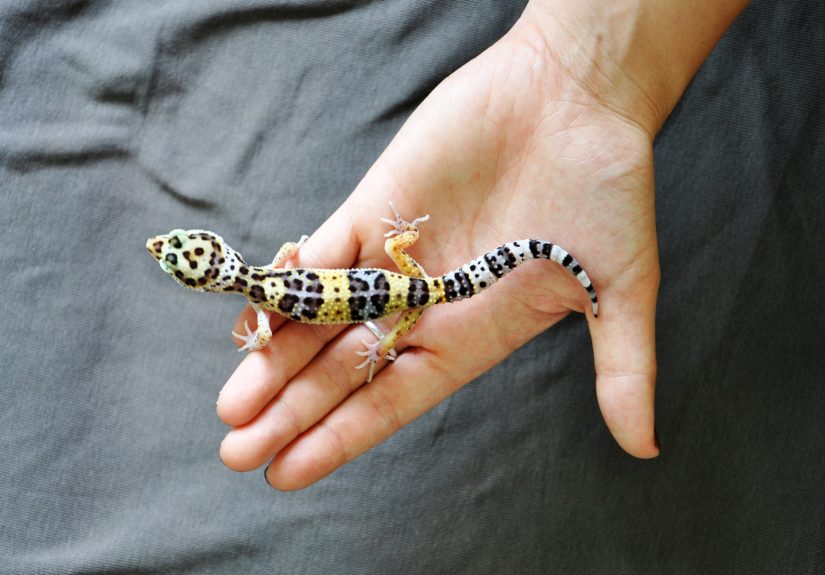
When you’re ready to pick up your gecko, the rule is simple: support the whole body. Your gecko should feel stablefeet supported, belly supported, and tail not grabbed.
The “two-hand bridge” method
- Approach from the side, not from above. Move slowly.
- Scoop under the chest and belly with one handlike you’re lifting a tiny sandwich that you genuinely respect.
- Bring the second hand in as a guardrail so your gecko can step forward if they want. Many geckos feel calmer when they have “somewhere to go” instead of being pinned.
- Keep your hands low over a safe surface. If they jump, it’s a short, harmless hopnot a surprise bungee stunt.
Let them climb onto you whenever possible
A great way to pick up a leopard gecko is to encourage them to walk onto your hand. Place your hand in front of them like a ramp, and gently block behind them with your other hand (without pressing). The more your gecko “chooses” the interaction, the calmer the handling usually goes.
What NOT to do (the hall of fame of bad ideas)
- Don’t grab the tail. Many lizards can drop their tail as a defense, and it’s stressful for them.
- Don’t squeeze. Firm support is good; pressure is not.
- Don’t chase around the enclosure. That turns handling into “predator practice.”
- Don’t hold them high up. Even calm geckos can suddenly decide they’re auditioning for parkour.
Step 3: Keep Sessions Short, Read the Signals, and End on a Win
The secret to taming isn’t one heroic 30-minute cuddle marathon. It’s many short, predictable sessions that end before your gecko hits “nope, I’m done” mode.
A simple handling schedule that works for most geckos
- Start small: about 5 minutes, every other day.
- Build gradually: increase time slowly as your gecko stays calm.
- Work up to routine: short daily handling can be better than random long sessions.
Signs your gecko is comfortable
- Slow, steady walking (not frantic scrambling)
- Curious sniffing or gentle exploring
- Relaxed posture (not rigid, not “freeze mode”)
Signs your gecko is stressed
- Repeated attempts to bolt or jump
- Tail waving/twitching, sudden stiff posture
- Rapid breathing, squeaking, or persistent hiding immediately after
If you see stress signs, shorten the session next time. You’re not “failing”you’re gathering data. Your gecko is basically giving you a review: “Five stars for effort, two stars for timing.”
How to put your leopard gecko back without drama
Return your gecko by lowering your hands into the enclosure and letting them step off on their own. Avoid dropping them onto the substrate or pulling your hand away suddenly. Calm in, calm out.
Common Questions About Holding a Leopard Gecko
How often should I handle my leopard gecko?
Many keepers aim for short sessions a few times per week, then adjust based on the gecko’s temperament. Some geckos become social butterflies; others are polite introverts. Your job is to find the sweet spot where handling is enrichingnot stressful.
Can kids hold a leopard gecko?
Older kids can, with close adult supervision, calm movements, and strict hand-washing. But very young children are higher-risk for getting sick from reptile-associated germs, and they’re also more likely to squeeze or drop a gecko by accident. If you do allow handling, keep the gecko low to a soft surface and keep sessions short.
What if my gecko drops its tail?
First: don’t panic. Tail dropping (autotomy) is a defense behavior and can happen if a gecko feels threatened or is grabbed incorrectly. The drop site can bleed a little, and the gecko will be stressed.
- Keep the enclosure clean (many owners temporarily switch to paper towels to reduce infection risk).
- Reduce handling while the area heals.
- Watch for infection signs (swelling, discharge, worsening redness) and contact a reptile-experienced vet if concerned.
Should I handle my gecko while it’s shedding?
Keep it minimal. Shedding can make them extra sensitive, and handling can pull on loose skin. If you need to help with stuck shed, focus on husbandry (humidity and proper shedding support) and consult a vet if issues repeat.
Afterword: Real-World Experiences Keepers Commonly Report (500+ Words)
Handling advice sounds super clean on paper: “Scoop gently, support the feet, be calm.” In real life, your leopard gecko may have opinions. A lot of new keepers expect instant trust because leopard geckos look like tiny, friendly dinosaurs. But trust is usually built in small moments.
Experience #1: The ‘Statue Gecko’ phase. Many geckos freeze the first few times you try to interact. They’ll press low to the ground, stare like they’re calculating your taxes, and refuse to move. In that moment, it’s tempting to “just pick them up and get it over with.” But keepers often find better success by pausing and doing nothing for a minutehand in the enclosure, no chasing, no grabbing. The gecko learns that your presence doesn’t automatically lead to a scary event.
Experience #2: The ‘Popcorn Jump’ surprise. Even calm geckos can spook and spring forward with zero warning. This is why experienced handlers sit on the floor or handle over a bed. When the jump happens, the best response is boring: don’t yank your hands away, don’t squeeze tighter, and don’t chase the gecko around the room. Instead, guide them with your hands like soft bumpers and let them settle. Over time, many geckos jump less as handling becomes predictable.
Experience #3: The ‘I only like you at night’ reality. Leopard geckos often feel safer and more curious when they’re naturally awake. Keepers frequently notice that evening handling goes smoother: the gecko is already exploring, and your hand becomes just another “thing to investigate.” Midday handling, on the other hand, can feel like being dragged out of bed by a giant. If your sessions are always tense, try adjusting the timing before you assume your gecko “hates handling.”
Experience #4: The ‘hand smells like food’ misunderstanding. If you feed insects and then handle immediately, your fingers may smell like dinner. Keepers sometimes report curious nibbles that aren’t aggressionmore like, “Are you… a worm?” Washing hands before handling and avoiding handling right after feeding can reduce this. Also, if your gecko is still learning, don’t wiggle your fingers like prey. You’re trying to build trust, not perform a one-person cricket impression.
Experience #5: The breakthrough moment. A common turning point happens when a gecko voluntarily climbs onto a hand for the first time. Keepers describe it as a tiny win that changes everything: handling becomes less about “catching” and more about “inviting.” Once your gecko understands that stepping onto your hand leads to calm exploration (and then being returned safely), many become noticeably more confident. Not every gecko becomes super cuddly, but most can learn to tolerateand sometimes enjoyshort, gentle sessions.
The pattern behind these experiences is consistent: leopard geckos respond best to calm, repeated routines. Your goal isn’t to “prove you’re the boss.” Your goal is to teach your gecko one simple fact: your hands are safe.
Conclusion
Learning how to hold a leopard gecko isn’t about fancy tricksit’s about doing the basics really well. Create a safe setup, use full-body support, and keep early sessions short and predictable. If your gecko ever seems stressed, slow down and rebuild trust. A calm gecko today is a confident gecko later.
Remember the three steps: 1) set the stage and let your gecko opt in, 2) scoop and support (never the tail), 3) keep sessions short, read stress signals, and end on a win.