Table of Contents >> Show >> Hide
- Why Sandy’s Flat Works: A Set Designer’s Brain in a Real-Life Home
- 9 Practical Lessons to Steal from a Vintage-Filled Flat
- 1) Protect the pathways like they’re VIP seating
- 2) Let the floor show itself (yes, really)
- 3) Use shallow ledges for “museum-style” display
- 4) Make your own ledges without making it your personality
- 5) Use shelving as architecture, not just storage
- 6) Decant the everyday stuff so it doesn’t visually fight your treasures
- 7) Rotate displays like a shop window (because… it works)
- 8) Collect within your real constraints
- 9) Keep a simple materials palette so the “stuff” feels intentional
- Room-by-Room: How to Make Collections Feel Curated (Not Crowded)
- When a Collection Starts Acting Like Clutter
- How to Keep Collecting Without Turning Your Home Into a Storage Unit
- Extra : Real-Life “Collected Home” Experiences That Make the Advice Click
- Conclusion: The “Curated, Livable” Sweet Spot
There are two types of people in the world: those who think “open shelving” is a lifestyle, and those who think it’s a trap invented by dust. If you’re reading this, chances are you’ve got a collectionor twelveand you’d like your home to feel like a lived-in story, not a thrift store during a mild earthquake.
Enter art director and set designer Sandy Suffield, whose vintage-filled North London flat has the kind of personality you can’t buy in one afternoon (unless your afternoon includes eBay, charity shops, and a suspiciously strong coffee). Her home is a masterclass in how to live with collections without losing your countertops, your calm, or your ability to walk from one room to the next without doing parkour.
This isn’t about “own less.” It’s about owning well: curating, displaying, rotating, storing, and letting your treasures look intentionalbecause the line between “collector” and “I’ll deal with it later” is basically one unlabelled box in a hallway closet.
Why Sandy’s Flat Works: A Set Designer’s Brain in a Real-Life Home
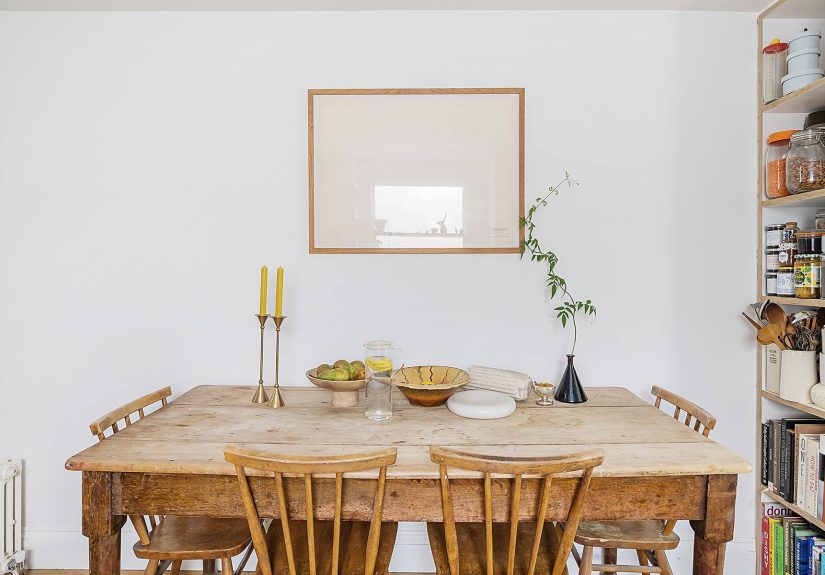
Sandy’s space is packed with vintage finds, but it doesn’t read as chaos. It reads as edited, airy, and surprisingly functionalespecially impressive in a city flat where square footage is precious and storage is mostly a rumor. Her approach feels like what happens when a creative professional treats home styling like production design: you can have lots of “props,” but the scene still needs blocking, flow, and breathing room.
Rule Zero: Start with a calm backdrop
One of Sandy’s smartest moves is also one of the simplest: she created a “blank canvas” by painting rooms a clean, bright white. The result is a steady visual baseline that makes vintage objects feel like featured characters, not background noise. Think of it as giving your collection a gallery wall… everywhere.
Vintage with purpose (not just vibes)
Sandy frames her love of old things as both aesthetic and practical. She’s described choosing vintage as a way to avoid adding to landfillplus it lets you upgrade slowly, piece by piece, without the pressure of matching sets or trend cycles. In collector terms: your home can evolve like a playlist, not a one-time album drop.
9 Practical Lessons to Steal from a Vintage-Filled Flat
1) Protect the pathways like they’re VIP seating
Sandy keeps rooms easy to navigate by avoiding bulky obstaclesno kitchen island crowding the floor, no sofa floating in the middle like it’s trying to start a new continent. If your collection forces you into a sideways crab-walk, the layoutnot the objectsis the real problem.
2) Let the floor show itself (yes, really)
A surprisingly powerful small-space trick: keep the space under furniture clear. Sandy’s logic is beautifully simple: when you can see under the furniture, the space feels bigger.
Visually, it’s like turning your room’s “air settings” from low to high.
3) Use shallow ledges for “museum-style” display
Deep shelves invite clutter. Shallow ledges invite editing. Sandy leans on skinny display shelves (often with fresh flowers) to showcase small pieces without sacrificing square footage. The best part? Ledges are low-commitment. You can switch things out whenever the moodor duststrikes.
4) Make your own ledges without making it your personality
Her DIY formula is refreshingly un-fussy: standard wood planks, basic brackets, and white paint. It’s not about artisanal joinery; it’s about creating a reliable “stage” for objects you already love.
5) Use shelving as architecture, not just storage
Instead of adding more furniture, Sandy built bookshelves that double as a partition between the living area and kitchen. This is collector gold: one move creates zones, adds display space, and keeps the room from feeling like one long “everything pile.”
6) Decant the everyday stuff so it doesn’t visually fight your treasures
Pantry goods in mismatched packaging can make even a pretty kitchen feel messy. Sandy keeps things presentable by decanting ingredients into glass jars as needed. It’s not about aesthetic perfectionit’s about reducing visual static so your vintage pieces can shine.
7) Rotate displays like a shop window (because… it works)
Sandy regularly rearranges what’s on view to “re-see things,” crediting a retail mindset: keep moving the merchandise. Translation: you don’t need to display everything all the time. You need a system that lets each piece have a moment.
8) Collect within your real constraints
Sandy admits the space can’t accommodate her love of chairs, so lighting became an obsession instead. That’s a pro-level collector move: identify what your home can actually hold, then direct your enthusiasm into categories that fit your life (and your floor plan).
9) Keep a simple materials palette so the “stuff” feels intentional
In a home full of objects, the supporting cast matters: consistent wall color, repeat materials, and a restrained base (wood, white, glass, neutral textiles) keep the collection from reading as visual noise. Your items should look like they’re conversing, not debating.
Room-by-Room: How to Make Collections Feel Curated (Not Crowded)
Living room: Anchor first, then layer
Start with one or two “anchors” that set the tone: a vintage sofa, a bold lamp, a piece of art you genuinely love. Then layer your smaller objects around them in tidy groupings. Use a color story (repeat a few hues across shelves) and vary height (tall + short, round + angular) so the display feels designed, not dumped. Leave pockets of empty spacenegative space is not “wasted,” it’s what makes the collection readable.
Kitchen: Put collections on walls and shelves, not on work zones
If you collect mugs, plates, or vintage glassware, greatjust keep your prep areas functional. Wall display, floating shelves, and built-ins help. If your counter becomes a permanent exhibit, your home stops being a kitchen and starts being a very snack-hostile museum.
Bedroom: Keep it soothing, even if you’re a maximalist at heart
Bedrooms benefit from a lighter touch. Choose a few meaningful objects (a lamp you adore, a piece of art, a small tray of favorites) and let the rest live elsewhere. Texture can do a lot herelinen, waffle weaves, quiltswithout adding more “things.” The goal is to sleep, not to feel judged by your own shelves at 2 a.m.
Bathroom: Shallow shelves and decanted products
Bathrooms get messy fast because everything is tiny and necessary and somehow always multiplying. Use shallow shelves for a small, edited display and decant what you can (cotton pads, bath salts, everyday items). If you love vintage apothecary vibes, this is your momentjust keep it hygienic and wipeable.
Home office: Separate “work brain” from “collector brain”
Collections can be inspiring, but they can also be distracting. The trick is zoning: keep your desk surface mostly clear, then give your collection a defined nearby boundary (one shelf, one ledge system, one cabinet). Your email doesn’t need to compete with 38 tiny figurines for attention.
When a Collection Starts Acting Like Clutter
A collection should add meaning, not stress. If you’re feeling overwhelmed, it’s time for guardrailsnot guilt. Here are a few reality-based ways to keep things under control:
- Choose a display boundary: one cabinet, one shelf run, one wall. When it’s full, you rotateno expansion into new territories.
- Try a “holding zone” bin: put “maybe” items in a box, store it out of sight, set a deadline (ideally within a few months), then donate/sell what’s left.
- Use the 90/90 rule for non-sentimental overflow: if you haven’t used it in 90 days and won’t in the next 90, it’s probably not earning its rent.
- Do a mini countdown: pick a time frame and tackle one small zone per daymomentum beats marathon purges.
How to Keep Collecting Without Turning Your Home Into a Storage Unit
Shop for a spot, not a fantasy
Before you buy, decide where the item will live. Not “somewhere on a shelf,” but which shelf. If it doesn’t have a home, it’s not a purchaseit’s future clutter with a receipt.
Build a rotation habit (and make it fun)
Treat your shelves like a tiny gallery. Swap pieces seasonally, or whenever you feel visually “used to” them. Rotating doesn’t mean you love something less. It means you’re giving it a better spotlight.
Keep a repair-first mindset
Sandy reupholstered a vintage sofa instead of replacing it. That mindsetrepair, refresh, reimaginehelps collections feel sustainable and personal, not disposable.
Collect categories that fit your square footage
If you live small, collect small (or collect vertical). Lamps, prints, ceramics, textiles, and wall-mounted pieces can satisfy the “treasure hunt” feeling without eating your floor plan.
Extra : Real-Life “Collected Home” Experiences That Make the Advice Click
Most people don’t wake up one day and announce, “Today I shall become a collector.” It usually starts innocently: a flea-market bowl that’s too charming to leave behind, a stack of vintage magazines you swear you’ll reference for “inspiration,” a tiny ceramic dog that looks suspiciously like your real one (but with better posture). Thenblinkyour home has a theme and your shelves are booked through 2029.
A common collector experience is the threshold moment: the day your favorite objects stop feeling like décor and start feeling like homework. You notice it when dusting takes longer than cooking dinner, or when you avoid certain corners because moving one thing means moving twenty things. That’s not a moral failure. That’s your house asking for better systems.
Another relatable scenario: the sentimental pile-up. You inherit a box of family keepsakeschina, photos, small heirloomsand you want to honor them, but you don’t want to live inside a museum exhibit titled “Everyone I’ve Ever Loved.” This is where rotation becomes emotionally freeing. You can display a few pieces at a time (a cabinet shelf, a tray, a shadow box), then swap seasonally. The memory stays present without taking over your present-day life.
Then there’s the hyper-specific collectionthe one that makes guests say, “Oh wow… you really like frogs.” These collections can look incredible if you give them a container. A single wall of shallow ledges. A glass-front cabinet. A bookcase bay. When everything lives inside a defined frame, it reads as intentional and even artistic. When it spreads to windowsills, countertops, and the top of the toilet tank, it reads as “frog situation.”
Small-space collectors also learn the power of visual quiet. Even if you keep a lot, you can make it feel calm by repeating a few colors, keeping walls light, and leaving negative space. Think of it like music: silence is part of the composition. A bookshelf that includes a few open gaps feels curated. A bookshelf packed edge-to-edge can feel like your objects are fighting for air.
Finally, collectors often discover that their happiest homes are the ones where objects support living, not replace it. The best compliment isn’t “You have so much stuff!” It’s “Your place feels like you.” Sandy’s flat shows that the secret isn’t perfectionit’s editing, flow, and rotation. Keep the pathways clear. Give your treasures a stage. Let your home breathe. That’s how collections become comfort, not clutter.
Conclusion: The “Curated, Livable” Sweet Spot
Sandy Suffield’s vintage-filled London flat proves you don’t have to choose between personality and peace. The trick is treating your collections like design elements: give them a calm backdrop, a defined boundary, and enough negative space to feel intentional. Use shallow ledges, rotate displays, and keep daily life zones functional. Your home can be richly layered without becoming overwhelming.