Table of Contents >> Show >> Hide
- What Is the Spirit Channeling Game “Ghost”?
- Before You Start: Safety, Consent, and Ground Rules
- What You Need to Play “Ghost”
- How to Make a DIY “Ghost” Board
- How to Play “Ghost”: Step-by-Step Rules
- Great Questions to Ask in “Ghost”
- What If It Doesn’t Move?
- What If It Starts Spelling Gibberish?
- How to End the “Ghost” Game (Don’t Skip This)
- “Ghost” Variations (Pick Your Flavor of Spooky)
- Example: A Short “Ghost” Session Transcript
- How to Keep It Fun (Not Freaky)
- Conclusion
- Experiences: 5 Real-World Stories People Share About Playing “Ghost” (About )
Let’s be honest: half the reason people play “Ghost” is the thrill of asking a spooky question in a quiet room and then staring at each other like, “Okay… who moved it?”
The other half? It’s a surprisingly good party game. It’s like a sleepover classic meets improv comedy meets “we should absolutely not do this right before bed.” In this guide, you’ll learn how to play the spirit channeling game “Ghost” in a way that’s clear, respectful, andmost importantlystill fun even if you’re the skeptic in the room.
What Is the Spirit Channeling Game “Ghost”?
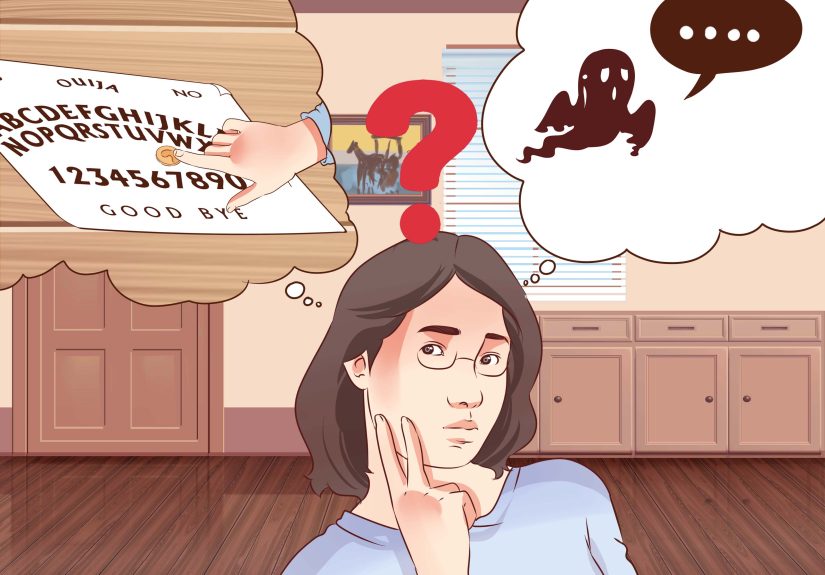
“Ghost” is a casual, DIY-style spirit channeling game that works a lot like a talking board session (think Ouija-style rules, but often homemade). Players place their fingertips lightly on a pointer (a planchette, coin, or small cup) and ask questions. The pointer glides toward letters, numbers, or “YES/NO” so the group can interpret an answer.
Some groups treat “Ghost” as paranormal communication. Others treat it like a spooky storytelling game powered by the group’s subconscious. Either way, the rules are similar: stay calm, ask one question at a time, and end the session intentionally.
Why It Can Feel So Real (Even If You Don’t Believe)
Many researchers and psychologists attribute talking-board movement to the ideomotor effectsmall, unconscious muscle movements influenced by expectation, attention, and group dynamics. In plain English: people can move something without realizing they’re moving it.
That doesn’t “ruin” the game. It explains why it can feel eerie: the motion doesn’t always feel like it’s coming from you, especially in a group where everyone’s sense of control gets fuzzy.
Before You Start: Safety, Consent, and Ground Rules
If you want the night to be spooky-fun instead of “why are we all emotionally unwell now,” set ground rules first. This takes two minutes and can save you a dramatic midnight argument about who “invited something in.”
Quick Safety Checklist
- Consent matters. Everyone should be comfortable participating. No pressuring the nervous friend. (They’ll haunt you later.)
- Skip it if someone is anxious or vulnerable right now. Spooky games + stress can be a bad combo.
- Keep it PG and respectful. No threats, dares, or “prove it” challenges. You’re playing a game, not auditioning for a horror movie.
- No dangerous props. If you use candles, keep them supervised, away from clutter, and in stable holders. Safety beats ambiance.
- Have an “end it” word. Anyone can call a stop at any timeno questions asked.
What You Need to Play “Ghost”
You can play with a store-bought talking board, or you can make your own “Ghost” board in about five minutes. Homemade is classic, cheap, and slightly more chaoticwhich is on-brand for the genre.
Basic Materials
- A board surface: paper, poster board, cardboard, or a real talking board.
- Markers or pens: thick marker is easier to read in dim light.
- A pointer: planchette (best), coin (easy), or a small upside-down cup/shot glass (slides well).
- A flat surface: a table is ideal. Laps work in a pinch, but wobble makes “mysterious movement” a little too easy.
- Optional: a notebook for the “scribe” to write letters/answers as they happen.
How to Make a DIY “Ghost” Board
The goal is simple: give the pointer clear places to go so answers can be interpreted without a decoding session that lasts until sunrise.
Step 1: Add the essentials
- YES (top left)
- NO (top right)
- GOODBYE (bottom center)
- Alphabet (A–Z, in two arcs or rows)
- Numbers (0–9, usually along the bottom above “GOODBYE”)
Step 2: Make it readable
- Use big letters.
- Leave space between characters.
- Keep it unclutteredyour eyes shouldn’t have to work overtime in low light.
Optional “Ghost” Add-Ons
- MAYBE (for indecisive vibes)
- REPEAT (for when the answer is… emotionally unclear)
- WHO? and WHY? (if your group likes dramatic follow-ups)
How to Play “Ghost”: Step-by-Step Rules
These steps mirror the most common talking-board conventions: keep fingers light, agree on one question at a time, and be patient with responses. The “Ghost” game lives or dies on pacingrush it and you’ll get nonsense (or at least nonsense you can’t enjoy).
Step 1: Pick roles (optional, but helpful)
- Facilitator: keeps the group on track and reminds everyone of the rules.
- Scribe: writes down letters as they’re indicated so nobody argues about what it “really” spelled.
- Timekeeper: gently moves things along if you’ve been stuck on one question forever.
Step 2: Set the pointer in the center
Place your planchette/coin/cup in the middle of the board. Everyone participating should rest one or two fingertips on itlightly. The keyword is lightly, like you’re touching a soap bubble you can’t afford to pop.
Step 3: Do a “calibration” question
Start with something simple and low-stakes. The point isn’t to prove anything; it’s to set the rhythm.
- “Is anyone here who wants to play?”
- “Can you move to YES?”
- “Can you move to NO?”
Step 4: Ask one question at a time (and agree on it)
This is the biggest rule for keeping “Ghost” playable: one question at a time. No cross-talk. No “Waitask if it likes my cousin!” chaos. The group should agree on the exact question, then ask it clearly.
Step 5: Watch where it goes, then record it
If it moves toward YES/NO, you’ve got a quick answer. If it starts drifting to letters, the scribe should call out each letter as it’s reached. When a word forms, pause and confirm:
- “Did you mean ‘CAT’?”
- “Can you confirm by moving to YES?”
Step 6: Keep questions smart (so answers stay interesting)
The best “Ghost” questions are specific, playful, and not designed to freak someone out.
Great Questions to Ask in “Ghost”
Fun, low-stakes starters
- “What should we nickname you?”
- “Do you like music? YES or NO?”
- “What’s your favorite letter?”
- “Should we tell a scary story after this?”
Mystery-style prompts (still friendly)
- “Point to a number between 0 and 9.”
- “Spell a color.”
- “What room should we go to next?” (Only if it’s safe and everyone agrees.)
Questions to avoid
- Anything that targets a specific person in a hurtful way (“Who here is lying?”).
- Medical, legal, or financial predictions (“Should I quit my job tomorrow?”).
- Threat-bait (“How will I die?”). Don’t do that to your nervous system.
What If It Doesn’t Move?
Totally normal. A few practical fixes:
- Reduce friction: try a smoother pointer (a small cup often slides better than a coin).
- Check the surface: bumpy tables and soft paper folds can snag.
- Reset: everyone lift fingertips, set the pointer back to center, take a breath, then start again.
- Ask clearer questions: YES/NO questions are easier at first than “Explain the meaning of existence.”
What If It Starts Spelling Gibberish?
Treat it like a game glitch, not a prophecy. You can:
- Ask: “Can you repeat that more slowly?”
- Ask: “Is this a word? YES or NO?”
- Reset the pointer to the center and switch to simpler questions.
How to End the “Ghost” Game (Don’t Skip This)
Whether you view “Ghost” as paranormal or psychological, endings matter. A clean ending reduces anxiety and prevents the session from spiraling into “Did we stop? Are we done? Waitwhy did the hallway creak?”
The clean close
- Say, “We’re ending the session now. Goodbye.”
- Move the pointer to GOODBYE together.
- Everyone removes fingertips at the same time.
- Turn on the lights, stretch, and do a quick reality reset (water, snack, jokesanything normal).
“Ghost” Variations (Pick Your Flavor of Spooky)
Variation 1: YES/NO Pencil Version (Quick and chaotic)
If your group wants a fast version, the famous “Charlie Charlie” style setup is basically the speed-run cousin of “Ghost”: a paper with YES/NO and two pencils crossed on top. You ask a question and watch for movement. It’s more about suspense than detailed messages, but it scratches the same itch.
Variation 2: The Skeptic-Friendly Mode
Want to keep it fun without escalating beliefs? Try this:
- Keep the lights dim, but not pitch black.
- Let the “scribe” be the only one who writes letters down.
- After the session, compare what people thought happened to what the scribe recorded.
This often turns into the best part of the night: the debrief where everyone realizes they experienced the same moment differently.
Example: A Short “Ghost” Session Transcript
Question: “Do you want to play with us?”
Pointer: moves to YES
Question: “What should we call you?”
Pointer: S… A… M…
Group: “Sam? Is your name Sam? Confirm with YES.”
Pointer: YES
Question: “Sam, pick a number 0 through 9.”
Pointer: 7
Whether you interpret “Sam” as a spirit, a subconscious pull toward common names, or a friend unconsciously steering (without realizing it), you still got a spooky little storyand that’s the point of the game.
How to Keep It Fun (Not Freaky)
- Stay playful: the vibe you bring is the vibe you get.
- Don’t escalate: if someone’s uncomfortable, shift to lighter questions or stop.
- Debrief after: talk about what felt weird, what felt funny, and what you want to do differently next time.
- Sleep hygiene matters: don’t end the night on maximum tension. Watch something silly. Eat a cookie. Rejoin society.
Conclusion
The spirit channeling game “Ghost” is one of those rare activities that works on multiple levels: it’s spooky, social, and weirdly introspective. Play it as a paranormal experiment, a psychological curiosity, or just a dramatic party gameeither way, the best sessions are the ones where everyone feels safe, included, and in control of the experience.
Keep your rules simple: light touch, one question at a time, and a real ending. Do that, and “Ghost” becomes less about fear and more about atmosphere the good kind that turns into inside jokes for years.
Experiences: 5 Real-World Stories People Share About Playing “Ghost” (About )
1) The Sleepover That Turned Into a Comedy Show
One group described playing “Ghost” at a middle-of-the-night sleepover with total seriousnessuntil the pointer started spelling something that looked like “P-I-Z-Z-A.” Everyone lost it. The funniest part wasn’t the message; it was how the mood instantly shifted from horror-movie silence to snack-planning chaos. They kept asking “important questions” like what topping was best and whether the “ghost” hated pineapple. The takeaway: sometimes the game reflects the energy in the room. If you’re hungry and giggly, your “mystery” might be… extremely on-brand.
2) The Skeptic Who Got Spooked by Their Own Hands
Another common story: the skeptic agrees to play “just to prove it’s fake,” then gets rattled the second the pointer moves smoothly. Not because they suddenly believe in spiritsbut because it genuinely doesn’t feel like conscious movement. People often say the moment that gets them isn’t a spooky word; it’s the sensation of motion without intention. Afterward, the skeptic usually becomes the one Googling psychology explanations and explaining them to everyone like, “I’m not scared, I’m educated.”
3) The Session That Went Too Intense (And the Smart Stop)
A lot of players talk about one night where the vibe got heavymaybe someone asked a personal question, or the room got quiet in a not-fun way. In the best versions of this story, someone used the agreed-upon “end it” rule. They moved to GOODBYE, turned on the lights, and took a break. The experience became a reminder that the healthiest “ghost rule” is this: your friends’ comfort matters more than the mystery. Ending isn’t “losing.” It’s good hosting.
4) The Friend Who “Definitely Wasn’t Pushing”
Groups love to argue about whether one person is steeringusually the friend who insists they aren’t, while everyone else gives them the side-eye. What’s interesting is that many stories end with a compromise: “We don’t think you’re cheating on purpose.” Unintentional movement is kind of the whole point of why “Ghost” feels strange. Some groups solve it by rotating who touches the pointer or doing a round where only two people play while others observe. Suddenly it’s less drama and more experiment.
5) The Sweet Ending That Made Everyone Feel Better
Not every “Ghost” story is about fear. Some players describe ending the session by asking something lightlike “Should we watch a funny video now?”getting a YES, and then closing properly. That little moment of normality helps, especially for anyone who’s prone to overthinking at night. They turned the lights on, ate snacks, and laughed about the weirdest letters they got. The “experience” wasn’t proof of anything supernatural; it was proof that a spooky game can still be a warm memory if you play it responsibly.