Table of Contents >> Show >> Hide
- Why Sew Suspender Buttons Instead of Using Clip-Ons?
- What You Need Before You Start
- Choose the Right Trousers First
- Where Suspender Buttons Go
- Inside or Outside the Waistband?
- How to Sew Suspender Buttons: Step by Step
- Pro Tip: Use a Backing Button for Extra Strength
- Can You Sew Suspender Buttons by Machine?
- Common Mistakes to Avoid
- Should You Remove Belt Loops?
- When It Makes Sense to Hire a Tailor
- Experiences, Lessons, and Real-Life Tips from Sewing Suspender Buttons
- Final Thoughts
- SEO Tags
If you have ever looked at a sharp pair of trousers and thought, “These would be perfect with suspenders,” you are already halfway to the good life. The other half involves six little buttons, a needle, some thread, and just enough patience to avoid sewing your finger to your waistband. In other words: a pretty good afternoon project.
Learning how to sew suspender buttons is one of those old-school clothing skills that still earns its keep. Button-on suspenders look cleaner than clip-ons, feel more secure, and make trousers hang better. They are especially useful on dress pants, wool trousers, vintage-inspired outfits, and formalwear. Better yet, once you know how to sew suspender buttons properly, you can convert ordinary pants into something that feels custom.
This step-by-step tutorial will walk you through the tools, button placement, sewing method, common mistakes, and a few practical style tips. Whether you are fixing up a tuxedo trouser, upgrading office pants, or giving your weekend wardrobe a little extra swagger, this guide will help you do it right.
Why Sew Suspender Buttons Instead of Using Clip-Ons?
Clip-on suspenders are convenient, but convenient and elegant are not always roommates. Clips can pinch fabric, leave marks, and look a little less refined on dress trousers. Button-on suspenders, by contrast, attach neatly inside the waistband and create a cleaner silhouette. The result is more secure, more comfortable, and more traditional.
That matters even more with formalwear. If you are wearing a tuxedo, button-on suspenders are the better option because they stay put and avoid chewing up delicate waistband fabric. On everyday trousers, they are still worth the effort because they help the pants sit naturally rather than being cinched tight by a belt. Think of it as tailoring without the dramatic tailor music.
What You Need Before You Start
- Six suspender buttons for one pair of trousers
- Strong hand-sewing thread that matches the trouser lining or waistband
- A hand-sewing needle
- Tailor’s chalk, fabric pencil, or washable marker
- A ruler or measuring tape
- Small scissors
- An iron, optional but helpful
- A thimble, optional but appreciated by your fingertips
For classic button-on suspenders, six buttons is the standard setup: two at the back and four at the front. Many trouser and suspender guides also recommend rounded 5/8-inch buttons with four holes. They are sturdy, easy to sew, and kind to the leather ends or fabric tabs on suspenders.
Choose the Right Trousers First
Before you sew anything, look at the trousers themselves. Suspender buttons work best on pants with a reasonably firm waistband. Dress trousers, wool pants, chinos with structure, and tuxedo trousers are all strong candidates. Super-thin casual shorts or very stretchy waistbands are less ideal because the buttons can tug the fabric over time.
Also consider the rise of the trousers. Suspenders generally look and function better with mid-rise or high-rise pants. On low-rise trousers, the straps can feel awkward and the overall proportion can look off. Not tragic, but not exactly Cary Grant either.
Where Suspender Buttons Go
This is the part people overthink, underthink, or measure once and regret forever. Good placement matters because it affects both comfort and appearance. The goal is simple: the straps should lie flat, feel balanced, and pull the trousers upward without twisting.
Front Button Placement
You will sew four buttons in the front: two on the left side and two on the right side. On pleated trousers, the first button on each side usually sits above the pleat. On flat-front trousers, it generally sits above the crease line. From there, the second button on each side is placed about 2 1/2 to 3 inches toward the side seam.
A practical rule is to position the front buttons about 1 inch below the top edge of the waistband, usually on the inside of the waistband. That keeps the button hidden from view while still giving the suspender tab enough room to attach comfortably.
Back Button Placement
At the back, most classic suspenders use a Y-back configuration. That means you only need two buttons at the rear. Place them equally on either side of the center back seam, typically about 2 1/2 to 3 inches apart overall. In practice, that means roughly 1 1/4 to 1 1/2 inches from the center seam on each side, again about 1 inch below the top of the waistband.
If your suspenders have unusual strap spacing, do not panic. You can also test placement by clipping or holding the suspenders where you want them while wearing the trousers, then marking the spots. This personalized method is often the smartest choice because bodies are gloriously inconsistent.
Inside or Outside the Waistband?
Most people sew suspender buttons on the inside of the waistband, especially on dress trousers and formal pants. It keeps the look tidy and traditional. Outside placement exists, particularly on vintage or workwear-inspired clothing, but for most modern outfits, inside placement wins on subtlety.
If your goal is a clean, web-publishable menswear answer: yes, inside is usually the move.
How to Sew Suspender Buttons: Step by Step
Step 1: Mark the Button Positions
Lay the trousers flat on a table with the waistband open. Use a ruler and tailor’s chalk to mark all six button locations. Double-check symmetry before you start sewing. Then check it again, because thread is forgiving but not magical.
Step 2: Thread the Needle
Cut a comfortable length of thread and double it over. Knot the end securely. Doubled thread gives you extra strength, which matters because suspender buttons get tugged every time you sit, stand, twist, or perform dramatic exits from weddings.
Step 3: Anchor the Thread
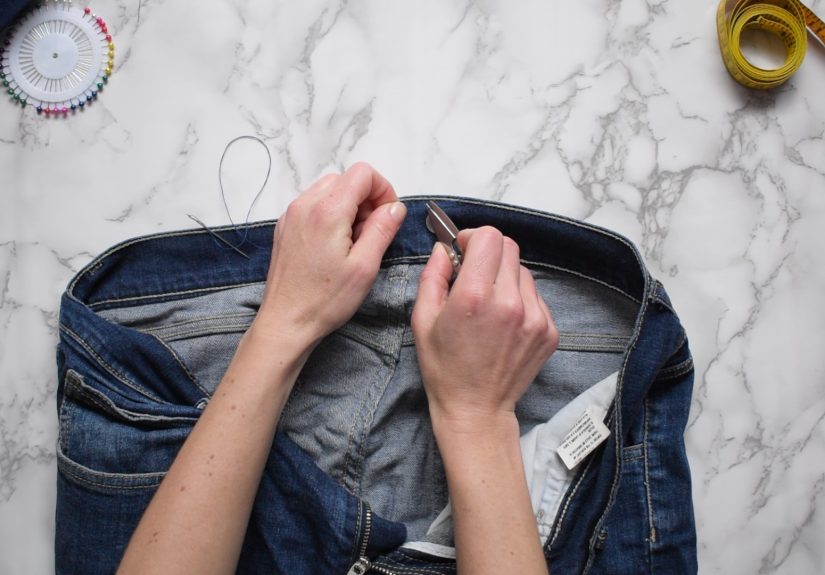
Bring the needle through the inner waistband layer near the marked spot. If possible, catch only the waistband facing and interfacing, not the outer trouser fabric. This is the tailoring trick that keeps your stitches from showing on the outside. Make two or three tiny anchor stitches in the same area under where the button will sit.
Step 4: Position the Button
Place the button directly over the anchor stitches. For four-hole buttons, sew in an X pattern or parallel bars. Either works as long as the button is secure and centered. Keep the button steady with one hand while you pass the needle through the holes.
Step 5: Sew the Button Firmly
Pass the needle up through one hole and down through the opposite hole, repeating the sequence until the button is firmly attached. Seven or eight passes is a good target for durability. Keep your stitches consistent and avoid pulling so tightly that the button crushes the fabric. You want it secure, not strangling the waistband.
Step 6: Add a Small Thread Shank if Needed
Some people sew suspender buttons completely flat. Others prefer a tiny bit of lift, especially if the waistband fabric is thick. A slight thread shank gives the suspender tab room to sit comfortably. If you want that extra space, leave a little ease while sewing, then wrap the thread around the stitches beneath the button a few times before knotting off. Not enormous. Just enough to keep the button functional rather than fused to the pants like a barnacle.
Step 7: Knot Securely and Hide the End
When the button feels solid, take the needle under the button, form a small loop, and knot the thread. Repeat once more for security. Then pass the needle back through the inner waistband layer and cut the thread a short distance away from the button so the tail disappears inside the fabric.
Step 8: Repeat for the Other Five Buttons
Yes, this is the repetitive part. Put on music. Bribe yourself with coffee. Sew the remaining buttons using the same method and keep checking alignment as you go.
Pro Tip: Use a Backing Button for Extra Strength
If the trousers are delicate or the waistband fabric seems prone to wear, you can add a small backing button on the inside layer. This distributes stress and helps prevent tearing over time. It is an especially smart move for frequently worn trousers or heavier suspenders. Think of it as giving your main button a tiny bodyguard.
Can You Sew Suspender Buttons by Machine?
Technically, yes. Some sewing machines and button-sewing feet can attach a button quickly using a zigzag stitch with the stitch length set to zero. That said, for trouser waistbands, hand sewing usually gives you better control. It is easier to catch only the inner layer, easier to place the button precisely, and less likely to leave visible stitching on the outside.
For most people, hand sewing is the better method here. It is slower, but it is also cleaner and far less likely to make you say words unfit for a tailoring manual.
Common Mistakes to Avoid
1. Sewing Through All Layers
If your stitches show on the outside of the trousers, the finish will look less polished. Catch only the inner waistband layers whenever possible.
2. Putting the Buttons Too Close Together
Buttons that are crowded make it harder to attach the suspender tabs and can twist the straps. Give them the recommended spacing.
3. Using Weak Thread
Suspender buttons are not decorative extras. They carry tension. Use strong thread and double it.
4. Skipping Symmetry Checks
If the left and right sides are uneven, the suspenders can sit crooked. Measure carefully before sewing.
5. Making the Button Too Tight to the Fabric
A little ease helps the suspender tab attach more comfortably. A button sewn flat as a manhole cover is not ideal.
Should You Remove Belt Loops?
This is more style question than sewing emergency. If you plan to wear the trousers only with suspenders, removing the belt loops creates a cleaner look. If you want the flexibility to wear both belts and suspenders, leave the loops on. Plenty of people do, and the fashion police are usually busy elsewhere.
For tuxedo trousers, suspenders make more sense than a belt. For office chinos or everyday wool pants, it comes down to preference.
When It Makes Sense to Hire a Tailor
If your trousers are expensive, heavily lined, vintage, or made from delicate fabric, taking them to a tailor is perfectly reasonable. This is also smart if the waistband construction is confusing or you want absolute precision for formalwear. Sometimes the best DIY decision is knowing when not to DIY.
But for sturdy trousers and a patient beginner, sewing suspender buttons by hand is completely manageable. It is one of the easier menswear alterations to learn, and the payoff is bigger than the effort suggests.
Experiences, Lessons, and Real-Life Tips from Sewing Suspender Buttons
The funny thing about sewing suspender buttons is that it sounds fancy until you actually do it. Then you realize it is less “Savile Row master tailor in candlelight” and more “person at kitchen table trying not to lose the chalk pencil.” That is not a bad thing. In fact, it is part of why this project is so satisfying.
One of the most common experiences beginners have is underestimating how much button placement affects comfort. A pair of buttons can look perfectly fine when the trousers are flat on the table, but once the suspenders go on the body, the straps may angle outward too much or sit too close to the center. That is why trying the suspenders on loosely before sewing can save a lot of frustration. A five-minute test fit can prevent an hour of unpicking stitches and muttering at your waistband.
Another common lesson is that thread tension matters more than people expect. Beginners often pull the thread too tightly because they think tighter means stronger. In reality, thread that is pulled too tight can pucker the fabric, make the button sit awkwardly, and reduce the little bit of space needed for the suspender tab to attach smoothly. The sweet spot is snug and secure, not aggressive. You are sewing a button, not trying to tow a truck.
There is also the issue of fabric thickness. On sturdy wool trousers, the project tends to feel reassuring. The needle goes through with resistance, the button sits nicely, and the finished result feels substantial. On thinner summer trousers, however, every stitch feels like it matters more. That is when a backing button or extra care with the inner layers becomes especially useful. It helps spread the tension so the waistband does not wear out prematurely.
People who sew suspender buttons for the first time are often surprised by how much the trousers improve afterward. The pants hang differently. The front crease looks cleaner. The waistband stays where it belongs instead of inching south all day long. That is why button-on suspenders have such a loyal following. They do not just change the look of the trousers; they change the way the trousers behave.
There is also a practical confidence boost that comes with doing it yourself. Once you have sewn six suspender buttons successfully, ordinary button repairs feel almost laughably easy. You start looking at loose coat buttons, missing shirt buttons, and half-finished mending projects with a new level of swagger. Suddenly you are not just wearing clothes. You are maintaining infrastructure.
Perhaps the best real-world tip is this: do the first pair for learning, not perfection. Pick trousers you like but do not worship. Mark carefully, sew patiently, wear them, and notice how the suspenders feel during a normal day. That experience will teach you more than any diagram ever could. By the time you move on to your nicer trousers or formalwear, your hands will be steadier, your placement will be smarter, and your odds of producing a truly polished result will go way up.
In other words, the experience of sewing suspender buttons is a little like the experience of wearing suspenders in the first place: slightly old-fashioned, unexpectedly practical, and much more enjoyable than modern life would have you believe.
Final Thoughts
If you want cleaner lines, better drape, and a more traditional way to wear trousers, learning how to sew suspender buttons is absolutely worth it. The job is simple, the materials are inexpensive, and the result feels wonderfully custom. Measure carefully, sew only through the inner waistband layers, use strong doubled thread, and do not rush the placement.
Once you finish, attach your suspenders, make a few fit adjustments, and admire the upgrade. Your trousers will thank you. Your waistband will stand a little taller. And your belt may begin to feel slightly nervous.