Table of Contents >> Show >> Hide
- The One Spot That Makes or Breaks the Look of Your Home
- Why a Messy Entryway Makes the Whole House Feel Cluttered
- What Organizers Say Should Never Linger in This Space
- How to Organize the Entryway So It Actually Stays Tidy
- Small Entryway? These Ideas Still Work
- Mistakes That Make the Entryway Look Messy Again
- A Simple 20-Minute Reset to Make Your Home Look Better Fast
- What It Feels Like When This Spot Finally Works: Real-Life Experiences From Everyday Homes
- Final Takeaway
There are plenty of places in a home that can go rogue. The kitchen counter turns into a paper museum. The bedroom chair becomes a part-time closet. The dining table starts moonlighting as a shipping center. But according to professional organizers, there is one spot that can make even a pretty tidy home look chaotic in about nine seconds flat: the entryway.
Yes, that humble patch of square footage by the front door has a shocking amount of power. It is the first thing you see when you walk in, the first thing guests notice, and the place where life tends to explode in real time. Shoes land there. Keys vanish there. Bags slump there dramatically like they just had a hard day at the office. Mail piles up. Returns wait by the door for a week and then somehow celebrate a birthday.
If your entryway is cluttered, the rest of your home can feel cluttered too, even when the bedrooms are clean and the bathroom sparkles. That is because the entryway acts like a visual headline for the entire house. When it looks calm, your home feels pulled together. When it looks like a yard sale had a minor incident, everything else feels messier by association.
The good news is that this is one of the easiest clutter problems to fix once you understand how organizers think about it. The goal is not to create a picture-perfect foyer that looks like nobody has ever owned a backpack. The goal is to build a hardworking drop zone that controls the chaos, supports your daily routine, and still looks nice enough to say, “Welcome home,” instead of, “Good luck finding your keys.”
The One Spot That Makes or Breaks the Look of Your Home
The entryway matters because it is where outside life crashes into inside life. Every day, it handles a stream of incoming and outgoing items: coats, bags, shoes, umbrellas, packages, sports gear, dog leashes, sunglasses, receipts, and the occasional mystery object nobody claims. Since it is such a high-traffic area, clutter builds there faster than in almost any other part of the house.
Professional organizers often call this area a drop zone for a reason. It is where people drop everything when they come through the door. When that drop zone has no system, the clutter spreads visually and physically. Shoes migrate into the hallway. Mail drifts onto the kitchen counter. Jackets pile onto chairs. Suddenly the entryway is not just messy; it is the command center for the rest of the home’s disorder.
That is why entryway organization is such a big deal. A clean, functional entry instantly makes the house feel calmer, neater, and more intentional. It also helps stop clutter before it travels any farther. Think of it as airport security for random household stuff. If the entryway catches it, sorts it, and sends it where it belongs, the rest of your home gets to breathe easier.
Why a Messy Entryway Makes the Whole House Feel Cluttered
It creates a bad first impression
Your entryway is the opening scene of your home. Before anyone notices your lovely rug, your great paint color, or the fact that you finally styled your shelves without making them look like a gift shop, they see the front door area. If it is crowded with shoes, bags, and paper piles, it tells the eye that clutter lives here.
It is packed with visual noise
Small items create big visual chaos. A few pairs of sneakers, a stack of unopened mail, a tangle of reusable shopping bags, and a hoodie tossed over a bench can make a space look busy fast. Unlike a bedroom, where clutter can hide behind a closed door, the entryway is often out in the open. There is nowhere for the mess to be shy.
It triggers clutter in other rooms
When the entry is disorganized, the mess does not stay politely in one zone. Keys end up on the kitchen island. Coats drift to the sofa arm. Gym bags slide into the living room. The lack of a working system at the door encourages stuff to roam, and roaming stuff is how a home starts feeling crowded even when it is technically not that dirty.
It adds stress to everyday routines
A messy entryway is not just a style problem. It is also a time thief. If you have to hunt for shoes, dig through a heap for your bag, or panic-search for your wallet every morning, the whole house feels less functional. Good organization is not just about appearance. It is about making daily life less annoying.
What Organizers Say Should Never Linger in This Space
If you want the entryway to stop sabotaging the rest of your home, start by removing the usual offenders. These are the items that professional organizers repeatedly flag as clutter magnets.
Too many shoes
Shoes are one of the biggest reasons an entryway looks messy. A practical rule is to keep only the pairs you are currently wearing most often in this area. The rest belong in a closet, bedroom, or secondary storage spot. When every family member treats the front door like a shoe showroom, the floor never stands a chance.
Out-of-season gear
Heavy boots in spring, beach totes in January, last season’s scarves, sports helmets no one is using this week: all of it steals valuable space. The entryway should serve your current life, not act as a museum of hobbies and weather patterns past.
Mail and paper piles
Paper clutter is sneaky because it looks small until it becomes a leaning tower of errands. Incoming mail, school forms, coupons, and receipts should never land in a random heap by the door. They need a tray, a wall file, or an immediate sorting routine.
Returns and donation bags
These are especially dangerous because they disguise themselves as “temporary.” Then three weeks pass, and your entryway still looks like a tiny holding warehouse. If something needs to leave the house, give it a deadline. Better yet, put returns in the car and donations directly into the trunk. Your entryway should not be doing long-term storage for guilt.
Oversized extras
Bulky furniture, giant coat racks, too many decorative objects, and random floor baskets can make a small area feel cramped. This is one place where restraint matters. The entryway needs breathing room more than it needs another cute object with no job.
How to Organize the Entryway So It Actually Stays Tidy
The best home organization tips are the ones that work on a Tuesday when you are tired, carrying groceries, and trying to answer a text with your elbow. In other words, your system must be easy. If organizing the entryway requires a twelve-step ritual and a positive moon cycle, it is not going to last.
1. Create zones for real life
Instead of thinking of the entryway as one general storage blob, divide it into mini zones. One zone for shoes. One for coats and bags. One for keys and wallets. One for mail. One for pet gear or kid gear if needed. Even a tiny entry can support zones when you assign each category a specific home.
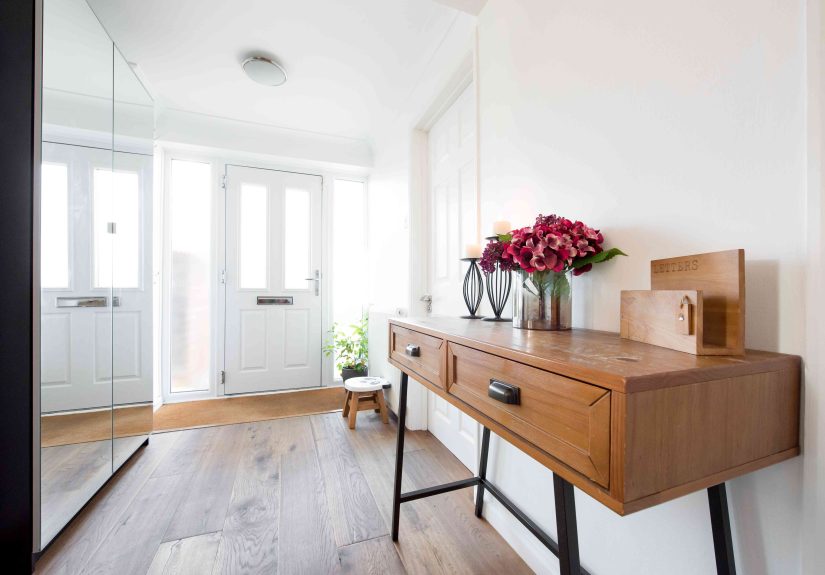
This is where a narrow console, a bench with storage, a wall shelf, or a few labeled baskets can work wonders. The point is not fancy furniture. The point is clarity. If every item has a landing spot, fewer things end up dumped on the floor or scattered across surfaces.
2. Use vertical space like a pro
When floor space is limited, go up. Hooks, wall-mounted shelves, peg rails, over-the-door organizers, and slim wall bins can turn a cramped entry into a surprisingly functional one. Vertical storage is especially helpful in small homes, apartments, and homes without a formal foyer.
Hooks deserve a special shout-out because they do the impossible: they make people more likely to hang things up. Coats, hats, umbrellas, tote bags, and dog leashes all behave better when there is an obvious place to put them.
3. Choose closed storage whenever possible
Open storage can look charming in photos, but in real homes, closed storage often wins the beauty contest. A cabinet, drawer, lidded basket, or bench with hidden storage reduces visual clutter instantly. This matters because even neatly stored items can still make a space look busy when they are fully visible.
If you love the look of open shelving, be selective. Limit it to a few attractive baskets or a tray for essentials. Do not let every practical item star in the show.
4. Add one catch-all, not seven
A tray or bowl for keys, sunglasses, earbuds, and loose change is smart. Seven little dishes holding random odds and ends is not. The best entryway storage ideas contain the small stuff without multiplying containers until the containers become the clutter.
5. Make paper processing immediate
Mail should have a tiny system, not a dramatic arc. Recycle junk mail right away. Put urgent papers in one designated file or slot. If you have kids, create one simple folder for school forms that need action. Paper becomes overwhelming when it is undecided. Your job is to make quick decisions at the door.
6. Edit the space by season
Your entryway should change as your life changes. Winter may need boots, gloves, and a tray for wet shoes. Summer may need sun hats, sunscreen, and beach totes. Seasonal rotation keeps this area from becoming a storage locker for all weather, all hobbies, and all possibilities at once.
7. Do a five-minute nightly reset
This is the habit that keeps everything from unraveling. Every evening, put shoes back, toss junk mail, hang coats, clear stray bags, and reset the tray. Five minutes is enough. This is not deep cleaning. It is simply returning the entryway to “ready for tomorrow” mode.
Small Entryway? These Ideas Still Work
You do not need a grand foyer, a mudroom, or custom built-ins to make this system work. Some of the smartest decluttering tips are designed for the tiniest spaces.
If your front door opens directly into the living room, create a visual entryway with a slim table, a small wall shelf, or a narrow shoe cabinet. Add hooks nearby and a washable rug or boot tray underneath. That small setup is enough to signal, “This is the landing zone.”
If you have a hallway instead of a foyer, use wall-mounted storage to keep the footprint shallow. Floating shelves, hooks, and an over-the-door organizer can handle a surprising amount without blocking traffic.
If you live with kids, lower hooks and baskets make a huge difference. Organization works better when people can actually reach the system. If you live with pets, keep a lidded bin or basket for leashes, wipes, and waste bags. The entryway should match the people and creatures who actually use it.
Mistakes That Make the Entryway Look Messy Again
Even good intentions can turn into clutter if the setup is off. Watch for these common mistakes:
- Keeping too much at the door: Only daily essentials should live here.
- Using the floor as storage: If it sits on the floor, it will usually multiply.
- Skipping a mail system: Paper without a plan becomes a paper problem.
- Adding storage without decluttering first: Containers cannot organize excess you do not need.
- Choosing pretty over practical: If the bench is too delicate for backpacks and the tray is too tiny for keys, the system will fail beautifully.
The trick is to keep the entryway streamlined, not overdesigned. Think functional, simple, and easy to maintain. The best entryways are not necessarily the fanciest ones. They are the ones that quietly make life easier.
A Simple 20-Minute Reset to Make Your Home Look Better Fast
If your entryway is currently giving “we just moved in yesterday” energy, do not panic. You can make a noticeable difference quickly.
- Take everything out or off the surface.
- Throw away trash and recycle obvious paper clutter.
- Remove anything that belongs in another room.
- Limit shoes and coats to what you use now.
- Assign homes for keys, bags, mail, and daily grab-and-go items.
- Put back only what earns a place.
- Add one container for small items and one solution for shoes.
That is it. No dramatic makeover required. Just a smarter system. In many homes, organizing this one spot creates the fastest visible improvement because it eliminates clutter at the source.
What It Feels Like When This Spot Finally Works: Real-Life Experiences From Everyday Homes
There is something almost magical about fixing the entryway, and not in a glitter-and-fairy-dust way. More like in a “Wait, why does my whole house suddenly seem calmer?” way. People often expect the biggest transformation to come from redoing a pantry or color-coding a closet, but the entryway has a different kind of power. It changes the mood of coming home.
Picture the usual scene before the reset. You walk in carrying a bag, your phone, maybe groceries, maybe a coffee you forgot you were still holding. Shoes are scattered near the door. A jacket is hanging off a chair because the actual hook is buried. There is a pile of unopened mail that gives you side-eye every time you pass it. One child cannot find a backpack. Someone else is asking where the keys are. The dog leash has disappeared into a mysterious crack in the universe. Nobody is technically doing anything wrong, but the whole moment feels noisy.
Now picture the same arrival after the entryway is organized. You open the door and there is a clear place to set your bag. Keys go into a tray without a second thought. Shoes slide into a cabinet or line up on a mat instead of drifting across the floor like tumbleweeds. Jackets hit hooks. Mail lands in one file, not in six emotional locations throughout the house. The room has not become larger, but it feels larger. You have not become a different person, but you feel slightly more competent, which is honestly a lovely perk.
Many people also notice a ripple effect. When the entryway is under control, the kitchen counter stays clearer because paper and keys are not migrating there. The living room looks more put together because backpacks and shopping bags are not being abandoned on the sofa. Mornings feel less frantic because the things you need to leave the house are actually where they are supposed to be. It is one of those changes that seems small until you live with it for a week, and then you cannot imagine going back.
There is also a quiet emotional benefit. An organized entryway creates a soft landing at the end of the day. Instead of being greeted by disorder, you are greeted by a space that says, “We have this handled.” That might sound dramatic for a bench and a few hooks, but anyone who has ever come home exhausted to a mountain of clutter knows this is no small thing. Home should not feel like a visual to-do list the second you walk in.
And no, it does not stay perfect every hour of every day. Real homes still have rainy shoes, stray backpacks, and the occasional rogue package. But when there is a system, the mess is temporary instead of constant. That is the real win. The entryway stops being a daily ambush and starts acting like what it should have been all along: a transition space that helps your home feel welcoming, functional, and wonderfully less chaotic.
Final Takeaway
If one area can make your whole house look cluttered, it is the entryway. That is not bad news. It is useful news. Instead of feeling like you need to organize every drawer, shelf, and closet in one giant burst of motivation, start where the clutter announces itself loudest. Create zones. Limit what stays there. Use vertical and closed storage. Reset it daily. When this one spot works, the rest of your home has a much better chance of looking tidy too.
In other words, if your entryway is the chaos gremlin of the house, it may be time for a gentle intervention.