Table of Contents >> Show >> Hide
- Why India’s Moon Landing Was Such a Big Deal
- What Chandrayaan-3 Actually Did
- Why the Moon’s South Pole Is the Hottest Cold Spot in Space
- The Engineering Behind the Win
- What Vikram and Pragyan Found on the Moon
- What the Landing Meant for India
- What the Landing Meant for the World
- Conclusion: A Landmark Mission With Long-Term Consequences
- Related Experiences: What This Moon Landing Felt Like on Earth
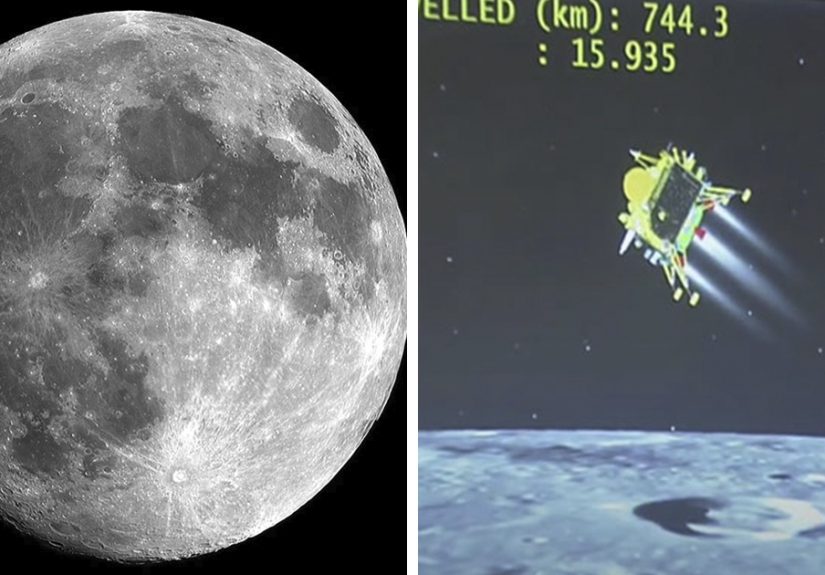
History does not always arrive with a drumroll. Sometimes it shows up with telemetry, tense engineers, and a rover the size of a very ambitious coffee table. On August 23, 2023, India made global space history when Chandrayaan-3 landed near the moon’s south pole, becoming the first country ever to pull off a successful soft landing in that region. That is the kind of sentence that makes science nerds sit up straighter and everyone else say, “Wait, the moon has neighborhoods now?”
It was a huge moment for India, for lunar exploration, and for the growing idea that world-class space missions do not always need world-record budgets. To be precise, Chandrayaan-3 landed in the moon’s south polar region, not exactly on the geographic pole itself. But the achievement still changed the conversation around modern space exploration. India became only the fourth nation to achieve a soft landing on the moon, joining a very small club that previously included the United States, the former Soviet Union, and China.
This was not just about planting a flag in the lunar dust and taking a victory lap in zero atmosphere. The mission mattered because the moon’s south polar region is one of the most scientifically valuable and strategically important places in space. It may hold water ice inside permanently shadowed craters, and that makes it a prime target for future science missions, human exploration, and long-term lunar infrastructure. In other words, this was not a sightseeing trip. It was a meaningful step into the next era of moon exploration.
Why India’s Moon Landing Was Such a Big Deal
The headline sounded simple enough: India lands on the moon. But the full story was much more impressive. Landing on the moon is hard. Landing near the south pole is harder. The terrain is rough, lighting conditions are tricky, temperatures are extreme, and the region is less forgiving than the smoother areas targeted by many earlier lunar missions. It is the difference between parking in an empty suburban lot and parallel parking on an icy hill during a power outage.
That is why Chandrayaan-3 was more than a technical success. It was proof that India’s space program had learned from earlier setbacks, refined its landing systems, and delivered under global scrutiny. The mission came just four years after Chandrayaan-2, India’s previous moon landing attempt, which reached lunar orbit successfully but failed during the final descent in 2019. Chandrayaan-3 was the comeback story engineers dream about and probably rehearse in the shower.
The landing also reshaped India’s standing in the space world. India had already earned respect for cost-effective and technically bold missions, including its Mars Orbiter Mission. But a successful lunar landing near the south pole signaled something even bigger: India was not merely participating in the new space age. It was helping define it.
What Chandrayaan-3 Actually Did
From Launch Pad to Lunar History
Chandrayaan-3 launched on July 14, 2023, from the Satish Dhawan Space Centre in Sriharikota, India. Rather than taking a fast and fuel-hungry route, the spacecraft followed an energy-efficient path that gradually expanded its orbit around Earth before heading toward the moon. This slower trajectory took roughly 40 days, but it helped keep costs down and demonstrated smart mission planning.
The mission included three major components: a propulsion module, the Vikram lander, and the Pragyan rover. The propulsion module carried the lander-rover package to lunar orbit. Vikram was designed to make the soft landing. Pragyan, the rover, was tasked with rolling down a ramp and exploring the surface nearby.
On August 23, Vikram descended successfully and touched down in the south polar region. That was the world-first moment. Soon after, Pragyan rolled onto the lunar surface, officially giving India both a lander and a mobile robotic explorer operating in one of the moon’s most challenging environments.
A Mission That Balanced Ambition and Efficiency
One reason Chandrayaan-3 drew so much attention was its relatively modest cost. Reports widely placed the mission budget at about $75 million, which made it look downright thrifty by spaceflight standards. No, that does not mean moon landings are cheap. It just means India has become very good at building capable missions with disciplined engineering and tight budgets.
That efficiency matters because it changes how people think about access to space. Chandrayaan-3 showed that sophisticated lunar exploration is not reserved only for the biggest spenders. It also showed that careful systems engineering, smart design choices, and institutional learning can turn a previous failure into a historic success.
Why the Moon’s South Pole Is the Hottest Cold Spot in Space
Scientists and space agencies are deeply interested in the moon’s south pole for several reasons. The biggest one is water ice. Inside permanently shadowed craters, sunlight never reaches the surface, allowing frozen water to potentially remain stable for extremely long periods. That water matters for science because it may preserve clues about the early solar system. It also matters for future missions because water can be used for drinking, breathable oxygen, and even rocket fuel after processing.
The south polar region also features peaks that receive relatively steady sunlight compared with many other lunar locations. That makes the broader region especially appealing for future robotic and human operations that rely on solar power. Put those two facts together, possible ice and useful sunlight, and you get the lunar equivalent of prime real estate.
That is one reason space agencies around the world have increasingly focused on this region. NASA’s Artemis program has long emphasized the south pole for future human exploration. Other countries and commercial teams have also eyed the area. India did not just arrive at an interesting place. It arrived first in a place that many others had already circled on the cosmic map.
The Engineering Behind the Win
Chandrayaan-3 succeeded because ISRO did not treat Chandrayaan-2 as an embarrassment to hide. It treated it as a lesson to study. After the 2019 landing failure, Indian engineers revised software, strengthened landing legs, improved hazard detection and guidance systems, and built greater tolerance into the final descent sequence.
That matters because moon landings are a brutal test of precision. A spacecraft has to slow down from orbital speeds, evaluate the landing zone, maintain stable orientation, and touch down gently on a surface with no atmosphere to help. There is no dramatic parachute moment. There is no aerodynamic forgiveness. It is all engines, sensors, navigation logic, and nerves.
Chandrayaan-3’s controlled descent showed that India had closed the gap between lunar ambition and lunar execution. The mission also demonstrated a broader truth about exploration: failure is expensive, public, and painful, but it can still be useful if a program learns fast and fixes what broke. In this case, it absolutely did.
What Vikram and Pragyan Found on the Moon
Chandrayaan-3 was designed as both a technology demonstration and a science mission. The lander and rover operated for about one lunar day, roughly 14 Earth days, before the harsh lunar night set in. During that window, they collected valuable measurements from the surface and near-surface environment.
One of the most discussed results came from Pragyan, which confirmed the presence of sulfur on the lunar surface through in-situ measurements. The rover also detected several other elements, including aluminum, calcium, iron, chromium, titanium, manganese, oxygen, and silicon. That elemental data helps scientists better understand the composition and geological history of the region.
The Vikram lander also carried instruments to study the local environment. It measured temperature variations in the upper layer of the lunar surface, gathered information on near-surface plasma, and contributed data related to seismic activity. Later mission summaries indicated the rover traveled roughly 100 meters around the landing site, collecting data along the way.
These were not flashy findings in the Hollywood sense. No little green aliens popped out to say hello. But scientifically, the mission delivered exactly what a smart lunar mission should: original, location-specific information from an area that had never before hosted a successful landing.
What the Landing Meant for India
For India, Chandrayaan-3 was a scientific achievement, a geopolitical statement, and a national morale boost all at once. It showcased the maturity of ISRO, highlighted India’s rising technological capabilities, and gave the country a defining success story in front of a global audience.
It also had a cultural effect. The landing was widely celebrated across India, and the mission’s engineers became household names in ways that rarely happen outside sports or entertainment. Students saw scientists as national heroes. That matters more than people sometimes realize. A successful mission does not just generate data. It generates ambition.
The mission also strengthened India’s credibility as a major player in future international space efforts. Countries looking for reliable partners in launch, planetary science, and cost-conscious engineering have one more reason to take India seriously. Not politely serious. Actually serious.
What the Landing Meant for the World
Globally, Chandrayaan-3 underscored that the moon is no longer the exclusive playground of Cold War superpowers. The new lunar era is more crowded, more collaborative, and more commercially active. In this landscape, India’s success was a reminder that innovation is distributed more widely than many old assumptions suggested.
The mission also added urgency to the global race for lunar science and exploration. If the south polar region really does hold accessible ice and other valuable resources, then early missions to that region will help shape scientific priorities, operational norms, and future infrastructure. India’s landing did not settle that future, but it absolutely gave India a stronger voice in it.
And perhaps most importantly, Chandrayaan-3 made space exploration feel fresh again. Not because the moon is new, but because the cast of major actors is expanding. That is good for science, good for competition, and good for everyone who enjoys seeing impossible things become engineering problems with deadlines.
Conclusion: A Landmark Mission With Long-Term Consequences
India’s successful landing near the moon’s south pole was not a one-day headline destined to float off into the void. It was a milestone with lasting consequences. Chandrayaan-3 proved that India could achieve a precise lunar landing in one of the most difficult regions on the moon. It delivered scientific results, restored momentum after a prior setback, and expanded the map of who gets to lead in deep-space exploration.
If the next decade becomes the era when humanity returns to the moon in a serious, sustained way, Chandrayaan-3 will be remembered as one of the missions that helped open that chapter. Not bad for a spacecraft that quietly arrived, touched down, and changed the lunar conversation forever.
Related Experiences: What This Moon Landing Felt Like on Earth
The story of Chandrayaan-3 is not only about propulsion modules, descent algorithms, and sulfur readings. It is also about the human experience of watching a country do something that had never been done before. For millions of people, the landing felt like one of those rare public moments when science stopped being abstract and became emotional. Schools streamed the descent. Families watched on phones and televisions. Engineers sat in control rooms trying to look composed while history tap-danced on their blood pressure.
For students, especially in India, the mission felt personal. Here was a lunar landing led not by a distant sci-fi fantasy, but by scientists who looked familiar, spoke familiar languages, and worked through a space agency that many had grown up hearing about. The message landed almost as hard as the spacecraft did: you do not have to be born inside a superpower myth to help write the future of space exploration.
For the Indian diaspora, the experience was different but just as powerful. It was a moment of pride that traveled instantly across time zones. Social media filled with reactions from people who had one eye on the livestream and the other on group chats exploding with flag emojis, exclamation points, and the digital equivalent of happy screaming. The landing became a shared event across continents, a scientific achievement that also felt cultural and deeply communal.
For space enthusiasts everywhere, the mission delivered the kind of suspense only real exploration can provide. A moon landing is not a guaranteed spectacle. It is a high-risk sequence where years of planning can unravel in minutes. That tension made the success more satisfying. Viewers were not watching a scripted ending. They were watching engineering fight gravity in real time.
For scientists and mission planners outside India, the experience was probably a mix of admiration and professional note-taking. Chandrayaan-3 offered a case study in resilient program design, disciplined budgeting, and iterative improvement after failure. It reminded the global space community that prestige missions still depend on fundamentals: rigorous testing, smart adjustments, and calm execution when the world is watching.
There was also a more universal feeling attached to the landing, one that had less to do with nationality and more to do with perspective. In a world usually crowded with noisy headlines, Chandrayaan-3 gave people a reason to look up again. Not metaphorically. Actually up. It brought the moon back into everyday conversation and made lunar exploration feel less like a relic of the Apollo era and more like a living, ongoing project with new participants and new stakes.
That may be one of the mission’s most valuable legacies. Beyond the hardware and the headlines, Chandrayaan-3 created an experience of possibility. It showed that science can still unite huge audiences, that engineering can still inspire awe, and that the moon still has the power to make humanity feel both tiny and wildly capable at the same time. That is a hard combination to beat.