Table of Contents >> Show >> Hide
- Why a Measurement Microphone Is Different From a Normal Mic
- What “Lab-Grade” Really Means
- How Cheap Can You Go and Still Get Real Results?
- Examples From the Real World
- The DIY Dream: Can You Build a Lab-Grade Mic for Pocket Change?
- USB or XLR: Which One Makes More Sense?
- How to Get Accurate Measurements Without Spending Like a Mad Scientist
- So, Is a Cheap Measurement Mic “Lab-Grade” or Just Audio Clickbait?
- Extended Practical Experience: What Using a Budget Measurement Mic Actually Feels Like
- SEO Tags
If you have ever tried to measure a speaker, tame a boomy room, or figure out why your “perfectly placed” monitors somehow sound like they are arguing with the walls, you already know a painful truth: your ears are brilliant, but they are also drama queens. They get tired, they get fooled, and they absolutely fall for a flattering frequency bump like it is a clearance sale at a vintage hi-fi shop. That is why a good measurement microphone matters.
The surprising part is not that serious audio people use measurement microphones. The surprising part is that you no longer need a wallet with private-jet tendencies to get one that is genuinely useful. A lab-grade microphone used to sound like the sort of thing that came in a foam-lined case with a calibration certificate, three warning labels, and a price tag hefty enough to cause emotional damage. Today, affordable measurement mics can get astonishingly close for room tuning, speaker design, system alignment, and studio correction. The trick is knowing what “close” really means, and where the cheap heroes stop being heroes.
Why a Measurement Microphone Is Different From a Normal Mic
A regular studio microphone is often designed to flatter a source. It may add sparkle to a vocal, weight to a kick drum, or a little glow to an acoustic guitar. In other words, it is allowed to have opinions. A measurement microphone is supposed to be the opposite. It should be boring in the best possible way: flat, consistent, omnidirectional, and trustworthy.
That flat response matters because the whole point of a measurement mic is to tell you what the speaker or room is doing, not what the microphone feels like adding to the conversation. If the mic has a big high-frequency lift, you may “correct” a problem that does not exist. If it rolls off the low end too early, you may conclude your subwoofer is behaving when it is actually staging a small rebellion. In measurement work, boring equals honest, and honest is beautiful.
Omnidirectional pickup is also a big deal. In room analysis and speaker measurement, you want a microphone that does not dramatically change its behavior depending on angle. That makes it better suited to capturing the overall acoustic picture without the directional color that many recording mics intentionally use. Think of it this way: a cardioid vocal mic is a spotlight, while a measurement mic is a floodlight with a clipboard.
What “Lab-Grade” Really Means
Flat response is only the beginning
People love the phrase lab-grade because it sounds precise, scientific, and expensive enough to impress your friends. In reality, it covers a spectrum. At the top end are true laboratory and standards-oriented microphones built to extremely tight tolerances, with rigorous calibration procedures and documented performance. Those are the real aristocrats of the category.
Below that are measurement and reference microphones that are accurate enough for demanding real-world work: speaker design, room correction, sound-system alignment, acoustic analysis, and production monitoring. These are often what people really mean when they say “lab-grade for cheap.” They do not necessarily replace formal standards microphones in every measurement chain, but they can be startlingly capable.
Calibration files are the secret sauce
The microphone itself matters, of course, but the calibration file is where the magic gets less magical and more mathematical. Good measurement mics increasingly come with an individual correction file tied to the exact unit’s serial number. That file compensates for the tiny response deviations unique to that specific microphone.
This is a huge distinction. A generic “average” response curve is nice. An individual correction file is better. A serial-number-specific file tells your software, “Yes, this particular microphone is a little enthusiastic at one frequency and a touch lazy at another. Please fix that before the human makes a bad decision.” Without that, you are trusting the family resemblance when you really want the exact fingerprint.
Noise floor, max SPL, and consistency matter too
An affordable mic can look impressive on paper and still trip over its own shoelaces in actual use. Self-noise matters when you are measuring quiet rooms, long decays, or low-level detail. Maximum SPL matters when you are analyzing loud systems, especially live sound rigs that can produce peaks far higher than their average levels suggest. Consistency matters because a mic that varies too much from unit to unit becomes a guessing game wearing a lab coat.
This is why “cheap but calibrated” can sometimes beat “more expensive but vague.” It is also why some low-cost mics are fantastic for room-response measurements at sane levels but not the right pick for critical concert-level SPL work. Audio, as always, is here to remind us that context is king and spec sheets are not sacred scripture.
How Cheap Can You Go and Still Get Real Results?
The good news is that the entry point is much lower than many people expect. There are budget measurement microphones that are completely legitimate tools for hobbyists, home-theater tweakers, studio owners, educators, and even plenty of working pros who need a practical second mic or a dependable utility option.
At the lower end, you will find models designed for room analysis and system tuning that deliver flat-enough response for real use, often with individual calibration data and straightforward compatibility with common software. Some are USB-based and beautifully simple: plug them in, load the file, and start measuring. Others use XLR and phantom power, which adds one more box to your setup but often gives you more flexibility with interfaces, analyzers, and professional workflows.
As you move up the ladder, you get better consistency, broader frequency response, lower self-noise, cleaner impulse behavior, tighter tolerances, and sometimes more complete calibration support. The jump from bargain-basement to solid entry-level is usually dramatic. The jump from solid entry-level to premium is more subtle but meaningful if your work is demanding enough.
That is the key truth: the first hundred dollars or so can buy you a real instrument. The next few hundred buy you confidence, repeatability, and fewer “wait, is that the room or the mic?” moments. Past that, you are paying for precision, stability, broader use cases, and sometimes the right to sound smug in an acoustics lab.
Examples From the Real World
Affordable XLR models such as the Dayton Audio EMM-6, Behringer ECM8000, and other entry-level omni condensers have become staples because they are useful, accessible, and far more competent than their modest price tags suggest. They are common in room EQ, DIY speaker development, and acoustic troubleshooting. When paired with the correct calibration data, they can produce very respectable results.
Move into the middle tier and you find microphones like the Audix TM1 and similar models that push harder on consistency, bandwidth, and overall confidence. These are often the sweet spot for people who are serious enough to care, but not yet serious enough to mortgage a synthesizer. They are the audio equivalent of buying the good torque wrench instead of using vibes and optimism.
At the higher end, Earthworks measurement microphones and other premium references show what the extra money buys: wider linear response, exceptionally consistent omni behavior, robust individual calibration support, and cleaner data when you are doing demanding work. They are a reminder that premium tools earn their keep. They are also a reminder that not everyone needs one to fix a 70 Hz room hump in a spare bedroom studio.
Meanwhile, some budget-oriented pro-audio options prove that price is not the whole story. Rational Acoustics, for example, makes it very clear that a microphone can be budget-friendly and still useful, while also being honest about its limitations for high-level SPL work. That kind of honesty is refreshing. In audio, the most expensive thing is often false confidence.
The DIY Dream: Can You Build a Lab-Grade Mic for Pocket Change?
This is where things get fun. The answer is: kind of, sometimes, with caveats large enough to need their own microphone stand.
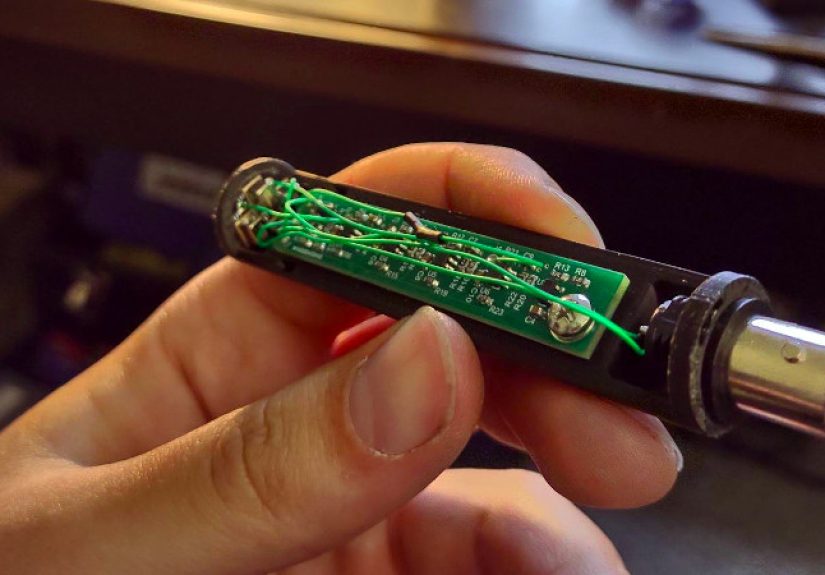
A memorable example came from a DIY design built around an array of MEMS capsules, highlighted for delivering performance that compared surprisingly well with a commercial measurement microphone. One especially clever part of the concept was the use of four capsules to help cancel induced electrical noise. That is catnip for audio nerds, and rightly so. It shows that thoughtful design, modern capsule technology, and a little engineering stubbornness can produce impressive results without premium-brand pricing.
But DIY also exposes the hard part: making a decent microphone is only half the battle. Proving exactly how accurate it is, across frequency, angle, level, and time-domain behavior, is the other half. Shielding, capsule spacing, enclosure design, preamp behavior, calibration procedure, and long-term consistency all matter. A project can be brilliant, educational, and useful without instantly replacing a commercial reference microphone.
So yes, the DIY route is real. It can be remarkably good. It can also become a rabbit hole lined with solder fumes, calibration questions, and the humbling realization that your “simple weekend project” now involves transfer functions and shielding geometry. Audio has jokes, and sometimes you are the punchline.
USB or XLR: Which One Makes More Sense?
USB is the convenience champion
USB measurement mics are popular for a reason. They reduce variables, skip the need for a separate preamp, and work beautifully with software-driven room correction and analysis. For home users, studio owners, and AV hobbyists, USB can be the fastest route from box to useful graph. That simplicity is not trivial. The easier a tool is to use correctly, the more likely it is to produce good data.
XLR is the grown-up toolbox option
XLR microphones require phantom power and an interface or analyzer input, but they offer more flexibility. They fit into pro workflows more naturally, let you choose your front end, and can be used across different systems. If you are doing live sound, deeper acoustic work, or anything that benefits from swapping interfaces and preamps, XLR is often the better long-term choice.
Neither format is automatically “more accurate”
The format is not the whole story. A good USB mic can outperform a mediocre XLR mic. A solid XLR chain can outperform a noisy or limited USB implementation. What matters is the total system: capsule quality, calibration support, self-noise, headroom, software compatibility, and whether you actually use the thing instead of letting it become a very honest paperweight.
How to Get Accurate Measurements Without Spending Like a Mad Scientist
Even the best budget measurement microphone cannot save you from sloppy workflow. The microphone is the witness, not the magician. If you want useful data, you need useful habits.
First, measure more than one position. Room-correction workflows increasingly recommend multiple mic positions because a single sweet-spot reading can be misleading. One measurement tells you what happened in one exact place. Several measurements tell you what the room is doing more broadly. That is a much better basis for correction.
Second, disable any active DSP, EQ, sound enhancements, or hidden interface tricks during measurement. If your speakers or interface are already applying processing, your measurements are not showing the raw system. They are showing the system after somebody else has already scribbled on the test paper.
Third, control obvious reflections and clutter. A giant reflective object between speakers can throw off results. So can odd desk setups, badly placed monitors, and unnecessary obstacles near the mic position. No, your lava lamp is not a certified acoustic treatment device.
Fourth, match the mic to the job. A budget mic with modest SPL handling may be excellent for small-room tuning but a poor choice for loud live-system SPL measurement. Likewise, an extremely sensitive premium mic can overload the wrong preamp at very high levels. Accurate measurement is not just about the microphone. It is about the microphone behaving properly inside a complete signal chain.
So, Is a Cheap Measurement Mic “Lab-Grade” or Just Audio Clickbait?
The honest answer is both less glamorous and more useful than the marketing version. A cheap measurement microphone can absolutely be a serious tool. It can help you tune a room, verify a speaker response, troubleshoot acoustic problems, improve mix translation, and make better decisions faster. For many users, it is all the microphone they will ever need.
But true laboratory-grade performance is not only about being flat enough. It is about tolerances, calibration traceability, consistency, confidence under varied conditions, and knowing exactly what the instrument is doing. That level still costs money, and for good reason.
The sweet spot, then, is not pretending a $60 microphone is secretly a metrology unicorn. The sweet spot is realizing that modern affordable measurement microphones are astonishingly good, especially when individually calibrated and used properly. They are not toys. They are not miracles. They are smart buys.
And in a hobby full of overpriced cables, mystical adjectives, and enough mythology to power a small fantasy franchise, a smart buy deserves a standing ovation.
Extended Practical Experience: What Using a Budget Measurement Mic Actually Feels Like
The real experience of using a budget measurement microphone is usually less cinematic than people imagine, but far more revealing. The first surprise is how quickly it changes your relationship with your room. You start out hoping the mic will confirm that your speakers are basically fine and your setup is “pretty close.” Then you run your first sweep and the graph politely informs you that your room has the acoustic discipline of a raccoon in a snack aisle.
That is not a failure. That is the point. A good affordable measurement mic does not make your room better by itself; it makes the truth harder to ignore. Suddenly you can see the low-end bump caused by a wall boundary, the ugly cancellation around the listening position, or the top-end weirdness caused by a desk reflection. What sounded like vague annoyance becomes visible. Once that happens, your decisions get faster and more rational. Move the speakers. Move the chair. Kill the hidden DSP. Measure again. Repeat until the graph stops looking like a mountain range drawn during a coffee tremor.
Another common experience is discovering that calibration files are not optional paperwork. The first time you load the correct file for a serial-numbered mic and compare it with an uncorrected reading, you understand why experienced users care so much about this step. A budget mic can feel suddenly more grown-up. It is the audio equivalent of putting on prescription glasses after insisting for years that road signs were supposed to be abstract art.
USB models tend to feel friendlier for beginners because they remove some setup friction. You plug them in, point them where the software tells you, and start learning. XLR mics feel more like tools from the wider pro-audio world: a bit less convenient, a bit more flexible, and slightly more likely to expose weak links elsewhere in your chain. Neither experience is wrong. They just fit different temperaments. Some people want fewer variables. Some people want more control. Audio people, naturally, often want both, plus a new interface they definitely did not need.
What really sticks with most users is how much the mic teaches humility. People often expect the expensive speakers or fancy acoustic panels to do the heavy lifting. But once the measurements begin, the practical lessons are usually smaller and less glamorous: a few inches of repositioning matter, symmetry matters, reflections matter, and assumptions are cheap. An affordable measurement mic becomes valuable not because it feels luxurious, but because it reduces the number of dumb mistakes you can make with total confidence.
That is why these microphones punch above their price. They are not exciting in the way a new synth, compressor, or pair of monitors is exciting. They are exciting in the way a flashlight is exciting when the power goes out. Suddenly, you can see what is actually there. And once you can see it, better sound stops being a mystery and starts becoming a process.