Table of Contents >> Show >> Hide
- What sparked the outrage (and why people were furious)
- Why this kind of stunt goes viral so fast
- What’s wrong with calling people a “cannibal tribe”
- The real risks creators ignore (because they’re busy chasing views)
- Consent isn’t a vibe: it’s the whole point
- What platforms and brands have to do with it
- How to create travel content without being a walking cautionary tale
- A viewer’s guide: how to watch without rewarding exploitation
- Conclusion: the internet isn’t a jungle, and people aren’t props
- Extra: 5 Real-World “Experience” Lessons From the Content-Chasing Era (About )
If you’ve spent more than 11 seconds on TikTok, you already know the platform runs on three fuels: curiosity, outrage, and that one song you didn’t ask to hear 400 times.
So when an influencer posted a “remote tribe” encounter and slapped the label “cannibal tribe” on it for maximum shock value, the internet did what the internet does:
it lit up like a ring light at golden hour.
But the backlash wasn’t just performative finger-wagging. Critics argued the stunt turned real people into a horror-movie prop, recycled harmful stereotypes about Indigenous communities,
and encouraged a brand of “content safari” tourism that can cause lasting damage. In other words: it wasn’t just cringe. It was a case study.
What sparked the outrage (and why people were furious)
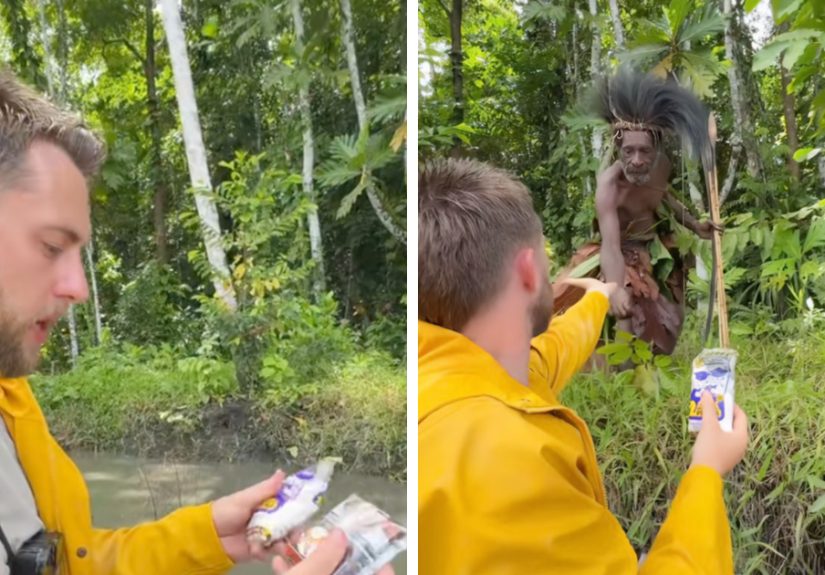
The controversy followed viral clips showing an influencer approaching an Indigenous community in Papua, Indonesia, framing the encounter as a risky brush with a so-called “cannibal tribe.”
Viewers called out the video’s framing as dehumanizing, misleading, and exploitativeespecially because it treated a community’s home like a set for a fear-based stunt.
A big part of the backlash centered on the label itself. “Cannibal tribe” isn’t a neutral descriptionit’s a loaded trope that’s been used for centuries to paint Indigenous people as
dangerous, primitive, or less than human. Even if the creator intended it as “edgy humor,” the punchline landed on the people being filmed.
Why this kind of stunt goes viral so fast
1) Algorithms reward extremes
Social platforms don’t just show you what’s “good.” They show you what keeps you watching. And nothing keeps people watching like a cliffhanger:
Will they be welcomed? Will they be chased? Will someone do something wildly irresponsible on camera?
The more intense the emotionfear, anger, disgust, awethe more likely viewers are to watch longer, comment, and share.
2) TikTok has become a news feed (whether we like it or not)
Many peopleespecially younger usersnow regularly get news on TikTok. That means viral creator drama and ethically messy “adventure” content
doesn’t stay in a niche corner of the internet. It spreads like glitter in a minivan: everywhere, forever, and impossible to fully clean up.
3) The “lost tribe” fantasy sells
There’s a long-running pop-culture obsession with “untouched,” “unknown,” or “forbidden” places and people. The influencer packaging is modern,
but the fantasy is old: the outsider arrives, narrates the “danger,” and becomes the hero of someone else’s story. It’s reality TV energyexcept the
“set” is a community’s actual life.
What’s wrong with calling people a “cannibal tribe”
It’s not just inaccurateit’s historically weaponized
Accusations of cannibalism have often been used to justify conquest, forced “civilizing,” and violence. When a creator uses “cannibal” as a hook,
they’re not just picking a spicy adjective. They’re tapping into a history of dehumanization that made exploitation easier to sell to the public.
It’s selective outrage with a short memory
Here’s the irony: documented cases of cannibalism in history include desperate survival cannibalism among European colonists (yes, really).
But the modern “cannibal” stereotype tends to be projected outwardonto people who already face misrepresentation.
If you’re going to talk about a taboo honestly, you can’t pretend it belongs to one kind of people.
It reduces human beings to a horror label
Even when viewers realize the framing is sensational, the clip still plants an image: “Those people are scary.” That kind of stigma can follow a group for years,
affecting how outsiders treat them and how their land and rights are discussed. The internet may move on, but communities don’t get to “log off.”
The real risks creators ignore (because they’re busy chasing views)
1) Disease transmission and public health harm
Contactespecially uninvited contactcan expose isolated communities to illnesses outsiders barely think about anymore. Infectious disease risk is one of the biggest
dangers tied to intrusion into highly isolated Indigenous populations. What looks like “just a quick clip” can become a serious health threat.
2) Violence and escalation
When outsiders enter a community’s territory without permission, people may respond defensively. That can endanger both the visitors and the community.
And even if no one gets hurt in the moment, the encounter can encourage copycatsmore boats, more cameras, more pressure.
3) Cultural disruption and exploitation
Filming can disrupt daily life, invite unwanted tourism, and create incentives for “performing” identity for outsiders. Sometimes that’s framed as harmless
“they’re just showing traditions”but there’s a difference between community-led cultural tourism and content creators extracting moments for clicks.
Control matters. Consent matters. Context matters.
4) Legal risk (and not just for the influencer)
Many places have restricted zones and legal protections meant to keep outsiders away from vulnerable communities. People have been arrested for attempting
to contact isolated tribes in other regions, precisely because governments recognize the danger of intrusion. Your “adventure” can quickly become
“international incident,” minus the fun soundtrack.
Consent isn’t a vibe: it’s the whole point
A lot of creators talk about “documenting culture,” but skip the basics: permission, understanding, and fair benefit for the people being filmed.
Ethical fields like anthropology have long emphasized “do no harm,” informed consent, and respect for the autonomy of communities and individuals.
The ethical standard isn’t “I didn’t mean it badly.” It’s “Did the people affected have real power in the decision?”
And here’s the uncomfortable truth: when a community is isolated or vulnerable, truly informed consent may be impossible to obtain safely.
If contact itself is the harm, you can’t ethically “ask first” by showing up with a camera and a grin.
What platforms and brands have to do with it
Platform rules existbut enforcement is messy
TikTok (like other major platforms) says it removes content and behavior that violates its Community Guidelines and safety rules.
The challenge is that harmful content doesn’t always look like a clear policy violation. Sometimes it looks like “travel” content,
edited with cinematic music and a caption that screams, “THIS IS INSANE.”
Brands: you don’t get to outsource ethics
If a creator is sponsored, the stakes rise. U.S. advertising rules already require clear disclosures for endorsements and material connections.
But legal disclosure is the floor, not the ceiling. Brands that fund exploitative “adventure” content risk reputational blowback
and, more importantly, they help finance harm.
How to create travel content without being a walking cautionary tale
1) Treat communities as collaborators, not content
- Ask permission before filming peopleevery time, not “once for the trip.”
- Explain how footage will be used and where it will be posted.
- Offer fair compensation when appropriate, and respect “no” immediately.
2) Skip the stereotype packaging
- Don’t use labels like “cannibal,” “primitive,” “savage,” or “untouched.”
- Don’t narrate normal human behavior like a nature documentary: “Observe the locals…” (Please don’t.)
- Focus on context: history, language, community prioritieswithout pretending you “discovered” anyone.
3) Don’t geo-tag vulnerable places
Viral location-sharing can turn a community into a tourist target. If a place is sensitive, keep details vague.
The goal is not to build a breadcrumb trail for the next clout-chaser with a drone and questionable judgment.
4) Respect “no-contact” norms and restricted areas
If a community is known to avoid contact or a region has restrictions, the ethical move is boringbut correct: don’t go.
Your audience doesn’t need that video. You don’t need that video. The community definitely doesn’t need that video.
A viewer’s guide: how to watch without rewarding exploitation
Pause before you share
Outrage-sharing still spreads the clip. If your comment is “this is awful,” you may be boosting the exact content you hate.
Consider describing what happened without reposting the video, or sharing criticism that doesn’t drive traffic to the original.
Look for Indigenous voices and context
When controversy hits, the loudest voices are often commentatorsnot the people represented. Seek out reporting and perspectives
that center Indigenous rights, consent, and safety rather than treating the story as influencer drama.
Use platform tools
Report content that encourages dangerous intrusion or harassment, and avoid engaging with creators who repeatedly turn real communities into shock content.
Algorithms notice what you linger onso don’t “hate-watch” your way into becoming the marketing department for someone else’s bad ideas.
Conclusion: the internet isn’t a jungle, and people aren’t props
The outrage over a “cannibal tribe” TikTok stunt isn’t just about one creator’s poor judgment. It’s about a broader incentive system that rewards
sensationalism, and a cultural habit of treating Indigenous communities as mysterious backdrops instead of modern people with rights, boundaries,
and agency.
Travel content can be educational, respectful, and genuinely fascinating. But it requires humility and restrainttwo traits that don’t always trend.
If the only way a video works is by dehumanizing the people in it, that’s not “adventure.” That’s exploitation with background music.
Extra: 5 Real-World “Experience” Lessons From the Content-Chasing Era (About )
Over the past few years, a pattern has become painfully familiar across travel TikTok and YouTube: the louder the “danger” framing, the faster the views.
And when the framing involves Indigenous communities, the fallout tends to hit the same checkpointspublic backlash, defensive apologies, and then
another creator trying the same formula with different scenery.
Experience lesson #1: The moment you pull out a camera, you’ve changed the room.
Travelers often describe a shift in energy the second filming startspeople who were relaxed become guarded, kids get pulled away, and conversations
turn into performances. That doesn’t automatically mean filming is wrong, but it does mean the “authentic moment” is now influenced by you.
When a creator barges in with a sensational label (“cannibal tribe,” “untouched,” “forbidden”), the camera becomes less like documentation and more like a spotlight.
Experience lesson #2: “But my guide said it was okay” is not a magic permission spell.
Ethical travel operators will tell you that a local guide can provide cultural context and introductions, but they cannot ethically override a community’s
right to refuse. In some situations, guides face pressure tooif influencers pay well, the temptation is to “make it happen.”
The smarter approach is to choose community-led tourism models where the community sets the terms, the boundaries, and the benefits.
Experience lesson #3: The internet punishes disrespect faster than it rewards nuanceso lead with nuance anyway.
Creators who rely on shock framing often discover the same thing: a viral spike can come with long-term brand damage.
Sponsors don’t love being attached to accusations of exploitation, and audiences get tired of “I didn’t mean it like that” apologies that arrive only after backlash.
Meanwhile, creators who build trustby adding context, crediting people properly, and avoiding dehumanizing hooksmay grow slower, but they tend to last longer.
Experience lesson #4: Communities remember, even if the comments section forgets.
When a clip goes viral, outsiders show up. Sometimes it’s tourists. Sometimes it’s wannabe documentarians. Sometimes it’s harassment.
Even if the original creator “moves on,” the community can be left dealing with attention they never asked for. That’s why “don’t geo-tag sensitive places”
isn’t just etiquetteit’s harm reduction.
Experience lesson #5: If you want “adventure,” try the radical act of being responsible.
The best travel experiences people talk about aren’t the ones where they scared themselves for clicks.
They’re the ones where they learnedhow a community runs a market day, how local leaders manage land, how people want to be represented,
what visitors should never do, and why. That kind of “adventure” is less cinematic, but it’s real. And it doesn’t require turning human beings into a trope.