Table of Contents >> Show >> Hide
- What Is Silicon Dioxide, Exactly?
- Why Silicon Dioxide Shows Up in Food, Supplements, and Medicine
- So, Is Silicon Dioxide Safe to Eat?
- The Important Distinction: Amorphous vs. Crystalline Silica
- What About Nanoparticles and New Safety Questions?
- Does Silicon Dioxide Build Up in the Body?
- Who Might Want to Be More Cautious?
- How to Read a Label Without Spiraling
- The Bottom Line
- Real-World Experiences and Common Consumer Reactions
- Conclusion
Silicon dioxide sounds like one of those ingredients that belongs in a chemistry lab, a robot factory, or a superhero origin story. In reality, it is much less dramatic. In food, supplements, and medications, silicon dioxide is usually there for a very boring reason: it helps powders stay free-flowing instead of turning into a stubborn brick at the bottom of a container. Glamorous? No. Useful? Absolutely.
Still, the question matters. When people spot “silicon dioxide” or “colloidal silicon dioxide” on a label, they often wonder whether it is safe to eat, whether it builds up in the body, and whether it is the same thing as the silica dust linked to lung disease. That last point is the big one, because the answer changes everything. Food-grade silicon dioxide is not the same risk story as inhaled crystalline silica dust from construction, mining, stone cutting, or industrial work.
So, is silicon dioxide safe? For most healthy people, the best evidence-backed answer is yes, when it is used in the small amounts typically found in food, supplements, and medications. But that simple answer deserves a full explanation, because chemistry loves nuance almost as much as the internet loves panic.
What Is Silicon Dioxide, Exactly?
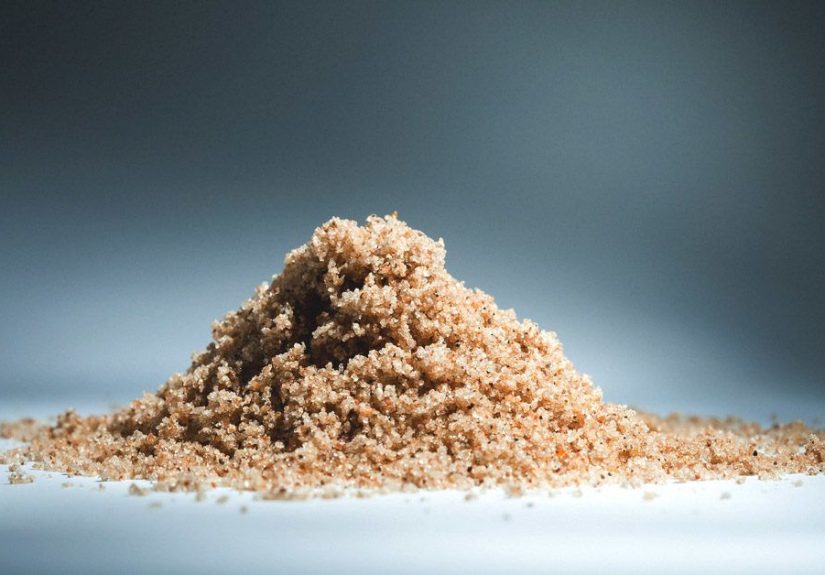
Silicon dioxide is also called silica. It is a compound made of silicon and oxygen, and it exists naturally all over the place. Sand, quartz, and many rocks contain forms of silica. That is one reason the name can be confusing: people hear “silica” and think of industrial dust hazards, while the ingredient in food is usually a different form used for a different purpose.
In the food world, silicon dioxide is commonly used as an anti-caking agent. That means it helps keep powdered ingredients from clumping when exposed to humidity. Think powdered soup mixes, spices, seasonings, coffee creamers, grated cheese coatings, baking ingredients, and supplement powders. In tablets and capsules, it often helps improve manufacturing flow and consistency, which is why it also shows up in many medications and vitamins as an inactive ingredient.
Its job is not to make food taste better or last forever. It is more of a behind-the-scenes stage manager. It keeps ingredients moving, blending, and pouring the way they are supposed to. No applause, no spotlight, just anti-clumping heroism.
Why Silicon Dioxide Shows Up in Food, Supplements, and Medicine
If you have ever opened a spice jar and not found a solid spice boulder inside, thank an anti-caking agent. Silicon dioxide helps powdered products resist moisture absorption and stay easier to measure, mix, package, and use. That is why it can appear in seasoning blends, powdered drink mixes, baking ingredients, and some processed foods.
In supplements and medications, silicon dioxide or colloidal silicon dioxide is often used in very small amounts as an inactive ingredient. It can help powders flow through manufacturing equipment, keep tablets consistent, and reduce clumping in capsules. That matters more than most people realize. Better flow can mean more accurate dosing and more reliable production. In other words, the ingredient list may look scary, but the function is often practical and unglamorous.
That said, just because something is useful does not automatically make it harmless. Plenty of helpful substances can still cause trouble under the wrong conditions. The key question is not whether silicon dioxide exists. It is which form, how much, and how you are exposed to it.
So, Is Silicon Dioxide Safe to Eat?
For ordinary dietary exposure, the evidence is generally reassuring. In the United States, silicon dioxide is allowed for specific food uses, including as an anti-caking agent. That alone does not mean “eat all you want and live forever,” but it does mean the ingredient has been evaluated for use under defined conditions. Food regulations also limit how much can be used in food, which helps keep exposure low.
Consumer health concern often comes from mixing up two very different situations: eating tiny amounts of food-grade amorphous silicon dioxide versus breathing fine crystalline silica dust for years. Those are not interchangeable. One belongs in label-reading discussions. The other belongs in workplace safety manuals, respirator policies, and very serious occupational health conversations.
Available toxicology information on oral exposure to amorphous silica is not perfect, but it is far more reassuring than the headlines sometimes suggest. Animal studies summarized by public health agencies have found no clear evidence of major harmful effects at many oral exposure levels, including doses far higher than what most people would normally consume from food. That does not prove a magical zero-risk universe, because nothing in toxicology works that way, but it supports the view that typical dietary exposure is low-risk for the general population.
The most sensible takeaway is this: if silicon dioxide appears near the bottom of an ingredient list in a food, vitamin, or tablet, that is usually not a reason to panic. The dose is typically small, the use is technical, and the form matters.
The Important Distinction: Amorphous vs. Crystalline Silica
This is where the conversation gets real. “Silica” is not one single practical exposure category. The form matters a lot.
Amorphous silicon dioxide
This is the form most often associated with food additives, product packaging applications, toothpaste, and many commercial products. It does not carry the same well-established health profile as respirable crystalline silica dust. Public health agencies have noted that there are no known health effects from amorphous silica at the levels found in typical commercial products.
Crystalline silica
This is the version tied to serious occupational disease when fine particles are inhaled over time. Long-term exposure to respirable crystalline silica dust has been linked to silicosis, lung cancer, chronic obstructive pulmonary disease, kidney disease, and greater risk of tuberculosis. This is the major silica hazard people read about in workplace health alerts, especially in construction, mining, countertop fabrication, quarrying, sandblasting, and stone cutting.
So when someone says, “Silica causes cancer,” the missing words are usually something like respirable crystalline silica dust inhaled over long periods in occupational settings. That is a very different statement from saying a trace amount of food-grade silicon dioxide in seasoning powder is dangerous to swallow. Same family name, radically different real-world risk.
What About Nanoparticles and New Safety Questions?
This is where things get a little less settled and a little more scientific. Some food-grade silicon dioxide can include very small particles, and researchers have been studying whether nano-sized or nanostructured forms might behave differently in the digestive tract compared with larger particles. That question is not silly. Tiny particles can interact with tissues in ways that bigger particles do not, and science is still working through the details.
Recent reviews and experimental studies have raised questions about long-term exposure, intestinal barrier interactions, immune effects, microbiome changes, and tissue distribution. At the same time, the research is not clean, simple, or universally consistent. Some reviews specifically note that study quality varies, results are inconsistent, and risk assessment remains difficult. In plain English: scientists are still sorting out what matters, what does not, and which lab findings actually translate into meaningful real-world risk for people eating normal diets.
That uncertainty should not be ignored, but it should not be exaggerated either. Right now, the strongest evidence does not show that typical food-level exposure to silicon dioxide is clearly causing harm in the general population. Instead, the current picture is more like this: traditional regulatory and toxicology data are broadly reassuring for normal use, while newer nanoparticle research suggests there are still details worth studying. That is a reasonable, grown-up answer. Slightly less exciting than internet doom posts, but much more useful.
Does Silicon Dioxide Build Up in the Body?
This is one of the most common label-reader questions. Based on the available research, ordinary oral exposure appears to result in relatively low absorption, and the body does not seem to treat silicon dioxide from food like some kind of permanent houseguest that moves into the spare room and never leaves. That said, not every study agrees on every detail, and ongoing work continues to investigate how particle size, formulation, and repeated exposure affect absorption and distribution.
The practical answer for consumers is that there is currently no strong evidence showing dangerous accumulation from the small amounts typically used in foods and common inactive ingredients. Researchers are still examining the finer points, especially for nanostructured forms, but the evidence does not support the idea that every sprinkle of silicon dioxide is quietly staging a takeover.
Who Might Want to Be More Cautious?
Most people do not need to actively avoid silicon dioxide. Still, a few groups may reasonably prefer to pay more attention.
First, people who work around silica dust should care deeply about the inhalation risk, especially if they handle stone, masonry, sand, or similar materials. But that is a workplace exposure issue, not a food-label issue.
Second, people who prefer to limit highly processed foods may also reduce their silicon dioxide intake simply because this ingredient often appears in processed, powdered, shelf-stable, or manufactured products. That is not necessarily because silicon dioxide itself is dangerous, but because cutting back on ultra-processed foods can be a reasonable health strategy overall.
Third, people who are sensitive to additives in general may choose simpler formulations with shorter ingredient lists. That is more of a personal preference and product-selection choice than a hard medical rule. Sometimes peace of mind matters too, and reading labels carefully is not a crime. In fact, it is one of the few legal forms of detective work left.
How to Read a Label Without Spiraling
When you see “silicon dioxide” on a label, context is everything. Ask three questions:
What kind of product is this? If it is a spice blend, powdered supplement, tablet, or capsule, silicon dioxide is often there as a flow aid or anti-caking agent.
How much is likely present? Usually not much. These kinds of technical additives are often used in small amounts, especially when they appear low on the ingredient list.
Is this an eating exposure or an inhalation exposure? Swallowing small amounts in food is not the same as breathing fine crystalline dust over months or years.
If your concern is health, those questions will get you farther than dramatic social media claims. The ingredient name may sound industrial, but so do plenty of completely ordinary substances. Chemistry is rude like that.
The Bottom Line
For most consumers, silicon dioxide is considered safe in the small amounts typically used in food, dietary supplements, and medications. It serves a practical role, it is regulated for specific uses, and the best-established health dangers linked to silica involve inhaling respirable crystalline silica dust in occupational settings, not eating food-grade amorphous silicon dioxide.
That does not mean every question has been answered forever. Research on nanostructured forms and long-term exposure is still developing, and it is fair to watch that science with interest. But based on what is known now, finding silicon dioxide on a food or supplement label is generally not a red flag for the average person.
In other words, silicon dioxide is usually more “helpful powder babysitter” than “villain in your pantry.” Not the sexiest ingredient on earth, but probably not the one that deserves your dramatic side-eye.
Real-World Experiences and Common Consumer Reactions
One of the most interesting parts of the silicon dioxide conversation is not the chemistry. It is the human reaction. The ingredient tends to trigger a very specific modern experience: someone flips over a package, spots an unfamiliar name, raises one eyebrow, opens a search tab, and five minutes later is emotionally somewhere between “mildly curious” and “I may never trust powdered coffee creamer again.” If that sounds familiar, congratulations, you have had the full twenty-first-century ingredient-list experience.
A very common pattern goes like this. A person sees silicon dioxide listed in a vitamin, protein powder, seasoning packet, or over-the-counter medicine. The name sounds synthetic, and synthetic often gets unfairly translated as dangerous. That feeling gets stronger when the same ingredient appears in multiple products. Suddenly it seems to be everywhere, which creates the impression that exposure must be huge. In reality, the ingredient often shows up because manufacturers use similar flow agents across many products, not because each product is loaded with it.
Another common experience is confusion caused by the word “silica.” People remember hearing that silica dust can scar lungs or cause cancer, so they assume the food additive must be identical. That is where many of the strongest fears begin. But once they learn the difference between food-grade amorphous silicon dioxide and inhaled crystalline silica dust, the panic usually drops several levels. It is the classic case of one scientific word doing too much emotional labor.
Some consumers also report that they feel better choosing products with fewer additives overall. That is a valid personal preference. For some, it is less about silicon dioxide itself and more about wanting a shorter ingredient list, less processed food, and fewer mystery-sounding compounds. That approach can be reasonable, as long as it is driven by informed choice rather than fear. Reading labels is helpful. Assuming every unfamiliar word is toxic is less helpful and frankly exhausting.
Parents often have another kind of reaction. If silicon dioxide appears in children’s vitamins, medicines, or snack foods, they want a clear answer fast. Not a chemistry lecture, not a ten-page toxicology document, just a plain-language answer. The most practical response is that ordinary dietary exposure is generally considered low-risk, and the big established danger linked to silica involves inhaling crystalline dust, not consuming trace amounts in foods or tablets.
Then there are the people who decide to do a pantry audit. They check spice jars, baking mixes, grated cheese, supplements, electrolyte powders, and medication labels. The result is usually not a horror movie. It is mostly a lesson in how modern manufacturing works. Silicon dioxide often appears because it improves texture, stability, and flow, especially in dry products. Once people understand its function, the ingredient tends to seem less like a threat and more like a practical little backstage helper.
That may be the most realistic “experience” tied to this topic: not dramatic illness, not instant danger, but a journey from label anxiety to better context. And honestly, that is a pretty good outcome. Fear thrives in vague language. Understanding usually calms it down.
Conclusion
If you are asking whether silicon dioxide is safe because you saw it in food, a supplement, or a medication label, the most evidence-based answer is reassuring. In the typical small amounts used for anti-caking and manufacturing support, food-grade amorphous silicon dioxide is generally considered safe for most people. The major health warning attached to “silica” is about breathing crystalline silica dust over time, which is a very different exposure and a very different risk category.
So yes, it is smart to ask questions about ingredients. But in this case, context beats panic. Silicon dioxide is one of those ingredients that sounds scarier than its usual real-world role. Science loves precision, and this is one of those times when precision saves a lot of unnecessary stress.