Table of Contents >> Show >> Hide
- The Billion-Dollar Punchline Wasn’t a Punchline
- Why Joker Worked So Well at the Box Office
- What Hollywood Should Learn (and What It Should Not)
- The Misread: Why “Just Make Another Joker” Is a Terrible Strategy
- Why This Still Matters Now
- Experiences Around the “Joker Made a Billion” Phenomenon (Extended Section)
- Conclusion
Every few years, the movie business gets a reminder that audiences are not robots and release calendars are not crystal balls. In 2019, Joker walked into theaters with an R rating, a grim tone, a relatively modest studio budget, and a lot of public debate swirling around it and then it did the one thing Hollywood never stops respecting: it made an absurd amount of money.
Not “pretty good for a risky movie” money. Not “solid for awards season” money. Billion-dollar money. That is the kind of result that makes executives sit up straighter, competitors start taking notes, and every development meeting suddenly include the phrase, “Okay, but what’s our version of that?”
And to be fair, they should pay attention. But they should also be careful about what they think they’re learning. Joker wasn’t just a hit. It was a weird, uncomfortable, prestige-leaning, comic-book-adjacent cultural event that broke box office expectations while dividing critics and the public conversation. That combination is exactly why its success is too big to ignoreand too easy to misunderstand.
The Billion-Dollar Punchline Wasn’t a Punchline
By the numbers, this was a studio dream
Let’s start with the part that makes accountants smile like cartoon villains. Joker finished its theatrical run with $1,078,751,311 worldwide, including $335,451,311 domestic and $743,300,000 international. It opened to $96,202,337 domestically, and Box Office Mojo lists its production budget at $55 million.
You do not need a finance degree to see why that ratio matters. That’s the kind of math that makes a studio feel like it found cash in last winter’s coat. A film doesn’t need to become a billion-dollar giant to be successful, but when one does it on a comparatively restrained budgetespecially in the comic-book categoryit resets the conversation.
It was a record-breaker in more than one way
Joker became the first R-rated movie to cross the $1 billion mark worldwide (unadjusted), and its opening was also reported at the time as a record October debut. The “R-rated billion-dollar film” headline mattered because it challenged a long-running assumption that massive global box office required a broader rating, a lighter tone, and a four-quadrant studio safety net.
In other words, Joker didn’t just win; it won while breaking some of the “rules.” Hollywood notices that. It has to.
Why Joker Worked So Well at the Box Office
1) It sold difference in a market full of familiarity
The movie had recognizable IP (the Joker, Gotham, Batman mythology orbit) but it did not look or feel like the standard superhero template. That gave audiences something rare: the comfort of a familiar brand with the intrigue of an unfamiliar product.
This is a powerful commercial combination. People knew the character. They did not know what kind of experience they were walking into. That uncertainty created curiosity, and curiosity sells ticketsespecially when the marketing communicates, “You need to see this for yourself.”
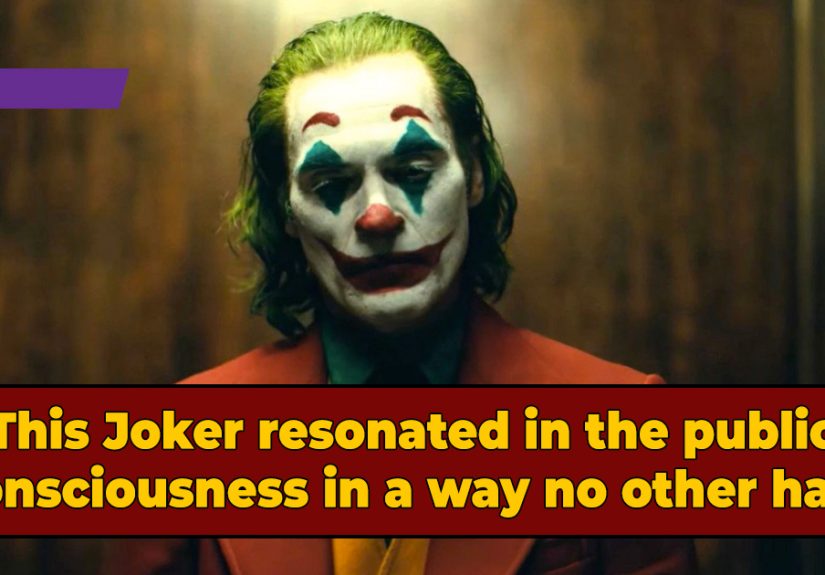
2) Joaquin Phoenix became the event
Plenty of films have good performances. Few films convince the public that a performance is the reason the movie is mandatory. Joker did. Phoenix’s physical, uneasy, talk-about-it-afterward portrayal became central to the movie’s identity, not just a nice bonus.
That matters because strong movie stars don’t just attract audiences; they shape the conversation around a film. The audience wasn’t only buying a comic-book origin story. They were buying a “you need to see what Phoenix is doing in this” experience. That is a different marketing engine, and a powerful one.
3) Prestige positioning gave it cultural momentum
Joker was not rolled out like a disposable genre entry. It played the festival game, won the Golden Lion at Venice, and was treated as an awards contender. That gave it a prestige halo that comic-book movies do not always receive.
The result was unusual and effective: one part studio blockbuster, one part awards-season talking point, one part internet argument. Not every movie can be all three at once. Joker managed it.
4) Controversy amplified visibility (without becoming a simple marketing trick)
Before release, the movie was surrounded by intense debate about violence, representation, and cultural responsibility. Critics and commentators questioned the film’s messaging; families of Aurora victims publicly voiced concerns; theaters and law enforcement discussed security measures.
That climate increased attention, but it is important not to turn this into a cheap lesson like “controversy equals profits.” Most controversy does not produce a billion dollars. In fact, it often scares audiences away. In Joker’s case, the controversy became fuel because it intersected with strong curiosity, recognizable IP, a compelling lead performance, and a movie people felt they needed to judge for themselves.
What Hollywood Should Learn (and What It Should Not)
Lesson #1: Mid-budget ambition can still scale
For years, studios have often treated theatrical releases like a two-lane highway: either micro-budget horror or giant franchise spectacle. Joker reminded the industry that there is still room for a middle lanefilmmaker-driven, adult-skewing, ambitious commercial cinema with strong branding.
The key point is not “make everything dark.” The key point is that audiences will show up for something that feels specific. Joker did not look like it came out of a committee blender. It looked like someone made choices.
Lesson #2: IP works best when it is a launchpad, not a leash
The film benefited from DC/Batman mythology, but it wasn’t built like a franchise homework assignment. Viewers did not need to memorize previous films, track post-credit scenes, or keep a spreadsheet of timelines. It was accessible, self-contained, and culturally recognizable.
That is a useful business lesson: IP can reduce risk, but over-engineered IP can also reduce urgency. Joker felt like a movie, not a trailer for future content. Ironically, that may have made it more commercially urgent.
Lesson #3: Global audiences are not allergic to difficult material
The international gross proved that darker, character-driven material can travel when the hook is strong enough. Hollywood sometimes treats “global appeal” as code for “simplify everything.” Joker suggested a more interesting idea: emotional clarity matters more than tonal sameness.
You did not need to live in Gotham or even care deeply about comic books to understand the film’s basic engine: isolation, resentment, humiliation, spectacle, and the transformation of pain into performance. That emotional framework is uncomfortablebut legible.
Lesson #4: Awards and box office can reinforce each other
Joker earned major awards attention, including a leading 11 Oscar nominations and two wins, with Joaquin Phoenix winning Best Actor and Hildur Guðnadóttir winning Original Score. That awards momentum helped extend the film’s cultural life beyond opening weekend chatter.
For studios, this is the dream scenario: a movie that opens huge, stays in the conversation, and then gets to return to the headlines in tuxedo season. It is not easy to replicate, but it is extremely valuable when it happens.
The Misread: Why “Just Make Another Joker” Is a Terrible Strategy
Survivorship bias is undefeated
The fastest way to lose money in Hollywood is to copy the surface of a hit while ignoring the structure underneath it. “R-rated comic-book drama made a billion” sounds like a recipe. It isn’t. It’s an outcome.
What made Joker work was a very particular combination of timing, actor, character familiarity, media attention, tonal commitment, and audience curiosity. You cannot order that combination in bulk.
Darkness is not depth
One bad lesson studios sometimes learn is that “serious” means joyless, gray, and punishing. But audiences are not rewarding misery on principle. They are rewarding conviction, craft, and conversation.
A movie can be bleak and empty. It can also be entertaining and substantial. Joker made money because people wanted to engage with itargue about it, praise it, reject it, reframe itnot because it was merely grim.
Franchise leverage still mattered
Let’s be honest: if Joker had been the exact same movie with a completely original character and no DC connection, it might still have been acclaimed but it almost certainly would not have had the same box office runway.
The industry lesson is not “IP doesn’t matter anymore.” It is “IP matters most when paired with genuine creative differentiation.” That is a much tougher lesson, because it requires taste, not just licensing.
Why This Still Matters Now
The Joker story still matters because it sits at the intersection of several ongoing debates: what theatrical audiences want, what comic-book films can be, whether adult dramas can scale, and how much “controversy” changes behavior versus simply changing headlines.
It also remains a useful case study in how a studio can position a film as both commercial and prestige-minded. Warner Bros. and DC took a risk on a project that was not a standard superhero playbook entry, and the commercial upside was massive. As Todd Phillips himself noted in the aftermath of Venice, the studio took a bold swing. This is exactly the kind of phrase executives love to quote after the numbers come in.
And yes, box office history keeps moving. Joker no longer holds the all-time R-rated worldwide record after Deadpool & Wolverine surpassed it in 2024. But that does not weaken the original point. If anything, it strengthens it: Joker helped prove that the ceiling for R-rated event films was much higher than many industry assumptions.
Experiences Around the “Joker Made a Billion” Phenomenon (Extended Section)
One of the most interesting things about Joker was not just the gross totalit was the experience of living through the conversation while the numbers kept climbing. This was one of those rare movie moments where different groups were almost watching different films, even when they bought tickets to the same one.
For general audiences, the experience often felt like a social dare: “Have you seen it yet?” People were not only asking whether the movie was good. They were asking what it meant, whether it crossed a line, whether it was overhyped, whether the performance was genius, and whether the discourse was more dramatic than the actual movie. In practical terms, that kind of conversation creates repeat visibility. The film stayed in group chats, office break rooms, podcasts, YouTube breakdowns, and weekend plans.
For movie fans, the experience was even weirderand kind of thrilling. The film arrived with festival prestige, comic-book branding, and culture-war-adjacent debates, which meant nearly every opinion came with a second opinion attached. Even praise and criticism felt unusually performative, as if people were also reacting to everyone else reacting. That feedback loop became part of the event. You weren’t just watching Joker; you were watching the public wrestle with Joker.
For the industry, the experience was probably equal parts excitement and panic. Excitement because a lower-budget, adult-skewing title exploded. Panic because surprise hits create strategic FOMO. Once a film like this lands, every studio starts asking whether it missed the next one. Development slates suddenly become more “open-minded,” at least until the next quarter’s priorities arrive and everyone remembers spreadsheets again.
There was also a theatergoing experience angle that shouldn’t be ignored. The movie opened under a cloud of security concern and public caution in some places, which gave showings an unusual atmosphere. Even people who were simply curious about the movie often arrived already aware of the headlines. That can change how audiences process a film. In some cases, the tension around the release became part of the emotional frame through which people viewed it.
And then there is the long-tail experience: the “I can’t believe this made a billion dollars” reaction that persisted long after opening weekend. That phrase stuck because it captures the core contradiction. Joker was not the kind of movie many people were trained to think of as a billion-dollar play. It was too dark, too divisive, too strange, too specificuntil it wasn’t. Once the number hit that extra comma and those extra digits, the conversation changed permanently. The movie stopped being just a controversial release and became an industry benchmark.
That is why the experience of Joker’s success still feels relevant. It reminded audiences that cultural noise can become commercial force, reminded studios that creative risk can be financially rational, and reminded everyone else that box office predictions are often just confidence wearing nice shoes. The film may not be repeatable in a laboratory, but the experience of its rise is the kind of case study Hollywood revisits whenever it starts believing it has the audience fully figured out.
Conclusion
Joker made over a billion dollars because it sat in a rare sweet spot: familiar enough to attract a huge audience, distinct enough to feel like an event, provocative enough to dominate conversation, and well-executed enough to convert curiosity into ticket sales around the world.
That is too much money to ignorebut it is also too complex a success to reduce to a lazy formula. The smartest takeaway is not “make darker movies” or “make controversial movies.” It is this: when studios pair strong IP with bold creative positioning and a clear point of view, audiences may reward the difference more than the safest possible version of the same old thing.