Table of Contents >> Show >> Hide
- How We Think About “Best” Gardening Tools
- The 16 Tools We’d Build a Garden Kit Around
- 1) Bypass Hand Pruners (Your Garden’s Haircut Scissors)
- 2) Loppers (For Branches That Laugh at Hand Pruners)
- 3) Folding Pruning Saw (The “I’m Done Asking Nicely” Tool)
- 4) Hori Hori Soil Knife (The Multi-Tool Gardeners Actually Use)
- 5) Heavy-Duty Hand Trowel (For Planting, Transplanting, and Treasure Hunting)
- 6) Hand Fork or Cultivator (The Soil Fluffer)
- 7) Garden Spade (Precision Digging’s Best Friend)
- 8) Round-Point Shovel (The Classic “Move Dirt From Here to There” Tool)
- 9) Garden Fork (Compost Turner + Clay Soil Negotiator)
- 10) Stirrup Hoe (Fast Weeding Without Full-Body Regret)
- 11) Stand-Up Weed Puller (Because Knees Have a Limited Warranty)
- 12) Rake (Actually, TwoBut We’ll Behave)
- 13) Garden Hose Nozzle (Small Tool, Big Quality-of-Life Upgrade)
- 14) Watering Can (When “Just Use the Hose” Isn’t the Move)
- 15) Garden Hose (Kink Resistance Is Not a Luxury)
- 16) Garden Cart or Wheelbarrow (The Back-Saver for Mulch, Soil, and “Why Did I Buy This Many Pots?”)
- Tool Care: The Secret to Tools That Last (and Cut Cleanly)
- Quick Buying Guide: Match Tools to Your Garden
- Editor Experiences: of “We’ve Been There” Garden Reality
- Conclusion
Gardening is basically a long-term relationship with dirt: it’s messy, it’s occasionally dramatic, and it rewards you
when you show up consistently (even if you’re wearing yesterday’s hoodie). The right tools don’t just make chores
fasterthey make them pleasant. Or at least “less likely to end with you muttering threats at crabgrass.”
Our editors pulled together the 16 gardening tools we recommend most oftenbecause they’re durable, comfortable,
and genuinely useful across real-life yards, patios, raised beds, and “this used to be lawn” food gardens. You’ll
notice a theme: fewer gimmicks, more tools that do one job really well (and keep doing it season after season).
How We Think About “Best” Gardening Tools
If you’ve ever bought a bargain trowel that bent like a soda can, you already know: price isn’t the same as value.
When we evaluate essential garden tools, we focus on:
- Build quality: steel that resists bending, blades that can be sharpened, handles that don’t crack.
- Ergonomics: comfort matters when you’re pruning for 30 minutes or digging for two hours.
- Task fit: the “right tool” depends on your soil (clay vs. sand), plants, and body mechanics.
- Repairability: replaceable parts beat “throw it away” designs every time.
The 16 Tools We’d Build a Garden Kit Around
1) Bypass Hand Pruners (Your Garden’s Haircut Scissors)
If you only invest in one cutting tool, make it a quality pair of bypass pruners. Bypass blades slide past each
other like scissors, giving clean cuts on living stemsgreat for roses, perennials, shrubs, and fruit trees.
Look for a comfortable grip, a smooth spring action, and a blade you can sharpen or replace.
Editor tip: Keep a small rag and a spritz bottle of rubbing alcohol nearby. Clean sap off the blade
and disinfect between diseased plants to reduce spread.
2) Loppers (For Branches That Laugh at Hand Pruners)
Loppers are basically pruners with a gym membership. They’re designed for thicker branchesthink hydrangeas with
serious wood, overgrown shrubs, or a small limb that needs to stop smacking you in the face every time you mow.
Choose bypass loppers for live wood and prioritize strong handles and a gear/lever system if hand strength is an issue.
3) Folding Pruning Saw (The “I’m Done Asking Nicely” Tool)
For limbs too big for loppers, a folding pruning saw is cleaner and safer than wrestling with a dull hand saw from the garage.
A good saw bites on the pull stroke and cuts quickly without shredding bark. Bonus: it folds, so you’re less likely
to store it blade-up like a tiny yard guillotine.
4) Hori Hori Soil Knife (The Multi-Tool Gardeners Actually Use)
The hori hori is part knife, part trowel, part weeder, part “why didn’t I buy this five years ago?”
It’s excellent for loosening roots, popping out weeds, cutting twine, dividing perennials, and digging precise holes
for transplants. Many have a measurement marking along the bladehandy for planting depth without guesswork.
5) Heavy-Duty Hand Trowel (For Planting, Transplanting, and Treasure Hunting)
A sturdy trowel is the backbone of container gardening and bed work. Go for thick metal (or forged construction),
a comfortable handle, and a shape that fits your soil. In rocky soil, a tough trowel saves your wrists and your patience.
Specific example: When planting bulbs or seedlings, a rigid trowel gives you clean hole walls so roots
settle evenly instead of folding into awkward knots.
6) Hand Fork or Cultivator (The Soil Fluffer)
When soil crusts over, water runs off instead of soaking in. A hand fork breaks that surface gentlyperfect for
aerating around plants, mixing compost, and coaxing out shallow weeds without disturbing roots.
7) Garden Spade (Precision Digging’s Best Friend)
A spade has a flatter, more squared-off blade than a shovel, making it ideal for edging beds, slicing into sod, and
digging in tighter spaces. If you install borders, cut new beds, or plant shrubs, a spade makes everything neater
(and makes you look like you know what you’re doing).
8) Round-Point Shovel (The Classic “Move Dirt From Here to There” Tool)
For general digging and moving soil, mulch, or compost, a round-point shovel is essential. Look for a strong blade,
a solid socket connection, and a handle length that fits your height. A well-made shovel will outlast trends,
landscaping fads, and your brief obsession with ornamental kale.
9) Garden Fork (Compost Turner + Clay Soil Negotiator)
In compacted or clay-heavy soil, a garden fork can be more effective (and less back-breaking) than a shovel.
It loosens soil without slicing through beneficial soil structure as aggressively. It’s also fantastic for turning compost
and lifting root crops like potatoes.
10) Stirrup Hoe (Fast Weeding Without Full-Body Regret)
A stirrup (or action) hoe slices weeds just below the soil surface on the push and pull. It’s fast. It’s satisfying.
And it reduces the amount of time you spend crouched like a garden gargoyle. Use it when weeds are small for the best results.
11) Stand-Up Weed Puller (Because Knees Have a Limited Warranty)
For deep-rooted weeds like dandelions, a stand-up weeder lets you pull with your legs instead of your lower back.
It’s especially helpful for gardeners who want to stay active without spending the next day bargaining with their spine.
12) Rake (Actually, TwoBut We’ll Behave)
If we’re being honest, a leaf rake and a bow rake do different jobs. But if you’re choosing one first:
a sturdy bow rake handles soil leveling, spreading mulch, and smoothing beds. A leaf rake is your cleanup hero for
fall leaves and debris. If you garden year-round, you’ll eventually want both.
13) Garden Hose Nozzle (Small Tool, Big Quality-of-Life Upgrade)
A good nozzle gives you control: a gentle shower for seedlings, a fan for beds, and a stronger stream for rinsing pots.
Editors tend to prefer durable metal bodies and easy thumb controls that don’t cramp your hand.
Practical note: Stronger spray isn’t always betterwatering is about soaking soil at root level, not blasting leaves.
14) Watering Can (When “Just Use the Hose” Isn’t the Move)
For indoor plants, patio containers, seedlings, and delicate starts, a watering can offers accuracy and gentleness.
The “best” can depends on your strength: larger capacities mean fewer trips, but a full can gets heavy fast.
Look for a balanced handle, a steady pour, and a rose (sprinkler head) that suits your plants.
15) Garden Hose (Kink Resistance Is Not a Luxury)
A frustrating hose can make you avoid wateringthen your garden punishes you with crispy leaves and guilt.
Choose a hose that reaches your farthest bed without stretching, resists kinking, and fits your storage setup.
Pair it with a quality nozzle and you’ll water more consistently (which plants love, and weeds somehow also love).
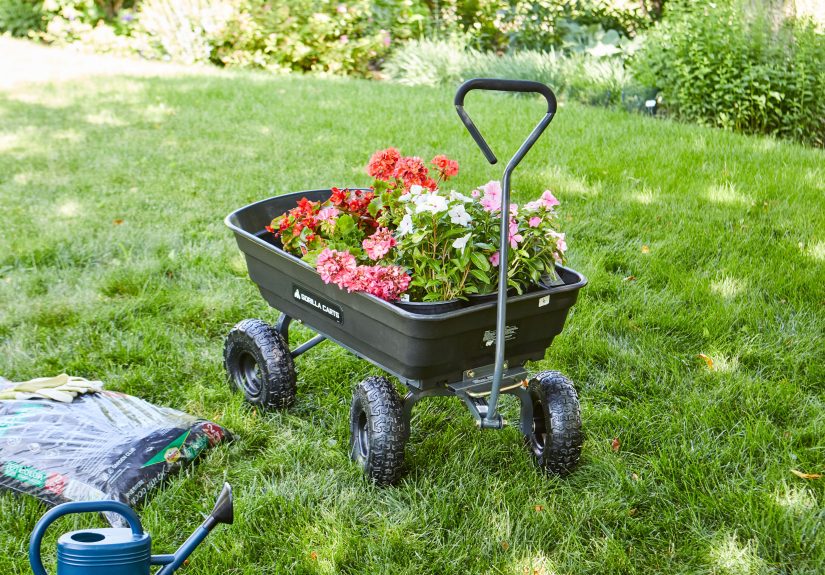
16) Garden Cart or Wheelbarrow (The Back-Saver for Mulch, Soil, and “Why Did I Buy This Many Pots?”)
If you move bags of soil, compost, mulch, stones, or plants, a cart/wheelbarrow is non-negotiable.
Carts are often easier to tip and steer on flat ground; wheelbarrows can shine in uneven terrain.
Either way, you’ll reduce strain and increase the amount you can do in one tripwithout turning every project into a workout montage.
Tool Care: The Secret to Tools That Last (and Cut Cleanly)
The best gardening tools are the ones you still enjoy using next season. A simple routine helps:
- Clean after use: Brush off soil, rinse, and dry to prevent rust and slow blade dulling.
- Disinfect cutting tools when disease is present: Many extension resources recommend 70% isopropyl alcohol or appropriate disinfectants; bleach solutions can work but may be corrosive if not rinsed and dried.
- Sharpen blades: Pruners, hoes, and shovels perform better (and require less force) when sharp.
- Oil moving parts: A drop of oil on pruner pivots and springs keeps action smooth.
- Store smart: Dry storage prevents rust; hanging tools saves edges and toes.
Quick Buying Guide: Match Tools to Your Garden
If you mostly grow in containers
Prioritize pruners, a hand trowel, watering can, gloves, and a compact hose/nozzle setup. Add a hori hori if you
repot oftenit’s excellent for slicing rootbound plants and loosening stubborn soil.
If you have raised beds or a vegetable garden
Add a stirrup hoe (for fast weed control), a rake (for leveling), and a cart/wheelbarrow (because compost happens).
Loppers and a pruning saw matter if your veggie patch lives near shrubs and small trees.
If your yard is more “landscape” than “lettuce”
Spade + shovel + loppers + pruning saw become your power quartet. You’ll also appreciate a sturdy hose nozzle for
cleaning patios and watering shrubs without soaking yourself like it’s a summer prank.
Editor Experiences: of “We’ve Been There” Garden Reality
We learned the hard way that gardening tools don’t fail politely. They fail at the exact moment you’re mid-task:
the trowel bends while you’re planting a “simple” row of basil, the pruners gum up with sticky sap, and the hose
kinks so aggressively it looks like it’s trying to tie itself into a bow. Over time, our editors started noticing
a pattern: the tools we reached for most were the ones that felt good in the hand and behaved predictablyeven when
the garden was being chaotic.
One editor’s first “aha” moment was switching from cheap anvil-style snips to a real pair of bypass pruners for roses.
Instead of crushing stems, the blades made clean cuts, and the plant bounced back with healthier growth. That experience
led to a bigger lesson: clean cuts aren’t just about aestheticsthey reduce damage, help plants heal faster, and make
pruning feel less like you’re wrestling the shrub into submission.
Another editor fell in love with the hori hori after a long season of losing scissors in the garden like they were
migrating birds. The hori hori became the “always in the back pocket” tool: it cut twine, sliced through small roots,
dug perfect transplant holes, and even helped pry out weeds that were clearly paying rent. Once you’ve used a depth-marked
blade to plant seedlings consistently, it’s hard to go back to eyeballing and hoping.
We also noticed that comfort tools aren’t “extras”they change how often you garden. A stand-up weed puller kept one
editor working through spring without triggering back pain. That meant weeds got removed earlier, beds stayed cleaner,
and the garden looked better with less effort. It wasn’t about doing more; it was about making “a little bit” doable
more days of the week.
And yes, watering gear matters. A high-quality nozzle with an easy thumb control changed the daily watering routine
from “annoying chore” to “oddly relaxing.” The difference was control: a gentle shower for seedlings, a wider pattern
for beds, and a stronger stream for rinsing muddy pots. Good watering tools also reduced overwatering, because it was
easier to water slowly and intentionally instead of blasting everything in 90 seconds and calling it a day.
Finally, we’ve become a little obsessed with tool maintenance because it pays off immediately. Clean tools cut better.
Sharp tools require less force. And disinfecting pruners between questionable plants is one of those boring habits that
prevents bigger problems later. The end result: the “best tools” aren’t just the ones with a famous namethey’re the ones
you actually enjoy picking up, using, cleaning, and trusting season after season.
Conclusion
You don’t need a garage full of gadgets to be a successful gardener. Start with a short list of reliable essentials:
pruners, a digging tool, a weeding tool, a watering setup, and something to haul materials. As your garden grows,
your toolkit can grow with itone well-chosen, well-cared-for tool at a time.