Table of Contents >> Show >> Hide
- The 2024 Met Gala Was Already Built for Illusion
- Katy Perry Went Viral Without Leaving the Studio
- Rihanna’s Absence Made the Internet Even More Gullible
- Why These Fake Met Gala Outfits Worked So Well
- The AI Problem Was Bigger Than Fashion Gossip
- The Real Irony: The Fake Looks Were Almost Too On-Theme
- Katy Perry, Rihanna, and the Power of Fashion Mythology
- What Watching This Online Actually Felt Like
- Conclusion
Every Met Gala needs a twist. In 2024, the official dress code was The Garden of Time, which sounds poetic, expensive, and mildly intimidating if your closet mostly contains black T-shirts and one blazer you swear still fits. But while celebrities climbed the Metropolitan Museum of Art steps in florals, corsets, archival references, and enough dramatic tailoring to keep fashion editors happily overcaffeinated for days, two of the night’s most talked-about looks never touched the carpet at all.
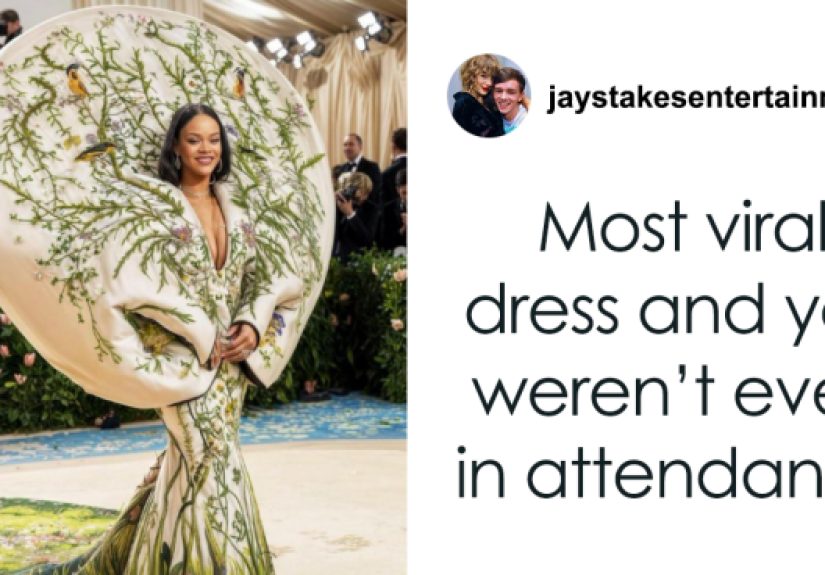
They belonged to Katy Perry and Rihanna. Or at least, they appeared to. Social media lit up with stunning images of both stars in elaborate, theme-perfect ensembles. Perry looked like a woodland fairy with a couture budget. Rihanna looked like the queen of a mythic garden empire. There was only one problem: neither woman was actually at the 2024 Met Gala.
That strange little plot twist turned a glamorous fashion event into something much bigger than a best-dressed debate. It became a case study in internet culture, celebrity obsession, AI-generated imagery, and how quickly a fake can dress itself up as fact. And honestly, if there were ever an event tailor-made for that kind of confusion, it was this one. The Met Gala is already a place where fantasy is normal, exaggeration is expected, and nobody blinks if a person arrives dressed like a chandelier, a pope, or a walking bouquet with a train the size of a studio apartment.
So when fake images of Katy Perry and Rihanna started circulating, a lot of people believed them. Some fans were fooled for a few seconds. Others were fooled for hours. One of the funniest details in the whole episode was that Katy Perry’s own mom got caught by the illusion, which is the kind of detail no publicist could invent and no internet could improve.
What followed was one of the most fascinating fashion-adjacent moments of the year: two absent celebrities effectively dominated the conversation from somewhere else entirely. No carpet. No arrival video. No awkward staircase pause. Just algorithmic chaos in couture drag.
The 2024 Met Gala Was Already Built for Illusion
To understand why the fake Met Gala images spread so easily, it helps to understand the mood of the actual event. The 2024 Costume Institute exhibition was Sleeping Beauties: Reawakening Fashion, and the dress code was The Garden of Time. That combination encouraged dreamy, romantic, slightly haunted fashion. Think florals, decay, fragility, fantasy, theatrical silhouettes, and outfits that looked like they had either bloomed from the ground or been rescued from a glamorous ghost story.
In other words, it was an ideal playground for AI image-makers. The more surreal the theme, the easier it becomes for a fake look to pass the first-glance test. If an image shows a celebrity in a gown covered in flowers, moss, metallic vines, giant sculptural sleeves, or suspiciously cinematic lighting, your brain doesn’t immediately say, “This must be fake.” At the Met Gala, your brain says, “Sure, that tracks.”
That’s the genius and the problem. Met Gala fashion has always rewarded spectacle. The event thrives on images that feel almost unbelievable, which means it now lives in the exact space where unbelievable images can thrive too.
Katy Perry Went Viral Without Leaving the Studio
Katy Perry’s fake Met Gala images were arguably the night’s biggest internet fashion event. One widely shared image showed her in a dramatic floral gown with a sweeping train that looked as if a secret garden had staged a hostile takeover of haute couture. Another fake look leaned more metallic and vine-like, as if Mother Nature had discovered armor and decided to get fabulous.
The reason these images spread so fast was simple: they looked plausible. More than plausible, really. They looked correct. Perry has a long history of treating the Met Gala like a performance art opportunity rather than a routine red carpet stop. She is not a celebrity who shows up in a tasteful column dress and quietly calls it a night. She commits. She leans in. She brings the theatrical energy of a Broadway finale and the camp instincts of someone who understands that fashion can be serious without ever being solemn.
That reputation mattered. If you told people Katy Perry arrived at the Met in a giant floral fantasy gown inspired by The Garden of Time, a lot of them would not just believe you. They would nod and say, “Of course she did.” This is the same woman who famously wore a chandelier to the 2019 Met Gala and then changed into a hamburger for the after-party. Once your fashion résumé includes “human lighting fixture” and “designer fast food,” the bar for internet belief gets very low and very strange.
What made the story even more memorable was Perry’s reaction. Rather than ignoring the whole thing, she leaned into the absurdity. She shared the fake image herself and revealed that she had missed the Met because she was working. She also posted the now-famous exchange with her mother, who texted to compliment the gown before Perry had to break the news: no, Mom, the AI got you too.
That response gave the moment a second life. It was no longer just a fake fashion image. It became a perfect little parable about modern internet culture. If even Katy Perry’s mom can get fooled by a fake Met Gala photo, what chance does the average doom-scroller have at 11:42 p.m. with six browser tabs open and a half-eaten snack nearby?
Rihanna’s Absence Made the Internet Even More Gullible
If Katy Perry’s fake look was a viral sensation, Rihanna’s fake look was a textbook example of expectation bias. People are primed to believe almost anything about Rihanna at the Met Gala because she has earned that trust through years of unforgettable appearances. She is one of the event’s most mythic figures. She has shown up fashionably late and still managed to dominate the conversation. She has worn one of the most iconic capes in Met history. She has delivered a papal-inspired masterpiece so memorable it practically has its own zip code in fashion history.
So when fake images surfaced showing Rihanna in a lavish, garden-inspired gown, they didn’t just look believable. They looked like the kind of thing people were already hoping to see. That’s a powerful engine for virality. Social media does not merely reward what looks real; it rewards what people want to be real.
Rihanna’s actual absence gave those fake images more room to breathe. There was no real red-carpet reveal to interrupt the fantasy. No official photo set arrived to shut down the rumor within seconds. Instead, the fake filled a vacuum. Coverage later explained that Rihanna missed the event after coming down with the flu, but for a stretch of the evening, the internet had already started dressing her in looks she never wore.
That says something important about Rihanna’s place in the Met Gala ecosystem. She is not just another guest. She is one of the event’s unofficial main characters. When she doesn’t appear, people don’t simply move on. They imagine the entrance they wish they had gotten. In 2024, AI tools turned that wish into highly shareable counterfeit fashion content.
Why These Fake Met Gala Outfits Worked So Well
The fake Katy Perry and Rihanna images were not just random celebrity deepfakes. They were custom-built for a very specific internet moment. Several factors made them unusually effective.
1. The Met Gala rewards extravagance
Ordinary red carpets are easier to fact-check emotionally. If you saw an actress in a gown made of glowing peonies and architectural moonlight at a movie premiere, you might hesitate. At the Met Gala, hesitation is not the house style. Wild fashion is the whole point.
2. Both stars have strong Met Gala identities
Perry is known for costume-level commitment. Rihanna is known for fashion greatness with impeccable dramatic timing. The fake images played directly into those existing public personas.
3. The theme made fantasy look normal
The Garden of Time encouraged dreamy, botanical, symbolic dressing. The AI creators did not need to invent an entirely new visual language. They just exaggerated the one already in use.
4. Social media rewards speed, not caution
During a live event, people share first and verify later. If a glamorous image appears during peak excitement, it only needs to feel real long enough to get reposted a thousand times. By then, it has already done its job.
5. The fakes were aesthetically satisfying
This part matters more than people admit. The fake outfits were not merely deceptive; they were appealing. They were beautiful enough to invite belief. People were not just fooled by technology. They were seduced by taste.
The AI Problem Was Bigger Than Fashion Gossip
It would be easy to laugh this off as harmless internet nonsense. In one sense, it was harmless. Nobody lost their bank account because they thought Rihanna wore an embroidered fantasy gown to a museum fundraiser. But the deeper issue is not whether these particular fake images caused major damage. It is how quickly they demonstrated the collapse of visual trust online.
The viral spread of fake Met Gala photos showed how difficult it has become to separate documentation from fabrication in real time. A glamorous celebrity event may seem like low stakes, but it is exactly the kind of environment where dangerous habits form. People learn to accept polished images as evidence. They stop checking original sources. They assume popularity equals authenticity. That habit does not stay politely inside fashion coverage.
The episode also highlighted a strange new tension in celebrity culture. Fame has always involved projection. Fans imagine what stars wear, say, think, and represent. AI simply mechanizes that projection. Instead of wondering what Rihanna might have worn, the internet can now generate a visual answer in seconds and circulate it as if reality just forgot to catch up.
That is why this story mattered beyond a single gala. It was one of those pop culture moments that seemed silly on the surface but deeply revealing underneath. Beneath the gowns and gossip was a much more serious question: when spectacle is this easy to fake, what happens to the value of showing up at all?
The Real Irony: The Fake Looks Were Almost Too On-Theme
There is a delicious irony at the center of all this. The 2024 Met Gala celebrated fragile beauty, time, transience, preservation, and the delicate line between life and display. Then the internet responded by creating digital gowns that looked real for a moment, captured public attention, and disappeared into the feed as synthetic artifacts of the night.
In a weird way, the fake images fit the spirit of the event almost too well. They were beautiful, fleeting, seductive, and fundamentally untouchable. They had no physical reality, no fabric, no fitting, no designer team steaming hems in a hotel room, no last-minute tailoring disaster, no celebrity wobbling up the stairs in shoes that should qualify as architectural risk. They were all image and no object.
That is what made them fascinating. They imitated not just the clothes, but the entire logic of fashion spectacle. The outfits looked editorial. They looked shareable. They looked expensive. They looked like they belonged to a night built on illusion. But they skipped every messy human step required to turn an idea into an actual garment.
In other words, they gave the internet exactly what it often wants most: the appearance of culture without the inconvenience of reality.
Katy Perry, Rihanna, and the Power of Fashion Mythology
Another reason this story took off is that both women have larger-than-life fashion mythology attached to them. Katy Perry approaches style with mischief. Her best looks are often playful, theatrical, and intentionally over the top. Rihanna, by contrast, has the kind of fashion authority that makes even a late arrival feel like a coronation. She does not simply wear clothes; she alters the mood of the room.
That distinction is important because the fake images borrowed from two very different celebrity brands. Perry’s images worked because they leaned into visual whimsy. Rihanna’s worked because they leaned into the expectation of grandeur. Together, they created a perfect viral pairing: one look that felt delightfully outrageous, another that felt majestically inevitable.
And that pairing also says a lot about how audiences consume red carpet culture now. People are no longer just reacting to what celebrities wear. They are reacting to what celebrities represent. A Katy Perry Met Gala look means camp, commitment, and cleverness. A Rihanna Met Gala look means domination, mystery, and the possibility that everybody else just got demoted to supporting cast.
That kind of symbolic value makes fake images more potent. They are not just copying faces; they are imitating expectations.
What Watching This Online Actually Felt Like
If you were following the Met Gala online that night, the experience was weird in a way that felt both funny and faintly unsettling. One minute you were doing the usual red-carpet routine: ranking looks, texting friends, pretending to understand every archival fashion reference, and deciding whether an outfit was genius or simply aggressive. The next minute, your feed was serving you images of Katy Perry and Rihanna that looked polished enough to pass, at least at first glance.
And that is the key phrase: at first glance. The whole episode lived in the space between seeing and checking. You would scroll, pause, squint, think, “Wow, that’s gorgeous,” and then feel your confidence wobble. Was Perry really there? Did Rihanna arrive late again? Was this from the official carpet, a side entrance, an after-party, a rehearsal, a fan render, a satire account, or a parallel universe curated by people with suspiciously good Photoshop skills?
That experience captures something essential about modern celebrity culture. We no longer watch these events in a single stream from a single source. We watch through fragments. A post here, a repost there, a cropped image on X, a screenshot on Instagram, a reaction meme, a hot take, a fake quote, a real quote buried underneath six jokes and three ads for skin care. The event becomes a puzzle assembled by exhausted thumbs.
That is why the fake images felt so effective. They were not interrupting a clear broadcast. They were joining the chaos. They slid into a feed already crowded with fast opinions, half-context, and glamorous overload. In that environment, “real enough” can beat “actually real” every time.
There was also something deeply familiar about how people reacted once the truth came out. First came embarrassment. Then came laughter. Then came a second wave of admiration. A lot of people essentially said, “Okay, fake or not, the dress ate.” And honestly, that reaction may be the most 2020s response possible. We are now fully capable of discovering an image is false and still wanting to discuss the styling.
For fans, that creates a very specific emotional whiplash. You feel the thrill of a reveal, the confusion of uncertainty, the deflation of learning it is fake, and then the reluctant amusement of realizing you just spent five minutes emotionally investing in a dress that never existed. It is like having a crush on a hologram with excellent tailoring.
And yet, the moment was not entirely cynical. In a strange way, it also revealed why people care so much about events like the Met Gala in the first place. They are not just watching fabric. They are watching narrative, theater, surprise, taste, ambition, camp, and fantasy. The fake Katy Perry and Rihanna images went viral because they plugged directly into that emotional circuitry. They gave people the rush of a fashion moment, even if the moment itself was synthetic.
Still, the aftertaste lingered. Once you realize how easy it is to be fooled at an event you are already paying close attention to, you start wondering how much else slides by unnoticed. That is the larger cultural experience hidden inside this goofy, glamorous story. It was not just about two stars who were not there. It was about living online in a time when the most shareable version of reality may not be reality at all.
Conclusion
Katy Perry and Rihanna may not have attended the 2024 Met Gala, but they still ended up wearing two of its most viral “outfits.” That alone tells you how much celebrity culture has changed. Presence is no longer the only path to domination. Sometimes absence, combined with expectation and a very online public, is enough to hijack the conversation.
What made this moment so memorable was not just the trick itself. It was how perfectly the trick fit the event. The Met Gala is where fashion becomes fantasy, and in 2024, fantasy skipped the line and went straight into the feed. Katy Perry’s fake floral drama and Rihanna’s imaginary regal glamour gave the internet exactly what it wanted: beauty, spectacle, and something to argue about before midnight.
But beneath the laughs and reposts, the story offered a sharp reminder. In the age of AI-generated celebrity images, even the most glamorous viral moment deserves a second look. Especially when the best-dressed stars of the night never actually got out of the car.