Table of Contents >> Show >> Hide
- 1) Start with function (because pretty doesn’t chop onions)
- 2) Pick one “anchor” that sets the kitchen’s personality
- 3) Color that works with food, not against it
- 4) Lighting: the fastest way to make a kitchen feel “designed”
- 5) Make storage look good (yes, it’s possible)
- 6) Decor that survives real life
- 7) Budget-friendly upgrades that look expensive
- 8) Design “recipes” you can copy
- 9) Common kitchen design mistakes (and how to dodge them)
- 10) Experiences and real-world moments that shape great kitchen design (extra)
A kitchen has a tough job: it has to be beautiful enough for “wow” moments, durable enough for spaghetti night, and
organized enough that you can find the cinnamon before your coffee gets cold. The good news? Great kitchen design
isn’t one magic makeoverit’s a bunch of smart, smaller decisions that work together: layout, lighting, color,
storage, and the finishing touches that make the room feel like you.
Below are practical kitchen decorating and design ideas you can actually usewhether you’re doing a full remodel or
just trying to make your current kitchen look less like a “miscellaneous countertop museum.”
1) Start with function (because pretty doesn’t chop onions)
Design around how you move
Before you pick tile or paint, take two minutes to watch your own “kitchen choreography.” Where do groceries land?
Where do you prep? Where do dishes pile up? Classic kitchen planning uses the sink, cooktop, and refrigerator as
primary work points (often described as a work triangle), but modern homes also benefit from thinking in “zones”:
prep zone, cooking zone, cleanup zone, beverage zone, and a grab-and-go snack zone.
Keep traffic out of your work zone
One of the easiest ways to make a kitchen feel calmer is to stop people from cutting through where you’re
cooking. If possible, route walkways so guests can reach the fridge, drinks, or patio without threading the needle
between you and a hot pan.
Use clearances that feel good in real life
If you’re adjusting layout or adding an island, clearances matter. A common guideline is about 36 inches
for a walkway and 42 inches (one cook) to 48 inches (two cooks) for a working aisle
where drawers, appliances, and people need room to operate without a daily bumper-car experience.
2) Pick one “anchor” that sets the kitchen’s personality
Cabinets: the main character
Cabinets take up the most visual space, so even small shifts here have a big impact. Three crowd-pleasing approaches:
classic light cabinets for an airy feel, two-tone (lighter uppers, deeper lowers) for
contrast, or a bold color on the island to create a focal point without committing to an all-over hue.
If your cabinets are structurally fine, repainting or refacing can deliver a dramatic upgrade without full replacement.
Countertops: the workhorse finish
Countertops should match your lifestyle. Quartz is popular for its consistent look and easy maintenance; natural stone
brings depth and one-of-a-kind movement; butcher block adds warmth; darker surfaces can feel dramatic but may show dust
and crumbs faster (the kitchen’s way of staying humble). If you’re torn, grab samples and test them under your actual
lightingyour kitchen is the judge, not a showroom spotlight.
Backsplash: the kitchen’s jewelry
A backsplash is one of the best places to add pattern, texture, and personality. Subway tile is timeless for a reason,
but the “twist” is in the details: vertical stack instead of brick, a darker grout for graphic contrast, handmade-look
tile for softness, or a bolder shape (hex, scallop, elongated picket) for extra flair. If your counters and cabinets
are neutral, the backsplash can be your moment.
Hardware: tiny change, huge payoff
Swapping cabinet pulls is like changing a kitchen’s earringsit can shift the whole vibe. Matte black reads modern,
brass feels warm and slightly vintage, polished nickel bridges traditional and contemporary. The trick is consistency:
pick one or two finishes and repeat them (hardware, faucet, lighting accents) so the room looks intentional rather than
“collected during three separate errands.”
3) Color that works with food, not against it
Build a palette you won’t hate in six months
A practical kitchen color palette often follows a simple structure:
one main neutral (walls/cabinets), one supporting tone (wood/metal/stone), and
one accent (tile, stools, textiles, art). Neutrals don’t have to be boringwarm whites, greiges, soft
mushroom tones, or light taupes can feel cozy and current without turning your kitchen into a trend museum.
Where bold color works best
If you love color, put it where it’s easiest to update: bar stools, pendant shades, a rug runner, window treatments,
artwork, and countertop accessories. Want something more permanent? Consider a colored island, a painted pantry door,
or a tile backsplash in a confident shade while keeping the rest of the finishes calmer.
4) Lighting: the fastest way to make a kitchen feel “designed”
Use layered lighting (not one sad ceiling light)
Great kitchen lighting usually combines three layers:
ambient (overall illumination), task (focused light for prep/cooking), and
accent (highlighting shelves, glass cabinets, or architectural features). This layered approach makes
the space more functional and dramatically more flattering.
Under-cabinet lighting is the secret weapon
Under-cabinet lighting improves visibility on countertops and gives the kitchen a warm “glow” at nightespecially when
paired with dimmers. If you don’t want electrical work, plug-in or rechargeable options can still create that upscale
look with minimal effort. If you are renovating, plan wiring early so fixtures look seamless.
Pendants: function + style over islands
Pendant lights anchor an island visually, but they should also provide useful light. A simple rule: choose fixtures
that match the kitchen’s scale (tiny pendants over a large island can look like they’re whispering) and install them
so they don’t block sightlines across the room. When in doubt, fewer larger fixtures often looks cleaner than a crowd
of small ones.
5) Make storage look good (yes, it’s possible)
Go vertical
Vertical storage is a game-changer, especially in smaller kitchens. Tall cabinets can hide less-used appliances and
pantry overflow while keeping counters clear. Add pull-out shelves, roll-out trays, or interior organizers so the
extra height doesn’t become a “top-shelf black hole.”
Open shelving: do it on purpose
Open shelves can look airy and stylish, but they only stay cute if you treat them like a curated display.
The best formula: a repeating set of everyday items (plates, bowls, glasses) plus a few decorative pieces (a plant,
a framed print, a ceramic bowl). If you’re a “shove it and close the door” person (no judgment), consider just a short
run of open shelving instead of replacing all your uppers.
Counter space is storage too
Clear counters are one of the strongest “kitchen decor” signals because they make the room look calmer and more
spacious. Create a few designated landing zones: a coffee/tea tray, a cooking oils-and-salt station near the stove,
and a small fruit bowl. Everything else earns its place by being used dailyor it moves to a drawer, pantry, or
donation box.
6) Decor that survives real life
Textiles: warmth without remodeling
Kitchens can feel hard because they’re full of hard surfaces: tile, stone, metal, glass. Textiles add softness fast.
A washable runner, a patterned Roman shade, or even upgraded dish towels can make the room feel finished. Choose
stain-friendly materials and patterns that don’t show every crumb like a high-definition crime scene.
Art belongs in the kitchen
Kitchens don’t need to be “all practical, no personality.” A framed print, vintage food poster, or a small gallery wall
(kept away from heat and grease) adds character. If you’re nervous about splatters, place art on the dining side of an
island or on a wall that’s not directly in the cooking zone.
Plants: the easiest “designer” move
Greenery brings life to a kitchenliterally. A simple herb pot by a window (basil, rosemary, mint) doubles as decor and
dinner support. If your kitchen doesn’t get much light, go with hardy low-light plantsor use a beautiful bowl of
lemons and call it “seasonal styling.”
7) Budget-friendly upgrades that look expensive
Paint strategically
Painting walls, cabinets, or even just an island can change the entire kitchen’s mood. If repainting cabinets feels
intimidating, start smaller: paint a pantry door, a breakfast nook wall, or an open-shelf backing panel for a pop of
contrast.
Upgrade the faucet
A new faucet is a high-impact swap that affects both style and daily function. A simple, well-shaped faucet in a
coordinated finish can make the sink area feel intentionally designedespecially if you add a matching soap dispenser
or streamline countertop clutter around the sink.
Refresh seating and surfaces
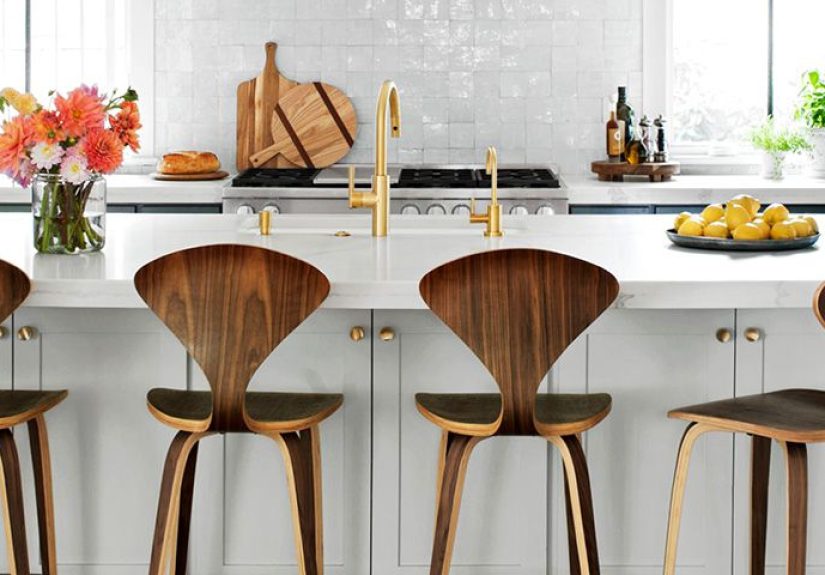
New stools, a new runner, or a new set of pendant shades can update a kitchen without demolition. If your island is
the social hub, comfortable seating (and a footrest) makes it feel like a destination, not a waiting room.
8) Design “recipes” you can copy
Recipe A: Modern, warm, and welcoming
Start with warm white walls, light wood or oak accents, simple cabinet fronts, and black or bronze hardware. Add a
lightly textured backsplash and layered lighting (recessed + pendants + under-cabinet). Finish with a neutral runner
and a few handmade ceramics for a calm, elevated look.
Recipe B: Classic kitchen with personality
Keep cabinets a classic color (white, cream, soft gray), then use the backsplash to add characterhandmade-look tile,
a subtle pattern, or a soft color. Choose polished nickel or unlacquered brass for a timeless feel. Add framed art and
a few vintage accents so the kitchen feels collected, not cookie-cutter.
Recipe C: Small kitchen that feels bigger
Prioritize vertical storage, brighter finishes, and clear counters. Add under-cabinet lighting, a reflective backsplash
(glossy tile), and a slim runner that visually stretches the floor. Use one or two open shelves for airy display, and
keep everything else behind doors so the space stays visually quiet.
9) Common kitchen design mistakes (and how to dodge them)
- Too little lighting: Fix it with layered lighting and under-cabinet lights.
- Ignoring workflow: Keep prep, cooking, and cleanup zones logical and close enough to work.
- All trend, no timeless: Use trends in easy-to-change items (paint, stools, decor) instead of permanent finishes only.
- Countertop clutter: Create “stations” and store the rest so the kitchen looks calmer instantly.
- Mismatched finishes: Repeat one or two finishes across the room for a cohesive look.
10) Experiences and real-world moments that shape great kitchen design (extra)
If kitchens could talk, most would say the same thing: “I wasn’t designed for the way you actually live.” That’s not
an insultit’s a helpful clue. In real homes, the best kitchen decorating and design ideas usually come from a few
familiar situations you might recognize.
First: the grocery drop zone. People rarely carry groceries gracefully into the pantry like a catalog
photo. They set bags on the nearest open surfaceoften the island, sometimes the floor, occasionally a chair that’s
about to become a very stressed chair. When a kitchen has a clear landing spot (a stretch of counter near the fridge,
a pull-out shelf, or even a dedicated basket system), the room feels calmer because the clutter has a “home,” even
temporarily.
Second: the coffee ritual. Whether it’s espresso, tea, or an iced coffee situation that requires a
straw, people tend to repeat the same steps every morning. A small coffee stationtray, mugs, sweetener, pods/beans,
and a nearby outletturns chaos into a routine. It also frees up the main prep space so breakfast doesn’t collide with
lunch packing and “where is the lunchbox” panic.
Third: the kitchen-as-social-stage. In so many homes, guests naturally gather around the island or the
“open doorway that is technically in the way.” That’s why clearances and traffic flow matter. When the seating side of
an island has enough breathing room, you can cook while friends hang out without everyone doing the awkward sideways
shuffle whenever a drawer opens.
Fourth: the small kitchen illusion. People often assume their kitchen feels cramped because it’s
physically small. Sometimes that’s truebut often it’s a visual problem: too many items on counters, dark corners,
bulky decor, and storage that forces things out into view. The moment you add under-cabinet lighting, clear a few
surfaces, and move rarely used items up high or behind doors, the kitchen can feel “bigger” without changing a single
wall.
Finally: the maintenance reality check. The most loved kitchens are the ones that don’t punish you for
using them. That means finishes that wipe clean, rugs that can be washed, hardware that feels good in your hand, and
a layout that doesn’t make cooking a daily obstacle course. The goal isn’t perfectionit’s a kitchen that supports
your day-to-day life and still looks great when someone drops by unannounced.