Table of Contents >> Show >> Hide
- Who Is Lauren Thomsen Design?
- Services: From First Sketches to Final Walkthroughs
- Design Philosophy: High Style, High Performance, No Lectures
- Signature Projects That Explain the Studio’s Reputation
- Northern Liberties Passive Rowhouse: a model for resilient city living
- Cascade House: mid-century renovation that frames nature from every room
- Wynnewood Modern Tudor: turning a turret into a daylight machine
- Fitler Square and other Philadelphia rowhouse renovations
- Wise House: upgrading a 1959 mid-century home without losing its soul
- What It’s Like to Work with Lauren Thomsen Design
- Awards, Recognition, and Press: Why It Matters (Beyond Bragging Rights)
- Is Lauren Thomsen Design Right for Your Project?
- FAQ: Quick Answers for Curious Homeowners
- Conclusion
Where Philadelphia’s love of rowhouses meets a not-so-secret obsession with high-performance living.
If you’ve ever toured a charming Philadelphia home and thought, “Wow, this has character,” followed immediately by,
“Why is it 10 degrees colder by the window?”welcome to the classic American romance between beauty and building science.
Lauren Thomsen Design lives in that tension, and (politely, stylishly) resolves it.
Based in Philadelphia, the studio is known for craft-driven renovations and high-performance new constructionoften with
Passive House principles in the mix. Translation: spaces that look great in photos and feel great on a random Tuesday in February.
Because the truest luxury is comfort you don’t have to think about.
Who Is Lauren Thomsen Design?
Lauren Thomsen Design (LTD) is an award-winning, Philadelphia-based architecture and interiors studio founded in 2017.
The team describes itself as a group of makers, teachers, and lifelong learnersan ethos that shows up in the way they
approach both design decisions and the real-life complexity of construction.
The founder’s lens: art, culture, and the science of “home”
Founder Lauren Thomsen is a registered architect with professional credentials that signal both rigor and sustainability focus
(including AIA, NCARB, and LEED accreditation). But the backstory matters here: her path blends architecture with a broader
cultural and artistic educationthink literature, art history, and time studying abroadbefore returning to the discipline
of building. That combination tends to produce homes that feel intentional rather than “assembled.”
A studio built for modern residential life
LTD works across a range of project types and scales, from historic rowhouse renovations to contemporary new builds.
The common thread is a holistic mindset: the firm treats a home as an ecosystem with a life cyclematerials, durability,
energy use, comfort, maintenance, and how people actually move through space when they’re carrying groceries and a half-asleep toddler.
Services: From First Sketches to Final Walkthroughs
One reason homeowners gravitate toward Lauren Thomsen Design is that the firm doesn’t just “design the pretty parts.”
Their services span the full arc of a project, which is especially valuable in cities like Philadelphia where zoning,
historic requirements, and tight sites can turn a simple idea into a long-running comedy series.
Planning and feasibility studies
Early-stage work often includes site analysis, zoning and massing studies, programming, and high-level options to define a realistic path forward.
In plain English: you find out what’s possible before you fall in love with a concept that the city (or the budget) won’t approve.
Full architectural design
LTD provides comprehensive architectural design and specifications, coordinating consultants and navigating municipal approvals.
This is where the studio’s “detail brain” shines: thoughtful layouts, durable materials, and performance decisions that don’t read like a compromise.
Construction administration
Construction is where drawings meet realityand reality sometimes has opinions. LTD stays involved from concept through completion,
helping protect design intent while navigating field conditions and inevitable changes.
Passive House and high-performance consultation
The firm includes in-house Passive House design expertise and LEED experience, helping clients incorporate sustainable strategies and,
when desired, pursue certifications. The key is timing: performance works best when it’s baked in early, not sprinkled on at the end like parsley.
Design Philosophy: High Style, High Performance, No Lectures
Architectural Digest’s “editors’ take” on Lauren Thomsen Design can be summed up like this: the firm marries
sustainable and Passive House solutions with an attractive, contemporary aesthetic. That pairing matters because
“green” shouldn’t mean “looks like a science fair project.” (Unless you’re into that. No judgment.)
Passive House, explained like you’re not trying to earn a second degree
Passive House design focuses on an ultra-efficient building envelopehigh insulation, airtightness, careful window strategy,
and ventilation that keeps indoor air fresh without wasting energy. The result is a home that tends to be quieter, more evenly heated/cooled,
and generally more comfortable.
Material integrity and craft
LTD’s work repeatedly emphasizes materials that feel honest and lastingwood, stone, carefully chosen metals, and detailing that
respects both context and longevity. The studio’s renovations often restore original elements where they matter, then layer in
modern interventions that feel inevitable rather than “tacked on.”
Context is not a buzzword here
In a city defined by rowhouse typologies and historic fabric, LTD leans into the idea that architecture responds to place:
street rhythm, light, setbacks, and how a home meets its neighborhood. The goal isn’t to copy the pastit’s to belong in the present.
Signature Projects That Explain the Studio’s Reputation
If you want to understand Lauren Thomsen Design quickly, look at the projects where the firm solved tough constraintstight lots,
historic rules, complex renovationsand still delivered spaces that feel calm, bright, and deeply livable.
Northern Liberties Passive Rowhouse: a model for resilient city living
This single-family new construction project in Philadelphia’s Northern Liberties neighborhood is often discussed as proof that
high-performance building isn’t limited to wide-open suburban lots. It’s on a tiny siteroughly 19 feet wide and 36 feet deep
and still delivers about 1,675 square feet of living space (plus a garage), with three bedrooms and three bathrooms.
The home received PHIUS+ 2018 Passive House certification and includes onsite battery storagea practical step toward
energy resilience. Performance decisions show up in the specifics: a highly insulated, airtight envelope, continuous exterior insulation,
and a window strategy that balances daylight with thermal comfort.
But what makes this project memorable is how it treats the urban context as a design partner. Positioned near Orkney Park,
a portion of the massing is set back to create a visual connection to the open space, enable southern glazing, and carve out a terrace
off the main living area. Exterior materials mix resilient corrugated metal with thermally modified wood sidingdurable, modern, and warm.
The interiors are described as well-lit and unusually quiet for a dense city environment, which is basically the architectural equivalent of a mic drop.
Extra-credit details include an electric car charger, a smart energy panel, and home energy monitoringbecause if you’re going to be efficient,
you might as well be informed about it.
Cascade House: mid-century renovation that frames nature from every room
Completed in 2024, Cascade House is a full remodel of a mid-century modern home set into a hillside on a secluded four-acre property
in Villanova, Pennsylvania (just outside Philadelphia). The original interior layout was described as maze-likedark, disconnected, and not taking advantage
of the site. LTD’s redesign made daylight and views the driver of every decision.
A previous addition was demolished and replaced with two new roof gables that complement the original roof form while simplifying circulation and
intentionally framing the landscape. The project restores key mid-century detailsexposed ceilings, beams, columns, and a significant interior wall of
local Pennsylvania fieldstonethen layers in new finishes and wood detailing that flows through shelving, railings, and millwork.
The home is approximately 4,800 square feet, and yet the interventions focus less on “bigger” and more on “better”: spatial clarity,
warm materials (including generous use of white oak), and a strong relationship to the hillside and beyond. The project has earned major recognition,
including an AIA Philadelphia Design Award (2025) and press attention across prominent shelter and design publications.
Wynnewood Modern Tudor: turning a turret into a daylight machine
Tudor homes can be gorgeousand occasionally a little… dim. In Wynnewood, LTD modernized a 3,900-square-foot single-family residence
(completed June 2024) by reworking circulation around an existing stair and turret, and by literally raising the turret roof
to introduce a band of clerestory windows. The goal wasn’t to erase the Tudor identity; it was to make the geometry something you can actually experience
from the inside.
Along with improved light, the project added functional space (including a study over the garage) and updated key rooms to better fit contemporary living.
It’s a great example of LTD’s approach: keep what’s special, fix what’s frustrating, and make the whole house feel like it finally exhaled.
Fitler Square and other Philadelphia rowhouse renovations
LTD’s portfolio includes multiple rowhouse projects where the theme is connectivitybetween kitchen and yard, between floors, between old fabric and new life.
In one Fitler Square renovation, the work involved unifying two poorly joined rowhomes into a single, coherent residence while respecting historical requirements
at the street-facing facade. Across similar projects, common moves include increasing ceiling heights where feasible, improving daylight, upgrading windows/doors for
better energy performance, and building kitchens that can handle real life: meals, homework, work-from-home, and the occasional “we’ll just order pizza” night.
Wise House: upgrading a 1959 mid-century home without losing its soul
Completed in 2022, Wise House is a renovation of a mid-century home originally designed by Charles Frederick Wise in 1959.
The project included high-performance window and roof upgrades, new cedar cladding, and interior reconfigurationsuch as removing a bearing wall to open up a previously
dark, enclosed kitchen. The result honors the original era while improving durability and daily comfort.
What It’s Like to Work with Lauren Thomsen Design
The firm’s public messaging emphasizes collaboration: helping clients hone goals early, listening closely, and guiding the construction process so the finished
home actually matches the vision. That’s a bigger deal than it sounds. Many homeowners don’t need an architect to draw a pretty plan; they need a team that can
translate priorities into decisionsand then defend those decisions when the project gets complicated.
Expect a lot of listening (and that’s a good thing)
Lauren Thomsen often describes her process as starting with observation and understanding project parameters. Practically, that means your first conversations
won’t be about “What’s trending?” They’ll be about how you live, what frustrates you, what you value, and what “home” means in your day-to-day routine.
Expect the details to be… detailed
LTD’s projects are defined by well-considered assembliesenvelope, glazing, ventilation, materialsbecause performance and longevity are built out of decisions
most people never notice until they’re wrong. When they’re right, you simply feel comfortable and assume life is supposed to be like that.
Expect a modern approach that still respects history
In Philadelphia, historic renovation can be a balancing act: preserve what matters, meet approvals, and still create something contemporary and functional.
LTD tends to land in the sweet spotmodern living with timeless sensibility, rather than “museum house” or “flip house.”
Awards, Recognition, and Press: Why It Matters (Beyond Bragging Rights)
Awards and media mentions don’t guarantee your renovation will be stress-freebut they can signal consistency, peer recognition, and a track record of thoughtful work.
Lauren Thomsen Design has been recognized by major industry and shelter outlets, and the firm has earned notable architecture awards in the Philadelphia region.
- AIA Philadelphia recognition, including design awards and an emerging firm prize.
- Inclusion in prominent design media such as Architectural Digest, Dwell, and House Beautiful.
- Features in regional and national publications, including The Philadelphia Inquirer and other design-focused outlets.
- Recognition associated with Forbes’ residential architecture lists (as reported in public directories and press roundups).
- Industry coverage of high-performance work, including Passive House and urban sustainability conversations.
Is Lauren Thomsen Design Right for Your Project?
If your dream home checklist includes any of the following, you’re likely in the right neighborhood:
energy-efficient design, Passive House consulting, rowhouse renovation expertise, and
craft-driven detailing that doesn’t age like a meme.
Great fit if you want:
- A home that’s beautiful and comfortable (not one or the other).
- Smart, contextual design for Philadelphia and the surrounding region.
- High-performance strategies integrated early, not “added later.”
- Renovation leadership that respects historic constraints while improving daily life.
Questions worth asking in an initial consultation
- What performance goals make sense for my site and scope?
- How will you balance historic requirements with modern layouts?
- What decisions should be made early to avoid expensive changes later?
- How do you coordinate with builders and consultants during construction?
- What does success look like for this projectfunctionally and aesthetically?
FAQ: Quick Answers for Curious Homeowners
Do I have to go full Passive House to benefit from high-performance design?
Not necessarily. Many homeowners adopt “Passive House-inspired” strategiesbetter insulation, airtightness improvements, high-quality windows, and balanced ventilation
without pursuing certification. LTD’s value is helping you choose what makes sense for your goals, budget, and constraints.
Can a tight urban lot really support a high-performance home?
Yesthough it requires careful planning. LTD’s work in Philadelphia shows how massing, glazing, envelope detailing, and mechanical strategy can deliver comfort and
efficiency even on narrow sites.
Will a historic renovation limit what I can change?
Sometimes. But “limit” doesn’t mean “ruin the fun.” It means you need a plan that respects what must remain while creatively improving what can evolveoften through
interior reconfiguration, better light, improved circulation, and upgraded assemblies.
Conclusion
Lauren Thomsen Design sits at a rare intersection: the studio designs homes that feel warm, human, and visually restrainedyet they’re engineered
to perform in the real world. From a PHIUS-certified Passive House rowhome on a tiny Philadelphia lot to a mid-century hillside renovation that pulls daylight deep into
the plan, LTD demonstrates a consistent idea: good design isn’t a look, it’s a lived experience.
If you’re looking for a Philadelphia architect who can handle the poetry of space and the practicalities of airtightness, approvals, and construction,
Lauren Thomsen Design is the kind of firm that makes ambitious goals feel achievablewithout sacrificing craft, context, or your sanity.
Bonus: of Real-World Experiences Related to Lauren Thomsen Design
Here’s what “high-performance, craft-driven residential architecture” often feels like once the dust settles and the last contractor joke has been told. In homes shaped by
a studio like Lauren Thomsen Design, homeowners commonly describe a kind of comfort that’s hard to photographbut impossible to un-feel. You wake up and the bedroom isn’t
mysteriously colder than the hallway. You walk barefoot in winter and don’t do that little involuntary shuffle that says, “My floor is actively plotting against me.”
In a Passive House–level rowhome, the quiet can be the first surprise. City living usually comes with a soundtrack: traffic, neighbors, the occasional dramatic trash day.
A tighter envelope and smarter assemblies can lower that volume until your home feels like it’s wearing noise-canceling headphones. And because the ventilation is designed
to be balanced and intentional, “fresh air” stops meaning “open a window and invite pollen, humidity, and motorcycle revs to the party.” Instead, indoor air quality becomes
steadyless stuffiness, fewer temperature swings, and a general sense that the house is working with you, not improvising.
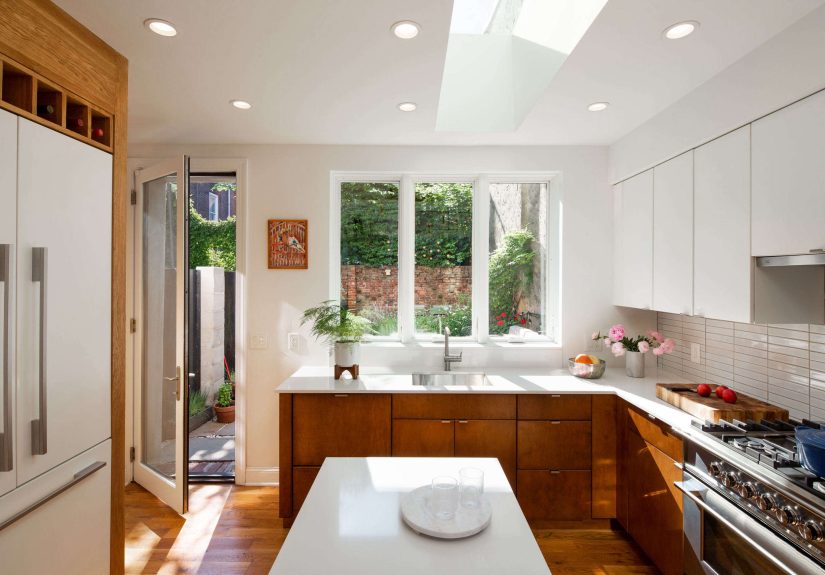
Renovation clients often notice another shift: the layout finally matches real life. The kitchen isn’t just a showroom for a fancy faucet; it becomes a command center with
sightlines to the backyard, a place where cooking and conversation can happen at the same time, and where homework doesn’t require relocating to a separate zip code.
When circulation is redesignedlike creating flow around an existing stair or rethinking a once-awkward additionyour daily routine gets smoother in a way that’s subtle but
constant. You stop bumping into weird corners. You stop narrating the house to guests like, “Okay, now turn left, then right, then… honestly I don’t know why it’s like this.”
Projects that emphasize light can be even more emotionally noticeable. In homes where clerestory windows are added, rooflines are adjusted, or openings are carefully placed,
mornings feel easier. The home looks awake even before you are. Natural light becomes a design material, not an afterthought. That matters in Philadelphia and the Main Line,
where seasons change hard and winter daylight can feel like a limited-edition product.
And then there’s the long-game experience: durability. Thoughtful material choiceswood used where it warms, metal where it protects, restored stone where it groundscan reduce
the “constant fixing” vibe that haunts many homeowners. The house feels solid. The details feel deliberate. Over time, you might realize the biggest luxury wasn’t the statement
stair or the perfect millwork line (though those are fun). It was living in a place that simply behaves: comfortable, efficient, and quietly supportive of the life happening inside it.