Table of Contents >> Show >> Hide
- Meet the MQ-25 Stingray: The Drone Built to Make Fighters Go Farther
- Why “Tanker First” Is Actually a Big Deal
- So Where Does the “Terminator” Part Come From?
- The Case for an Armed Stingray: More Reach, More Options, Less Risk
- The Case Against It: Tankers Have a Day Job
- What to Watch Next: The Signs That This Is Becoming Real
- Conclusion: A Flying Gas Station With Main-Character Potential
- Experiences: Following the Stingray’s Glow-Up From “Tanker” to “Terminator”
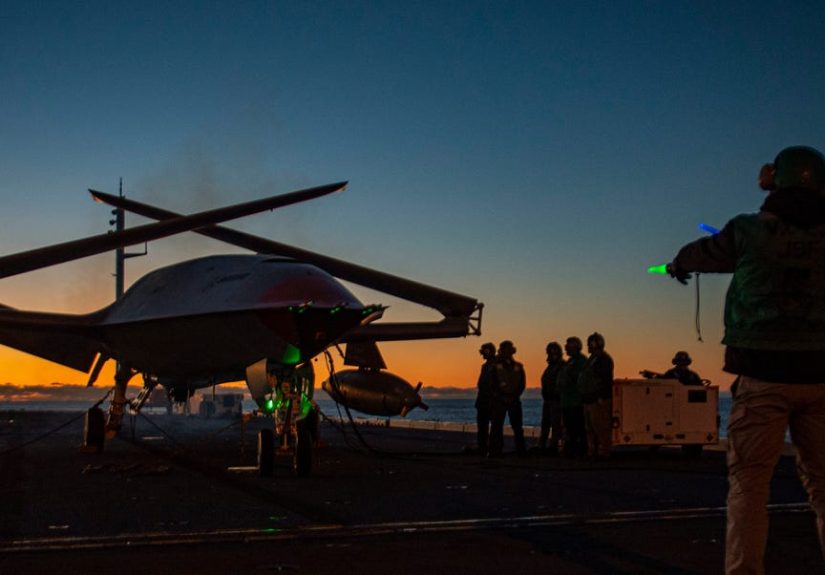
The U.S. Navy’s MQ-25 Stingray was supposed to be the most responsible grown-up in the carrier air wing: show up on time, hand out gas, and keep the party going.
Think of it as a flying convenience store that sells exactly one itemjet fuelat an altitude where your credit card statement can’t find you.
But lately, the Stingray has been showing up in public looking… different. Not “new haircut” differentmore like “why do you have missiles?” different.
A Boeing display model has appeared with Long Range Anti-Ship Missiles (LRASM) hanging under the wings, and suddenly the conversation shifts from
“uncrewed tanker” to “uncrewed striker.” In other words: from tanker to terminator.
Before anyone panics (or starts composing dramatic movie trailers in their head), it’s worth unpacking what’s real today, what’s being pitched for tomorrow,
and why the Navy keeps circling back to the same idea: once you can safely operate a big uncrewed aircraft off a carrier, you’ve built a launchpad for a lot more
than just refueling.
Meet the MQ-25 Stingray: The Drone Built to Make Fighters Go Farther
The MQ-25 started life as a practical answer to an unglamorous problem: carrier fighters have been spending a chunk of their time playing “buddy tanker”
instead of doing fighter things. When F/A-18s are tasked with aerial refueling support, that’s less striking power, less flexibility, and more airframe hours burned
on a mission that doesn’t require a human in the cockpit.
Why the Navy wanted a tanker drone
The Navy’s goal is straightforward: field a dedicated, carrier-based uncrewed tanker that can push fuel out at rangeoften described as roughly 15,000 pounds of fuel about 500 nautical miles from the carrierthen recover back aboard.
That extra gas translates into longer legs for the air wing, more time on station, and fewer fighters tied up in support roles.
Even if you never care about aviation, here’s the big-picture effect: a carrier is only as “long-range” as the aircraft it can support. If tanking is organic and persistent,
the carrier strike group becomes harder to fence in.
Yes, it has already made history
The MQ-25 program’s Boeing-owned demonstrator aircraft (often called T1) flew years ago and has already checked off milestones that used to sound like science fiction:
it has refueled manned Navy aircraft in flight, proving the mechanics and the choreography of unmanned tanking.
- First unmanned-to-manned aerial refueling was demonstrated with a Super Hornet.
- Additional testing expanded to other carrier aircraft types, including the E-2D and F-35C in the broader test narrative.
All of that matters because the MQ-25 isn’t just “a drone.” It’s the Navy’s attempt to normalize uncrewed aviation on the most demanding runway on Earth:
a moving ship where the runway is short, the weather is rude, and the deck crew doesn’t have time for your software update.
Why “Tanker First” Is Actually a Big Deal
If you’re wondering why the Navy didn’t jump straight to an uncrewed strike jet: because the hardest part isn’t bolting on a weapon.
The hardest part is carrier integration.
Carrier aviation is a trust exercise
A tanker mission is a smart on-ramp because it forces the MQ-25 to master the fundamentals:
- Deck handling (taxiing, parking, avoiding humans with wands and very strong opinions)
- Launch and recovery with catapults and arresting gear
- Command and control that works in a shipboard environment
- Safety and reliability that makes commanders comfortable betting a flight deck on it
In other words: the MQ-25 is less “robot Top Gun” and more “robot learns to not get everyone fired.”
Once that foundation exists, expanding missions becomes a policy choice, not a physics problem.
It also quietly changes the carrier air wing math
In the carrier air wing, range is a team sport. Tanking extends the reach of fighters and reduces the strain on aircraft that would otherwise be modified or tasked to refuel.
And in a world where long-range threats push carriers to operate farther out, tanking becomes less of a convenience and more of a survival habit.
So Where Does the “Terminator” Part Come From?
The “tanker to terminator” vibe took off when Boeing displayed a model of the MQ-25 carrying two LRASM anti-ship missiles.
This wasn’t a subtle hint. It was basically a billboard that said: “What if your tanker could also delete ships?”
It’s important to keep the tone honest: a display model is not the same as an approved requirement, a funded integration plan, or an operational capability.
But it is a signalespecially when multiple defense outlets report that industry is actively pitching expanded roles like surveillance and strike.
Why LRASM, specifically, fits the “armed Stingray” pitch
LRASM is designed for long-range maritime strike, with an emphasis on survivability and autonomous target discrimination in contested environments.
Public descriptions often note a range greater than 200 nautical miles and guidance features intended to find and hit ships even when the battlespace is messy.
Pair that with a carrier-based uncrewed aircraft and you get a concept that makes planners sit up straight:
a platform that can launch from the carrier, fly out with endurance, and contribute to sea denial without risking a pilot.
What “armed MQ-25” could look like in practice
The most realistic near-term vision isn’t the MQ-25 kicking down the front door of enemy air defenses.
It’s more like a standoff contributora platform that:
- launches from the carrier with weapons for maritime strike in permissive-to-moderately contested lanes,
- uses networked targeting from other assets (fighters, E-2D, maritime patrol, offboard sensors),
- adds magazine depth so the carrier air wing can carry more shots without turning every fighter into a bomb truck,
- or swaps weapons for ISR/relay payloads when “seeing” and “connecting” matters more than “shooting.”
In that sense, “terminator” doesn’t have to mean “killer drone that replaces fighter pilots.”
It can mean “multi-role uncrewed aircraft that makes the whole team more lethal.”
The Case for an Armed Stingray: More Reach, More Options, Less Risk
If the Navy ever chooses to arm an MQ-25-derived aircraft, it would likely be because it solves several problems at once.
1) It expands the carrier’s long-range striking toolkit
Carriers already project power, but threats are evolvingand so is the desire to hold targets at risk from farther away.
A long-range anti-ship weapon carried by an uncrewed platform is one way to push capability outward without demanding that every strike be crewed.
2) It frees fighters to do fighter jobs
In high-end scenarios, fighters may be needed for air defense, escort, electronic attack support, and complex strike packages.
If an uncrewed platform can carry some of the “extra shots,” fighters can prioritize the missions that benefit most from human judgment in the cockpit.
3) It supports “affordable mass” thinking
Modern conflict planning increasingly values having enough platforms and weapons to complicate an adversary’s defense.
An armed uncrewed aircraft doesn’t have to be the stealthiest thing in the sky to be valuable.
Sometimes its job is simply to be another credible launch platform that stretches an opponent’s decision-making.
The Case Against It: Tankers Have a Day Job
Here’s the catch: the MQ-25’s core job is incredibly important, and arming it creates tradeoffs.
A tanker’s value is measured in fuel offload, reliability, sortie generation, and integrationnot in how intimidating it looks on a brochure.
Tradeoffs that matter
- Fuel vs. payload: Weapons and sensors take weight and space. That can reduce fuel offload or endurance.
- Complexity: Weapons integration adds software, testing, certification, logistics, and training burdens.
- Risk: If a platform is both tanker and shooter, commanders must decide when it’s okay to risk it.
- Doctrine and control: Using lethal force introduces policy, rules-of-engagement, and command-and-control questions that tanking doesn’t.
In plain terms: turning your flying gas station into a weapons truck is cool until you desperately need gas.
That’s why many analysts expect any “terminator” evolutionif it happens at allto come as a spiral upgrade or a variant,
not as a sudden transformation of every tanker into an armed striker.
What to Watch Next: The Signs That This Is Becoming Real
If you’re trying to separate “conference concept” from “future fleet reality,” watch for these signals:
1) Carrier flight testing and operational milestones
The Navy’s timeline language has pointed to carrier-based flight testing and operational demonstrations in the mid-2020s timeframe, with reporting indicating that key milestones
have shifted and that first-flight and shipboard testing have been discussed in the 2025–2026 window.
When the MQ-25 starts stacking safe, repeatable shipboard operations, the “what else can it do?” question gets louder.
2) Mission-control maturity
The MQ-25 is more than an air vehicleit’s also the mission control ecosystem that has to work at sea.
As that command-and-control architecture matures, it becomes easier to integrate additional payloads, sensors, and mission sets.
3) Budget language that mentions more than tanking
The program already gets described as supporting tanker and surveillance/ISR concepts in some oversight documentation.
If budgets, requirements, and test plans begin explicitly calling out strike integration, that’s when “terminator” stops being a headline and starts being a roadmap.
Conclusion: A Flying Gas Station With Main-Character Potential
Right now, the MQ-25 Stingray is best understood as the Navy’s gateway dronethe aircraft designed to make uncrewed carrier aviation normal by doing a mission
that is high-impact, repeatable, and incredibly useful: aerial refueling.
But the moment an uncrewed aircraft can reliably launch, recover, taxi, communicate, and coordinate off a carrier, the “tanker-only” label starts to look less like a permanent identity and more like a starting class in a video game.
And yesBoeing’s armed model suggests that industry (and possibly the Navy) sees a future where the Stingray’s “sting” becomes literal.
Will the MQ-25 itself become a missile-slinging sea hunter? Maybe. Will an MQ-25-derived variant do it? That’s easier to imagine.
Either way, the trend line is clear: the Navy is building the operational muscle for uncrewed carrier aviation, and once that muscle exists, new missions are only a few policy decisions away.
Experiences: Following the Stingray’s Glow-Up From “Tanker” to “Terminator”
If you’ve ever tried to keep up with modern military aviation, you know the experience is basically a mix of awe, confusion, and occasional “wait, that’s real?”
The MQ-25 is a perfect examplebecause it doesn’t evolve like a normal airplane story. It evolves like a season of a streaming show where the writers keep dropping hints that the quiet side character is about to become the villain… or the hero… or both.
One day you’re reading about a practical, almost boring missionuncrewed aerial refuelingand thinking, “Okay, neat, the Navy built a robot gas station.”
Then a model appears at a conference with big, serious missiles under the wings, and suddenly your brain does that cartoon record-scratch:
Hold on. Are we still talking about a tanker?
The strangest part, from a “watching-this-unfold” perspective, is how logical the shift feels once you sit with it.
At first, “arming the tanker drone” sounds like a plot twist written by someone who drinks espresso for sport.
But the more you learn about carrier ops, the more you realize the tanker role was never “small.” It was the entry ticket.
Anyone can sketch a weaponized drone on a slide. The hard part is making a big uncrewed aircraft behave on a carrier deck like it belongs thereday after day, night after night.
Following MQ-25 updates can feel like watching a toddler learn to walk in steel-toed bootsexcept the toddler costs a lot, and the boots are catapults and arresting gear.
Every milestone matters: taxi tests, deck-handling demos, mission control improvements, interoperability checks.
None of that is as flashy as “terminator drone,” but it’s the stuff that makes the flashy part even possible.
And if you’re the kind of person who enjoys the human side of tech, the MQ-25 story has plenty of that too.
There’s the unspoken reality that trust is the real technology being built here.
It’s not just whether the drone can refuel a jet; it’s whether a squadron, a ship’s crew, and senior leaders are willing to treat an uncrewed aircraft as a normal member of the air wing.
That’s a cultural shift as much as it is an engineering one.
There’s also something oddly relatable about the way the MQ-25 keeps getting described. “Pathfinder.” “Gateway.” “Future air wing.”
Those words pop up because everyone senses what’s going on: the Navy isn’t only buying a tanker.
It’s buying the right to be more flexible later.
As a reader, you can almost feel the tension between “please just get the tanker working” and “imagine what else we could do once it works.”
That’s the push-pull you see in the reporting: schedule pressure and testing realities on one side, and big strategic ideas on the other.
It’s like watching someone renovate a kitchen while also daydreaming about building an entire second story. First you need the cabinets to close properly. Then you can talk about rooftop decks.
And yes, the “tanker to terminator” hook is irresistible, because it turns a support platform into a headline.
But the best “experience” takeaway is actually more grounded: even if the MQ-25 never carries a weapon operationally, it still changes the game by making uncrewed carrier aviation routine.
Once you have routine, you have options. And options are what militaries buy when they’re staring at a future that refuses to sit still.
So if you’re following along at home, here’s the vibe: enjoy the cool renders, laugh at the dramatic nicknames, but keep your eye on the boring milestones.
The moment the MQ-25 becomes dependable at sea is the moment the Navy gets serious leveragenot just in fuel, but in what it can imagine next.