Table of Contents >> Show >> Hide
- The Disappearance That Wouldn’t Stay Gone
- Why Cold Cases Don’t “Go Cold”They Go Quiet
- The Restart Button: A Renewed Push and a Very Specific Kind of Hope
- The Bullet Behind the Baseboard: When Evidence Hides in Plain Sight
- The Indictment, the Arrest, and the Confession That Finally Fit the Evidence
- The Dig: How the Search Turned Into a Recovery
- Why “Last Words” Don’t Solve a Case by Themselves
- What This Case Reveals About Solving a 20+ Year Homicide
- The Family Side: Relief That Still Hurts
- What the Rest of Us Can Learn (Without Playing Amateur Detective)
- Epilogue: of Real-World “This Is What It Feels Like”
If you’ve ever yelled at a true-crime podcast because the obvious suspect is right there, this story is going to feel like the universe
finally hitting “Refresh.” After nearly a quarter century of silence, a West Virginia cold case broke open in the strangest way possible:
a suspect’s final confessiongiven when he knew he was running out of tomorrowsled investigators to two sets of remains and long-delayed answers.
But this isn’t just a headline built for doom-scrolling. It’s a real-world look at how modern cold-case work actually happens: the slow grind of
re-checking old files, the patient science of evidence recovery, and the uncomfortable truth that sometimes the thing that “solves” a case isn’t
a dramatic courtroom momentit’s a shovel, a lab test, and a family finally being able to bring their loved ones home.
The Disappearance That Wouldn’t Stay Gone
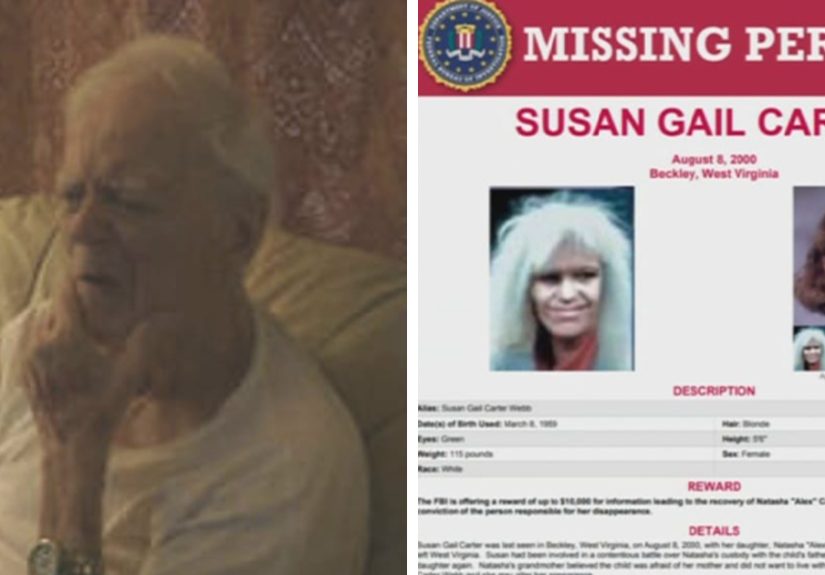
In August 2000, Susan Carter and her 10-year-old daughter, Natashaknown by many as “Alex”vanished from the Beckley area in Raleigh County,
West Virginia. Missing-person cases can begin with uncertainty: a family argument, a sudden move, a rumor that someone “just left.”
But as the calendar pages flip and birthdays pass, uncertainty starts to harden into something heavier.
Over the years, investigators said Susan was involved in a contentious custody dispute with Alex’s father. That detail matters, not as gossip,
but because custody fights can muddy the waters earlyespecially when the missing person is a parent and the public is quick to assume,
“Maybe they ran off.” When time is precious, a case that gets framed as a voluntary disappearance can lose momentum it never gets back.
What law enforcement would later emphasize is that Susan and Alex were living at the home of a man named Larry Webb around the time they disappeared.
And for many families, “living with” can be the most ominous phrase in the English languagebecause it means the answers might be hiding in the
most ordinary place: a living room, a basement, a backyard.
Why Cold Cases Don’t “Go Cold”They Go Quiet
We call them “cold cases,” as if they’re stored in an evidence-free freezer behind a dusty filing cabinet. In reality, many unsolved homicides
are more like a radio station with bad reception: the signal is there, but it’s buried under staticmissing witnesses, lost tips, outdated methods,
and the inevitable erosion of memory.
A case can stall for reasons that sound boring but are brutally important:
- No body, no clear crime scene: proving homicide beyond a reasonable doubt is hard when you can’t show what happenedor where.
- Witness timelines decay: people move, relationships change, and details blur after years.
- Early missteps: a delayed search, an overlooked room, a tip that didn’t get the attention it deservedsmall errors can snowball.
- Technology changes: what couldn’t be tested in 2000 might be testable years later, but only if evidence was preserved correctly.
And then there’s the emotional math. Families don’t get to “close the file.” They live inside an endless loop of hope and dread:
every unknown number is a possible answer, every news alert a possible update, every passing year a new layer of grief.
The Restart Button: A Renewed Push and a Very Specific Kind of Hope
Years after Susan and Alex disappeared, the case received renewed attention from federal and local partners. In 2021, the FBI’s Pittsburgh field
office announced a new initiative and a reward to generate leads and keep the case in the public eye. Efforts like this may look like publicity,
but they’re also strategy: billboards, posters, and refreshed media coverage can prompt the one tip a community has been carrying quietly for years.
One key detail from that renewed push: it reminded the public that Alex was only 10 when she disappeared, and it kept her name connected to a real
childnot just a line in an old report. When cold cases get attention, they often attract a second wave of witnesses: people who were afraid to talk
in 2000, people who didn’t realize what they knew mattered, or people who finally decide they’re done protecting someone.
Importantly, investigators didn’t just ask for help. They worked the case like it was still 2000only with better tools.
Search warrants were executed at Webb’s property over time, and the investigation gained traction through the kind of physical evidence that doesn’t
care about fading memories.
The Bullet Behind the Baseboard: When Evidence Hides in Plain Sight
Breakthroughs in cold cases often arrive looking unimpressive. Not a smoky confession. Not a cinematic “gotcha.”
More like: a bullet, embedded in a wall, tucked behind a baseboard in a bedroom associated with a child who disappeared decades earlier.
According to investigators, a bullet was recovered from the wall in the bedroom believed to have been used by Alex. It was sent for testing,
and DNA results confirmed the presence of Alex’s blood on that bullet. That kind of result is a hinge moment: it transforms suspicion into evidence,
and evidence into pressure.
This is also where modern investigative work earns its keep. Evidence recovery teams and crime scene units aren’t just “bag-and-tag” crews.
They’re trained to notice the weirdly new baseboard, the patch of paint that doesn’t match, the subtle signs that a room has been altered.
The work is meticulous because the stakes are permanent: if you get it wrong, a defense attorney will (rightfully) tear it apart later.
And that bulletsmall, silent, and stubbornhelped create a case that could speak for a child who couldn’t.
The Indictment, the Arrest, and the Confession That Finally Fit the Evidence
In October 2023, authorities announced that Webb had been indicted for Alex’s murder. Even then, the case still carried the weight that haunts
many missing-person homicides: investigators believed they knew what happened, but they didn’t yet have everything they needed to fully answer
the hardest questionwhere Susan and Alex were.
In early April 2024, Webb was taken into custody. And then, in the first week of April, investigators said he confessed.
Prosecutors later described it as detailed and consistent with the investigation. The central allegation: Webb said he shot Susan during an argument
over missing money, then shot Alex to avoid being caught for Susan’s death.
Confessions are complicated. People lie. People minimize. People shift blame. People try to sound less monstrous than they were.
That’s why investigators don’t treat a confession like a magic wand. They treat it like a blueprintand then they test whether the house is really there.
The Dig: How the Search Turned Into a Recovery
The confession pointed investigators back to Webb’s property. From there, the case moved from “investigation” into the physically demanding
reality of evidence recovery. Digging for human remains isn’t like gardening. It’s a forensic operation that has to preserve context:
soil layers, object placement, clothing, and anything that might help identify the victims and document what happened.
Investigators searched for days. According to reporting from the press conference and subsequent coverage, heavy equipment and experienced operators
worked methodicallyrow by rowturning soil to significant depth across the yard. That’s not dramatic; it’s disciplined.
It’s also a reminder that closure often looks like a muddy boot, not a Hollywood monologue.
On Monday, April 22, 2024, investigators located remains believed to be Susan Carter and Alex Carter on Webb’s property in the Beckley area.
Officials said the remains were sent to the state medical examiner for autopsies and confirmation.
The day carried another grim twist: Webb died after a medical episode while in custody. The timing was described publicly as strange and difficult
to processbecause the bodies were found only hours after his death. Even in a case driven by procedure and proof, the human brain can’t help but
notice the poetic cruelty of the timing.
Why “Last Words” Don’t Solve a Case by Themselves
Here’s a truth that gets lost in viral headlines: a deathbed confession isn’t automatically a legal solution. It can be a major lead, a vital admission,
and a key piece of truthbut investigators still have to corroborate it.
In this case, the alleged confession mattered because it didn’t float in a vacuum. Officials emphasized that details aligned with evidence already found,
including the bullet recovered from the bedroom wall and tested for DNA. In other words, the confession didn’t invent a story; it snapped into an
existing picture.
That distinction matters for public trust. A confession without corroboration is a headline. A confession supported by physical evidence is a case.
And when the suspect dies, the need for reliability gets even sharperbecause there won’t be a trial where competing narratives get tested in court.
The investigation has to be strong enough to stand on documentation, not drama.
What This Case Reveals About Solving a 20+ Year Homicide
While every cold case is unique, this one highlights patterns that show up again and again in long-unsolved homicides:
1) Persistence beats brilliance
The public loves the idea of a genius detective. Real investigations are usually won by the person who refuses to stop asking,
“What did we miss?” Agencies credited relentless work by investigators who kept pushing the case forward when it had every reason to stall.
2) Interagency teamwork isn’t a buzzwordit’s leverage
Cold cases often require more resources than a single department can spare. In this investigation, state police, local authorities, and the FBI all played roles,
combining manpower, lab access, and specialized evidence recovery capabilities.
3) Old evidence can become new evidence
A bullet in a wall might have been meaningless decades ago without the ability to extract usable DNA or without the investigative context to locate it.
Advancements in forensic testing mean that preserved evidence can gain value over timeif it’s found, documented, and handled properly.
4) “Closure” comes in layers
Finding remains answers a brutal question, but it also opens new ones: timelines, cause of death confirmation, and accountability reviews about early handling.
Investigators have acknowledged that reviewing the early days of a case is part of doing justice, not reliving mistakes for sport.
The Family Side: Relief That Still Hurts
When a case is unresolved for decades, families learn a special kind of emotional multitasking: you grieve and hope at the same time.
Public comments from Alex’s father captured that messy realityrelief that answers were finally coming, and grief that the outcome was the one families fear.
Families also carry the weight of advocacy: calling agencies, writing letters, pushing for attention, insisting that a missing child still matters.
One of the quiet lessons of this story is that persistence doesn’t always look heroic. Sometimes it looks like being “that person” who won’t stop asking,
even when you worry you’re annoying someone.
And sometimes, tragically, the answer arrives when the person responsible can no longer face formal judgment in a courtroom. That doesn’t erase the truth.
But it does reshape the kind of justice that’s possibleand can make the work of careful documentation and corroboration even more important.
What the Rest of Us Can Learn (Without Playing Amateur Detective)
Stories like this can trigger a natural urge to “help.” The best help is grounded, respectful, and realistic:
- Take missing persons alerts seriously: sharing official posters and accurate information keeps cases visible.
- Respect families: don’t tag them into speculation threads or treat their loss as entertainment.
- If you truly have information, use official channels: cold cases often hinge on one credible tip, not a thousand theories.
- Support resources that preserve evidence and fund testing: many breakthroughs come from lab capacity and case review time.
Above all, remember that behind every “solved” headline is a human reality: people lost years of normal life waiting for a phone call that never came.
Epilogue: of Real-World “This Is What It Feels Like”
When people imagine a cold case getting solved after 20-plus years, they picture a clean moment: a detective announces the truth, a family exhales,
credits roll. The real experience is messier, more physical, and often painfully sloweven after the “break.”
For investigators, the breakthrough can arrive on a day that looks ordinary from the outside. A phone call. A transfer to a hospital.
A new piece of lab reporting that turns a hunch into an argument you can make in court. And then, suddenly, the work becomes intensely practical.
There are search grids. Weather forecasts. Equipment logistics. Chain-of-custody forms. People assigned to stand in the same spot for hours so a section
of ground can be processed inch by inch. It’s not glamorousbut it’s what keeps the truth from falling apart later.
For evidence recovery teams, “discovery” isn’t a single moment of digging up a secret. It’s a careful, procedural shift:
the site becomes a scene, the soil becomes a record, and every object becomes a potential piece of identification or confirmation.
You don’t just find remainsyou document position, depth, surrounding material, and anything that can help explain what happened and when.
In cases like this one, where the alleged location is a yard that has lived a whole lifetime since 2000, the work is even harder.
Landscapes change. Trees grow. Dirt gets moved. People build decks, plant gardens, and do all the normal things that can unknowingly layer the past.
For families, the experience is its own kind of whiplash. For years, there’s a terrible suspension: you can’t fully mourn, because what if they’re alive?
You can’t fully hope, because your brain keeps whispering what you don’t want to hear. Then a call comes insometimes from a detective, sometimes through news
and the answer is finally concrete. That can feel like relief and heartbreak arriving in the same envelope.
Even “good news” in a homicide case is heavy. Many families describe a strange blend of gratitude (someone kept working), anger (why did it take so long),
and grief that hits fresh because the unknown is gone. There are also the practical realities people don’t talk about: waiting for medical examiner confirmation,
making decisions about remains, and preparing for a memorial that should have happened decades earlier. The calendar doesn’t make room for that kind of time travel,
but families have to live it anyway.
And then there’s the human complexity of the suspect’s final confession. People want to know if it was remorse, fear, religion, exhaustion, or ego.
Often it’s a tangled mix. What matters most is not the storyteller’s motivebut whether the story matches the evidence.
In this case, investigators emphasized alignment between the confession and what they could independently verify. That’s the difference between a last-minute
performance and a last-minute truth.
If there’s one experience that repeats across decades-old homicide cases, it’s this: closure isn’t a switch. It’s a process.
But when a missing child and her mother are finally found and namedwhen a family can stop wondering wherethey get something priceless back:
the right to mourn honestly, and the chance to bring their people home.