Table of Contents >> Show >> Hide
- The Fast Answer: Do Fidgets Help Students Focus?
- Why Students Fidget in the First Place
- What Research Says About Fidgets and Student Focus
- Which Fidgets Work Better in Class?
- A Practical Classroom Framework for Using Fidgets
- Fidgets, ADHD, and Neurodivergent Learners
- Parent Guide: Should You Send a Fidget Tool to School?
- Student Guide: How to Know If Your Fidget Is Actually Helping
- Myths vs. Reality
- Final Verdict: Do Fidgets Help Students Focus?
- 500-Word Experience Section: What This Looks Like in Real Life
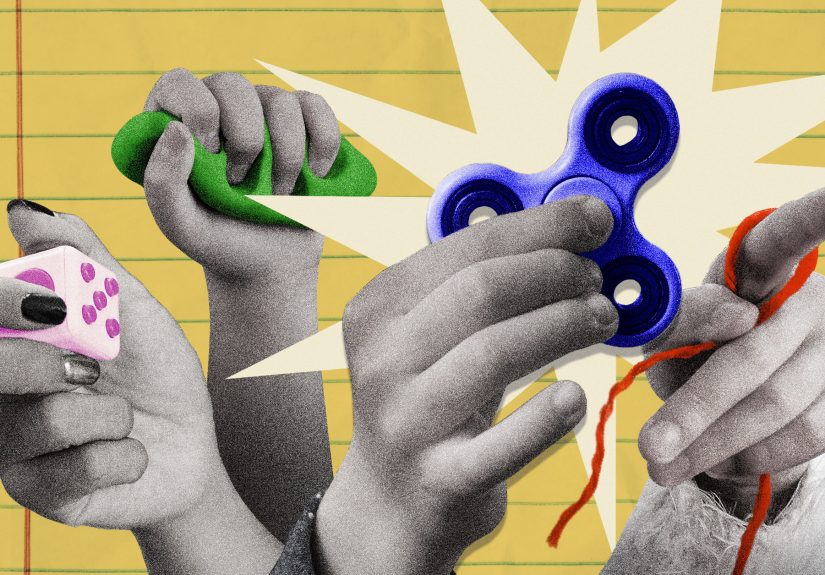
If you’ve ever watched a student twist a rubber ring, squeeze putty, or spin something suspiciously noisy during math, you’ve probably asked the same question as every teacher, parent, and school counselor on Earth:
Is this helping… or is this just tiny, desk-sized chaos?
The honest answer is both less dramatic and more useful: fidgets can help some students focus in some situations, but they can also backfire hard when the tool is flashy, loud, or used without structure.
So no, fidgets are not magic concentration wands. But no, they’re not automatically distractions either.
In this guide, we’ll unpack what research says, where classrooms get fidgets right (and hilariously wrong), and how to choose tools that support learning instead of starting a miniature toy convention in period 3.
We’ll also cover ADHD, executive function, classroom management, and practical rules teachers and families can use immediately.
The Fast Answer: Do Fidgets Help Students Focus?
Sometimes. Think of fidgets like caffeine: useful in the right dose, terrible at the wrong moment.
For students with restlessness, sensory needs, or attention variability, a quiet, low-visual fidget can reduce internal “noise” and make it easier to stay on-task.
For other students, especially when the fidget is novel, noisy, or visually stimulating, it competes with learning and lowers performance.
The key variable is not “fidget vs. no fidget.” The key variable is fit:
- fit between student and tool,
- fit between task and environment,
- fit between classroom rules and real behavior.
Why Students Fidget in the First Place
Fidgeting is often the body’s way of regulating attention, arousal, or stress. Many students are not trying to be disruptive; they’re trying to stay mentally online.
When a task feels boring, difficult, or long, micro-movements can act like a “self-generated attention anchor.”
Fidgeting and Executive Function
Executive function includes working memory, inhibitory control, and cognitive flexibility.
Students with executive function challenges may need a small motor outlet so their brain can stay with the lesson rather than chase every hallway sound, pencil tap, and existential thought about lunch.
Not Every Wiggle Is a Problem
Schools often reward stillness and confuse movement with disengagement.
But still bodies can hide wandering minds, while moving hands can sometimes support sustained attention.
The goal is not “zero movement.” The goal is productive attention.
What Research Says About Fidgets and Student Focus
Where Fidgets Can Hurt Focus
Several classroom studies found that some fidget devicesespecially spinnerswere linked with poorer attention or lower academic performance.
In short: when the tool is highly interesting on its own, the student may pay attention to the tool instead of the task.
It’s multitasking with glitter: fun, but cognitively expensive.
Research has also shown “spillover distraction”: nearby students can lose focus too.
If one student’s fidget creates visual motion, sound, or social curiosity (“Can I try that?”), the entire table’s working memory takes a hit.
Where Fidgets Might Help
Evidence is mixed, not hopeless.
Some studies and classroom reports suggest that controlled movement can improve on-task behavior for specific students, especially when tools are quiet, training is explicit, and expectations are clear.
Newer analyses also suggest that effects vary widelymeaning one-size-fits-all conclusions are a bad idea.
Translation for real classrooms: don’t ban everything, don’t allow everything, and definitely don’t assume a viral toy equals a learning support.
Which Fidgets Work Better in Class?
The best classroom fidgets are boring. Yes, boring.
If the tool is entertaining, it’s probably not a classroom support toolit’s recess in disguise.
Better Classroom-Friendly Fidgets
- Textured strips under desks
- Soft stress balls (silent, non-bouncy)
- Marble mesh sleeves
- Resistance bands on chair legs
- Small putty used only during listening tasks
High-Risk Fidgets for Distraction
- Clicky devices
- Light-up tools
- Fast-spinning or throwable objects
- Anything with collectible/trading energy
- Anything that makes the teacher say, “Absolutely not,” within 30 seconds
A Practical Classroom Framework for Using Fidgets
1) Start With a Purpose, Not a Product
Before introducing a fidget, define the problem:
Is the student off-task during silent reading? Losing focus during direct instruction? Tapping loudly during tests?
Choose the tool based on the function needed, not what’s trending online.
2) Teach “How to Fidget” Explicitly
Students need direct instruction:
- Eyes on teacher/materials
- Hands below desk level
- No sound, no throwing, no sharing during instruction
- If the fidget distracts you or others, it goes to the “pause basket”
3) Use a Trial Window
Test the tool for 1–2 weeks.
Track one or two measurable outcomes:
- on-task intervals,
- assignment completion rate,
- redirection frequency,
- student self-rating of focus.
If outcomes improve, keep it. If outcomes stall, adjust or stop.
Evidence-based teaching beats gadget optimism every time.
4) Pair Fidgets With Better Supports
Fidgets work best as one small part of a bigger support system:
- movement breaks,
- clear routines,
- chunked directions,
- visual schedules,
- preferential seating,
- teacher check-ins.
A fidget cannot fix unclear instruction, sleep deprivation, anxiety overload, or a worksheet that feels like a tax form.
Fidgets, ADHD, and Neurodivergent Learners
Students with ADHD often need help regulating attention and activation levels.
Some benefit from controlled movement; others get pulled into the fidget itself.
This is why individualized plans matter more than blanket rules.
Important Principle: Individualization
Medical and school guidance emphasizes multimodal supportbehavior strategies, school accommodations, and, when appropriate, medical/psychosocial treatment.
Fidgets can be an accommodation for some students, but they are not a replacement for comprehensive ADHD care.
Legal and School Planning Considerations
Under disability protections in U.S. schools, students may receive supports through formal plans.
If fidgets are used, they should be documented as a specific accommodation with criteria for successnot as a random classroom free-for-all.
Parent Guide: Should You Send a Fidget Tool to School?
Short answer: maybe, but collaborate first.
A home-successful tool can fail in a classroom if it’s noisy, tempting, or socially disruptive.
What Parents Can Do
- Ask the teacher which types are classroom-appropriate.
- Practice “silent fidgeting” at home during homework.
- Teach one-sentence self-advocacy: “This helps my hands stay busy so my brain can listen.”
- Pack one backup tool, not a fidget buffet.
- Review weekly: “Did it help your focus or steal it?”
Student Guide: How to Know If Your Fidget Is Actually Helping
If you’re a student reading this, here’s the simplest test:
Are you finishing more work with better accuracy and less stress?
If yes, keep the tool.
If no, you’re probably entertaining your fingers while your grades quietly file a complaint.
Self-Check Questions
- Did I need fewer reminders from the teacher?
- Did I remember more from the lesson?
- Did my fidget distract anyone else?
- Did I use it quietly and consistently?
- Would I still use this if nobody could see it?
Myths vs. Reality
Myth 1: All fidgets improve focus
Reality: Effects vary by student, tool, and context.
Some tools help. Some hurt. Many do nothing.
Myth 2: If one student gets a fidget, everyone should
Reality: Equity means giving students what they need to access learning, not giving everyone identical objects.
Myth 3: Fidgets are a cure for ADHD
Reality: Fidgets may support attention in specific moments, but ADHD support usually requires broader, evidence-based strategies.
Myth 4: Banning all fidgets solves distraction
Reality: Blanket bans can remove useful regulation tools for students who genuinely benefit.
Smarter screening and structure usually work better.
Final Verdict: Do Fidgets Help Students Focus?
Yesfor the right student, with the right tool, under the right rules.
Nowhen the tool is noisy, exciting, or unstructured.
The best classrooms treat fidgets as an intervention to test, not a trend to trust blindly.
If you remember one thing, remember this:
Focus is a systems problem.
Fidgets can be one helpful gear in the system, but they can’t run the machine alone.
Combine them with strong teaching, predictable routines, movement opportunities, and individualized supports.
That’s where real attention gains live.
500-Word Experience Section: What This Looks Like in Real Life
Experience 1: The Fifth-Grade Teacher Who Swapped “Cool” for “Quiet”
Ms. Rivera started the year with total optimism and a plastic tub labeled “Focus Tools.”
Within two days, her class transformed into a tiny percussion ensemble.
She had clickers, poppers, spinners, and one mystery object that sounded exactly like a cricket with a caffeine problem.
Her first instinct was to ban everything, forever, and maybe move to a quiet mountain.
Instead, she tried a reset.
She removed every high-noise item and replaced them with textured desk strips and marble sleeves.
She taught a mini-lesson called “Fidgets Are for Learning, Not Performing.”
Students practiced while listening to a short read-aloud.
If the tool popped above desk level, made noise, or got shared, it went into a “try again tomorrow” basket.
Within two weeks, redirections dropped noticeably, and two students who usually drifted during direct instruction stayed engaged for longer chunks.
Not perfect, but betterand calmer.
Experience 2: The Middle School Student Who Thought a Spinner Was a Superpower
Jordan (7th grade) loved his spinner and was convinced it made him “lock in.”
His science teacher suggested a two-week experiment:
Week A with spinner, Week B with a silent squeeze ring.
They tracked assignment completion, quiz recall, and teacher prompts.
Jordan expected the spinner to win by a landslide.
Plot twist: the ring days were better.
Jordan realized the spinner felt good but stole visual attention.
The ring gave him movement without the “look at me” effect.
He kept the ring for note-taking and used brief movement breaks before tests.
His biggest takeaway was mature and hilarious:
“I thought I needed cool gear. Turns out I needed less drama.”
Experience 3: A Parent-Teacher Team Effort
Maya’s mom noticed homework improved when Maya kneaded putty.
She sent the same putty to school without checking classroom rules.
By lunch, three classmates wanted to borrow it and one tried to stretch it across two desks like mozzarella.
The teacher emailed homekindly.
They met, agreed on one approved tool, and added a simple script for Maya:
“This helps me focus. I can’t pass it around during class.”
They also added a daily check-in score from 1 to 5 for attention.
After a month, Maya’s writing stamina improved and peer interruptions dropped.
The lesson wasn’t “parents were wrong” or “teacher was strict.”
It was that coordination beats guessing.
Experience 4: The School Psychologist’s Reality Check
Dr. Lee says the most common mistake is treating fidgets as a personality accessory instead of a functional support.
In student support meetings, she asks three questions:
What behavior are we targeting?
How will we measure change?
What happens if this tool fails?
That framework prevents months of hopeful but ineffective trial-and-error.
She has seen fidgets help students who pick skin, tap loudly, or leave seats repeatedly.
She has also seen fidgets tank attention when novelty takes over.
Her rule: if it helps learning, it stays; if it steals learning, it goes.
Simple, fair, and data-driven.
Experience 5: The College Student Version
A freshman named Eli used a spinner in lecture and felt productive.
Later, while reviewing notes, he realized he remembered surprisingly little.
He switched to a smooth stone in one hand and active note prompts in the other (“What’s the main claim?” “What’s the example?”).
Attention improved, and so did quiz scores.
His conclusion:
“A fidget should be background music, not the main act.”
Across all these stories, the pattern is consistent:
fidgets help when they reduce cognitive friction and disappear into the background.
When they become the event, focus leaves the chat.