Table of Contents >> Show >> Hide
- What Is MEV-1?
- The Story Behind MEV-1
- How MEV-1 Works
- Why MEV-1 Was a Big Deal
- MEV-1 and Intelsat 901
- MEV-1 Timeline
- MEV-1 vs. Refueling: What Is the Difference?
- The Business Case for Satellite Life Extension
- MEV-1 and Space Sustainability
- What MEV-1 Taught the Space Industry
- Common Questions About MEV-1
- Experiences Related to MEV-1: What This Mission Feels Like From the Ground
- Conclusion
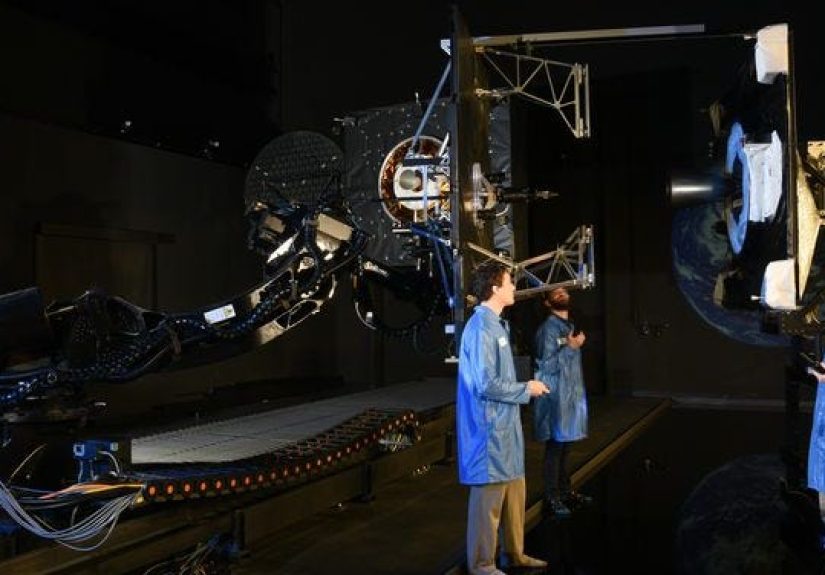
MEV-1 sounds like the name of a robot that should be serving coffee on a spaceship, but it is actually one of the most important commercial spacecraft ever launched. Short for Mission Extension Vehicle-1, MEV-1 is a satellite-servicing spacecraft built by Northrop Grumman and operated through its SpaceLogistics subsidiary. Its job is simple to describe and extremely difficult to do: fly up to an aging satellite in geosynchronous orbit, dock with it, take over propulsion and attitude control, and keep that satellite working longer.
In other words, MEV-1 is a space mechanic. It does not change tires, complain about parts being “backordered,” or leave a mysterious grease stain on your driveway. Instead, it attaches to communications satellites that are still useful but running low on fuel. Once connected, it uses its own thrusters and fuel supply to help the client satellite stay in the right place and point in the right direction.
The spacecraft made history in 2020 when it docked with Intelsat 901, also known as IS-901. That event marked the first docking between two commercial satellites in geostationary orbit and proved that satellite life extension was not just a clever PowerPoint dream. It was a working business model.
What Is MEV-1?
MEV-1 is the first Mission Extension Vehicle, a commercial spacecraft designed to extend the operational life of satellites in geosynchronous orbit. Geosynchronous orbit, often shortened to GEO, is roughly 22,300 miles above Earth’s equator. Satellites in this region orbit at the same rate Earth rotates, making them appear fixed over one area of the planet. This is why GEO is especially valuable for communications, television broadcasting, weather monitoring, and government connectivity.
Satellites in GEO are expensive, complex, and difficult to replace quickly. Many continue to have healthy electronics, antennas, and transponders long after their fuel supply becomes the limiting factor. That fuel is needed for stationkeeping, attitude control, and end-of-life disposal maneuvers. When the fuel runs low, a satellite may need to be retired even if the rest of the spacecraft is still ready for work.
MEV-1 changes that equation. Instead of letting a useful satellite retire early, MEV-1 docks with it and acts like an external propulsion and control module. It is not quite refueling the satellite. Think of it more like attaching a tugboat to a large ship and steering the combined stack from the outside.
The Story Behind MEV-1
MEV-1 launched on October 9, 2019, aboard a Proton-M rocket from the Baikonur Cosmodrome in Kazakhstan. It shared the ride with the EUTELSAT 5 West B satellite. After launch, MEV-1 used its own propulsion system to reach the region near geostationary orbit and prepare for its first client mission.
That first client was Intelsat 901, a communications satellite launched in June 2001. IS-901 had been designed for a 13-year service life, but like many well-built spacecraft, it kept doing its job beyond the original plan. The problem was fuel. By the late 2010s, the satellite was approaching the point where it would have to be moved into a graveyard orbit, a disposal region above the active GEO belt.
Rather than simply retire IS-901, Intelsat partnered with SpaceLogistics to use MEV-1. The satellite was moved into a safer graveyard orbit for the docking attempt. MEV-1 then approached carefully, performed a series of rendezvous checks, and docked with IS-901 on February 25, 2020.
How MEV-1 Works
Rendezvous and Proximity Operations
Docking in space is never casual. There is no “pull over by the gas station” option. MEV-1 had to approach a client satellite that was never designed with a docking port. To do this, it used onboard navigation sensors, ground control support, and a carefully planned sequence of rendezvous and proximity operations.
During final approach, MEV-1 aligned itself with the liquid apogee engine nozzle of Intelsat 901. That nozzle, originally used after launch to help place the satellite into its operational orbit, provided a standard structural feature that MEV-1 could use. The servicer inserted a probe into the engine nozzle and then used mechanical capture features to secure the connection.
Taking Over Control
Once docked, MEV-1 became responsible for controlling the combined spacecraft stack. It provided propulsion and attitude control, allowing IS-901 to return to operational service. The two spacecraft effectively became one flying system: IS-901 continued doing communications work, while MEV-1 handled the orbital chores.
This approach is powerful because it does not require major modification to the client satellite. MEV-1 was designed to work with many GEO satellites because most of them have a main engine nozzle that can serve as a capture point. That makes the technology more flexible than a one-off rescue mission.
Why MEV-1 Was a Big Deal
MEV-1 proved that commercial satellite servicing could work in a real operational environment. Before this mission, satellite servicing was mostly associated with crewed Space Shuttle missions, such as those that repaired and upgraded the Hubble Space Telescope. MEV-1 showed that an uncrewed commercial spacecraft could perform a complex servicing job in GEO.
This matters because GEO satellites represent major investments. Launching a replacement satellite can cost hundreds of millions of dollars when manufacturing, insurance, launch, and operations are included. If a satellite can safely operate longer, the operator gains more value from the asset and may avoid service disruptions for customers.
MEV-1 also gave the satellite industry a new way to think about sustainability. Space has long operated on a “build it, launch it, use it, discard it” model. That may have been acceptable when orbital traffic was lighter, but today’s space environment is busier and more valuable. Life-extension services can help reduce unnecessary replacements and improve fleet flexibility.
MEV-1 and Intelsat 901
After docking with MEV-1, Intelsat 901 was returned to commercial service. The combined spacecraft stack was repositioned to an operational orbital slot, where IS-901 resumed serving customers. Around 30 commercial and government customers were transitioned to the satellite in April 2020.
The mission agreement called for MEV-1 to provide about five years of life-extension service. During that period, the aging satellite could keep generating value instead of being retired. At the end of the service period, MEV-1 was expected to move IS-901 to a final disposal orbit, undock, and become available for another client.
That is one of the most interesting parts of the MEV concept. MEV-1 was not designed as a disposable helper. It was built for a 15-year design life and for multiple docking and undocking operations. In plain English, it can do more than one job. That is exactly the kind of idea that makes accountants smile and engineers reach for another cup of coffee.
MEV-1 Timeline
2001: Intelsat 901 Launches
Intelsat 901 launched in June 2001 on an Ariane 4 rocket. It was built as a communications satellite and designed for a 13-year operational life. Like many satellites, it continued operating beyond that original design window.
2019: MEV-1 Launches
MEV-1 launched on October 9, 2019, aboard an ILS Proton rocket. The mission used a supersynchronous transfer orbit profile, and MEV-1 later maneuvered toward the GEO region using its own propulsion.
2020: Historic Docking
On February 25, 2020, MEV-1 docked with Intelsat 901. This was the first commercial satellite-to-satellite docking in geosynchronous orbit and the first mission of its kind to return an inactive commercial satellite to service without astronauts.
2020–2025: Life Extension
MEV-1 provided propulsion and stationkeeping services for IS-901 under a multi-year agreement. During this time, the client satellite continued providing communications services instead of being permanently retired.
2025 and Beyond: A New Client Opportunity
After completing its service with IS-901, MEV-1 was expected to move on to additional work. This reusable-service model is central to the economics of on-orbit servicing.
MEV-1 vs. Refueling: What Is the Difference?
It is tempting to describe MEV-1 as a satellite refueling spacecraft, but that is not technically accurate. MEV-1 does not open fuel lines and refill the client satellite’s tanks. Instead, it physically docks with the satellite and supplies external propulsion and attitude control.
That distinction matters. Refueling requires compatible valves, transfer systems, and detailed knowledge of the client spacecraft’s fuel architecture. MEV-1 avoids much of that complexity by acting as an attached propulsion module. The client satellite does not need to drink from a space fuel hose. MEV-1 simply says, “Relax, I’ll do the driving.”
Future satellite servicing systems may include refueling, robotic repair, inspection, relocation, assembly, and debris removal. MEV-1 is best understood as an early but highly successful step in that broader movement.
The Business Case for Satellite Life Extension
The business logic behind MEV-1 is surprisingly practical. A GEO communications satellite may still have profitable service demand, available transponders, and healthy onboard systems, but it can become constrained by fuel. Extending that satellite’s life can delay replacement costs, protect customer contracts, and give the operator more flexibility in planning future launches.
For satellite operators, timing matters. A replacement spacecraft may be delayed by manufacturing issues, launch availability, regulatory approvals, or market changes. MEV-1 provides a bridge. It can keep a satellite useful while the operator decides whether to build a replacement, shift customers to another spacecraft, or adjust orbital assets.
This is especially valuable in markets where demand changes quickly. Connectivity needs can rise in one region and fall in another. A life-extension vehicle gives operators more time to respond instead of forcing a retirement decision simply because the fuel gauge is giving everyone anxiety.
MEV-1 and Space Sustainability
Space sustainability is not only about cleaning up debris. It is also about using spacecraft more intelligently. If a satellite can safely serve for extra years, fewer emergency replacements may be needed. Operators can reduce waste, improve orbital planning, and make better use of existing infrastructure.
MEV-1 also highlights the importance of responsible proximity operations. When one spacecraft approaches another in GEO, safety, transparency, and coordination are essential. Industry groups and government agencies have been working on best practices for rendezvous and servicing operations, because the future of space will involve more spacecraft interacting with each other.
That future sounds exciting, but it also requires rules. Nobody wants the orbital equivalent of a parking lot where every driver is improvising. Standards for communication, approach paths, lighting, sensors, data sharing, and safe-distance protocols will help on-orbit servicing grow responsibly.
What MEV-1 Taught the Space Industry
MEV-1 taught the industry that satellite servicing can be more than an experimental stunt. It can be a commercial service with real customers, measurable value, and repeatable operations. The mission also proved that docking with a satellite not designed for docking is possible when the servicing vehicle is carefully engineered around common spacecraft features.
Another lesson is that customers may embrace servicing when it solves a direct business problem. Intelsat did not use MEV-1 because it was a shiny gadget. It used MEV-1 because the technology helped preserve service continuity and extend the value of an existing satellite.
Finally, MEV-1 showed that the next era of space infrastructure may look more like aviation or maritime operations. Aircraft are maintained, inspected, repaired, and returned to service. Ships are refueled, tugged, upgraded, and repaired. Spacecraft have historically been the exception. MEV-1 suggests that may not always be the case.
Common Questions About MEV-1
Is MEV-1 still in space?
Yes. MEV-1 was designed for long-term operations in geosynchronous orbit and for multiple client missions during its design life.
Did MEV-1 refuel Intelsat 901?
No. MEV-1 did not refuel IS-901. It docked with the satellite and supplied propulsion and attitude control externally.
Why was Intelsat 901 worth saving?
IS-901 still had useful communications capability, but it was running low on fuel for orbital control. MEV-1 allowed the satellite to continue operating rather than being retired immediately.
Why is GEO important?
Geosynchronous orbit is valuable because satellites there can appear fixed over a region of Earth. That makes GEO ideal for communications, broadcasting, and certain government services.
Experiences Related to MEV-1: What This Mission Feels Like From the Ground
To understand MEV-1, imagine managing a very expensive delivery truck that is parked 22,300 miles above Earth. The engine, electronics, radio, and cargo area still work beautifully. Customers still want the service. The only problem is that the truck is nearly out of steering fuel, and there is no roadside assistance number taped to the dashboard. Before MEV-1, that truck would probably be retired. After MEV-1, someone could send a specialized helper vehicle to attach to it and keep it working.
From an operator’s perspective, that changes the emotional tone of satellite fleet management. End-of-life planning used to feel like watching a reliable old employee pack up a desk. The satellite might still be productive, but fuel limits forced the conversation. MEV-1 added another option: not “goodbye,” but “let’s extend the contract.” That may sound dry, but in an industry where satellites cost enormous sums and support real customers, extra operational years are a very big deal.
For engineers, MEV-1 is the kind of mission that turns theory into sweaty-palmed reality. Rendezvous in GEO is not a video game. The target satellite was not built with a friendly docking hatch labeled “insert robot here.” The spacecraft had to approach with precision, use sensors to understand relative motion, and connect through a structure that was originally designed for propulsion, not servicing. Every step required discipline. One bad assumption could create a costly problem in one of the most commercially important orbital neighborhoods.
For people who follow space technology, MEV-1 also delivers a refreshing lesson: innovation does not always mean bigger rockets or louder launches. Sometimes the breakthrough is quieter. It is a spacecraft gently approaching another spacecraft, locking on, and turning an ending into a second act. That is less dramatic than a fiery liftoff, but it may be just as important for the future of space commerce.
There is also a practical customer-experience angle. Most people never think about the satellites behind television feeds, maritime connectivity, enterprise networks, government communications, or remote data links. When everything works, satellites are invisible. That is the point. MEV-1 helped preserve that invisibility by supporting continuity. The best compliment a satellite servicing mission can receive is that customers on Earth barely notice anything changed.
On a bigger level, MEV-1 feels like the beginning of a mindset shift. We do not throw away cars because the tires wear down. We do not abandon aircraft after one long flight. We maintain complex machines because maintenance is cheaper, smarter, and more sustainable than constant replacement. MEV-1 introduced that logic to high-value satellites in GEO. It made space feel a little less disposable and a little more like an operating environment where infrastructure can be managed over time.
That experience matters because the number of satellites in orbit continues to grow. The more humanity depends on orbital systems, the more it needs repair, inspection, relocation, and life-extension services. MEV-1 is not the final answer to satellite sustainability, but it is a convincing first chapter. It proved that a commercial servicer could reach an aging satellite, dock successfully, restore value, and create a pathway for future missions.
In the end, MEV-1 is memorable not because it made space flashy, but because it made space practical. It showed that the future may include spacecraft that fix, tow, inspect, upgrade, and extend the lives of other spacecraft. That is a big step toward a mature space economy. Also, let’s be honest: a robot tugboat in geostationary orbit is objectively cool.
Conclusion
MEV-1 is one of the clearest examples of how commercial space is evolving from launch-and-leave operations into a more sustainable, service-based ecosystem. By docking with Intelsat 901 and extending its operational life, MEV-1 proved that aging satellites do not always need to be retired simply because they are low on fuel. They can be supported, repositioned, and kept useful.
The mission was a milestone for satellite servicing, geosynchronous orbit operations, and the business of space logistics. It showed that on-orbit life extension can protect customer service, improve asset value, and reduce waste. More importantly, it gave the industry confidence that future spacecraft may be maintained rather than abandoned.
MEV-1 may not be a household name, but it deserves attention. It is the spacecraft equivalent of a skilled mechanic, a tugboat captain, and a very patient dance partner all rolled into one. For the future of space infrastructure, that combination could be priceless.