Table of Contents >> Show >> Hide
- What is Moonbird, exactly?
- Quick take: what you get (and what you don’t)
- Why slow breathing works (the science, minus the lab coat)
- Design and build: the “stress pebble” aesthetic
- How Moonbird works day-to-day
- The app: optional, but it’s where the nerdy fun lives
- Breathing programs: pick your flavor of calm
- Does Moonbird actually help? What reviewers and research suggest
- Pros and cons: the honest list
- Moonbird vs other meditation gadgets
- Who should buy Moonbird in 2025?
- How to get the most out of Moonbird
- FAQ
- Verdict: why people keep trying to “borrow” it
- Extra: Real-world Moonbird moments (the “everyone wants to buy one” experiences)
You know that one friend who swears they “totally meditate,” but their idea of mindfulness is aggressively reorganizing their inbox at 1:00 a.m.? Yeah. That friend.
Moonbird is the rare wellness gadget that can win over both the incense-and-journaling crowd and the “I don’t do vibes” skepticsbecause it doesn’t ask you to
believe in anything except one extremely radical concept: breathing… but slower.
In this Moonbird review 2025, I’m pulling together what hands-on reviewers, sleep and stress experts, and the broader breathwork research world have been saying
about this handheld breathing coach. The result: a practical, slightly sarcastic guide to whether Moonbird is actually worth your moneyor just another gadget destined to live
in the “self-care drawer” next to your unused foam roller.
What is Moonbird, exactly?
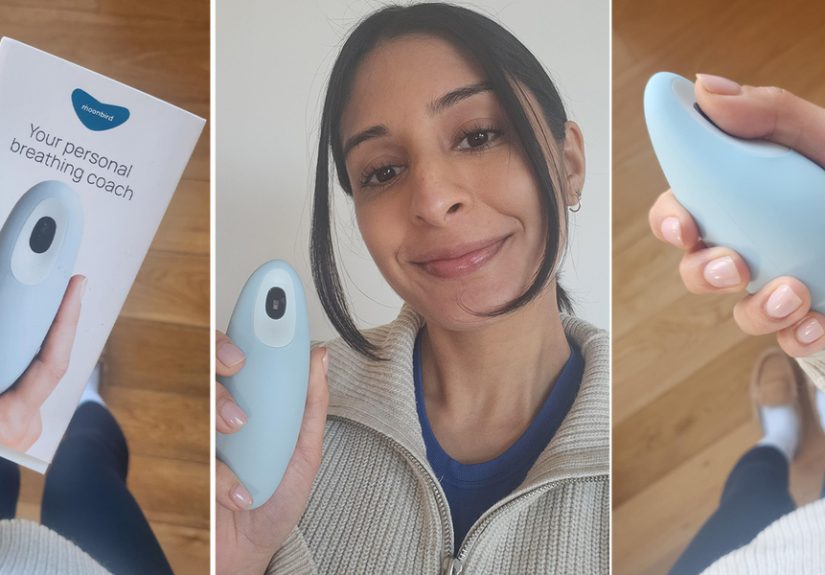
Moonbird is a handheld breathing coach designed to guide paced breathing without forcing you to stare at a screen. The device gently
expands and contracts in your hand, cueing your inhale and exhale like a tiny, polite metronome that doesn’t judge your posture.
The idea is simple: instead of counting breaths in your head (and accidentally doing math), you match your breathing to the device’s rhythm. You can use it
completely screen-free, or pair it with the companion app for real-time feedback (including heart rate and heart rate variability data).
Quick take: what you get (and what you don’t)
What you get
- Screen-free tactile guidance (it “breathes” in your hand).
- Short sessions for stress spikes and longer sessions for wind-down and sleep routines.
- Preset breathing exercises plus custom pacing.
- Optional app with HR/HRV biofeedback and progress tracking.
- One-time purchase (no subscription required for basic use).
What you don’t get
- A miracle cure for anxiety, insomnia, or anything medical (it’s a wellness tool, not a medical device).
- A replacement for therapy, sleep hygiene, ortragicallyyour rent.
- A “set it and forget it” fix. Like most breathwork tools, it works best when you actually use it.
Why slow breathing works (the science, minus the lab coat)
Moonbird’s core claim is built on a pretty solid foundation: slow, controlled breathing can shift your body out of “fight-or-flight” and toward “rest-and-digest.”
That’s the parasympathetic nervous system doing its calming thinglowering heart rate, reducing stress responses, and helping your brain stop acting like every email is a bear attack.
Multiple clinical and educational sources describe benefits of slow or diaphragmatic breathing such as improved relaxation, reduced heart rate, and better stress management.
Breathwork is also commonly recommended as a simple, accessible way to lower stress and support sleep routines.
HRV, “resonance breathing,” and the 6-breaths-per-minute sweet spot
You’ll see Moonbird and other breathwork tools talk about HRV biofeedback and “coherence.” Here’s the plain-English version:
your heart rate naturally speeds up a bit on inhale and slows down on exhale. With paced breathingoften around ~6 breaths per minutethat pattern can become more pronounced,
which many HRV biofeedback approaches use as a marker of better autonomic balance.
This pace is sometimes called resonance frequency breathing. Research often cites that resonance tends to occur around 0.1 Hz (about six breaths per minute),
though it varies person to person. Translation: you don’t need to chase a perfect number. You just need a pace that feels slow, steady, and not like you’re trying to inhale the universe.
Design and build: the “stress pebble” aesthetic
A lot of meditation gadgets scream, “I am a Device™ and I demand a charging station next to your dignity.” Moonbird is more like a smooth, ergonomic object you can keep on your desk
without it looking like you’re about to scan someone’s barcode.
Specs-wise, it’s built for hands: a soft medical-grade silicone skin, a compact shape, and a tactile “expand/contract” motion that you can follow even with your eyes closed.
It’s also designed to be portablesomething you can use in bed, on the couch, or in the passenger seat while you’re silently judging traffic patterns.
Battery and charging
Battery life is reported around a couple of hours of active use, and it charges via a magnetic detachable cable. That might sound short until you realize most sessions are 2–10 minutes.
In practice, that usually translates into many sessions between charges (unless you’re running a nightly breathwork marathon, in which case: respect).
How Moonbird works day-to-day
Here’s what using Moonbird typically looks like:
- You start the device (often described as a simple “wake and use” interactionno complicated setup ritual required).
- You place your hand around it and match your breathing to its expansion (inhale) and contraction (exhale).
- If you want extra data, you open the app later and look at your session stats. If you don’t, you simply… enjoyed breathing like a calm person.
Use case #1: bedtime wind-down
Many reviewers gravitate toward Moonbird as a sleep breathing tool. It’s not a sedative. It’s more like a “transition ritual”a way to tell your body
the day is over and the doomscrolling Olympics have been cancelled.
Breathing exercises are already widely recommended for sleep and relaxation routines. Moonbird’s advantage is that it reduces the mental friction of starting:
you don’t have to count, you don’t have to guess timing, and you don’t have to keep a phone lit up like a tiny billboard for your brain.
Use case #2: stress spikes (meetings, commuting, modern life in general)
The “two-minute reset” is where Moonbird shines for a lot of people. If you’re stressed, your breathing often becomes shallow or irregular.
A physical pace guide can make it easier to slow down quicklyespecially if you find audio meditations distracting or your brain treats silence like an invitation to panic.
Use case #3: focus and attention resets
Some users describe Moonbird as a bridge between “I know breathwork helps” and “I will never remember to do breathwork.” Leaving it on your desk creates a visual cue,
and the tactile motion makes the practice feel more like an action than an abstract intention.
The app: optional, but it’s where the nerdy fun lives
If you pair Moonbird with the app, you get real-time and historical biofeedbacktypically heart rate and HRV trends during and across sessions.
This is useful if you’re motivated by seeing a chart that says, “Congrats, you’re less feral than you were ten minutes ago.”
The app experience is also where you select different breathing programs, adjust pacing, and access educational or guided content. Importantly,
Moonbird is designed to work without staring at your phone while you breatheso the app can be a “before/after” tool rather than the center of the experience.
Breathing programs: pick your flavor of calm
Moonbird is built around preset breathing patterns plus custom options. Common styles include:
- Balanced slow breathing (steady inhale/exhale timing) for general calm.
- Longer exhales to support relaxation and sleep onset routines.
- Box breathing (inhale/hold/exhale/hold in equal counts), a classic for stress management.
- Custom pacing so you can match what feels best for your body and comfort level.
If you’re new to breathwork, the biggest win is not “the perfect program.” It’s consistency. A preset takes away decision fatigue,
which is the same fatigue that made you eat chips for dinner and call it “girl dinner” (or “boy dinner” or “human dinner”no judgment).
Does Moonbird actually help? What reviewers and research suggest
The fairest answer is: it can help a lot of people feel calmer faster, particularly for short stress reduction sessions and bedtime wind-down.
That’s consistent with how paced breathing is generally used in stress and sleep support.
Hands-on reviews from mainstream health and lifestyle outlets describe Moonbird as easy to use and particularly appealing for people who want a quick, guided breathing routine
without the mental overhead of counting or following long meditations. Several reviewers focus on its usefulness for anxiety moments and sleep prepshort sessions that feel doable
even when your brain is running 37 tabs at once.
What the science says (and what it doesn’t)
Broadly, breathing interventions are associated with improved parasympathetic activity and reduced stress responses in many contexts. HRV biofeedback approaches commonly use slow-paced breathing
(often around six breaths per minute) as a training rhythm. That lines up with the kind of pacing Moonbird is built to guide.
What this doesn’t mean: that Moonbird “treats” anxiety disorders or insomnia. If you have clinically significant anxiety, panic, PTSD, sleep disorders, or medical conditions,
breathwork tools can be supportivebut they shouldn’t replace professional care.
Pros and cons: the honest list
Pros
- Ridiculously easy to start (no counting, no instructions tattoo required).
- Screen-free by design, which is rare for a modern wellness product.
- Portableuse it in bed, at your desk, or while traveling.
- Biofeedback support via the app if you like data and progress tracking.
- No subscription needed to benefit from the core device experience.
- Short sessions feel achievable, which matters more than perfection.
Cons
- Price: it’s a premium calming gadget, and you’ll feel that in your wallet.
- Not magic: the effect can be immediate but may be short-lived for some people, especially in high-anxiety moments.
- Not for everyone: if you already love free breathwork apps and stick to them, Moonbird may feel redundant.
- Data isn’t the point (but some buyers expect it to be a medical-grade tracker; it isn’t).
Moonbird vs other meditation gadgets
When people search “best meditation gadget,” they often end up comparing very different categories. Here’s the practical breakdown:
Moonbird vs meditation apps
Apps are cheaper, sometimes free, and offer tons of content. But they also require a phone, a screen, and usually audio. Moonbird is for people who want a
tactile breathing guide that makes starting feel effortlessespecially when screens are the problem, not the solution.
Moonbird vs smartwatches and rings
Wearables can prompt breathwork sessions and track HRV trends, but they rarely provide a physical pacing cue you can hold.
Moonbird’s advantage is sensory: you feel the pace, which can be grounding when your thoughts are doing parkour.
Moonbird vs HRV biofeedback devices
Dedicated HRV biofeedback tools can be more “clinical” and data-driven. Moonbird sits in the middle: it offers biofeedback,
but its biggest value is frictionless practice. If you want the calm habit first and the charts second, Moonbird makes sense.
Who should buy Moonbird in 2025?
Based on the patterns across reviews and what breathwork research suggests, Moonbird tends to fit best for these people:
You should strongly consider it if…
- You get stressed easily and want a quick, repeatable reset that doesn’t require your phone.
- You struggle with bedtime anxiety or “can’t turn my brain off” nights.
- You’ve tried breathing exercises, but counting makes you feel like you’re failing a math quiz.
- You want a calming tool you can use discreetly at work or while traveling.
- You like biofeedback, but you don’t want your self-care to feel like filing taxes.
You might skip it if…
- You already use free breathwork routines daily and feel satisfied.
- You’re hoping a gadget will replace therapy, medication, or medical advice.
- Spending ~$200 on wellness tools makes you feel more stressed than the stress itself.
How to get the most out of Moonbird
A breathing device can’t “win” against a chaotic schedule unless you give it a fair shot. Here are practical ways to make it work:
- Start tiny: 2–5 minutes is enough to feel a shift for many people.
- Pick one anchor moment: after your first coffee, after lunch, or right when you get in bed.
- Use the “object effect”: keep it visible on your desk or nightstand so it reminds you to use it.
- Try longer exhales when you want downshift energy (especially before sleep).
- Use the app like a mirror: check data occasionally for motivation, not as a grade.
FAQ
Do I need the app?
No. Moonbird is designed for screen-free breathing guidance. The app adds exercise selection, stats, and biofeedbackbut the device can be used on its own.
Is there a subscription?
Moonbird is generally positioned as a one-time purchase tool. The core experience doesn’t rely on a subscription to function as a breathing coach.
Can it help with anxiety or insomnia?
Breathing exercises can support stress reduction and relaxation, which may help many people feel calmer and improve bedtime routines.
But Moonbird isn’t a medical treatment. If anxiety or insomnia is severe, persistent, or worsening, talk with a qualified clinician.
Is it travel-friendly?
Yesthis is one of Moonbird’s biggest strengths. It’s compact, quiet, and doesn’t require headphones or a screen to be useful.
Verdict: why people keep trying to “borrow” it
The easiest way to sum up this Moonbird review 2025: it turns breathwork into something you can do on autopilot.
Not because it does the work for you, but because it removes the annoying partscounting, timing, second-guessing, and phone dependency.
If you’re the kind of person who genuinely benefits from slow breathing but struggles to keep it consistent, Moonbird can feel like a cheat code.
Not a “fix my life” cheat codemore like a “stop spiraling for five minutes so I can rejoin society” cheat code. And honestly, in 2025,
that’s a pretty valuable feature set.
Is it expensive? Yes. Is it also the type of calming gadget that people try once and immediately start plotting how to justify buying their own?
Also yes. If you want a screen-free meditation gadget that’s portable, easy, and grounded in how paced breathing actually works,
Moonbird is one of the more thoughtfully designed options out there.
Extra: Real-world Moonbird moments (the “everyone wants to buy one” experiences)
Let’s talk about the part nobody puts on the product box: the social phenomenon of handing Moonbird to another human. Based on common reactions described in reviews
and user anecdotes, Moonbird has a strange superpowerpeople try it for 30 seconds and suddenly develop a very serious interest in “where you got it” and “how much it costs”
and “do you think it would fix my brain, specifically.”
Picture a typical scene: someone’s waiting for a Zoom meeting to start. Their leg is bouncing like it’s training for the Olympics, their jaw is clenched, and they’re
pretending they’re not anxious by aggressively sipping water. You slide Moonbird across the desk like it’s a secret agent gadget. They pick it up, it expands,
and they instinctively match their breathbecause humans are basically fancy mammals who love a rhythm. Two minutes later, their shoulders drop. They say,
“Okay… that’s actually nice.” That’s how it starts.
Another common moment: bedtime. The person who swears they’ll stop scrolling “in five minutes” but ends up researching whether ancient Romans had social anxiety
(spoiler: probably). Moonbird gives them a different “thing to do with their hands” that isn’t a phone. The tactile motion anchors attention just enough to keep the mind
from sprinting into tomorrow’s problems. It’s not dramatic. It’s subtle. Which is exactly why it works for many peopleno big performance, just a gentle downshift.
Then there’s the public-place test. Breathwork in public can feel awkward because, culturally, we’ve decided that being calm outside your house is suspicious.
Moonbird makes it discreet. In a waiting room, on a flight, in the back of an Uber, people can hold it like a stress ball. No one needs to know you’re doing
paced breathing. You’re just… holding a small object and not yelling at anyone. A win.
Some of the most interesting “Moonbird moments” show up with people who struggle with focus. Not because Moonbird is a productivity hack, but because breathing is a nervous
system dialand a lot of focus issues are also nervous system issues (overwhelm, agitation, restless energy). A short session can feel like clearing the fog from a windshield.
You don’t become a new person. You just become the version of you who can finish one task before starting seventeen others.
And yes, kids and teens come up in conversations toousually because they’re the most honest product reviewers on Earth. If something is boring, they’ll let you know
with a single facial expression that could cut glass. But the tactile cue can be surprisingly engaging because it’s interactive and simple. The best framing isn’t
“meditation” (that word can trigger instant resistance). It’s “let’s match the rhythm.” Keep it playful. Keep it short. Let it be a tool, not a lecture.
The big takeaway from these experiences is that Moonbird isn’t trying to turn you into a monk. It’s trying to make one of the most evidence-backed calming skills
(slow, controlled breathing) easier to actually do in modern life. And when a wellness gadget makes people say, “Wait… I want one,” it’s usually because it reduces friction,
not because it promises enlightenment by Tuesday.