Table of Contents >> Show >> Hide
- Meet Swift: The Overachiever That Refuses to Retire
- Why Swift’s Orbit Is Dropping (and Why the Sun Is Partly to Blame)
- NASA’s “Suggestion Box” Moment: Inviting Industry to Help
- The Orbit-Raising Menu: How Do You Lift a Satellite Without Breaking It?
- Option 1: The classicsend a robotic space tug to rendezvous and push
- Option 2: The “thruster backpack”attach a propulsion module and let it do the work
- Option 3: The “buy time” approachreduce drag until the cavalry arrives
- Option 4: The internet’s favoritewild ideas that are fun until you price them
- The Plan NASA Picked: A Commercial Orbit Boost Demonstration
- Why Saving Swift Matters (Hint: It’s Not Just Sentimentality)
- The Hard Parts NASA and Industry Have to Get Right
- So… What Kinds of “Suggestions” Actually Help NASA Right Now?
- Conclusion: A Space Telescope, a Shrinking Orbit, and a Very Real Rescue Attempt
- Experience: What “Raising Swift’s Orbit” Teaches You (Even If You Never Touch a Rocket)
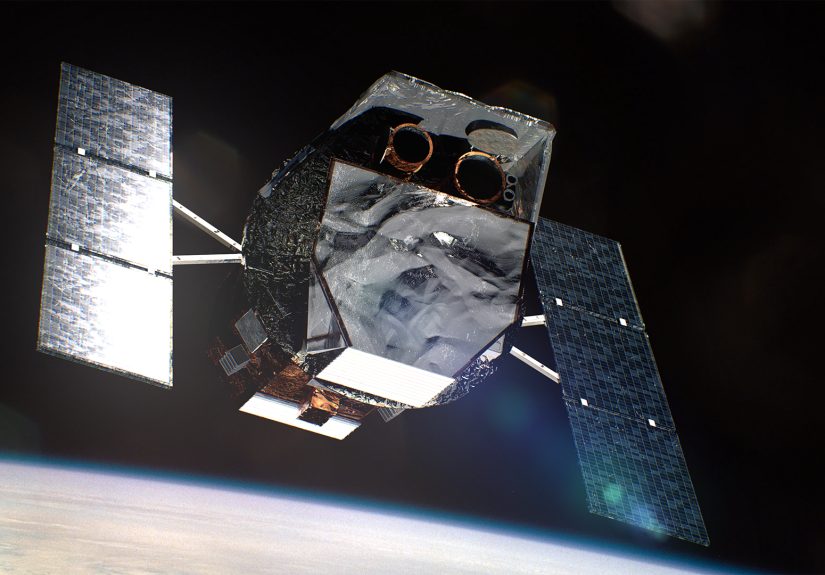
Somewhere above your head, a 21-year-old NASA space telescope is doing the cosmic equivalent of “I’m fine” while very much not being fine. The Neil Gehrels Swift Observatory (a.k.a. Swift) is still catching the universe in the actgamma-ray bursts, black hole flare-ups, weird stellar tantrumsyet its low-Earth orbit is slowly shrinking thanks to atmospheric drag. And because Swift wasn’t built with its own “get out of gravity jail” thrusters, NASA has done something delightfully modern: it opened the door to outside ideas (and industry hardware) to give the mission a literal lift.
In other words: NASA is taking suggestions for raising Swift’s orbit. Not the “comment section” kind of suggestions (no, duct tape is not flight-qualifiedplease stop emailing), but real engineering proposals from U.S. industry that could keep Swift alive long enough to keep doing scienceand prove a new era of commercial satellite servicing isn’t just hype with a fancy logo.
Meet Swift: The Overachiever That Refuses to Retire
Launched in 2004, Swift was built to do one thing extremely well: detect gamma-ray bursts (GRBs)the most powerful explosions since the Big Bangand then pivot fast to watch the afterglow in X-ray and ultraviolet/visible light. Swift is basically the universe’s emergency-response camera crew: it spots something violent, slews quickly, and calls its friends on Earth to look too.
The observatory carries three instruments that work as a coordinated team:
- Burst Alert Telescope (BAT): hunts for sudden gamma-ray flashes across a wide field of view.
- X-Ray Telescope (XRT): zooms in to study the X-ray afterglow and pinpoint locations.
- Ultraviolet/Optical Telescope (UVOT): captures UV/visible light to help identify what blew up (and where).
Swift’s “rapid response” design turned it into a general-purpose transient astronomy machine. Today it’s used for everything from GRBs to tidal disruption events (stars being shredded by black holes), flaring stars, and quick follow-up of alerts from other observatories. Even after two decades, Swift still punches above its weightbecause time-domain astronomy is basically the Olympics of being in the right place at the right time, and Swift has been practicing since flip phones were cool.
Why Swift’s Orbit Is Dropping (and Why the Sun Is Partly to Blame)
If you imagine space as a perfectly empty void, orbital decay sounds like a scam. But low-Earth orbit isn’t “empty” so much as “barely there.” The upper atmosphere is thin, yet it still produces dragespecially when the Sun gets rowdy.
Solar activity makes Earth’s atmosphere “puff up”
During periods of high solar activity, extra energy heats Earth’s upper atmosphere, causing it to expand upward. That increases atmospheric density at the altitudes where satellites like Swift live. More density means more drag. More drag means your orbit slowly loses energy. And losing orbital energy is like slowly letting air out of a bike tireeventually you’re riding on the rim, and it’s not a vibe.
Swift can’t simply fire its enginesbecause it doesn’t have any
Swift was not designed for life-extension maneuvers. No onboard propulsion means it can’t “reboost” itself. So the orbit naturally decays over time, and the decay can accelerate when solar activity spikes. That’s why NASA started sounding the alarm: Swift is still productive scientifically, but it’s running out of altitude runway.
NASA has even adjusted Swift’s operationstemporarily suspending most science activities at timesso flight controllers can keep the spacecraft oriented in a way that minimizes drag and buys time for a rescue-style orbit boost.
NASA’s “Suggestion Box” Moment: Inviting Industry to Help
Here’s the twist that makes this story more than “old satellite slowly falls down”: NASA didn’t just shrug and accept the countdown. Instead, the agency explored a faster, more flexible approachleaning on American commercial space companies for ideas and potentially hardware.
The basic logic is straightforward: building a brand-new space observatory to replace Swift would be expensive and slow, while a targeted orbit-raising mission could be comparatively affordable and fastif the technology is ready and the schedule is realistic.
So NASA began exploring concepts through U.S. industry studies and innovation pipelines, effectively asking: “If you had to raise the orbit of a working, uncooperative, not-built-for-servicing satellite… how would you do it?”
The Orbit-Raising Menu: How Do You Lift a Satellite Without Breaking It?
There are multiple ways to “raise an orbit,” and each comes with its own engineering headaches, budget realities, and a special kind of paperwork that only exists when you try to grab a spacecraft that never consented to being grabbed.
Option 1: The classicsend a robotic space tug to rendezvous and push
This is the most intuitive concept: launch a small servicing spacecraft, meet Swift in orbit, attach to a structural feature, and perform a controlled reboost to a higher altitude. Think “tow truck,” but with orbital mechanics instead of a flatbedand the towing fee is paid in delta-v.
The trick is attachment. Swift wasn’t built with a docking port or grapple fixture designed for robotic capture. So the servicing craft must be clever: it needs sensors for close-in navigation, a capture mechanism that can handle unexpected geometry, and a propulsion system that can nudge the combined stack without inducing dangerous tumble.
Option 2: The “thruster backpack”attach a propulsion module and let it do the work
Another concept is to affix a propulsion package to Swiftalmost like bolting on a temporary engine. That could mean adhesives, mechanical clamps, or specialized attachment pads that can grab onto “ordinary” surfaces in space. The advantage is modularity: you bring the propulsion with you, attach it, and do the reboost.
The disadvantage is also modularity: attaching something reliably in microgravity to a spacecraft never designed for it is basically a three-dimensional puzzle where every piece is expensive and none of them are allowed to break.
Option 3: The “buy time” approachreduce drag until the cavalry arrives
Not every solution is a dramatic robotic embrace. Sometimes the best move is… staying very still. Swift’s team has used operational strategieskeeping the spacecraft in an attitude that reduces drag to slow orbital decay and increase the margin for a future orbit boost attempt.
This is less flashy than a tug, but it’s incredibly practical. When you’re racing orbital decay, buying weeks or months can be the difference between “successful rendezvous” and “we missed the spacecraft because it reentered.”
Option 4: The internet’s favoritewild ideas that are fun until you price them
Once NASA’s interest in a Swift orbit boost became public, the broader space community did what it always does: it brainstormed. Loudly. Creatively. Occasionally with spreadsheets. Concepts ranged from “use a servicing craft built for other missions” to “build a whole orbital support system.”
Most of these are not what NASA is actually doing (sorry, “giant space lasso” fans), but the excitement signals something real: orbital servicing is moving from sci-fi to procurement.
The Plan NASA Picked: A Commercial Orbit Boost Demonstration
NASA didn’t just collect ideas. The agency moved toward execution by selecting a commercial approach aimed at rendezvous, capture, and reboostessentially turning Swift into a high-stakes demonstration of satellite servicing.
The orbit boost effort is more than mission life-extension; it’s a test case: can a commercial spacecraft safely dock (or “capture”) a government satellite that was never designed for in-space servicing, and then perform a controlled orbit raise? If yes, it opens doors for future servicing of science missions, Earth-observing platforms, and other expensive satellites that are still healthyjust a little too close to the atmospheric pool drain.
Why the schedule is tense
Orbit decay doesn’t negotiate. It also doesn’t care about launch delays, supply chain hiccups, or “we’re waiting on a part.” NASA has stated that maintaining enough altitude margin matters for the reboost attempt. In early February 2026, Swift’s average altitude had dropped below roughly 400 kilometers, and NASA indicated the odds of a successful orbit boost improve if the average altitude remains above about 300 kilometers.
That’s why operations changeslike holding a drag-minimizing attitudeare a big deal. Swift is essentially conserving altitude the way you’d conserve your phone battery at 4%: airplane mode, dim screen, no games, don’t even think about watching a video.
Why Saving Swift Matters (Hint: It’s Not Just Sentimentality)
Sure, it’s emotionally satisfying to save a hardworking telescope from fiery doom. But there are concrete reasons NASA is trying to keep Swift alive.
1) Swift is still scientifically valuable
Time-domain astronomy is booming. The sky is full of transientsevents that appear, change, and fade quickly. Swift is built for rapid response and multiwavelength follow-up, making it an important piece of the ecosystem. Losing it would create gaps that aren’t easily filled by a single replacement.
2) Servicing tech has broader applications
If a commercial vehicle can rendezvous with, capture, and reboost Swift, that capability can apply to other satellites that are operational but orbit-limited. It also strengthens the emerging U.S. market for in-space servicing, which is increasingly relevant in a crowded orbital environment.
3) It’s a real-world demo, not a lab exercise
A lot of servicing concepts sound great in simulations. Swift is the opposite of a simulation: it’s a real spacecraft with real quirks, in a decaying orbit, and the universe does not offer a “reset mission” button. A successful Swift orbit boost would be one of the clearest proofs that commercial servicing can work under pressure.
The Hard Parts NASA and Industry Have to Get Right
Rendezvous: finding a tiny moving target at orbital speeds
“Meeting up in orbit” sounds like a casual coffee date. In reality, you’re matching speed and position with something traveling around Earth at roughly 7–8 kilometers per second. The servicing spacecraft must carefully adjust its orbit, phase its approach, and use sensors to navigate the final meters safely.
Capture: no docking port, no handrails, no easy mode
Swift wasn’t built for servicing. That means capture hardware has to work with existing featuresstructural rings, fixtures, or other parts of the spacecraft that were never intended as docking targets. That’s where modern robotics, careful force control, and inspection imagery become essential.
Reboost: pushing without spinning, stressing, or overheating
Once attached, you’re effectively flying a combined vehicle. Thrusting has to be done in a way that doesn’t destabilize the attitude, exceed structural limits, or place sensitive instruments in unfavorable thermal conditions. Even if the physics is straightforward, the operational choreography is not.
So… What Kinds of “Suggestions” Actually Help NASA Right Now?
NASA isn’t looking for clever one-liners. The useful suggestions live in three buckets:
- Attachment and capture ideas that can handle non-cooperative targets safely.
- Efficient propulsion approaches that deliver meaningful altitude gain with manageable fuel and risk.
- Operational strategies that buy timeminimizing drag, optimizing pointing, and managing the spacecraft’s health while waiting.
In practice, “NASA taking suggestions” has meant engaging U.S. industry with real study work, real mission planning, and real contractsthen adapting Swift’s operations to keep the door open for the reboost attempt.
Conclusion: A Space Telescope, a Shrinking Orbit, and a Very Real Rescue Attempt
Swift is a rare kind of space mission: scientifically productive, operationally nimble, and still relevant decades after launch. But orbital decay doesn’t care about scientific legacy. With solar-driven atmospheric drag accelerating Swift’s slow descent, NASA has turned to commercial innovation and in-space servicing concepts to keep the mission alive.
Whether the orbit boost succeeds or not, this effort is already reshaping the conversation: satellites don’t have to be disposable. If we can safely reach them, attach to them, and move them, we can extend the value of missions that are still doing great workjust in the wrong orbit.
And yes, NASA is taking suggestions. The good ones look less like “what if we…” and more like “here’s the mechanism, the timeline, the risk plan, and how we avoid turning a productive telescope into an accidental fireworks show.”
Experience: What “Raising Swift’s Orbit” Teaches You (Even If You Never Touch a Rocket)
You don’t need a flight badge to appreciate the weirdly human lessons baked into a mission like this. Trying to reboost Swift is, in many ways, like trying to help a beloved old car keep runningexcept the car is doing 17,000 miles per hour, the hood is sealed shut, and the mechanic has to operate from a different vehicle without ever physically “standing” anywhere.
First lesson: time is a resource, not just a schedule. When a spacecraft’s orbit is decaying, every day is a little less altitude, a little more drag, and a little tighter margin. That’s why operational choiceslike minimizing drag by holding the spacecraft in a “low-resistance” orientationmatter so much. It’s the space version of closing every background app on your phone so the battery lasts until you find a charger. People tend to think the “real” work starts when the rescue spacecraft launches, but the truth is that the mission team can win (or lose) months earlier by how well they manage the spacecraft’s remaining orbital budget.
Second lesson: engineering is often the art of using what’s already there. Swift wasn’t designed for servicing. No docking port. No friendly grapple fixture. No “please attach tug here” sign in Comic Sans. So the servicing concept has to get creative: identify existing structural features that can be captured safely, build a mechanism that can tolerate slight misalignments, and include sensors that can confirm what you’re grabbing before you grab it. This is an experience familiar to anyone who has tried to assemble furniture with one missing screw: you stop wishing the part existed and start figuring out how to make the best use of the parts you’ve got.
Third lesson: “simple” ideas get complicated the moment safety shows up. “Just push it higher” sounds easy until you list the constraints: don’t spin the observatory, don’t overheat anything, don’t block the instruments, don’t exceed structural loads, don’t create debris, don’t cause a collision risk, and don’t forget the regulatory approvals. Even a gentle thrust can create unexpected attitude changes if the combined vehicle’s center of mass shifts. In ordinary life, you learn this when you try to push a shopping cart with a wonky wheelsmall forces can lead to big deviations. In orbit, that “wonky wheel” is orbital dynamics, and it does not accept apologies.
Fourth lesson: collaboration isn’t a buzzword when nobody owns all the pieces. A Swift orbit boost blends NASA operations experience with commercial agility, robotics, propulsion, navigation, and mission assurance. No single group has a monopoly on “the solution,” because the problem spans hardware, software, physics, logistics, and risk management. That’s one reason the “suggestion” concept is powerful: it encourages multiple approaches, and it forces the best ideas to survive contact with real constraints. In everyday terms, it’s the difference between dreaming up a home renovation on a napkin and actually opening the wall to find out what’s inside.
Final lesson: sometimes saving something is also about proving a new habit. If the reboost works, Swift keeps doing sciencegreat. But the bigger win is demonstrating a repeatable capability: satellites can be serviced, repositioned, and extended rather than replaced. That changes how we think about space infrastructure. It nudges spaceflight culture from “build, launch, hope” toward “build, launch, maintain.” And that mindsetmaintenance, life extension, smart reuseis the kind of experience that pays dividends far beyond one telescope.
So if you’re wondering what it feels like to be “raising Swift’s orbit,” the best answer is: it feels like solving a high-stakes puzzle under a clock, with a team that has to be both cautious and bold at the same time. It’s stressful, clever, occasionally funny in a gallows-humor way, and deeply satisfyingbecause the prize isn’t just altitude. It’s more time to watch the universe do what it does best: surprise us.